
📋 At a Glance
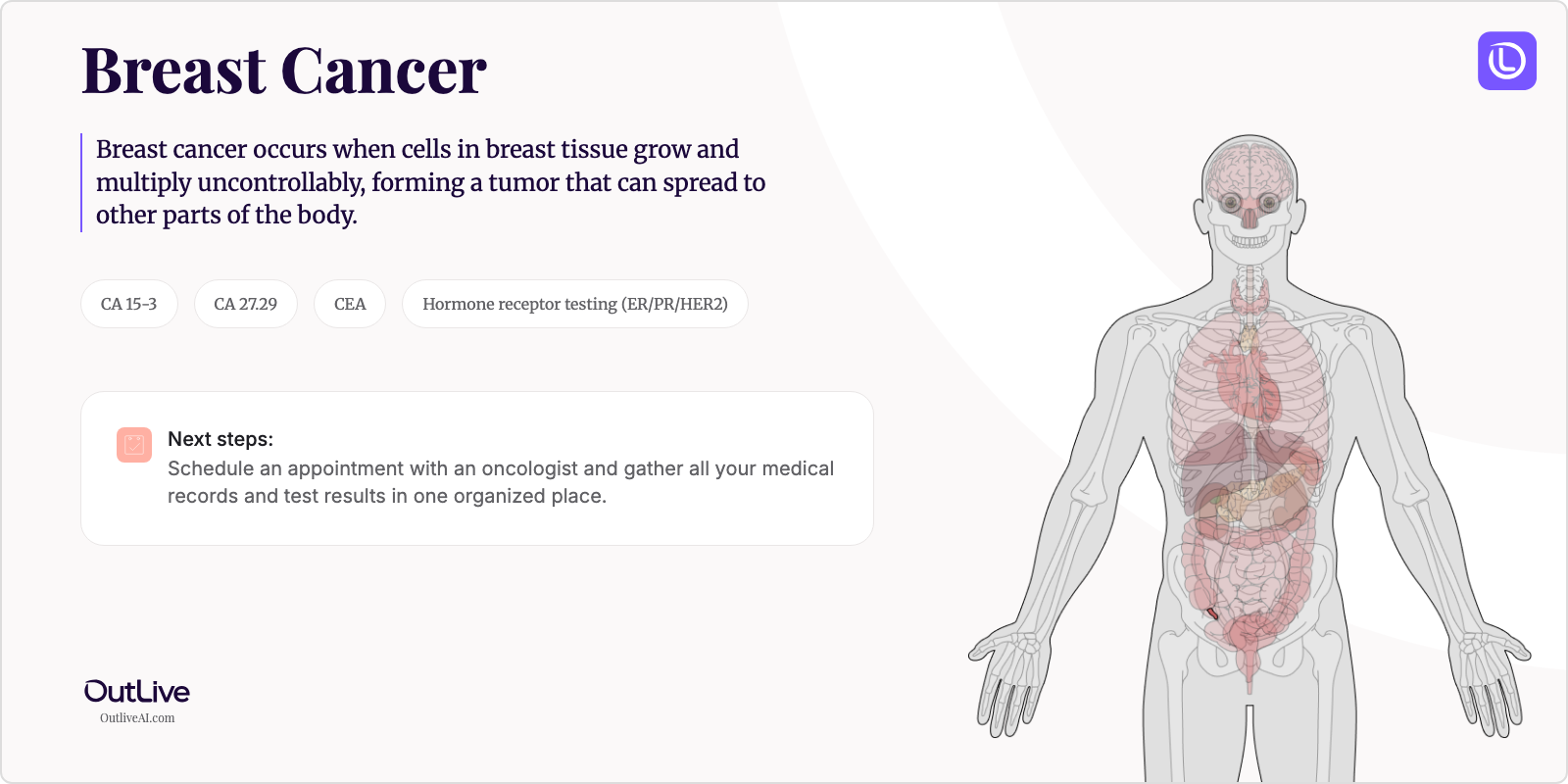
- What it is: Breast cancer occurs when cells in breast tissue grow and multiply uncontrollably, forming a tumor that can spread to other parts of the body.
- Key lab tests: CA 15-3, CA 27.29, CEA, and hormone receptor testing (ER/PR/HER2)
- Your first goal: Schedule an appointment with an oncologist and gather all your medical records and test results in one organized place.
Receiving a new diagnosis for Breast Cancer can be overwhelming. You might be feeling anxious, confused, and unsure of what comes next. That's completely normal. This guide is here to help you understand your condition in simple terms, know which lab tests matter most, and feel prepared for your next steps.
First, Take a Breath: What is Breast Cancer in Simple Terms?
Think of your breast tissue like a well-organized neighborhood where cells live and work together harmoniously. In breast cancer, some cells start breaking the rules – they begin multiplying too quickly and don't die when they should, creating a crowd (tumor) that disrupts the neighborhood. These unruly cells can sometimes travel to other parts of your body through your bloodstream or lymph system, like troublemakers moving to new neighborhoods. The good news is that we have many effective ways to stop these cells and restore order, and breast cancer treatment has become increasingly successful over the years.
Understanding Your Diagnosis: The Key Lab Tests
This is the most important section. These are the most critical biomarkers used to diagnose and monitor Breast Cancer. For each one, we'll explain what it means in simple terms.
Key Tests for Breast Cancer:
- CA 15-3: This blood test measures a protein that breast cancer cells often release, helping your doctor monitor how well treatment is working and watch for any signs of cancer returning.
- CA 27.29: Similar to CA 15-3, this marker specifically tracks breast cancer activity and is especially useful for monitoring your response to treatment over time.
- CEA (Carcinoembryonic Antigen): While not specific to breast cancer, CEA levels can rise when cancer is present and help your doctor track treatment progress.
- Hormone Receptor Testing (ER/PR): These tests determine if your cancer cells have receptors for estrogen or progesterone, which directly influences which treatments will work best for you.
- HER2 Testing: This test checks if your cancer cells make too much of a growth-promoting protein called HER2, which helps determine if certain targeted therapies could benefit you.
Your First Specialist Appointment: What to Ask
What to Expect: You'll meet with an oncologist, a doctor who specializes in treating cancer. This appointment typically lasts 45-60 minutes. Your oncologist will review your pathology report, discuss your specific type of breast cancer, explain your staging results, and outline potential treatment options. They'll also perform a physical exam and may order additional tests to complete your treatment planning.
Questions to Ask Your Doctor:
- What specific type and stage of breast cancer do I have, and what does this mean for my treatment options?
- What are my hormone receptor (ER/PR) and HER2 status results, and how do they affect my treatment plan?
- What treatment sequence do you recommend (surgery first vs. chemotherapy first), and why?
- What are the expected side effects of my treatment, and how can we manage them?
- Should I consider genetic testing to understand if this is hereditary, and would my family members benefit from screening?
Download our [Checklist of Questions to Ask Your Breast Cancer Specialist](# to feel prepared.
How to Track Your Journey
Tracking your Breast Cancer journey is crucial for understanding how your treatment is working and spotting important trends. Here's what you should monitor:
Symptoms to Track:
- Energy levels and fatigue patterns throughout the day
- Any new lumps, skin changes, or pain in breast area or elsewhere
- Side effects from treatments (nausea, numbness, skin reactions)
- Emotional well-being and mood changes
- Changes in appetite or unexpected weight loss
Lab Results to Monitor:
- Complete Blood Count (CBC) - Before each chemotherapy cycle
- CA 15-3 or CA 27.29 - Every 3-6 months during treatment
- Liver function tests - Every 3-6 months or as directed
- Vitamin D levels - Every 6-12 months
Why Tracking Matters: Tracking helps you and your doctor see patterns that might not be obvious day-to-day. It can reveal which treatments are working, identify side effects early when they're easier to manage, and provide concrete data for making treatment adjustments. Many patients find that tracking also gives them a sense of control during a time that can feel overwhelming.
Next Steps After Your Diagnosis
Immediate Actions (This Week):
- Contact your insurance company to understand your coverage and get pre-authorizations started
- Gather all your medical records, imaging results, and pathology reports in one folder
- Schedule your oncology appointment and any additional staging scans your doctor recommended
- Identify a trusted friend or family member who can attend appointments with you
Short-term Goals (Next Month):
- Complete all staging tests to determine the full extent of your cancer
- Meet with your full treatment team (surgeon, medical oncologist, radiation oncologist)
- Consider getting a second opinion, especially if your case is complex
- Join a breast cancer support group or connect with a patient navigator
Long-term Management:
- Establish a regular monitoring schedule with your oncology team
- Develop a survivorship care plan that includes regular screenings and healthy lifestyle habits
- Consider participating in clinical trials if appropriate for your situation
Frequently Asked Questions
How quickly can I expect to feel better? Recovery timelines vary greatly depending on your treatment plan. Many patients start feeling more like themselves 3-6 months after completing active treatment, though some effects like fatigue can linger longer. Remember, healing is not linear – you'll have good days and challenging days.
Will I need to change my diet? While no specific diet cures cancer, eating well supports your body during treatment. Focus on maintaining a healthy weight, eating plenty of fruits and vegetables, limiting processed foods, and staying hydrated. Your treatment team may have specific recommendations based on your medications.
How often will I need to see my doctor? During active treatment, you'll likely see your oncologist every 2-3 weeks. After treatment, visits typically decrease to every 3-4 months for the first few years, then every 6 months, and eventually yearly. You'll also have regular imaging and blood work.
Can I still exercise/work/travel? Most patients can maintain modified versions of their normal activities. Light exercise is often encouraged as it helps with fatigue and mood. Work accommodations can usually be arranged. Travel may need to be timed around treatment schedules, and you should discuss any travel plans with your doctor.
When to Seek Immediate Medical Attention
Contact your doctor immediately if you experience:
- Fever over 100.4°F (38°C), especially during chemotherapy
- Sudden shortness of breath or chest pain
- Severe, persistent headaches or vision changes
- Uncontrolled vomiting or inability to keep fluids down for 24 hours
- Signs of infection at surgical sites (increased redness, warmth, drainage)
- Sudden swelling in arm on the side of surgery (possible lymphedema)
🔬 Ready to Organize Your Health Journey?
Understanding your condition is the first step. Our free Lab Analyzer tool helps you:
- Track all your lab results for Breast Cancer in one place
- Spot important trends over time
- Generate personalized questions for your doctor
[Upload Your Lab Report for Free Analysis →]