
📋 At a Glance
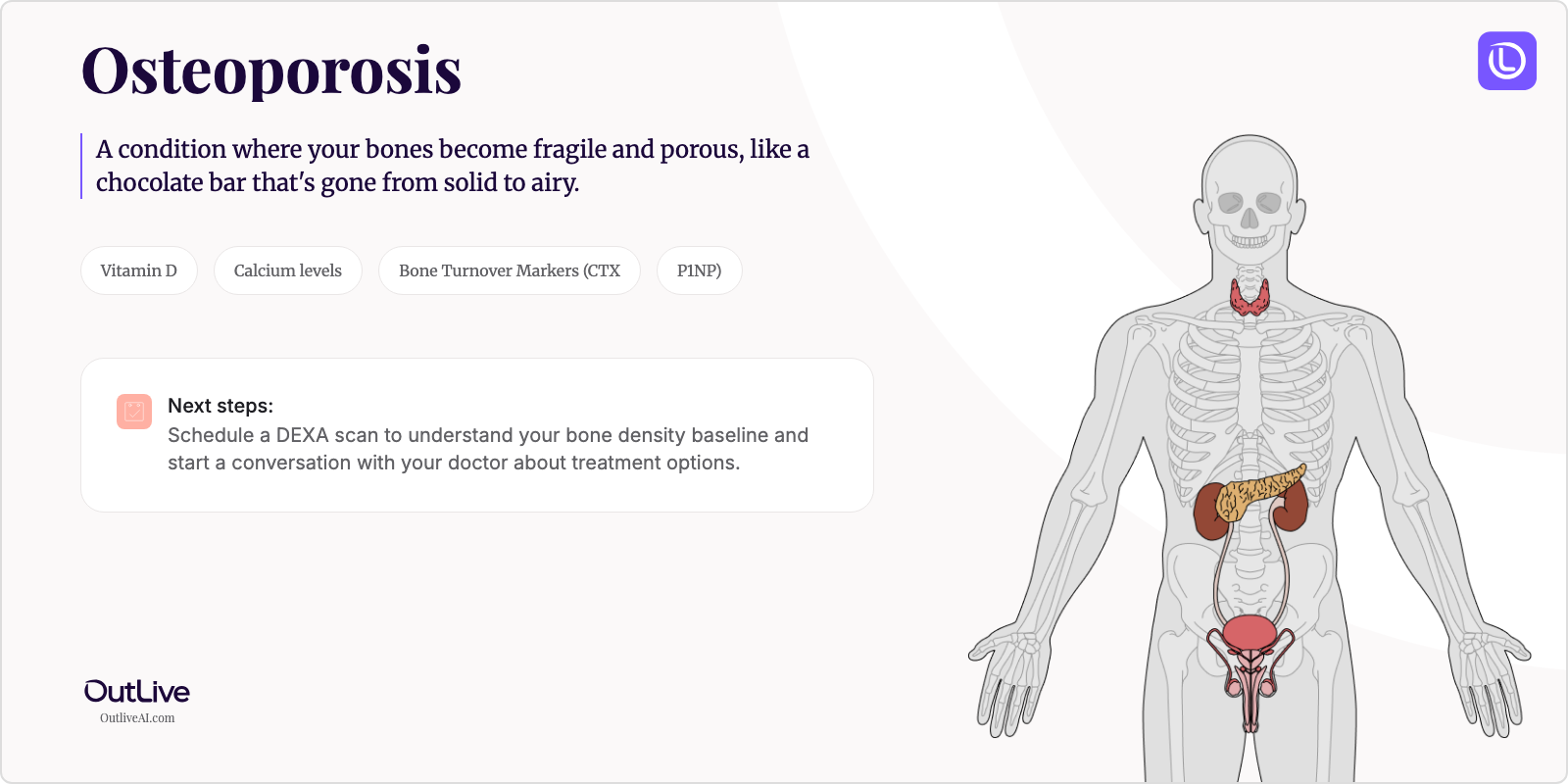
- What it is: A condition where your bones become fragile and porous, like a chocolate bar that's gone from solid to airy.
- Key lab tests: Vitamin D, Calcium levels, and Bone Turnover Markers (CTX, P1NP)
- Your first goal: Schedule a DEXA scan to understand your bone density baseline and start a conversation with your doctor about treatment options.
Receiving a new diagnosis for Osteoporosis can be overwhelming. You might be feeling anxious, confused, and unsure of what comes next. That's completely normal. This guide is here to help you understand your condition in simple terms, know which lab tests matter most, and feel prepared for your next steps.
First, Take a Breath: What is Osteoporosis in Simple Terms?
Think of your bones like the framework of a house. In healthy bones, this framework is strong and dense, like solid oak beams. With osteoporosis, those beams have become more like honeycomb - still there, but with lots of tiny holes that make them weaker and more likely to break. The good news? Just like you can reinforce a house, there are many ways to strengthen your bones and prevent fractures. You're not alone in this - millions of people successfully manage osteoporosis and live active, fulfilling lives.
Understanding Your Diagnosis: The Key Lab Tests
This is the most important section. These are the blood tests your doctor uses to understand what's happening with your bones and how to best help you.
Key Tests for Osteoporosis:
- Vitamin D (25-hydroxyvitamin D): This test measures your body's vitamin D stores, which is crucial because vitamin D helps your body absorb calcium to build strong bones.
- Calcium: This measures the calcium level in your blood, essential for bone strength and helping your doctor ensure you're getting enough of this vital mineral.
- CTX (C-telopeptide): This "bone breakdown marker" shows how quickly your body is breaking down old bone tissue - think of it as measuring how fast your bones are being demolished.
- P1NP (Procollagen Type 1 N-Terminal Propeptide): This "bone building marker" shows how quickly your body is making new bone - like measuring how fast new construction is happening.
Your First Specialist Appointment: What to Ask
What to Expect: You'll likely see either an endocrinologist (hormone specialist) or a rheumatologist (bone and joint specialist). They'll review your DEXA scan results, discuss your risk factors, and create a personalized treatment plan. The appointment usually lasts 30-45 minutes, and your doctor will explain your T-score (how your bones compare to a healthy 30-year-old) in detail.
Questions to Ask Your Doctor:
- "What is my T-score, and what does it mean for my fracture risk?"
- "Which medications do you recommend for me, and what are the benefits versus side effects?"
- "How much calcium and vitamin D should I be getting daily through food and supplements?"
- "What specific exercises are safe and beneficial for strengthening my bones?"
- "How often should I have follow-up DEXA scans and blood work to monitor my progress?"
Download our [Checklist of Questions to Ask Your Osteoporosis Specialist](# to feel prepared.
How to Track Your Journey
Tracking your Osteoporosis journey is crucial for understanding how your treatment is working and spotting important trends. Here's what you should monitor:
Symptoms to Track:
- Back pain or changes in posture (could indicate spine compression)
- Any falls or near-falls (helps assess balance and fracture risk)
- Height measurements every 6 months (loss of height can signal spine fractures)
Lab Results to Monitor:
- Vitamin D levels - Check every 3-6 months initially, then annually
- Calcium levels - Check every 6-12 months
- Bone turnover markers (CTX, P1NP) - Check 3-6 months after starting treatment
Why Tracking Matters: Your bone health changes slowly - think months and years, not days and weeks. By tracking your lab results over time, you and your doctor can see if your treatment is working, catch problems early, and celebrate improvements. It's like having a GPS for your bone health journey instead of driving blind.
Next Steps After Your Diagnosis
Immediate Actions (This Week):
- Schedule your DEXA scan if you haven't had one yet
- Start a daily vitamin D supplement (typically 1000-2000 IU, but confirm with your doctor)
- Review your home for fall hazards - remove loose rugs, install grab bars, improve lighting
Short-term Goals (Next Month):
- Meet with a nutritionist to optimize your calcium intake through food
- Begin a weight-bearing exercise program (walking, dancing, or tai chi are great starts)
- Join an osteoporosis support group online or in your community
Long-term Management:
- Establish a routine for taking medications consistently
- Schedule annual DEXA scans to monitor bone density changes
- Build a strong relationship with your bone health team
Frequently Asked Questions
How quickly can I expect to feel better? Osteoporosis itself doesn't usually cause symptoms until a fracture occurs. If you're starting treatment, bone density improvements typically show up on DEXA scans after 1-2 years, but your fracture risk starts decreasing within months of starting medication.
Will I need to change my diet? Yes, but the changes are usually simple additions rather than restrictions. Focus on getting 1,200mg of calcium daily (preferably from food like dairy, leafy greens, and fortified products) and ensure adequate protein intake to support bone health.
How often will I need to see my doctor? Initially, you'll likely have appointments every 3-6 months to establish treatment and monitor progress. Once stable, annual check-ups are typical, with DEXA scans every 1-2 years.
Can I still exercise/work/travel? Absolutely! In fact, weight-bearing exercise is one of the best things you can do for your bones. Avoid high-impact activities and exercises that involve extreme spinal flexion (like sit-ups), but walking, swimming, and strength training are excellent choices.
When to Seek Immediate Medical Attention
Contact your doctor immediately if you experience:
- Sudden, severe back pain (could indicate a spine fracture)
- Loss of height of more than 1.5 inches
- Any fracture from a minor fall or bump
- Severe jaw pain or unusual dental problems (if taking bisphosphonates)
🔬 Ready to Organize Your Health Journey?
Understanding your condition is the first step. Our free Lab Analyzer tool helps you:
- Track all your lab results for Osteoporosis in one place
- Spot important trends over time
- Generate personalized questions for your doctor
[Upload Your Lab Report for Free Analysis →]