
📋 At a Glance
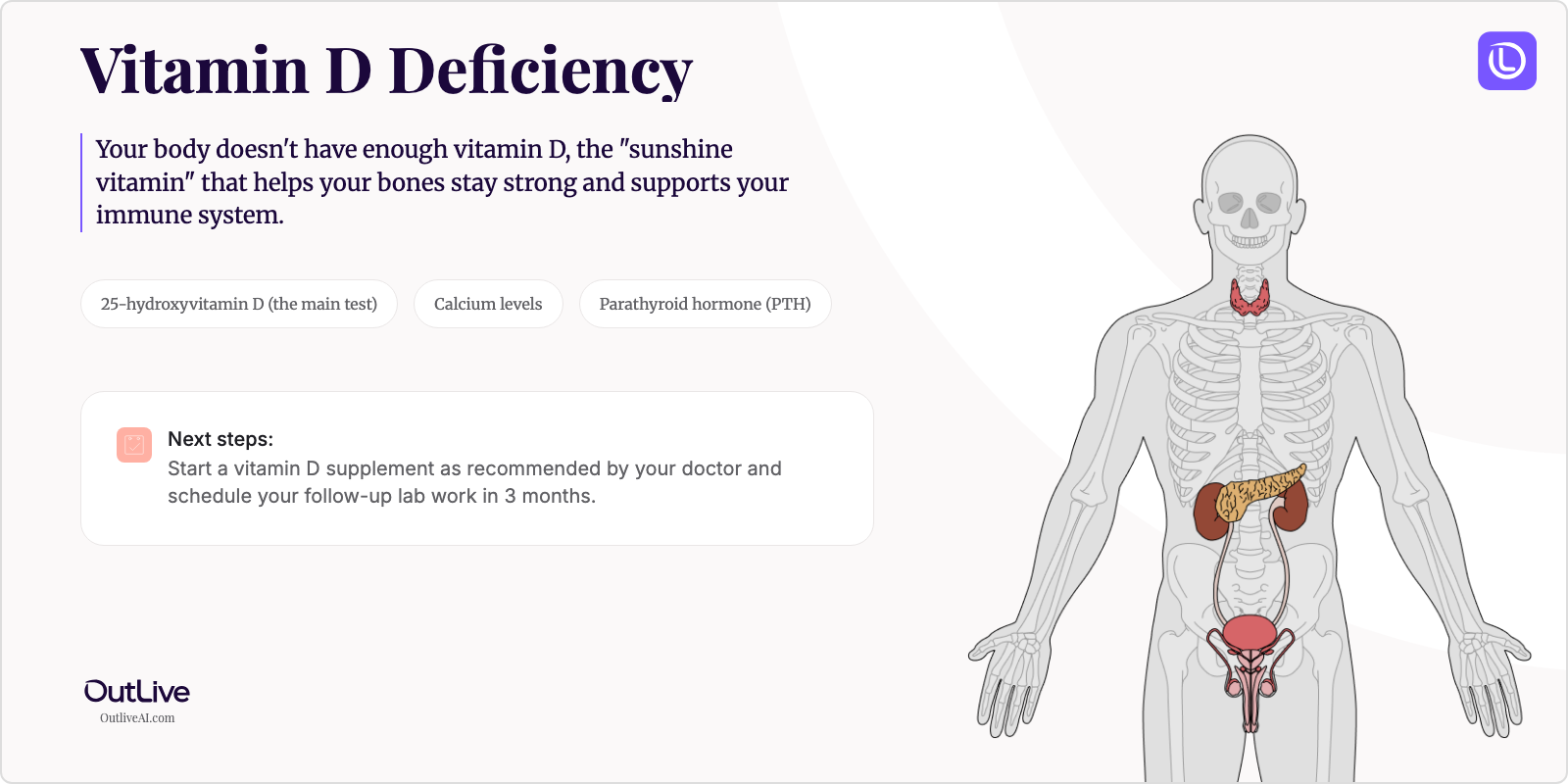
- What it is: Your body doesn't have enough vitamin D, the "sunshine vitamin" that helps your bones stay strong and supports your immune system.
- Key lab tests: 25-hydroxyvitamin D (the main test), calcium levels, and parathyroid hormone (PTH)
- Your first goal: Start a vitamin D supplement as recommended by your doctor and schedule your follow-up lab work in 3 months.
Receiving a new diagnosis for Vitamin D Deficiency can be overwhelming. You might be feeling anxious, confused, and unsure of what comes next. That's completely normal. This guide is here to help you understand your condition in simple terms, know which lab tests matter most, and feel prepared for your next steps.
First, Take a Breath: What is Vitamin D Deficiency in Simple Terms?
Think of vitamin D as your body's construction manager for bones and immune defense coordinator. Just like a construction site needs a manager to organize workers and materials to build strong structures, your body needs vitamin D to help calcium do its job of building strong bones and to help your immune system function properly. When you don't have enough vitamin D, it's like having a construction site without proper management – the workers (calcium) are there, but they can't do their job effectively. This can lead to weak bones, muscle aches, fatigue, and a harder time fighting off infections. The good news? Unlike many health conditions, vitamin D deficiency is usually straightforward to treat with supplements and lifestyle changes.
Understanding Your Diagnosis: The Key Lab Tests
This is the most important section. Below are the most critical biomarkers used to diagnose and monitor Vitamin D Deficiency. For each one, I'll explain what it means in simple terms.
Key Tests for Vitamin D Deficiency:
- 25-Hydroxyvitamin D: This is THE main test that shows how much vitamin D is in your blood – think of it as checking your vitamin D fuel tank to see if you're running on empty, half-full, or full.
- Calcium: This test checks your blood calcium levels, which vitamin D helps control – when vitamin D is low, your body may struggle to maintain proper calcium levels.
- Parathyroid Hormone (PTH): This hormone increases when vitamin D is low because your body is trying to compensate by pulling calcium from your bones – it's like your body's emergency backup system kicking in.
- Alkaline Phosphatase: This enzyme can be elevated when your bones are trying to rebuild themselves due to vitamin D deficiency – it's a sign your bones are working overtime.
Your First Specialist Appointment: What to Ask
What to Expect: You'll likely continue seeing your primary care doctor for vitamin D deficiency, though in severe cases or if you have bone problems, you might be referred to an endocrinologist (hormone specialist) or rheumatologist (bone and joint specialist). Your doctor will review your lab results, discuss your symptoms, examine you for signs of deficiency (like muscle weakness or bone tenderness), and create a treatment plan that typically includes vitamin D supplements.
Questions to Ask Your Doctor:
- "What is my exact vitamin D level, and what range should I be aiming for?"
- "Should I take vitamin D2 or D3, and what's the right dose for me?"
- "How long will it take for my levels to improve, and when should I retest?"
- "Are there any underlying conditions causing my vitamin D deficiency that we should investigate?"
- "What lifestyle changes can I make to help maintain healthy vitamin D levels long-term?"
Download our [Checklist of Questions to Ask Your Vitamin D Deficiency Specialist](# to feel prepared.
How to Track Your Journey
Tracking your Vitamin D Deficiency journey is crucial for understanding how your treatment is working and spotting important trends. Here's what you should monitor:
Symptoms to Track:
- Fatigue levels (rate your energy 1-10 daily)
- Bone or muscle pain (location, intensity, and frequency)
- Mood changes (feeling down or depressed)
- Frequency of getting sick (colds, infections)
- Hair loss or thinning
Lab Results to Monitor:
- 25-Hydroxyvitamin D - Check every 3 months until normal, then annually
- Calcium levels - Check with each vitamin D test
- PTH levels - Check if initially abnormal, then as directed
Why Tracking Matters: Tracking helps you and your doctor see if your treatment is working. Many people feel dramatically better within 2-3 months of treatment, but without tracking, it's easy to forget how far you've come. Plus, tracking helps identify patterns – maybe you feel worse in winter months when there's less sunlight, signaling you might need a higher dose during those times.
Next Steps After Your Diagnosis
Immediate Actions (This Week):
- Fill your vitamin D prescription or buy the over-the-counter supplement your doctor recommended
- Set a daily reminder to take your vitamin D (taking it with a meal containing fat helps absorption)
- Schedule your follow-up appointment and lab work for 3 months from now
Short-term Goals (Next Month):
- Establish a routine for taking your supplement consistently
- Start spending 15-20 minutes in sunlight daily (when possible)
- Add vitamin D-rich foods to your diet (fatty fish, egg yolks, fortified milk)
Long-term Management:
- Maintain regular lab monitoring as recommended by your doctor
- Consider seasonal adjustments to your vitamin D intake (you may need more in winter)
- Address any underlying causes (like malabsorption issues) if identified
Frequently Asked Questions
How quickly can I expect to feel better? Most people start noticing improvements in energy and muscle aches within 2-4 weeks of starting treatment, with significant improvement by 2-3 months. However, it can take 3-6 months for your vitamin D levels to fully normalize, especially if you started with very low levels.
Will I need to change my diet? While supplements are the main treatment, adding vitamin D-rich foods helps. Include fatty fish (salmon, mackerel), egg yolks, fortified dairy products, and fortified cereals. However, diet alone rarely fixes vitamin D deficiency – think of food sources as helpful support, not the main solution.
How often will I need to see my doctor? Initially, you'll likely have a follow-up in 3 months to recheck your levels. Once your levels normalize, annual checks are usually sufficient unless symptoms return or you have conditions affecting vitamin D absorption.
Can I still exercise/work/travel? Absolutely! In fact, gentle exercise can help with the muscle aches and fatigue. Just listen to your body and don't overdo it initially. There are no travel restrictions, but remember to pack your supplements and maintain your routine.
When to Seek Immediate Medical Attention
Contact your doctor immediately if you experience:
- Severe muscle cramps or spasms that don't improve
- Confusion or significant memory problems
- Heart palpitations or irregular heartbeat
- Severe bone pain or suspected fracture
- Numbness or tingling around your mouth or in your fingers (could indicate calcium problems)
🔬 Ready to Organize Your Health Journey?
Understanding your condition is the first step. Our free Lab Analyzer tool helps you:
- Track all your lab results for Vitamin D Deficiency in one place
- Spot important trends over time
- Generate personalized questions for your doctor
[Upload Your Lab Report for Free Analysis →]