
📋 At a Glance
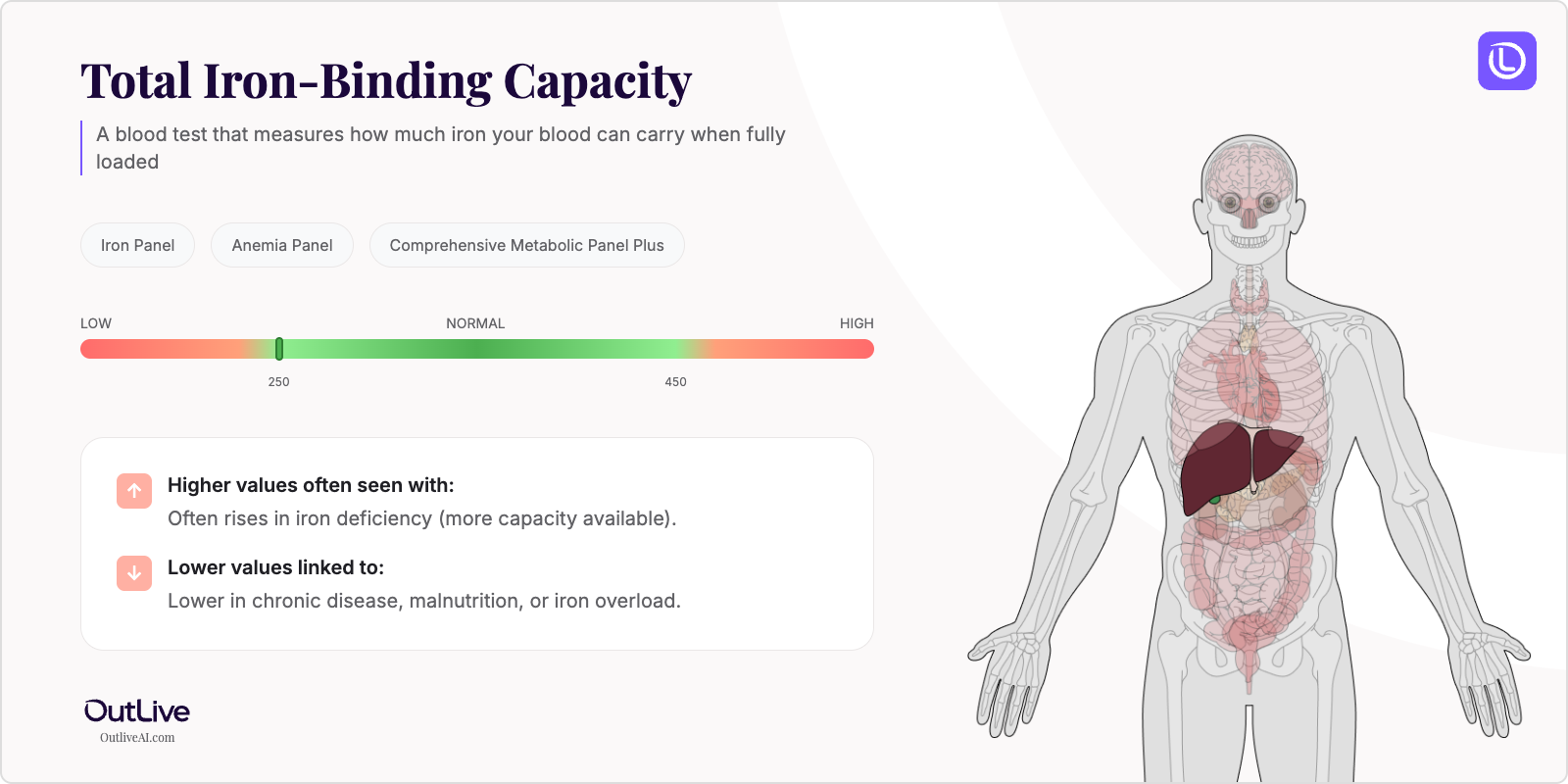
- What it is: A blood test that measures how much iron your blood can carry when fully loaded
- Found in tests: Iron Panel, Anemia Panel, Comprehensive Metabolic Panel Plus
- Normal range: 250-450 mcg/dL (may vary slightly between labs)
If you're looking at your lab results and wondering what TIBC means, you're in the right place. Think of TIBC as measuring the total number of "seats on the bus" available for iron in your bloodstream - it tells us how much iron your blood could potentially carry if all the seats were filled. Let's break down what your numbers mean in plain English.
Why Is TIBC Tested?
Your doctor orders a TIBC test when they want to understand how your body is handling iron. It's commonly included in an iron panel, which is like taking a complete inventory of your body's iron storage and transportation system. This test becomes especially important when you're experiencing symptoms like unexplained fatigue, weakness, or pale skin that might signal an iron problem.
TIBC is particularly valuable because it doesn't just tell us about iron levels - it reveals how your body is responding to those levels. When iron is low, your body often creates more "seats on the bus" (higher TIBC) to try to capture every bit of available iron. When iron is abundant or there's inflammation, your body may reduce the number of seats (lower TIBC).
This test helps diagnose and monitor conditions like iron deficiency anemia, iron overload disorders, chronic diseases affecting iron metabolism, and nutritional deficiencies. It's often ordered alongside other iron tests to give your doctor a complete picture of your iron status.
What Does TIBC Do in Your Body?
TIBC primarily measures transferrin, the main protein taxi service that carries iron through your bloodstream. Think of transferrin molecules as specialized delivery trucks that pick up iron from your digestive system or storage sites and deliver it where it's needed - especially to your bone marrow for making new red blood cells.
Your liver produces transferrin, and it adjusts production based on your body's iron needs. When iron stores are low, your liver works overtime to produce more transferrin, hoping to capture any available iron. This is why TIBC often goes up when you're iron deficient - your body is sending out more trucks to pick up whatever iron it can find.
The relationship between TIBC and your actual iron levels helps doctors understand not just how much iron you have, but how well your body is managing it. This is crucial because both too much and too little iron can cause serious health problems, and TIBC helps distinguish between different causes of abnormal iron levels.
What Do My TIBC Results Mean?
Normal TIBC Ranges
| Population | Normal Range | Optimal Range |
|---|---|---|
| Adult Male | 250-450 mcg/dL | 300-400 mcg/dL |
| Adult Female | 250-450 mcg/dL | 300-400 mcg/dL |
| Children (6-16 years) | 250-400 mcg/dL | 275-375 mcg/dL |
| Pregnancy | 300-600 mcg/dL | 350-500 mcg/dL |
Note: Reference ranges may vary slightly between laboratories. Always compare your results to the range provided on your specific lab report.
What Does High TIBC Mean?
Common Causes:
- Iron deficiency anemia (most common cause - your body makes more transferrin to capture scarce iron)
- Pregnancy (increased iron needs lead to higher transferrin production)
- Oral contraceptive use (estrogen increases transferrin production)
- Chronic blood loss (from heavy periods, ulcers, or other sources)
- Poor iron absorption (celiac disease, inflammatory bowel disease)
- Vegetarian or vegan diet with inadequate iron intake
- Polycythemia vera (rare blood disorder)
Possible Symptoms:
- Extreme fatigue and weakness
- Pale skin, nail beds, or inner eyelids
- Shortness of breath with minimal exertion
- Frequent infections
- Brittle nails or spoon-shaped nails
- Restless leg syndrome
- Unusual cravings for ice, dirt, or starch
When to Be Concerned: If your TIBC is above 500 mcg/dL along with symptoms of severe fatigue, chest pain, or difficulty breathing, contact your healthcare provider promptly. Very high TIBC with very low iron levels suggests significant iron deficiency that may require immediate treatment.
What Does Low TIBC Mean?
Common Causes:
- Iron overload conditions (hemochromatosis, multiple blood transfusions)
- Chronic inflammation or infection (your body reduces iron transport during illness)
- Liver disease (the liver produces less transferrin)
- Kidney disease (protein loss in urine includes transferrin)
- Malnutrition or severe protein deficiency
- Certain cancers (particularly blood cancers)
- Hyperthyroidism (overactive thyroid)
Possible Symptoms:
- Joint pain and stiffness
- Abdominal pain
- Fatigue (different from iron deficiency fatigue)
- Skin color changes (bronze or gray tint)
- Irregular heartbeat
- Unexplained weight loss
- Swelling in legs or abdomen
When to Be Concerned: TIBC below 200 mcg/dL, especially with high iron levels, requires medical evaluation. If accompanied by severe abdominal pain, confusion, or signs of liver problems (yellow skin/eyes), seek immediate medical attention.
What Can Affect My TIBC Levels?
Factors That May Increase Levels:
- Medications: Birth control pills, aspirin (through blood loss), antacids (reducing iron absorption)
- Lifestyle: Vegetarian/vegan diet, frequent blood donation, intense endurance training
- Conditions: Recent blood loss, growth spurts in children, altitude changes
- Supplements: Excessive zinc supplementation (interferes with iron absorption)
Factors That May Decrease Levels:
- Medications: Corticosteroids, testosterone, chloramphenicol, ACTH
- Lifestyle: High-protein diet, alcohol consumption, smoking
- Conditions: Recent infections, surgery, burns, chronic stress
- Time of Day: TIBC can be slightly lower in the afternoon
How Is TIBC Related to Other Tests?
TIBC is rarely interpreted alone - it's part of a team of tests that work together to reveal your iron status. It's often tested alongside serum iron, ferritin, and transferrin saturation to create a complete iron panel.
Often tested alongside: Serum iron, ferritin, transferrin saturation, hemoglobin, hematocrit Part of: Iron Panel, Anemia Workup Ratio calculations: Transferrin saturation = (Serum Iron ÷ TIBC) × 100 Follow-up tests: Complete blood count (CBC), reticulocyte count, vitamin B12, folate
Frequently Asked Questions
How often should TIBC be tested? For most people, TIBC is tested when symptoms suggest an iron problem or during routine health screenings. If you're being treated for iron deficiency or overload, your doctor may check it every 3-6 months until levels normalize, then annually.
Can I improve my TIBC levels naturally? TIBC typically normalizes when the underlying cause is addressed. For high TIBC due to iron deficiency, eating iron-rich foods (red meat, leafy greens, beans) with vitamin C can help. For low TIBC due to inflammation, treating the underlying condition is key.
Should I fast before a TIBC test? Most labs recommend fasting for 12 hours before a TIBC test for the most accurate results, as recent meals can affect iron measurements. Morning testing is preferred since iron levels fluctuate throughout the day.
How quickly can TIBC levels change? TIBC changes more slowly than serum iron. After starting iron supplementation, TIBC may take 2-3 months to normalize. In acute inflammation, TIBC can drop within days to weeks.
Next Steps After Your TIBC Test
Questions to Ask Your Doctor:
- What do my TIBC results mean for my overall health?
- Are my levels related to my symptoms?
- Do I need additional testing?
- Should we monitor this over time?
- Are there lifestyle changes that could help?
Download our TIBC Doctor Questions Checklist
🔬 Ready to Track Your TIBC Over Time?
Understanding a single TIBC result is just the beginning. Our free Lab Analyzer tool helps you:
- Track how your TIBC changes over time
- See how it relates to your other lab values
- Identify patterns your doctor might miss
- Get personalized insights based on your trends
[Upload Your Lab Report for Free Analysis →]