
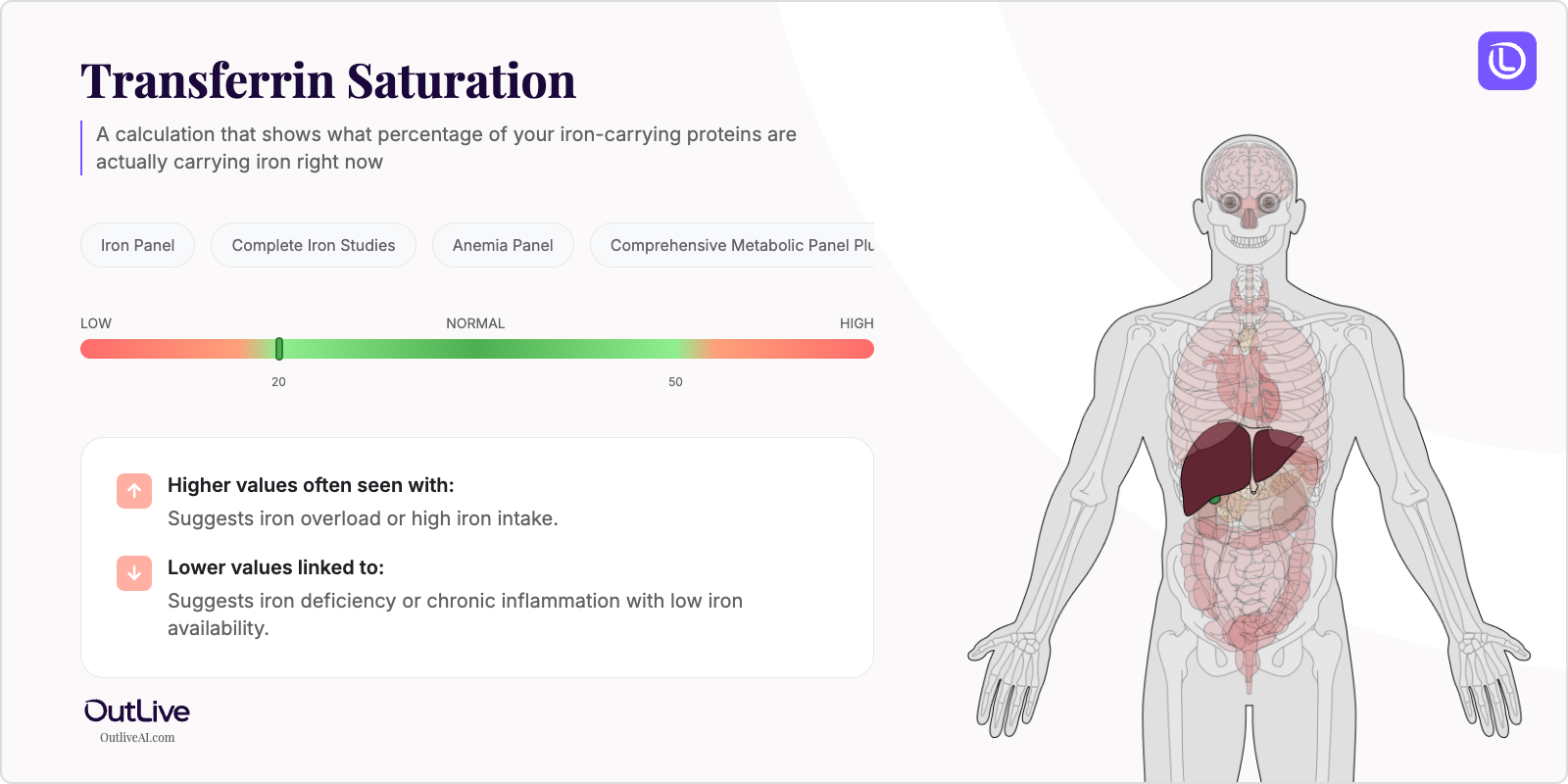
📋 At a Glance
- What it is: A calculation that shows what percentage of your iron-carrying proteins are actually carrying iron right now
- Found in tests: Iron Panel, Complete Iron Studies, Anemia Panel, Comprehensive Metabolic Panel Plus
- Normal range: 20-50% (slightly lower for women, higher for men)
If you're looking at your lab results and wondering what transferrin saturation means, you're in the right place. Think of transferrin saturation like the occupancy rate of a parking garage – it tells you what percentage of available "parking spots" (transferrin proteins) are filled with "cars" (iron molecules). Let's break down what your numbers mean in plain English, so you can walk into your next doctor's appointment feeling informed and confident.
Why Is Transferrin Saturation Tested?
Your doctor orders a transferrin saturation test when they want to understand how well your body is managing iron – not just how much iron you have, but how efficiently you're using it. This test is particularly valuable because it gives us a more complete picture than just looking at iron levels alone.
This test is commonly part of routine screening in iron panels, complete blood counts with iron studies, and anemia workups. Doctors often order it when you're experiencing unexplained fatigue, weakness, or if you have pale skin or frequent infections. It's also a go-to test for monitoring conditions like hereditary hemochromatosis (iron overload) or tracking how well iron supplements are working.
The beauty of this test is that it helps distinguish between different types of anemia and iron disorders. While your iron levels might look normal, your transferrin saturation can reveal whether your body is actually able to use that iron effectively – it's like having money in the bank versus having cash in your wallet ready to spend.
What Does Transferrin Saturation Do in Your Body?
Transferrin is your body's iron taxi service. These special proteins in your blood pick up iron from your digestive system or storage sites and deliver it wherever it's needed – primarily to your bone marrow to make new red blood cells. The saturation percentage tells us how many of these "taxis" have passengers versus how many are driving around empty.
Your liver produces transferrin, and the amount it makes actually responds to your body's iron needs. When iron stores are low, your liver makes more transferrin proteins to capture every bit of available iron. When iron is plentiful, fewer transferrin proteins are needed. This elegant system ensures iron gets distributed properly throughout your body.
The relationship between transferrin saturation and your overall health is profound. Iron is essential for making hemoglobin (which carries oxygen in your blood), supporting your immune system, and maintaining energy production in every cell. When transferrin saturation is off balance, it can affect everything from your energy levels to your ability to fight infections.
What Do My Transferrin Saturation Results Mean?
Normal Transferrin Saturation Ranges
| Population | Normal Range | Optimal Range |
|---|---|---|
| Adult Male | 20-50% | 25-35% |
| Adult Female | 15-50% | 20-35% |
| Children (6-16 years) | 17-42% | 20-35% |
| Pregnancy | 10-44% | 15-30% |
Note: Reference ranges may vary slightly between laboratories. Always compare your results to the range provided on your specific lab report.
What Does High Transferrin Saturation Mean?
Common Causes:
- Hereditary hemochromatosis - A genetic condition causing excessive iron absorption
- Multiple blood transfusions - Each transfusion adds iron that your body can't easily eliminate
- Excessive iron supplementation - Taking too many iron pills or receiving IV iron
- Liver disease - Conditions like cirrhosis or hepatitis can affect iron metabolism
- Hemolytic anemia - When red blood cells break down too quickly, releasing their iron
- Thalassemia - An inherited blood disorder affecting hemoglobin production
- Excessive alcohol consumption - Alcohol increases iron absorption from food
Possible Symptoms:
- Chronic fatigue and weakness
- Joint pain, especially in hands
- Abdominal pain
- Skin darkening or bronze coloration
- Heart palpitations
- Loss of sex drive
- Memory problems
When to Be Concerned: Transferrin saturation above 45% warrants follow-up testing, especially if accompanied by high ferritin levels. Values above 60% are particularly concerning and may indicate iron overload. Seek immediate medical attention if you experience severe abdominal pain, irregular heartbeat, or signs of liver problems like yellowing skin or eyes.
What Does Low Transferrin Saturation Mean?
Common Causes:
- Iron deficiency anemia - The most common cause, from poor diet or blood loss
- Chronic disease anemia - Conditions like rheumatoid arthritis or kidney disease
- Heavy menstrual periods - Leading to ongoing iron loss
- Poor iron absorption - From celiac disease, Crohn's disease, or gastric bypass surgery
- Pregnancy - Increased iron demands for the growing baby
- Vegetarian or vegan diet - Without adequate iron-rich plant foods
- Frequent blood donation - Regular donors may deplete iron stores
Possible Symptoms:
- Extreme fatigue and weakness
- Shortness of breath
- Dizziness or lightheadedness
- Pale skin, nail beds, or gums
- Frequent infections
- Restless leg syndrome
- Unusual cravings (ice, dirt, starch)
When to Be Concerned: Transferrin saturation below 20% typically indicates iron deficiency that needs treatment. Values below 10% are considered severe and may require immediate intervention. Contact your doctor promptly if you experience chest pain, severe shortness of breath, or fainting spells.
What Can Affect My Transferrin Saturation Levels?
Factors That May Increase Levels:
- Medications: Birth control pills, hormone replacement therapy, methyldopa
- Lifestyle: High-iron diet, cooking in cast iron pans, excessive vitamin C with meals
- Conditions: Recent viral infections, inflammation resolution, dehydration
- Supplements: Iron supplements, vitamin C (increases iron absorption)
Factors That May Decrease Levels:
- Medications: Antacids, proton pump inhibitors, cholestyramine, aspirin (chronic use)
- Lifestyle: Tea or coffee with meals, high-calcium foods with iron-rich meals, intense exercise
- Conditions: Active infections, inflammatory conditions, recent surgery
- Time of Day: Levels can be 30% lower in the evening compared to morning
How Is Transferrin Saturation Related to Other Tests?
Transferrin saturation is calculated using two other measurements: serum iron and total iron-binding capacity (TIBC) or transferrin levels. It's the mathematical relationship between these values that gives us the saturation percentage.
Often tested alongside: Serum iron, TIBC, ferritin, complete blood count (CBC), reticulocyte count Part of: Iron Panel, Anemia Workup Ratio calculations: Transferrin saturation = (Serum Iron ÷ TIBC) × 100 Follow-up tests: If abnormal, your doctor may order genetic testing for hemochromatosis, liver function tests, or inflammatory markers like CRP
Frequently Asked Questions
How often should transferrin saturation be tested? For most people, annual testing is sufficient unless you have a known iron disorder. If you're being treated for iron deficiency, retesting every 3-4 months is typical. Those with hemochromatosis may need testing every 3-6 months.
Can I improve my transferrin saturation levels naturally? Yes! For low levels, include iron-rich foods like lean meats, beans, and fortified cereals. Pair them with vitamin C sources like citrus fruits. For high levels, limit iron-rich foods, avoid vitamin C with meals, and drink tea or coffee with meals to reduce absorption.
Should I fast before a transferrin saturation test? Fasting for 12 hours is recommended for the most accurate results, as recent meals can temporarily affect iron levels. Morning testing after an overnight fast is ideal.
How quickly can transferrin saturation levels change? Serum iron can fluctuate within hours, but meaningful changes in transferrin saturation typically take days to weeks. Iron supplementation may show improvement in 2-4 weeks, while dietary changes alone may take 2-3 months.
Next Steps After Your Transferrin Saturation Test
Questions to Ask Your Doctor:
- What do my transferrin saturation results mean for my overall health?
- Are my levels related to my symptoms?
- Do I need additional testing?
- Should we monitor this over time?
- Are there lifestyle changes that could help?
- Should I take iron supplements, and if so, what type and dose?
- Could any of my medications be affecting my results?
Download our Transferrin Saturation Doctor Questions Checklist
🔬 Ready to Track Your Transferrin Saturation Over Time?
Understanding a single transferrin saturation result is just the beginning. Our free Lab Analyzer tool helps you:
- Track how your transferrin saturation changes over time
- See how it relates to your other lab values
- Identify patterns your doctor might miss
- Get personalized insights based on your trends
[Upload Your Lab Report for Free Analysis →]