
📋 At a Glance
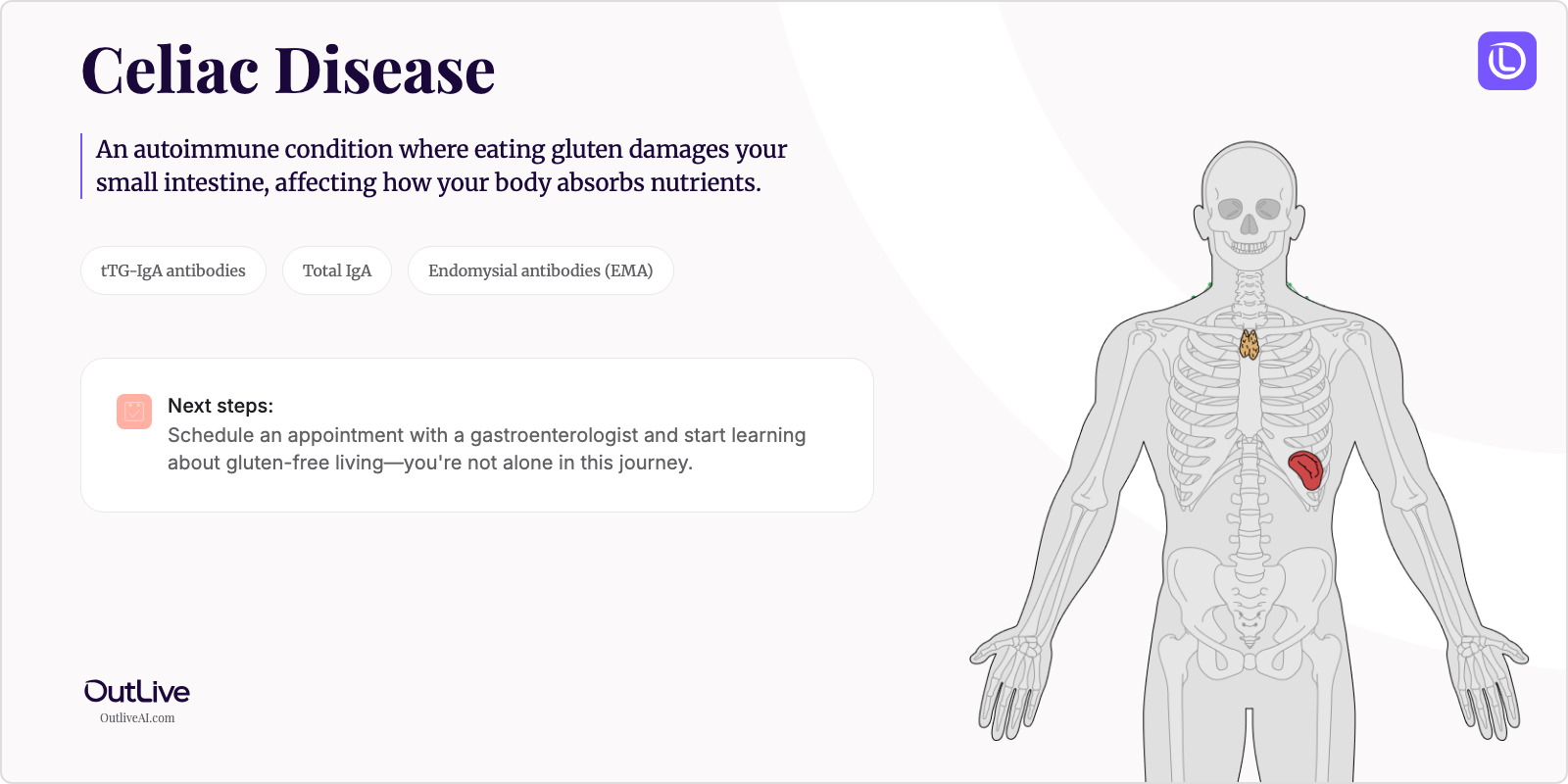
- What it is: An autoimmune condition where eating gluten damages your small intestine, affecting how your body absorbs nutrients.
- Key lab tests: tTG-IgA antibodies, Total IgA, and Endomysial antibodies (EMA)
- Your first goal: Schedule an appointment with a gastroenterologist and start learning about gluten-free living—you're not alone in this journey.
Receiving a new diagnosis for Celiac Disease can be overwhelming. You might be feeling anxious, confused, and unsure of what comes next. That's completely normal. This guide is here to help you understand your condition in simple terms, know which lab tests matter most, and feel prepared for your next steps.
First, Take a Breath: What is Celiac Disease in Simple Terms?
Think of your small intestine as a shag carpet—those tiny finger-like projections (called villi) help absorb nutrients from your food. With Celiac Disease, when you eat gluten (a protein found in wheat, barley, and rye), your immune system mistakenly attacks these villi, essentially flattening your "carpet." This makes it much harder for your body to absorb the vitamins and minerals it needs. The good news? Once you remove gluten from your diet, that carpet can repair itself, and most people feel significantly better within weeks to months.
Understanding Your Diagnosis: The Key Lab Tests
This is the most important section. These are the blood tests that helped your doctor diagnose your Celiac Disease and will help monitor your progress:
Key Tests for Celiac Disease:
- Tissue Transglutaminase IgA (tTG-IgA): This is your body's "gluten alarm system"—when elevated, it shows your immune system is reacting to gluten and attacking your intestinal lining.
- Total IgA: This checks if your body can produce enough IgA antibodies to make the tTG-IgA test accurate—think of it as making sure your alarm system has working batteries.
- Endomysial Antibodies (EMA): Another highly specific antibody test that confirms your immune system is targeting your intestinal tissue when you eat gluten.
- Deamidated Gliadin Peptide (DGP) IgG: This test is especially useful if your IgA levels are low, providing an alternative way to detect your body's reaction to gluten.
Your First Specialist Appointment: What to Ask
What to Expect: You'll likely see a gastroenterologist—a doctor who specializes in digestive system disorders. They may discuss doing an endoscopy (a small camera to look at your small intestine) to confirm the diagnosis and assess any damage. Don't worry—this is a routine procedure that takes about 15-20 minutes, and you'll be sedated so you won't feel anything.
Questions to Ask Your Doctor:
- "How severe is the damage to my small intestine, and how long might it take to heal?"
- "Should I have my family members tested for Celiac Disease since it can run in families?"
- "What nutrients should I be tested for, since malabsorption might have caused deficiencies?"
- "How often should I have follow-up blood tests to monitor my antibody levels?"
- "Can you refer me to a registered dietitian who specializes in Celiac Disease?"
Download our [Checklist of Questions to Ask Your Celiac Disease Specialist](# to feel prepared.
How to Track Your Journey
Tracking your Celiac Disease journey is crucial for understanding how your treatment is working and spotting important trends. Here's what you should monitor:
Symptoms to Track:
- Digestive symptoms (bloating, diarrhea, constipation, stomach pain)
- Energy levels and fatigue patterns
- Skin changes or rashes (especially dermatitis herpetiformis)
- Joint pain or headaches
- Mood changes or brain fog
Lab Results to Monitor:
- tTG-IgA antibodies - Every 6 months initially, then annually
- Vitamin D, B12, and Folate levels - Every 6-12 months
- Iron and Ferritin - Every 6-12 months
- Thyroid function - Annually (Celiac increases thyroid disease risk)
Why Tracking Matters: Your antibody levels should drop as your intestine heals on a gluten-free diet—this is how you'll know your treatment is working. Tracking symptoms helps you identify hidden sources of gluten and shows your doctor how well you're responding to dietary changes. Many people are surprised to discover patterns they hadn't noticed before.
Next Steps After Your Diagnosis
Immediate Actions (This Week):
- Schedule an appointment with a gastroenterologist if you haven't already
- Start reading food labels carefully—gluten hides in unexpected places like soy sauce, salad dressings, and even some medications
- Join a local or online Celiac support group for practical tips and emotional support
Short-term Goals (Next Month):
- Meet with a registered dietitian who specializes in Celiac Disease
- Clean out your pantry and create a dedicated gluten-free space in your kitchen
- Get tested for common nutritional deficiencies (iron, vitamin D, B12, folate)
Long-term Management:
- Establish a relationship with knowledgeable healthcare providers who understand Celiac Disease
- Learn to confidently navigate restaurants and social situations involving food
- Stay current on annual health screenings, including bone density tests
Frequently Asked Questions
How quickly can I expect to feel better? Many people notice improved energy and fewer digestive symptoms within 2-4 weeks of going gluten-free. Complete intestinal healing typically takes 6 months to 2 years, depending on the initial damage. Children often heal faster than adults.
Will I need to change my diet? Yes, you'll need to follow a strict gluten-free diet for life. This means avoiding all wheat, barley, rye, and most oats (unless certified gluten-free). The good news is that naturally gluten-free foods like fruits, vegetables, meat, fish, rice, and potatoes are all safe and delicious options.
How often will I need to see my doctor? Initially, you'll likely have follow-ups every 3-6 months to monitor your antibody levels and nutritional status. Once your levels normalize and symptoms improve, annual check-ups are typically sufficient unless new concerns arise.
Can I still exercise/work/travel? Absolutely! Once you're managing your diet well, Celiac Disease shouldn't limit your activities. Many professional athletes have Celiac Disease. Traveling requires more planning (research restaurants, pack snacks), but it's completely doable with preparation.
When to Seek Immediate Medical Attention
Contact your doctor immediately if you experience:
- Severe, persistent abdominal pain that doesn't improve
- Signs of severe anemia (extreme fatigue, chest pain, shortness of breath)
- Unexplained weight loss despite following a gluten-free diet
- Persistent vomiting or inability to keep food down
- Blood in your stool or black, tarry stools
🔬 Ready to Organize Your Health Journey?
Understanding your condition is the first step. Our free Lab Analyzer tool helps you:
- Track all your lab results for Celiac Disease in one place
- Spot important trends over time
- Generate personalized questions for your doctor
[Upload Your Lab Report for Free Analysis →]