
📋 At a Glance
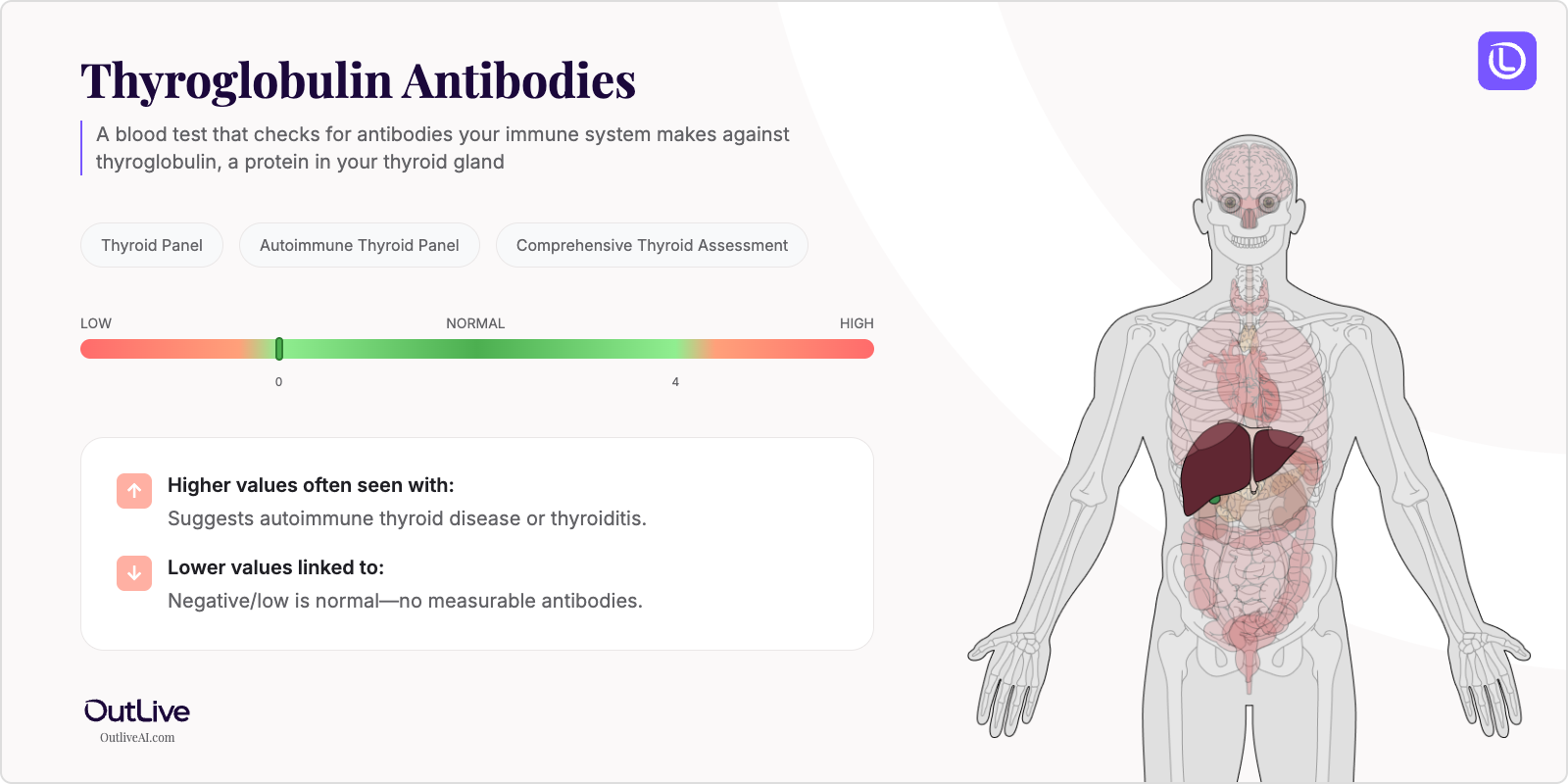
- What it is: A blood test that checks for antibodies your immune system makes against thyroglobulin, a protein in your thyroid gland
- Found in tests: Thyroid Panel, Autoimmune Thyroid Panel, Comprehensive Thyroid Assessment
- Normal range: Less than 4 IU/mL (or negative result)
If you're looking at your lab results and wondering what TG antibodies mean, you're in the right place. Think of TG antibodies like security guards who've mistaken a friendly neighbor (your thyroid proteins) for an intruder. When these antibodies show up in your blood, it means your immune system might be confused and attacking your own thyroid tissue. Let's break down what your numbers mean in plain English.
Why Is TG Antibodies Tested?
Your doctor ordered this test because they want to understand what's happening with your thyroid and immune system. TG antibodies (also called anti-thyroglobulin antibodies or Anti-Tg) are most commonly checked when you're experiencing symptoms like unexplained fatigue, weight changes, or when your basic thyroid tests show something unusual.
This test is particularly important for diagnosing autoimmune thyroid conditions like Hashimoto's thyroiditis or Graves' disease. It's also used to monitor thyroid cancer survivors, as these antibodies can interfere with other thyroid cancer monitoring tests. If you have a family history of thyroid problems or other autoimmune conditions, your doctor might include this test as part of a comprehensive thyroid evaluation.
The presence of TG antibodies doesn't automatically mean you have thyroid disease, but it does indicate that your immune system is reacting to your thyroid tissue. About 10-15% of healthy people can have slightly elevated levels without any thyroid problems, which is why your doctor looks at the whole picture, not just one number.
What Does TG Antibodies Do in Your Body?
Under normal circumstances, thyroglobulin is a large protein that lives peacefully inside your thyroid gland, helping to produce thyroid hormones that regulate your metabolism, energy, and body temperature. It's like a factory worker that stays inside the factory doing its job.
When TG antibodies develop, your immune system has essentially created a "wanted poster" for thyroglobulin. These antibodies attach to thyroglobulin proteins and signal your immune system to attack, causing inflammation in your thyroid gland. Over time, this can damage your thyroid tissue and affect how well your thyroid produces hormones.
The relationship between TG antibodies and other thyroid markers is complex. While TSH tells you how hard your pituitary gland is working to stimulate your thyroid, and T3/T4 show your actual hormone levels, TG antibodies reveal whether your immune system is involved in any thyroid dysfunction you might be experiencing.
What Do My TG Antibodies Results Mean?
Normal TG Antibodies Ranges
| Population | Normal Range | Optimal Range |
|---|---|---|
| Adult Male | < 4 IU/mL or Negative | < 1 IU/mL |
| Adult Female | < 4 IU/mL or Negative | < 1 IU/mL |
| Children | < 4 IU/mL or Negative | < 1 IU/mL |
| Pregnancy | < 4 IU/mL or Negative | < 1 IU/mL |
Note: Reference ranges may vary slightly between laboratories. Always compare your results to the range provided on your specific lab report.
What Does High TG Antibodies Mean?
Common Causes:
- Hashimoto's thyroiditis (the most common cause - an autoimmune condition where your immune system attacks your thyroid)
- Graves' disease (another autoimmune thyroid condition that typically causes an overactive thyroid)
- Postpartum thyroiditis (temporary thyroid inflammation after pregnancy)
- Type 1 diabetes or other autoimmune conditions (autoimmune conditions often travel together)
- Thyroid cancer (particularly papillary or follicular types)
- Subacute thyroiditis (viral infection of the thyroid)
- Normal variation (10-15% of healthy people have detectable levels)
Possible Symptoms:
- Fatigue that doesn't improve with rest
- Weight gain or difficulty losing weight
- Feeling cold when others are comfortable
- Dry skin and brittle hair
- Muscle aches and joint stiffness
- Depression or mood changes
- Irregular menstrual periods
When to Be Concerned: Elevated TG antibodies alone aren't usually an emergency, but you should contact your doctor promptly if your levels are very high (over 100 IU/mL) or if you're experiencing severe symptoms like extreme fatigue, rapid heartbeat, or significant swelling in your neck. These could indicate active thyroid inflammation that needs treatment.
What Does Low TG Antibodies Mean?
Common Causes: Low or negative TG antibodies are actually the normal, healthy result! This means your immune system isn't producing antibodies against your thyroid tissue. There are no concerning causes of "too low" TG antibodies - in this case, lower is better.
Possible Symptoms: None - low or undetectable TG antibodies don't cause symptoms and are the desired result.
When to Be Concerned: You don't need to be concerned about low or negative TG antibodies. This is what we hope to see!
What Can Affect My TG Antibodies Levels?
Factors That May Increase Levels:
- Medications: Lithium, interferon-alpha, interleukin-2, amiodarone
- Lifestyle: High stress levels, smoking, excessive iodine intake
- Conditions: Pregnancy (temporary elevation), viral infections, other autoimmune diseases
- Supplements: Very high doses of iodine or kelp supplements
Factors That May Decrease Levels:
- Medications: Immunosuppressive drugs, corticosteroids (in some cases)
- Lifestyle: Stress reduction, anti-inflammatory diet, regular exercise
- Conditions: Successful treatment of thyroid conditions
- Time of Day: Levels are generally stable throughout the day
How Is TG Antibodies Related to Other Tests?
TG antibodies are part of a comprehensive thyroid evaluation and work together with other tests to give your doctor the full picture.
Often tested alongside: TSH, Free T4, Free T3, TPO antibodies (anti-thyroid peroxidase) Part of: Thyroid Panel, Autoimmune Panel Ratio calculations: Not typically used in ratio calculations Follow-up tests: If positive, your doctor may order thyroid ultrasound, TSI antibodies, or thyroglobulin levels
Frequently Asked Questions
How often should TG antibodies be tested? If your initial test is negative and you have no symptoms, retesting isn't usually necessary unless new symptoms develop. If positive, your doctor may recheck levels every 6-12 months to monitor changes, especially if you're being treated for thyroid disease.
Can I improve my TG antibodies levels naturally? While you can't always eliminate antibodies completely, some people see improvements with stress management, selenium supplementation (with doctor approval), maintaining optimal vitamin D levels, and following an anti-inflammatory diet. However, always work with your healthcare provider before making major changes.
Should I fast before a TG antibodies test? No, fasting isn't required for TG antibodies testing. You can eat and drink normally before your blood draw.
How quickly can TG antibodies levels change? TG antibodies levels change slowly over months to years, not days or weeks. A significant change typically takes at least 3-6 months to develop, which is why frequent retesting isn't usually helpful.
Next Steps After Your TG Antibodies Test
Questions to Ask Your Doctor:
- What do my TG antibodies results mean for my overall thyroid health?
- Are my levels related to my current symptoms?
- Do I need additional thyroid or autoimmune testing?
- Should we monitor these antibodies over time?
- Are there lifestyle changes that could help reduce inflammation?
- Do I need to see an endocrinologist?
Download our TG Antibodies Doctor Questions Checklist
🔬 Ready to Track Your TG Antibodies Over Time?
Understanding a single TG antibodies result is just the beginning. Our free Lab Analyzer tool helps you:
- Track how your TG antibodies change over time
- See how it relates to your other thyroid values
- Identify patterns your doctor might miss
- Get personalized insights based on your trends
[Upload Your Lab Report for Free Analysis →]