
📋 At a Glance
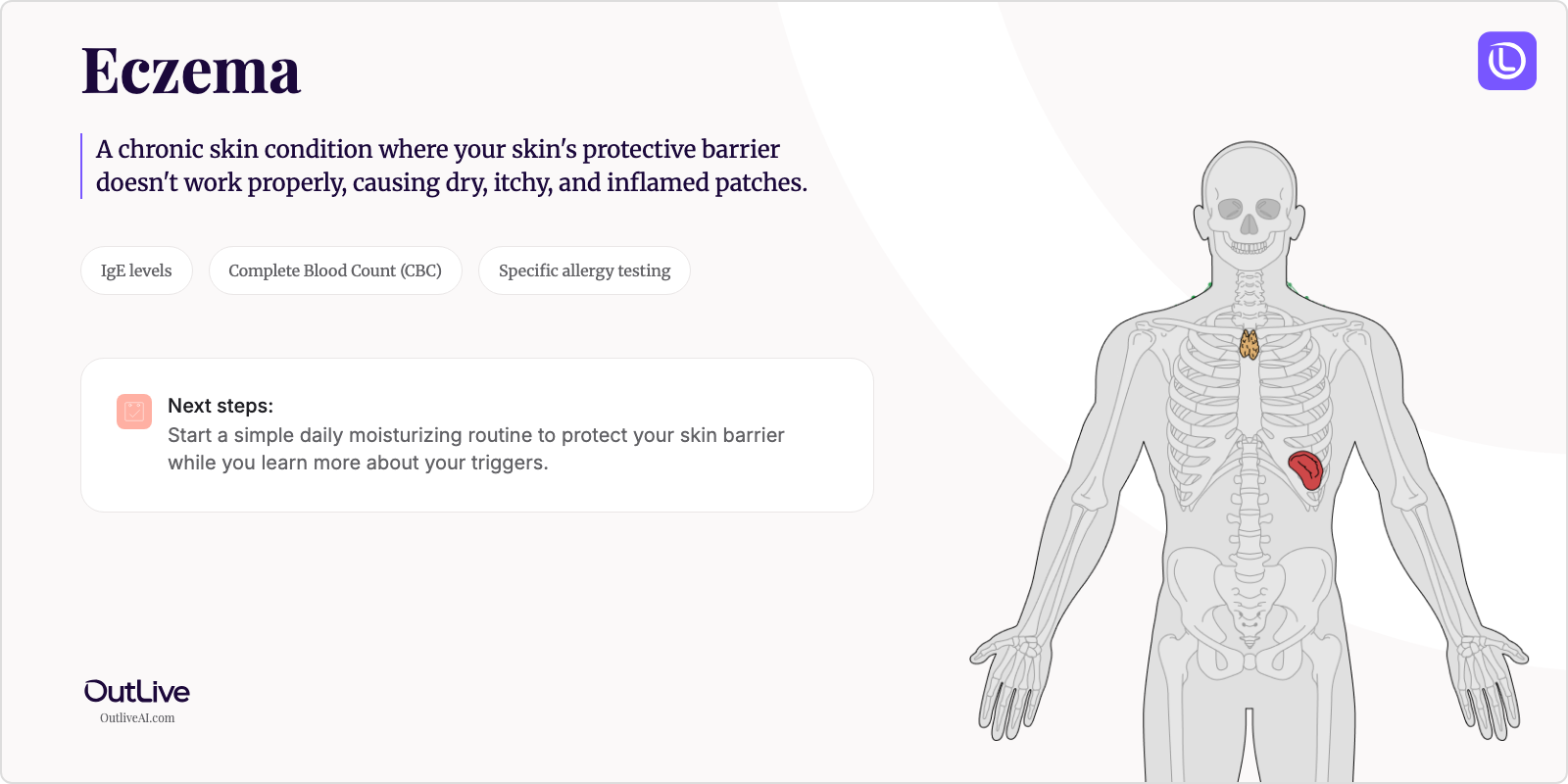
- What it is: A chronic skin condition where your skin's protective barrier doesn't work properly, causing dry, itchy, and inflamed patches.
- Key lab tests: IgE levels, Complete Blood Count (CBC), and specific allergy testing
- Your first goal: Start a simple daily moisturizing routine to protect your skin barrier while you learn more about your triggers.
Receiving a new diagnosis for Eczema can be overwhelming. You might be feeling anxious, confused, and unsure of what comes next. That's completely normal. This guide is here to help you understand your condition in simple terms, know which lab tests matter most, and feel prepared for your next steps.
First, Take a Breath: What is Eczema in Simple Terms?
Think of your skin like a brick wall that protects your body. In eczema, the "mortar" between those bricks isn't working properly – it's letting moisture escape and irritants get in. This causes your skin to become dry, itchy, and inflamed. The good news? While eczema is chronic (meaning it's long-term), it's very manageable. Most people with eczema live completely normal lives once they understand their triggers and find the right treatment routine. You're not alone in this – about 10% of people have eczema at some point in their lives, and there are more treatment options available today than ever before.
Understanding Your Diagnosis: The Key Lab Tests
This is the most important section. While eczema is primarily diagnosed by examining your skin, certain lab tests help your doctor understand what's happening inside your body and identify potential triggers.
Key Tests for Eczema:
- IgE (Immunoglobulin E): This blood test measures antibodies that your immune system produces in response to allergens – high levels often indicate allergic eczema and can help identify specific triggers.
- Complete Blood Count (CBC): This test checks for elevated eosinophils (a type of white blood cell), which can indicate allergic reactions or infections that might worsen your eczema.
- Specific IgE Testing (RAST): This panel tests for allergies to specific substances like foods, dust mites, or pet dander that might be triggering your eczema flare-ups.
Your First Specialist Appointment: What to Ask
What to Expect: You'll likely see a dermatologist – a doctor who specializes in skin conditions. They'll examine your skin closely, ask about your symptoms and family history, and may take photos to track your progress. The appointment usually lasts 20-30 minutes, and they'll create a personalized treatment plan based on your specific type and severity of eczema.
Questions to Ask Your Doctor:
- "What type of eczema do I have, and what are my specific triggers?"
- "Should I get allergy testing to identify potential food or environmental triggers?"
- "What's the difference between my daily maintenance routine and what I should do during a flare-up?"
- "How do I know if my skin is infected and needs antibiotics?"
- "Are there any lifestyle changes that could help reduce my flare-ups?"
Download our [Checklist of Questions to Ask Your Eczema Specialist](# to feel prepared.
How to Track Your Journey
Tracking your Eczema journey is crucial for understanding how your treatment is working and spotting important trends. Here's what you should monitor:
Symptoms to Track:
- Itch intensity (rate it 1-10 daily)
- Location and size of affected areas
- Sleep quality (eczema often disrupts sleep)
Lab Results to Monitor:
- IgE levels - Check every 6-12 months if you have allergic eczema
- CBC with eosinophils - Check during severe flares or if infection is suspected
- Vitamin D levels - Check annually (low levels can worsen eczema)
Why Tracking Matters: Tracking helps you identify patterns – maybe your eczema worsens after eating certain foods, during stressful periods, or when the weather changes. This information is gold for your doctor and helps them adjust your treatment plan. Many patients discover their triggers within 2-3 months of consistent tracking.
Next Steps After Your Diagnosis
Immediate Actions (This Week):
- Start a gentle, fragrance-free moisturizing routine twice daily (morning and night)
- Switch to fragrance-free, hypoallergenic laundry detergent and soap
- Take photos of your affected areas to track changes
Short-term Goals (Next Month):
- Establish a consistent skincare routine that works for you
- Identify and eliminate obvious triggers (common ones include harsh soaps, certain fabrics, stress)
- Join an eczema support group online or locally for tips and emotional support
Long-term Management:
- Work with your doctor to find the right combination of treatments (moisturizers, topical medications, and possibly systemic treatments)
- Develop strategies for managing stress, which often triggers flare-ups
- Create an "eczema action plan" for handling flare-ups quickly and effectively
Frequently Asked Questions
How quickly can I expect to feel better? With proper treatment, many people see improvement within 2-4 weeks. The itching often improves first, followed by the redness and scaling. Remember, eczema management is a marathon, not a sprint – finding what works best for you may take some time.
Will I need to change my diet? Not necessarily. Only about 30% of children and 10% of adults with eczema have food triggers. Your doctor may recommend an elimination diet or allergy testing if they suspect food allergies are contributing to your flares.
How often will I need to see my doctor? Initially, you'll likely have follow-ups every 4-6 weeks until your eczema is under control. Once stable, most people see their dermatologist every 3-6 months, or as needed for flare-ups.
Can I still exercise/work/travel? Absolutely! With proper management, eczema shouldn't limit your activities. Just remember to shower and moisturize after sweating, pack your medications when traveling, and communicate with your employer if you need accommodations.
When to Seek Immediate Medical Attention
Contact your doctor immediately if you experience:
- Signs of infection: yellow crusting, pus, red streaks, fever, or worsening pain
- Sudden, severe flare-up covering large areas of your body
- Eye complications: pain, vision changes, or severe swelling around the eyes
🔬 Ready to Organize Your Health Journey?
Understanding your condition is the first step. Our free Lab Analyzer tool helps you:
- Track all your lab results for Eczema in one place
- Spot important trends over time
- Generate personalized questions for your doctor
[Upload Your Lab Report for Free Analysis →]