
📋 At a Glance
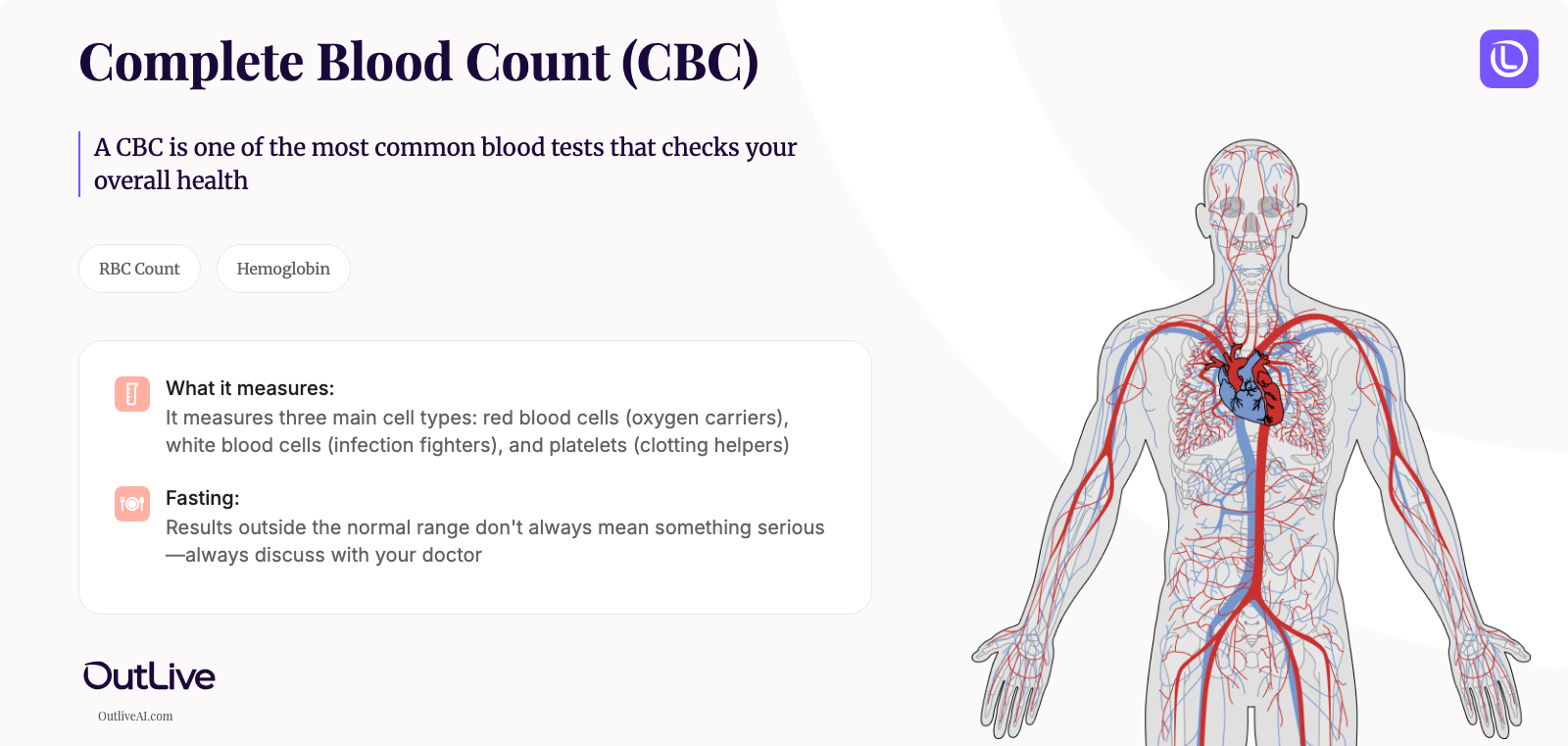
- A CBC is one of the most common blood tests that checks your overall health
- It measures three main cell types: red blood cells (oxygen carriers), white blood cells (infection fighters), and platelets (clotting helpers)
- Results outside the normal range don't always mean something serious—always discuss with your doctor
If you're reading this, you've likely just had a Complete Blood Count test—or CBC—and are looking at a report filled with numbers and abbreviations that might as well be in another language. Take a breath. You're in the right place. This guide will walk you through what a CBC test is, what all those numbers mean, and most importantly, what you should do next. Think of us as your translator—we're here to help you understand your results so you can have a more informed conversation with your healthcare provider.
Why Is a CBC Test Ordered?
Your doctor might order a CBC test for several reasons, and most of them are routine. Think of it as your body's basic health report card—it gives your healthcare provider a snapshot of what's happening inside.
The most common reasons include:
Routine check-ups: Just like checking your car's oil, a CBC is often part of your annual physical exam. It helps catch potential issues before they become problems.
Investigating symptoms: If you've been feeling unusually tired, weak, or have unexplained bruising, fever, or frequent infections, a CBC helps your doctor understand what might be causing these symptoms.
Monitoring existing conditions: If you have a known condition like anemia or are undergoing treatment like chemotherapy, regular CBCs help track how you're responding to treatment.
Pre-surgery screening: Before any surgery, doctors want to ensure your blood cells are at healthy levels to minimize risks.
Remember, needing a CBC doesn't mean something is wrong. It's often just your doctor being thorough.
How to Prepare for a CBC Test
Here's some good news: preparing for a CBC test is remarkably simple. Unlike some other blood tests, you typically don't need to fast beforehand. You can eat and drink normally unless your doctor specifically tells you otherwise (they might if you're having other tests done at the same time).
The process itself takes just a few minutes. A healthcare professional will clean a small area on your arm, insert a tiny needle to draw a small amount of blood (usually just one or two small tubes), and then bandage the site. You might feel a quick pinch, but most people find it's over before they know it.
After the test, you can go about your day normally. Some people might have slight bruising at the needle site, which is completely normal and will fade in a few days.
Understanding the Components of Your CBC Report
Now let's decode that report. Your CBC measures three main families of cells in your blood, each with an important job. Think of your bloodstream as a busy city, and these cells as different teams of workers keeping everything running smoothly.
What Do My Red Blood Cell (RBC) Results Mean?
Red blood cells are like delivery trucks carrying oxygen from your lungs to every part of your body. Your CBC measures several aspects of these cells:
RBC Count: This is simply how many red blood cells you have. Think of it as counting how many delivery trucks are on the road.
Hemoglobin (Hgb or Hb): This is the protein inside red blood cells that actually carries the oxygen—like the cargo space in those delivery trucks. This is often the number doctors pay closest attention to when checking for anemia.
Hematocrit (Hct): This tells you what percentage of your blood is made up of red blood cells. Imagine looking at a jar of blood—hematocrit is how much of that jar is filled with red cells versus liquid.
RBC Indices: These are calculations that describe the size and hemoglobin content of your red blood cells:
- MCV (Mean Corpuscular Volume): The average size of your red blood cells
- MCH (Mean Corpuscular Hemoglobin): The average amount of hemoglobin in each cell
- MCHC (Mean Corpuscular Hemoglobin Concentration): How concentrated the hemoglobin is in your cells
- RDW (Red Cell Distribution Width): How much your red blood cells vary in size
Here are the typical adult ranges, though they can vary slightly by lab:
| Component | Abbreviation | Male Range | Female Range |
|---|---|---|---|
| RBC Count | RBC | 4.7-6.1 M/mcL | 4.2-5.4 M/mcL |
| Hemoglobin | Hgb/Hb | 13.8-17.2 g/dL | 12.1-15.1 g/dL |
| Hematocrit | Hct | 41-50% | 36-44% |
| Mean Corpuscular Volume | MCV | 80-100 fL | 80-100 fL |
| Mean Corpuscular Hemoglobin | MCH | 27-33 pg | 27-33 pg |
| Mean Corpuscular Hemoglobin Concentration | MCHC | 32-36 g/dL | 32-36 g/dL |
| Red Cell Distribution Width | RDW | 11.5-14.5% | 11.5-14.5% |
What Do My White Blood Cell (WBC) Results Mean?
White blood cells are your body's defense force, like having different specialized teams of security guards. Your CBC measures:
WBC Count: The total number of white blood cells. This tells you how many defenders are on duty.
WBC Differential: This breaks down your white blood cells into five types, each with a special role:
- Neutrophils: Your first responders to bacterial infections
- Lymphocytes: Virus fighters and immune memory cells
- Monocytes: The cleanup crew that removes damaged cells
- Eosinophils: Allergy and parasite specialists
- Basophils: Involved in allergic reactions
Here are the typical adult ranges for white blood cells:
| Component | Abbreviation | Typical Adult Range |
|---|---|---|
| WBC Count | WBC | 4,500-11,000 cells/mcL |
| Neutrophils | Neut | 50-70% (2,500-8,000 cells/mcL) |
| Lymphocytes | Lymph | 20-40% (1,000-4,000 cells/mcL) |
| Monocytes | Mono | 2-8% (100-700 cells/mcL) |
| Eosinophils | Eos | 1-4% (50-500 cells/mcL) |
| Basophils | Baso | 0.5-1% (25-100 cells/mcL) |
What Do My Platelet Results Mean?
Platelets are like your body's emergency repair team. When you get a cut, they rush to the scene to form a clot and stop the bleeding.
Platelet Count: The number of platelets in your blood. Too few and you might bruise or bleed easily; too many could increase clotting risk.
MPV (Mean Platelet Volume): The average size of your platelets. Younger, larger platelets are often more active.
Here are the typical adult ranges for platelets:
| Component | Abbreviation | Typical Adult Range |
|---|---|---|
| Platelet Count | PLT | 150,000-400,000 platelets/mcL |
| Mean Platelet Volume | MPV | 7.5-11.5 fL |
What Do Abnormal Results Mean? (A High-Level Guide)
Seeing results outside the "normal" range can be anxiety-inducing, but remember: abnormal doesn't always mean serious. Many factors can affect your results, including dehydration, recent illness, medications, or even the time of day the test was taken.
Here are some general patterns your doctor might investigate:
Low red blood cells, hemoglobin, or hematocrit might suggest:
- Anemia (from iron deficiency, vitamin deficiency, or chronic disease)
- Recent blood loss
- Certain medications
High red blood cells, hemoglobin, or hematocrit might suggest:
- Dehydration
- Living at high altitude
- Certain lung or heart conditions
- Smoking
Low white blood cell count might suggest:
- Viral infections
- Certain medications (especially chemotherapy)
- Autoimmune conditions
High white blood cell count might suggest:
- Bacterial infections
- Inflammation
- Stress or smoking
- Certain medications (like steroids)
Low platelet count might suggest:
- Certain medications
- Autoimmune conditions
- Viral infections
High platelet count might suggest:
- Inflammation
- Iron deficiency
- Recent surgery or trauma
Important disclaimer: This list is not exhaustive, and many conditions can cause similar changes. Only your healthcare provider can interpret your results in the context of your symptoms, medical history, and other tests. Never try to diagnose yourself based on CBC results alone.
Next Steps After Your CBC Test
So you've read through your results—what now? Here's your action plan:
1. Schedule a follow-up with your doctor: Even if your results look normal to you, discuss them with your healthcare provider. They can explain what the numbers mean for your specific situation.
2. Prepare your questions: Not sure what to ask? We've created a helpful checklist of questions to bring to your appointment. [Download our CBC Doctor Questions Checklist](# to make sure you cover everything important.
3. Keep track of your results: Save a copy of your CBC report. If you have regular CBCs done, tracking changes over time can be more informative than a single test.
4. Don't panic about mild abnormalities: Many people have results slightly outside the normal range and are perfectly healthy. Your doctor will let you know if anything needs attention.
5. Follow your doctor's recommendations: If your doctor suggests lifestyle changes, additional tests, or treatment, make sure you understand the plan and follow through.
🔬 Ready to Translate Your Full Report?
Understanding your CBC is just the beginning. Our free Lab Analyzer tool helps you:
- Track all your lab results in one place
- Spot important trends over time
- Generate personalized questions for your doctor
- Get plain-English explanations of every test
[Upload Your Lab Report for Free Analysis →]
Join 50,000+ people taking control of their health journey
Remember, knowledge is power when it comes to your health. Understanding your CBC results is an important step in taking an active role in your healthcare journey. You've already taken the first step by educating yourself—now use that knowledge to have better, more productive conversations with your healthcare provider.