
📋 At a Glance
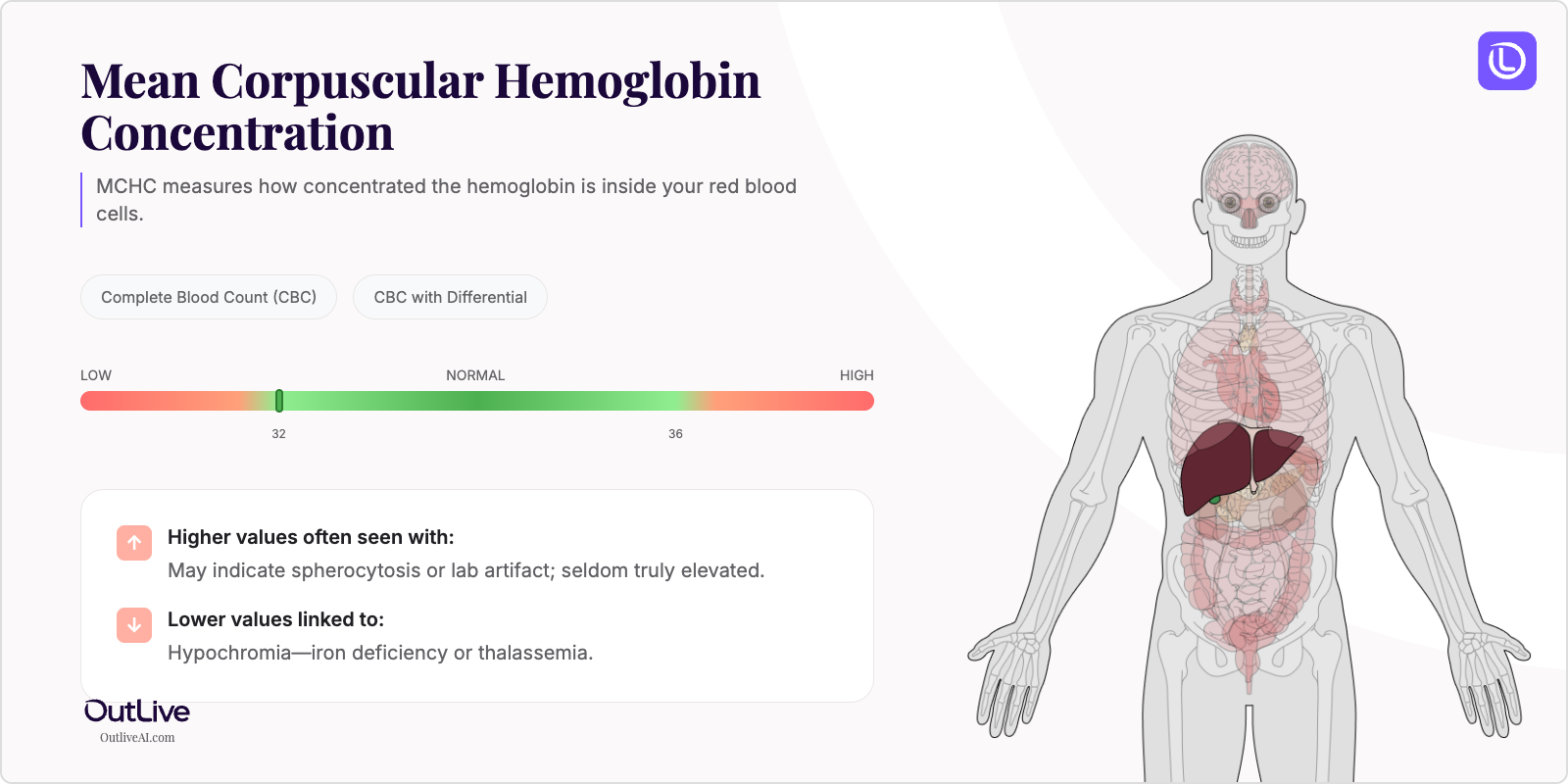
- What it is: MCHC measures how concentrated the hemoglobin is inside your red blood cells.
- Found in tests: Complete Blood Count (CBC), CBC with Differential
- Normal range: 32-36 g/dL (grams per deciliter)
If you're looking at your lab results and wondering what MCHC means, you're in the right place. Think of MCHC as a quality control measure for your red blood cells – it tells us how well-packed with hemoglobin each cell is, like checking if a suitcase is properly packed or just has clothes thrown in haphazardly. Let's break down what your numbers mean in plain English.
Why Is MCHC Tested?
Your doctor orders an MCHC test as part of a Complete Blood Count (CBC), one of the most common blood tests performed. It's like getting a full inspection of your blood's delivery system. This test is routinely included in annual check-ups, pre-surgery evaluations, and when you're experiencing symptoms like fatigue, weakness, or shortness of breath.
The MCHC specifically helps your doctor understand not just how many red blood cells you have, but how effective they are at their job. When you're feeling unusually tired, dizzy, or weak, your doctor wants to know if your red blood cells are properly equipped with hemoglobin – the protein that carries oxygen throughout your body. The MCHC gives us this crucial information.
This measurement is particularly valuable for diagnosing and monitoring different types of anemia, tracking how well treatments are working, and identifying certain genetic blood conditions. It's one piece of a larger puzzle that helps your healthcare team understand what's happening inside your bloodstream.
What Does MCHC Do in Your Body?
MCHC doesn't actually "do" anything in your body – it's a calculated measurement that tells us about the concentration of hemoglobin within your red blood cells. Hemoglobin is the iron-rich protein that gives blood its red color and, more importantly, carries oxygen from your lungs to every cell in your body. Think of hemoglobin as tiny oxygen delivery trucks, and MCHC tells us how many trucks are packed into each red blood cell garage.
Your bone marrow produces red blood cells, and during this process, it loads them with the right amount of hemoglobin. When everything's working properly, each red blood cell contains about 32-36% hemoglobin by weight. This concentration is crucial because too little hemoglobin means your cells aren't getting enough oxygen, while too much can make your blood cells rigid and less able to squeeze through tiny blood vessels.
The MCHC works alongside other measurements like MCV (cell size) and MCH (hemoglobin amount per cell) to give your doctor a complete picture of your red blood cells' health. Together, these values help identify not just if there's a problem, but what type of problem it might be.
What Do My MCHC Results Mean?
Normal MCHC Ranges
| Population | Normal Range | Optimal Range |
|---|---|---|
| Adult Male | 32-36 g/dL | 33-35 g/dL |
| Adult Female | 32-36 g/dL | 33-35 g/dL |
| Children (6-12 years) | 31-37 g/dL | 33-35 g/dL |
| Pregnancy | 31-36 g/dL | 32-35 g/dL |
Note: Reference ranges may vary slightly between laboratories. Always compare your results to the range provided on your specific lab report.
What Does High MCHC Mean?
Common Causes:
- Hereditary spherocytosis (a genetic condition affecting red blood cell shape)
- Autoimmune hemolytic anemia (your immune system attacks red blood cells)
- Severe burns (concentrates the blood temporarily)
- Certain medications like chemotherapy drugs
- Laboratory error or old blood sample
- Sickle cell disease in some cases
- Severe dehydration (temporarily concentrates hemoglobin)
Possible Symptoms:
- Fatigue and weakness
- Jaundice (yellowing of skin and eyes)
- Dark-colored urine
- Enlarged spleen
- Shortness of breath
- Rapid heartbeat
When to Be Concerned: High MCHC levels above 37 g/dL are relatively uncommon and usually indicate your red blood cells are unusually concentrated with hemoglobin. If your MCHC is consistently elevated along with symptoms like severe fatigue, jaundice, or abdominal pain, contact your healthcare provider promptly. These could indicate your red blood cells are breaking down faster than normal.
What Does Low MCHC Mean?
Common Causes:
- Iron deficiency anemia (most common cause)
- Thalassemia (genetic blood disorder)
- Chronic blood loss (heavy periods, internal bleeding)
- Lead poisoning
- Vitamin B6 deficiency
- Chronic kidney disease
- Certain chronic inflammatory conditions
Possible Symptoms:
- Extreme tiredness and weakness
- Pale skin, nail beds, or gums
- Frequent infections
- Brittle nails
- Cold hands and feet
- Difficulty concentrating
- Headaches and dizziness
When to Be Concerned: MCHC levels below 30 g/dL typically indicate hypochromic anemia, meaning your red blood cells are pale and lacking adequate hemoglobin. If you're experiencing severe fatigue, chest pain, rapid heartbeat, or shortness of breath with minimal exertion, seek medical attention. These symptoms suggest your body isn't getting enough oxygen.
What Can Affect My MCHC Levels?
Factors That May Increase Levels:
- Medications: Chemotherapy drugs, certain antibiotics, methyldopa
- Lifestyle: Severe dehydration, living at high altitudes
- Conditions: Recent blood transfusion, severe burns, smoking
- Supplements: Excessive vitamin B12 supplementation (rare)
Factors That May Decrease Levels:
- Medications: Aspirin (with chronic use), certain antibiotics, anti-seizure medications
- Lifestyle: Poor dietary iron intake, vegetarian/vegan diet without proper supplementation
- Conditions: Heavy menstrual periods, pregnancy, frequent blood donation
- Time of Day: Slight variations throughout the day (minimal effect)
How Is MCHC Related to Other Tests?
MCHC is calculated using two other measurements from your CBC: hemoglobin and hematocrit. It's always evaluated alongside other red blood cell indices to get the full picture.
Often tested alongside: MCV (mean corpuscular volume), MCH (mean corpuscular hemoglobin), RDW (red cell distribution width), hemoglobin, hematocrit Part of: Complete Blood Count (CBC) Ratio calculations: MCHC = (Hemoglobin ÷ Hematocrit) × 100 Follow-up tests: Iron studies, ferritin, vitamin B12, folate, reticulocyte count, hemoglobin electrophoresis
Frequently Asked Questions
How often should MCHC be tested? For healthy adults, MCHC is typically checked during annual physicals as part of a CBC. If you have anemia or a blood disorder, your doctor may monitor it every 3-6 months or more frequently during treatment.
Can I improve my MCHC levels naturally? If your MCHC is low due to iron deficiency, eating iron-rich foods (red meat, spinach, beans) along with vitamin C sources can help. For other causes, treatment depends on the underlying condition. Always consult your doctor before making significant dietary changes.
Should I fast before an MCHC test? No fasting is required for an MCHC test or CBC. You can eat and drink normally before your blood draw.
How quickly can MCHC levels change? MCHC changes relatively slowly compared to other blood values. With proper treatment for iron deficiency, you might see improvements in 2-3 months. Red blood cells live about 120 days, so complete normalization can take several months.
Next Steps After Your MCHC Test
Questions to Ask Your Doctor:
- What do my MCHC results mean for my overall health?
- Are my levels related to my symptoms?
- Do I need additional testing?
- Should we monitor this over time?
- Are there lifestyle changes that could help?
Download our MCHC Doctor Questions Checklist
🔬 Ready to Track Your MCHC Over Time?
Understanding a single MCHC result is just the beginning. Our free Lab Analyzer tool helps you:
- Track how your MCHC changes over time
- See how it relates to your other lab values
- Identify patterns your doctor might miss
- Get personalized insights based on your trends
[Upload Your Lab Report for Free Analysis →]