
📋 At a Glance
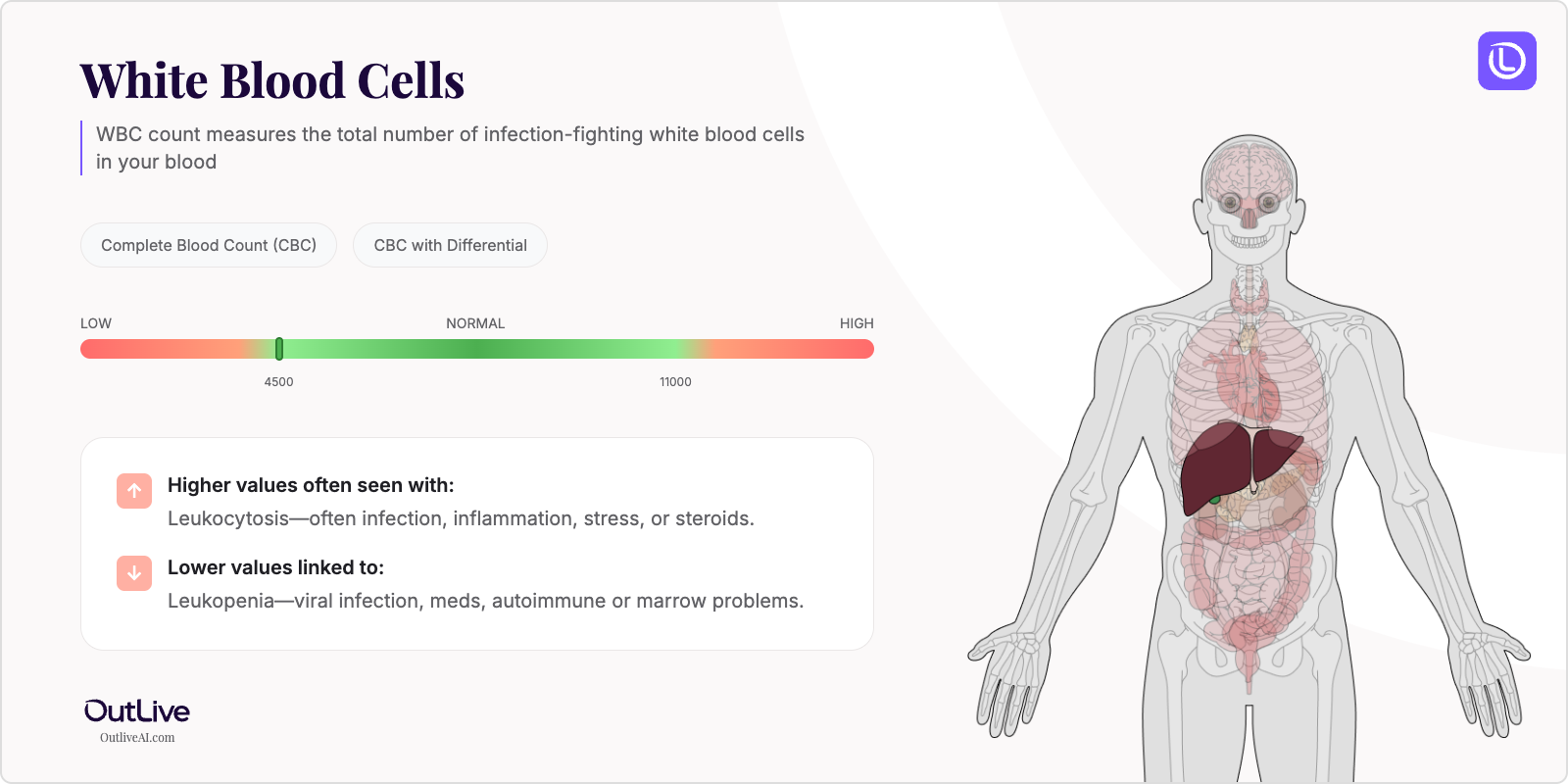
- What it is: WBC count measures the total number of infection-fighting white blood cells in your blood
- Found in tests: Complete Blood Count (CBC), CBC with Differential
- Normal range: 4,500-11,000 cells/mcL (may vary slightly by lab)
If you're looking at your lab results and wondering what your WBC or white blood cell count means, you're in the right place. Think of white blood cells as your body's security force—they patrol your bloodstream 24/7, ready to fight off infections and foreign invaders. When your WBC count is too high or too low, it's like having too many or too few security guards on duty. Let's break down what your numbers mean in plain English.
Why Is White Blood Cell Count Tested?
Your doctor orders a WBC count as part of a Complete Blood Count (CBC), one of the most common blood tests. It's like taking attendance of your immune system's workforce to see if you have the right number of defenders on duty.
WBC testing helps doctors investigate unexplained symptoms like fever, fatigue, weakness, or body aches that might indicate infection or other conditions. It's routinely included in annual check-ups to catch problems early, before symptoms appear. If you're undergoing chemotherapy or taking medications that affect your immune system, regular WBC monitoring ensures your treatment isn't leaving you vulnerable to infections.
The test is also crucial when diagnosing infections—bacterial infections typically cause WBC to rise, while some viral infections can lower it. Beyond infections, WBC counts help identify blood disorders like leukemia, monitor inflammatory conditions, and assess your overall immune system health. Before surgery, doctors check your WBC to ensure your body can handle the procedure and heal properly.
What Does White Blood Cell Count Do in Your Body?
White blood cells are your immune system's soldiers, produced in your bone marrow and released into your bloodstream to protect against threats. Unlike red blood cells that simply transport oxygen, white blood cells actively seek and destroy harmful invaders like bacteria, viruses, and even cancer cells.
Your body maintains a delicate balance of white blood cells—enough to protect you, but not so many that they cause problems. When you get an infection, your bone marrow quickly produces more WBCs, like calling in reinforcements during battle. This is why your WBC count rises when you're sick. Conversely, certain conditions can suppress your bone marrow's ability to make white blood cells, leaving you vulnerable to infections.
There are actually five different types of white blood cells—neutrophils, lymphocytes, monocytes, eosinophils, and basophils—each with specialized roles. Your total WBC count includes all of these types combined. Think of it as counting all security personnel regardless of their specific job. A CBC with differential breaks down these individual cell types, providing more detailed information about what's happening in your immune system.
What Do My WBC Results Mean?
Normal WBC Ranges
White blood cell counts vary by age and can differ slightly between laboratories. Here are the typical ranges:
| Population | Normal Range | Critical Values |
|---|---|---|
| Adults | 4,500-11,000 cells/mcL | \ <2,000 or \ >30,000 cells/mcL |
| Children (2-6 years) | 5,000-15,000 cells/mcL | Varies by age |
| Newborns | 9,000-30,000 cells/mcL | Varies by hours after birth |
| Pregnancy | 6,000-17,000 cells/mcL | Higher is normal |
Note: Reference ranges may vary slightly between laboratories. Always compare your results to the range provided on your specific lab report.
What Does High WBC (Leukocytosis) Mean?
When your WBC count exceeds 11,000 cells/mcL, it's called leukocytosis. This is your body's alarm bell signaling that something needs attention.
Common Causes:
- Bacterial infections - Your body's most common reason for raising WBC
- Inflammation - From conditions like rheumatoid arthritis or inflammatory bowel disease
- Medications - Especially corticosteroids, lithium, and some antibiotics
- Stress or trauma - Physical or emotional stress temporarily raises WBC
- Smoking - Chronic smoking maintains elevated WBC levels
- Allergic reactions - Severe allergies trigger white blood cell production
- Leukemia or lymphoma - Blood cancers cause abnormal WBC production
Possible Symptoms:
- Fever and chills
- Body aches and fatigue
- Night sweats
- Unexpected weight loss
- Enlarged lymph nodes
- Frequent infections (if WBCs aren't functioning properly)
When to Be Concerned: WBC counts above 30,000 cells/mcL require immediate medical attention as they may indicate leukemia or severe infection. Persistent elevation without obvious cause also needs investigation. If you have high WBC with fever, severe pain, or difficulty breathing, seek urgent care.
What Does Low WBC (Leukopenia) Mean?
When your WBC count falls below 4,500 cells/mcL, it's called leukopenia. This leaves you with fewer defenders against infection.
Common Causes:
- Viral infections - Including influenza, HIV, and hepatitis
- Chemotherapy or radiation - Cancer treatments often suppress bone marrow
- Autoimmune disorders - Like lupus where your body attacks its own cells
- Bone marrow disorders - Including aplastic anemia or myelodysplastic syndromes
- Medications - Certain antibiotics, antipsychotics, and immunosuppressants
- Nutritional deficiencies - Severe deficiency in vitamin B12, folate, or copper
- Overwhelming infections (sepsis) - Severe infections can deplete WBC reserves
Possible Symptoms:
- Frequent or unusual infections
- Infections that won't heal
- Fever without obvious cause
- Mouth sores
- Skin abscesses
- Fatigue and weakness
When to Be Concerned: WBC counts below 2,000 cells/mcL significantly increase infection risk. Below 1,000 cells/mcL is a medical emergency requiring protective isolation. If you have low WBC with fever over 100.4°F, seek immediate medical care as infections can progress rapidly.
What Can Affect My WBC Levels?
Factors That May Increase Levels:
- Medications: Corticosteroids, lithium, beta-agonists, antibiotics
- Lifestyle: Smoking, extreme physical stress, obesity
- Conditions: Recent surgery, burns, heart attack, pregnancy
- Supplements: High-dose vitamin B12 or folate (in deficient individuals)
- Time of day: WBC slightly higher in afternoon/evening
Factors That May Decrease Levels:
- Medications: Chemotherapy, antibiotics (some), antithyroid drugs, anticonvulsants
- Lifestyle: Alcohol abuse, malnutrition, extreme athletic training
- Conditions: Recent viral illness, enlarged spleen, liver disease
- Age: Elderly may have slightly lower counts
- Ethnicity: Some individuals of African or Middle Eastern descent naturally have lower WBC (benign ethnic neutropenia)
How Is WBC Related to Other Tests?
Your WBC count is part of a larger picture of your health and is rarely interpreted alone.
Often tested alongside:
- WBC Differential - Breaks down the five types of white blood cells (neutrophils, lymphocytes, monocytes, eosinophils, basophils)
- Red Blood Cell Count - Low RBC with high WBC might indicate leukemia
- Platelet Count - Often affected together in blood disorders
- C-Reactive Protein (CRP) - Confirms inflammation when WBC is elevated
Part of these test panels:
- Complete Blood Count (CBC) - Always includes WBC
- Pre-surgical panels - Ensures safe healing ability
- Infection workups - Combined with cultures and other markers
Follow-up tests if abnormal:
- Blood smear examination - Visual inspection of white blood cells
- Flow cytometry - Detailed analysis for leukemia/lymphoma
- Bone marrow biopsy - If blood cancer suspected
- Blood cultures - If infection suspected
Frequently Asked Questions
How often should WBC be tested?
For healthy adults, annual testing during routine check-ups is sufficient. If you have conditions affecting your immune system or take medications that impact WBC, your doctor may recommend testing every 3-6 months or more frequently.
Can I improve my WBC levels naturally?
If your WBC is low due to nutritional deficiencies, improving your diet with adequate protein, vitamins (especially B12 and folate), and minerals can help. Regular moderate exercise, adequate sleep, and stress management support healthy immune function. However, medical causes require proper treatment.
Should I fast before a WBC test?
No fasting is required for a WBC count. You can eat and drink normally before the test. However, if other tests requiring fasting are ordered alongside your CBC, follow those fasting instructions.
How quickly can WBC levels change?
WBC can change within hours during acute infection or stress. Bacterial infections can double or triple your count within 6-12 hours. After treatment, levels typically normalize within days to weeks depending on the cause.
Is WBC the same as immune system strength?
Not exactly. WBC count tells you how many white blood cells you have, not how well they function. You can have a normal count with poorly functioning cells, or a slightly low count with highly effective cells. The differential and clinical context provide more complete information.
Next Steps After Your WBC Test
Questions to Ask Your Doctor:
- What do my WBC results mean in context with my symptoms?
- Do I need a differential count to see which types of white cells are affected?
- Are my medications affecting my WBC count?
- How often should I recheck my WBC levels?
- Are there lifestyle changes that could help normalize my count?
- Do I need to take precautions against infection?
[Download our WBC Doctor Questions Checklist](#
🔬 Ready to Track Your WBC Over Time?
Understanding a single WBC result is just the beginning. Our free Lab Analyzer tool helps you:
- Track how your WBC changes over time
- See how it relates to your other immune markers
- Identify patterns your doctor might miss
- Get personalized insights based on your trends
[Upload Your Lab Report for Free Analysis →]
Remember, your WBC count is just one piece of your health puzzle. While abnormal results can be concerning, many causes are easily treatable. Always discuss your results with your healthcare provider who can interpret them in context with your symptoms, medical history, and other test results. Your white blood cells work hard to protect you—understanding your count helps ensure they can do their job effectively.