
📋 At a Glance
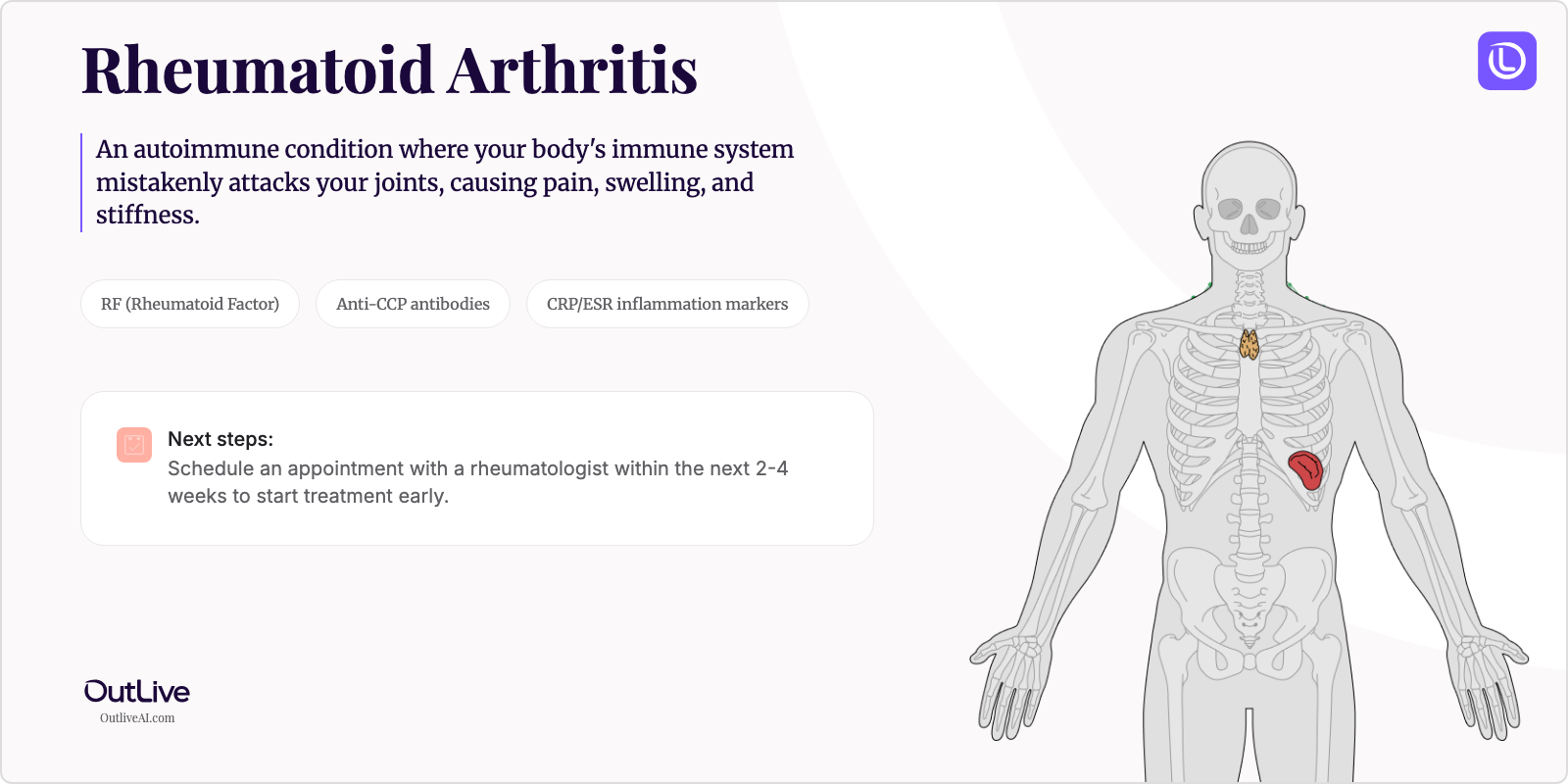
- What it is: An autoimmune condition where your body's immune system mistakenly attacks your joints, causing pain, swelling, and stiffness.
- Key lab tests: RF (Rheumatoid Factor), Anti-CCP antibodies, CRP/ESR inflammation markers
- Your first goal: Schedule an appointment with a rheumatologist within the next 2-4 weeks to start treatment early.
Receiving a new diagnosis for Rheumatoid Arthritis can be overwhelming. You might be feeling anxious, confused, and unsure of what comes next. That's completely normal. This guide is here to help you understand your condition in simple terms, know which lab tests matter most, and feel prepared for your next steps.
First, Take a Breath: What is Rheumatoid Arthritis in Simple Terms?
Think of your immune system as your body's security team. Normally, this team protects you from invaders like viruses and bacteria. But with rheumatoid arthritis (RA), your security team gets confused and starts attacking your own joints by mistake—like friendly fire. This causes inflammation (swelling and warmth), pain, and stiffness, especially in smaller joints like your hands and feet. The good news? We have excellent treatments today that can slow or even stop this process, especially when we catch it early like we have with you.
Understanding Your Diagnosis: The Key Lab Tests
This is the most important section. These are the blood tests your doctor used to diagnose your RA and will continue monitoring to see how well your treatment is working:
Key Tests for Rheumatoid Arthritis:
- Rheumatoid Factor (RF): This antibody is like a "mistaken identity badge" your immune system creates—about 70% of people with RA test positive for it.
- Anti-CCP Antibodies: These are even more specific markers for RA that can appear years before symptoms start—think of them as early warning signals.
- C-Reactive Protein (CRP): This measures overall inflammation in your body—like a thermometer for inflammation that helps track how active your RA is.
- Erythrocyte Sedimentation Rate (ESR): Another inflammation marker that shows how quickly red blood cells settle in a test tube—faster settling means more inflammation.
Your First Specialist Appointment: What to Ask
What to Expect: You'll be seeing a rheumatologist—a doctor who specializes in autoimmune conditions affecting joints and connective tissues. Think of them as your RA quarterback, coordinating your treatment plan. They'll examine your joints, review your lab work, possibly order X-rays, and discuss treatment options. The appointment typically lasts 45-60 minutes for your first visit.
Questions to Ask Your Doctor:
- "How aggressive is my RA based on my test results, and what does that mean for my treatment plan?"
- "What medication do you recommend starting with, and what are the benefits versus side effects?"
- "How quickly should I expect to see improvement once treatment starts?"
- "Are there any lifestyle changes I should make immediately to help manage my symptoms?"
- "How often will we monitor my lab work and adjust treatment if needed?"
Download our [Checklist of Questions to Ask Your Rheumatoid Arthritis Specialist](# to feel prepared.
How to Track Your Journey
Tracking your Rheumatoid Arthritis journey is crucial for understanding how your treatment is working and spotting important trends. Here's what you should monitor:
Symptoms to Track:
- Morning stiffness duration (how long it takes to "loosen up" after waking)
- Joint pain levels (rate 1-10 daily for affected joints)
- Fatigue levels and energy patterns throughout the day
- Any new joint involvement or swelling
Lab Results to Monitor:
- CRP and ESR levels - Check every 3-6 months to track inflammation
- RF and Anti-CCP - Usually checked annually unless treatment changes
- Complete Blood Count (CBC) - Every 3 months if on certain medications
Why Tracking Matters: Your RA can change over time, and treatments that work initially may need adjusting. By tracking trends in your symptoms and lab results, you and your doctor can catch flares early, adjust medications proactively, and celebrate improvements that might otherwise go unnoticed.
Next Steps After Your Diagnosis
Immediate Actions (This Week):
- Schedule your rheumatologist appointment if not already done
- Start a symptom diary noting morning stiffness, pain levels, and affected joints
- Gather all your medical records and lab results in one place
Short-term Goals (Next Month):
- Begin your prescribed treatment plan and set medication reminders
- Learn gentle joint protection techniques and exercises from a physical therapist
- Connect with an RA support group (online or in-person) for emotional support
Long-term Management:
- Establish a routine for regular lab monitoring and doctor visits
- Work with your healthcare team to find the medication combination that works best for you
- Develop a sustainable exercise routine that protects your joints while keeping you active
Frequently Asked Questions
How quickly can I expect to feel better? Most people start noticing improvement within 4-12 weeks of starting treatment, though finding the perfect medication combination can take 3-6 months. Early, aggressive treatment leads to better long-term outcomes.
Will I need to change my diet? While no specific diet cures RA, many patients find that an anti-inflammatory diet (Mediterranean-style with fish, vegetables, and whole grains) helps reduce symptoms. Some people identify trigger foods through an elimination diet.
How often will I need to see my doctor? Initially, expect visits every 1-3 months as you establish treatment. Once stable, most patients see their rheumatologist every 3-6 months, with lab work done before each visit.
Can I still exercise/work/travel? Absolutely! With proper treatment, most people with RA maintain active lifestyles. Low-impact exercises like swimming, yoga, and walking are excellent. Many continue working with minor accommodations, and travel is certainly possible with planning.
When to Seek Immediate Medical Attention
Contact your doctor immediately if you experience:
- Sudden, severe joint pain or swelling that's different from your usual symptoms
- Signs of infection (fever, chills, red/hot joints) especially if on immune-suppressing medications
- Chest pain or difficulty breathing (rare but serious RA complications)
- Vision changes or severe headaches (possible medication side effects)
🔬 Ready to Organize Your Health Journey?
Understanding your condition is the first step. Our free Lab Analyzer tool helps you:
- Track all your lab results for Rheumatoid Arthritis in one place
- Spot important trends over time
- Generate personalized questions for your doctor
[Upload Your Lab Report for Free Analysis →]