
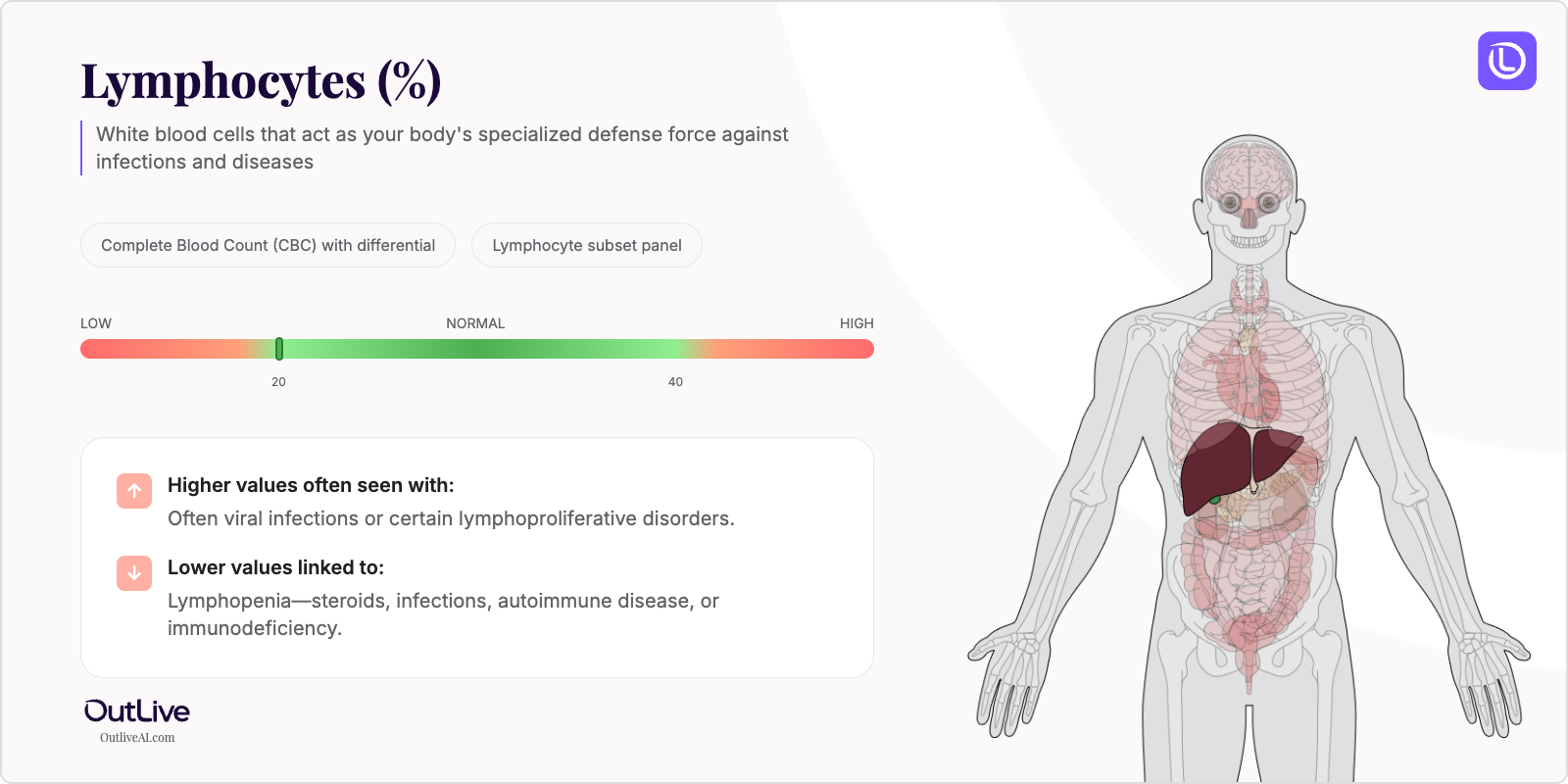
📋 At a Glance
- What it is: White blood cells that act as your body's specialized defense force against infections and diseases
- Found in tests: Complete Blood Count (CBC) with differential, Lymphocyte subset panel
- Normal range: 1,000-4,800 cells per microliter (20-40% of total white blood cells)
If you're looking at your lab results and wondering what lymphocytes means, you're in the right place. Think of lymphocytes as your body's elite security team – they're specialized white blood cells that remember past invaders and coordinate targeted attacks against viruses, bacteria, and even cancer cells. Let's break down what your numbers mean in plain English, so you can walk into your next doctor's appointment feeling informed and confident.
Why Is Lymphocytes Tested?
Your doctor orders a lymphocyte count as part of your Complete Blood Count (CBC), one of the most common blood tests performed during routine check-ups or when you're feeling unwell. This test gives us a window into how well your immune system is functioning and whether your body might be fighting an infection or dealing with another health challenge.
Doctors specifically look at lymphocyte levels when you have symptoms like persistent fatigue, frequent infections, unexplained fever, swollen lymph nodes, or night sweats. The test helps distinguish between viral and bacterial infections – viral infections typically cause lymphocyte levels to rise, while bacterial infections often increase other types of white blood cells instead.
Beyond infection detection, lymphocyte counts are crucial for monitoring immune system disorders, evaluating how well cancer treatments are working, and checking if certain medications are affecting your immune system. If you have a chronic condition like HIV, autoimmune disease, or are receiving chemotherapy, your doctor will monitor these levels regularly to ensure your body maintains adequate immune protection.
What Does Lymphocytes Do in Your Body?
Lymphocytes are like having three different specialized security teams working together in your body. B-lymphocytes (B-cells) produce antibodies – think of them as creating "wanted posters" for specific invaders. T-lymphocytes (T-cells) are the direct attackers that destroy infected cells and coordinate the immune response. Natural killer (NK) cells patrol your body looking for abnormal cells, including cancer cells, destroying them before they can cause harm.
These cells circulate through your bloodstream and lymphatic system, constantly surveying for threats. When they encounter something foreign, they spring into action, multiplying rapidly to mount a defense. What's remarkable is their memory – once lymphocytes encounter a specific threat, they remember it, allowing your body to respond faster and more effectively if that same invader returns. This is why vaccines work and why you typically only get chickenpox once.
Your bone marrow and thymus gland produce lymphocytes, which then mature and take up residence in your lymph nodes, spleen, and other lymphoid tissues throughout your body. The right balance is crucial – too few leaves you vulnerable to infections, while too many might indicate your body is fighting something or, in rare cases, could signal a blood disorder.
What Do My Lymphocytes Results Mean?
Normal Lymphocytes Ranges
| Population | Normal Range | Optimal Range |
|---|---|---|
| Adult Male | 1,000-4,800 cells/µL (20-40% of WBC) | 1,500-3,500 cells/µL |
| Adult Female | 1,000-4,800 cells/µL (20-40% of WBC) | 1,500-3,500 cells/µL |
| Children (2-6 years) | 3,000-9,500 cells/µL (20-50% of WBC) | 4,000-7,000 cells/µL |
| Infants (6 months-2 years) | 6,000-9,000 cells/µL (45-75% of WBC) | 6,500-8,500 cells/µL |
| Pregnancy | 1,000-3,900 cells/µL (18-44% of WBC) | 1,200-3,200 cells/µL |
Note: Reference ranges may vary slightly between laboratories. Always compare your results to the range provided on your specific lab report.
What Does High Lymphocytes Mean?
Common Causes:
- Viral infections - Most common cause, including flu, COVID-19, mononucleosis, hepatitis
- Chronic lymphocytic leukemia (CLL) - A type of blood cancer that develops slowly
- Other blood cancers - Including lymphomas and acute lymphocytic leukemia
- Whooping cough (pertussis) - Bacterial infection causing severe coughing
- Stress response - Physical or emotional stress can temporarily elevate levels
- Smoking - Can cause persistent mild elevation
- Autoimmune disorders - Conditions where your immune system attacks healthy tissue
Possible Symptoms:
- Swollen lymph nodes (neck, armpits, groin)
- Persistent fatigue or weakness
- Fever and night sweats
- Unexplained weight loss
- Frequent infections
- Easy bruising or bleeding
When to Be Concerned: If your lymphocyte count is above 5,000 cells/µL in adults, your doctor will likely want to investigate further. Extremely high levels (above 10,000) require prompt medical evaluation. However, remember that most cases of elevated lymphocytes are due to common viral infections and resolve on their own. Your doctor will consider your symptoms, medical history, and other lab values to determine if additional testing is needed.
What Does Low Lymphocytes Mean?
Common Causes:
- Recent viral infection - Your body may temporarily deplete lymphocytes fighting infection
- HIV/AIDS - Directly attacks and destroys T-lymphocytes
- Autoimmune disorders - Such as lupus or rheumatoid arthritis
- Corticosteroid medications - Prednisone and similar drugs suppress lymphocyte production
- Chemotherapy or radiation - Cancer treatments can temporarily lower counts
- Severe stress or malnutrition - Physical stress or poor nutrition affects immune function
- Inherited immune disorders - Rare genetic conditions affecting lymphocyte production
Possible Symptoms:
- Frequent or unusual infections
- Infections that won't go away
- Slow wound healing
- Persistent fatigue
- Skin rashes or disorders
- Joint pain or swelling
When to Be Concerned: A lymphocyte count below 1,000 cells/µL in adults (called lymphocytopenia) increases your infection risk. Levels below 500 are considered severe and require immediate medical attention. Your doctor may recommend preventive antibiotics or other protective measures if your counts remain low.
What Can Affect My Lymphocytes Levels?
Factors That May Increase Levels:
- Medications: Certain antibiotics, anti-seizure drugs, and allopurinol (gout medication)
- Lifestyle: Recent vaccination, smoking, chronic stress
- Conditions: Recent viral illness, allergic reactions, inflammatory bowel disease
- Supplements: Excessive zinc supplementation, some herbal immune boosters
Factors That May Decrease Levels:
- Medications: Steroids (prednisone), chemotherapy drugs, immunosuppressants
- Lifestyle: Extreme physical stress, alcohol abuse, severe dieting
- Conditions: Recent surgery, severe burns, kidney disease
- Time of Day: Levels can be slightly lower in the morning
How Is Lymphocytes Related to Other Tests?
Lymphocytes are always evaluated as part of your complete white blood cell picture. Your doctor looks at the total white blood cell count and the percentage each type represents (called the differential). The neutrophil-to-lymphocyte ratio can indicate inflammation or stress on your immune system.
Often tested alongside: Neutrophils, monocytes, eosinophils, basophils Part of: Complete Blood Count (CBC) Ratio calculations: Neutrophil-to-lymphocyte ratio (NLR), CD4/CD8 ratio in HIV monitoring Follow-up tests: Flow cytometry for lymphocyte subsets, immunoglobulin levels, HIV testing if indicated
Frequently Asked Questions
How often should lymphocytes be tested? For healthy individuals, lymphocytes are checked during annual physicals as part of your CBC. If you have an immune disorder or are on medications affecting your immune system, your doctor may check levels every 3-6 months or more frequently during active treatment.
Can I improve my lymphocytes levels naturally? Yes, maintaining a healthy lifestyle supports optimal lymphocyte levels. Get adequate sleep (7-9 hours), manage stress through relaxation techniques, eat a balanced diet rich in fruits and vegetables, exercise regularly, and avoid smoking. However, always work with your doctor if your levels are abnormal.
Should I fast before a lymphocytes test? No fasting is required for a CBC that includes lymphocyte count. You can eat and drink normally before the test.
How quickly can lymphocytes levels change? Lymphocyte levels can change within hours to days in response to infection or stress. During acute viral infections, counts may double within 24-48 hours. After the infection clears, levels typically return to normal within 1-2 weeks.
Next Steps After Your Lymphocytes Test
Questions to Ask Your Doctor:
- What do my lymphocytes results mean for my overall health?
- Are my levels related to my current symptoms?
- Do I need additional testing to determine the cause?
- Should we monitor this over time?
- Are there lifestyle changes that could help normalize my levels?
- Could any of my medications be affecting my lymphocyte count?
Download our Lymphocytes Doctor Questions Checklist
🔬 Ready to Track Your Lymphocytes Over Time?
Understanding a single lymphocytes result is just the beginning. Our free Lab Analyzer tool helps you:
- Track how your lymphocytes changes over time
- See how it relates to your other lab values
- Identify patterns your doctor might miss
- Get personalized insights based on your trends
[Upload Your Lab Report for Free Analysis →]