
📋 At a Glance
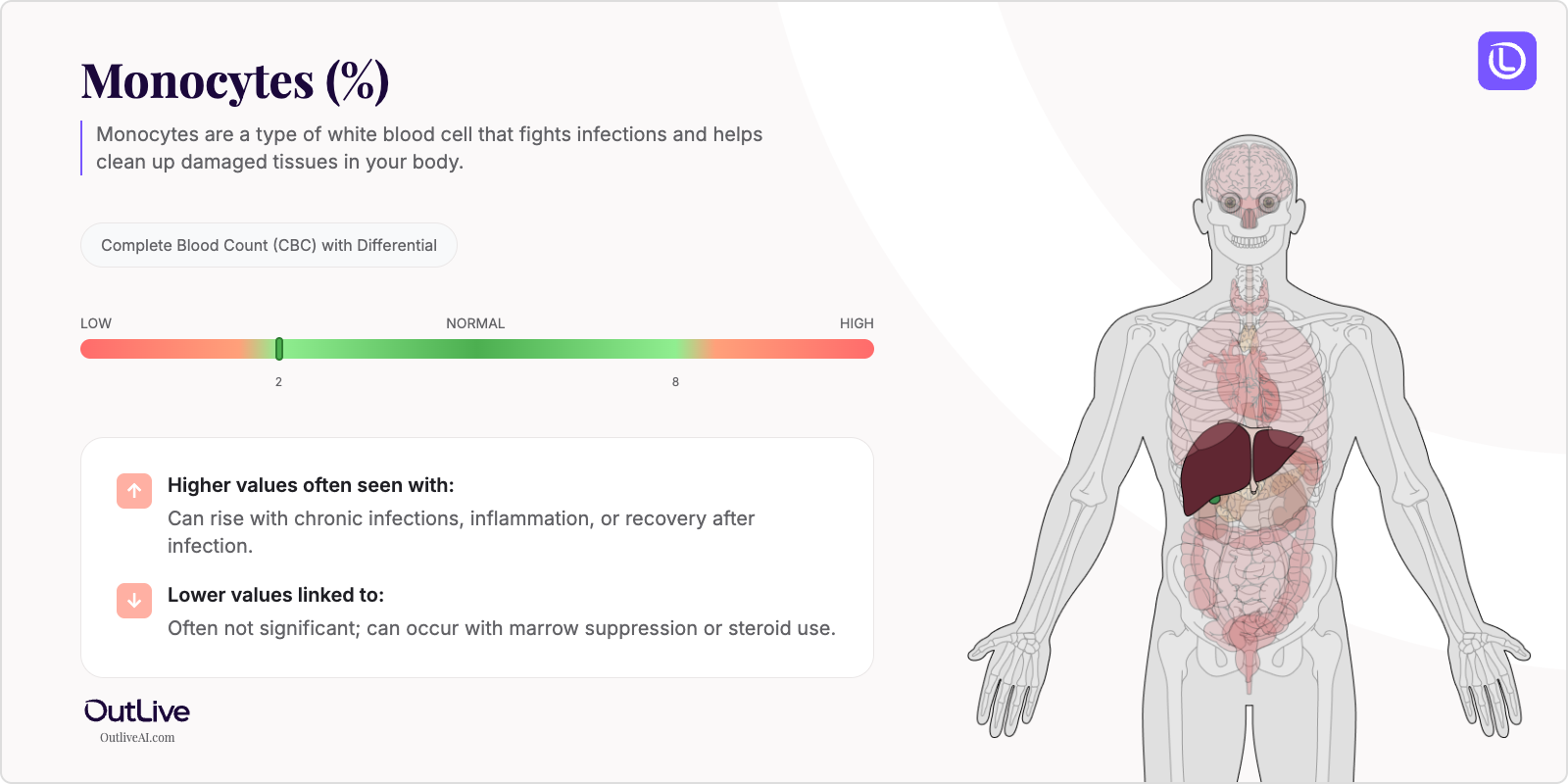
- What it is: Monocytes are a type of white blood cell that fights infections and helps clean up damaged tissues in your body.
- Found in tests: Complete Blood Count (CBC) with Differential
- Normal range: 2-8% of total white blood cells, or 200-800 cells per microliter
If you're looking at your lab results and wondering what monocytes means, you're in the right place. Think of monocytes as your body's cleanup crew and security guards rolled into one – they patrol your bloodstream, looking for invaders like bacteria and viruses, while also helping to clear away damaged or dead cells. Let's break down what your numbers mean in plain English.
Why Is Monocytes Tested?
Your doctor orders a monocyte count as part of a Complete Blood Count (CBC) with differential, one of the most common blood tests. This test gives us a detailed picture of all the different types of cells in your blood, including your infection-fighting white blood cells. Monocytes make up about 2-8% of all your white blood cells, and checking their levels helps your doctor understand how well your immune system is functioning.
Doctors specifically look at monocyte levels when you have symptoms like persistent fever, unexplained fatigue, frequent infections, or when monitoring certain chronic conditions. The test is also routinely ordered during annual check-ups to catch potential problems early, before symptoms even appear.
Your monocyte count matters because it can reveal hidden infections, inflammatory conditions, or blood disorders that might not be obvious from symptoms alone. It's like having a window into how your immune system is responding to challenges in your body.
What Does Monocytes Do in Your Body?
Monocytes are the largest type of white blood cell, and they're incredibly versatile defenders. After being produced in your bone marrow, they circulate in your bloodstream for about 1-3 days before moving into your tissues, where they transform into specialized cells called macrophages or dendritic cells. Think of them as soldiers that can change their equipment based on what threat they're facing.
These cells have three main jobs in your body. First, they engulf and destroy harmful bacteria, viruses, and fungi – literally eating the invaders through a process called phagocytosis. Second, they clean up cellular debris and dead cells, keeping your tissues healthy. Third, they act as messengers, alerting other parts of your immune system when they detect a threat.
Monocytes work closely with other white blood cells like neutrophils and lymphocytes. While neutrophils are your body's first responders to infection, monocytes arrive as the second wave, providing longer-lasting defense and helping with healing. Having the right balance of monocytes ensures your immune system can both fight immediate threats and maintain long-term protection.
What Do My Monocytes Results Mean?
Normal Monocytes Ranges
| Population | Normal Range | Optimal Range |
|---|---|---|
| Adult Male | 2-8% of WBC or 200-800 cells/μL | 4-6% or 400-600 cells/μL |
| Adult Female | 2-8% of WBC or 200-800 cells/μL | 4-6% or 400-600 cells/μL |
| Children (2-6 years) | 3-9% of WBC or 300-900 cells/μL | 5-7% or 500-700 cells/μL |
| Pregnancy | 2-10% of WBC or 200-1000 cells/μL | 4-7% or 400-700 cells/μL |
Note: Reference ranges may vary slightly between laboratories. Always compare your results to the range provided on your specific lab report.
What Does High Monocytes Mean?
Common Causes:
- Chronic infections (tuberculosis, bacterial endocarditis, syphilis)
- Viral infections (mononucleosis, COVID-19, cytomegalovirus)
- Autoimmune disorders (lupus, rheumatoid arthritis, inflammatory bowel disease)
- Blood cancers (leukemia, lymphoma, multiple myeloma)
- Recovery phase after acute infection or chemotherapy
- Chronic inflammatory conditions (sarcoidosis, vasculitis)
- Stress response or recent surgery
Possible Symptoms:
- Persistent fatigue or weakness
- Fever or night sweats
- Unexplained weight loss
- Swollen lymph nodes
- Joint pain or swelling
- Frequent infections
When to Be Concerned: If your monocyte count is above 1000 cells/μL (or above 10% of total white blood cells), this warrants prompt medical attention. Extremely high levels (above 1500 cells/μL) may indicate a blood disorder and require immediate evaluation. However, remember that slightly elevated monocytes often simply mean your body is fighting an infection effectively.
What Does Low Monocytes Mean?
Common Causes:
- Bone marrow suppression from chemotherapy or radiation
- Severe infections overwhelming the immune system
- Aplastic anemia (bone marrow failure)
- Hairy cell leukemia (a rare blood cancer)
- Certain medications (corticosteroids, chemotherapy drugs)
- HIV/AIDS progression
- Severe burns or trauma
Possible Symptoms:
- Increased susceptibility to infections
- Slow wound healing
- Persistent or recurring infections
- Fatigue and weakness
- Easy bruising or bleeding
- Skin infections or rashes
When to Be Concerned: Monocyte counts below 100 cells/μL (or less than 1% of white blood cells) can leave you vulnerable to serious infections. If you have low monocytes along with fever, signs of infection, or other concerning symptoms, contact your healthcare provider immediately.
What Can Affect My Monocytes Levels?
Factors That May Increase Levels:
- Medications: Corticosteroids (paradoxically can cause initial increase), certain antibiotics, immunosuppressants
- Lifestyle: Chronic stress, smoking, excessive alcohol consumption
- Conditions: Recent vaccination, pregnancy, spleen removal, recovery from illness
- Supplements: High-dose vitamin D, certain herbal supplements
Factors That May Decrease Levels:
- Medications: Chemotherapy drugs, immunosuppressants, high-dose corticosteroids (long-term use)
- Lifestyle: Severe malnutrition, extreme physical stress, radiation exposure
- Conditions: Acute infections (temporary decrease), bone marrow disorders
- Time of Day: Levels can be slightly lower in the morning
How Is Monocytes Related to Other Tests?
Monocytes are always evaluated as part of your complete white blood cell picture. They're measured alongside neutrophils, lymphocytes, eosinophils, and basophils in what's called a CBC with differential. Your doctor looks at the absolute number of monocytes and their percentage of total white blood cells.
Often tested alongside: Neutrophils, Lymphocytes, Eosinophils, Basophils, Hemoglobin, Platelets Part of: Complete Blood Count (CBC) Ratio calculations: Monocyte-to-lymphocyte ratio (MLR) may be calculated to assess inflammation Follow-up tests: If abnormal, your doctor might order blood cultures, inflammatory markers (CRP, ESR), or bone marrow biopsy
Frequently Asked Questions
How often should monocytes be tested? For healthy adults, monocytes are typically checked during annual physicals as part of a routine CBC. If you have a chronic condition or abnormal results, your doctor may recommend testing every 3-6 months or more frequently during active treatment.
Can I improve my monocytes levels naturally? Yes, maintaining a healthy immune system through balanced nutrition, regular exercise, adequate sleep, and stress management can help normalize monocyte levels. Foods rich in vitamins C, D, and zinc support immune function.
Should I fast before a monocytes test? No, fasting is not required for a CBC or monocyte count. You can eat and drink normally before the test.
How quickly can monocytes levels change? Monocyte levels can change within hours to days in response to infection or inflammation. After treating an underlying condition, levels typically normalize within 1-2 weeks, though some chronic conditions may take longer.
Next Steps After Your Monocytes Test
Questions to Ask Your Doctor:
- What do my monocytes results mean for my overall health?
- Are my levels related to my symptoms?
- Do I need additional testing?
- Should we monitor this over time?
- Are there lifestyle changes that could help?
Download our Monocytes Doctor Questions Checklist
🔬 Ready to Track Your Monocytes Over Time?
Understanding a single monocytes result is just the beginning. Our free Lab Analyzer tool helps you:
- Track how your Monocytes changes over time
- See how it relates to your other lab values
- Identify patterns your doctor might miss
- Get personalized insights based on your trends
[Upload Your Lab Report for Free Analysis →]