
📋 At a Glance
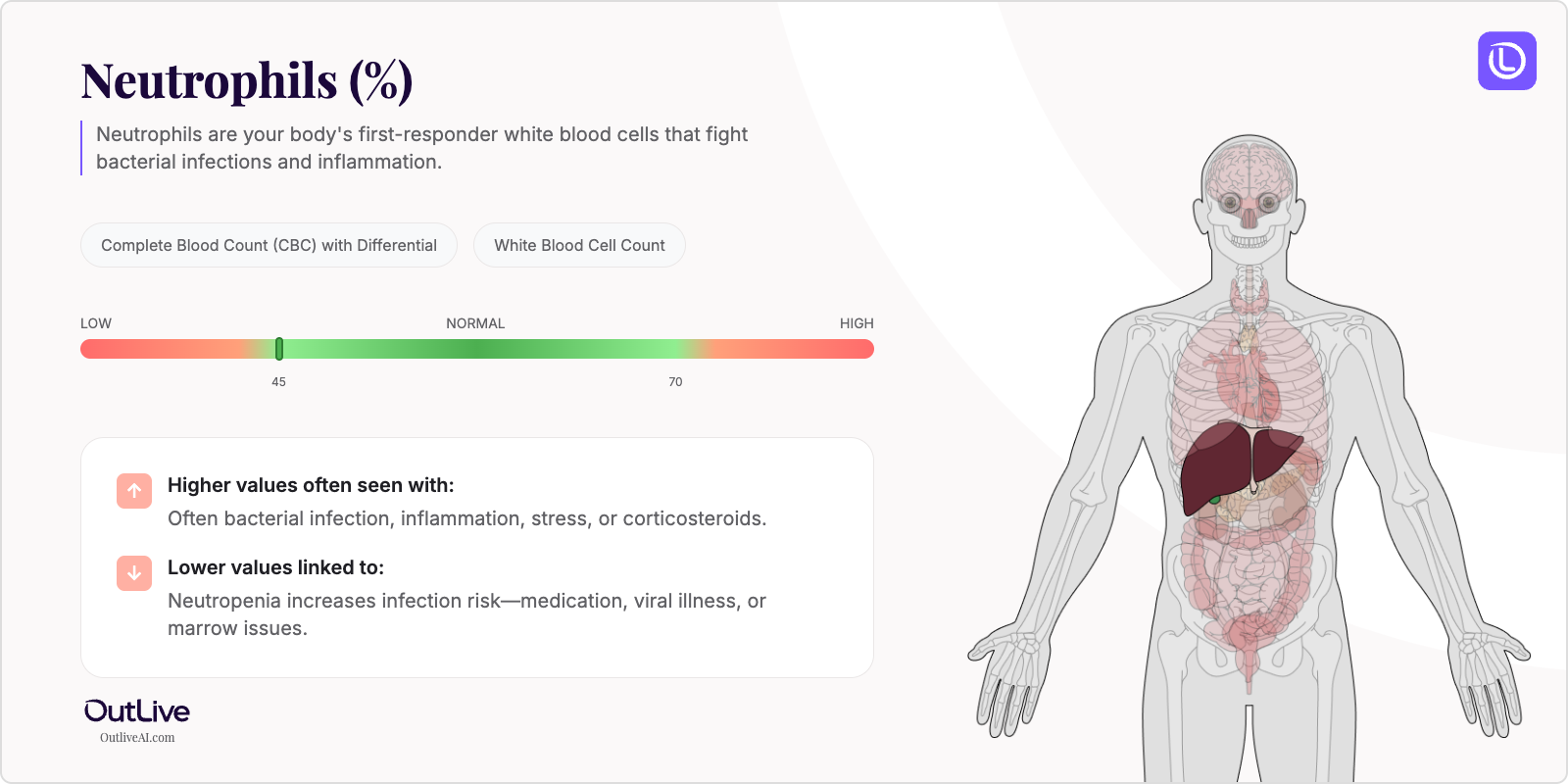
- What it is: Neutrophils are your body's first-responder white blood cells that fight bacterial infections and inflammation.
- Found in tests: Complete Blood Count (CBC) with Differential, White Blood Cell Count
- Normal range: 2,000-7,500 cells per microliter (or 45-70% of total white blood cells)
If you're looking at your lab results and wondering what neutrophils means, you're in the right place. Think of neutrophils as your body's emergency response team – like firefighters who rush to the scene whenever there's trouble. They're the most abundant type of white blood cell in your bloodstream, making up about half to two-thirds of all your infection-fighting cells. Let's break down what your numbers mean in plain English.
Why Is Neutrophils Tested?
Your doctor orders a neutrophil count as part of a Complete Blood Count (CBC) with differential, one of the most common blood tests performed. This test gives us a detailed picture of your body's defense system and overall health status. It's often included in routine check-ups, pre-surgery evaluations, and when monitoring various health conditions.
Doctors specifically look at neutrophil levels when you have symptoms of infection like fever, chills, or body aches. They also check these levels if you're experiencing unexplained fatigue, frequent infections, or if you're undergoing treatments like chemotherapy that can affect your immune system. The test helps determine if your body is fighting an infection, responding to inflammation, or if your bone marrow (where neutrophils are made) is working properly.
Understanding your neutrophil count matters because these cells are your primary defense against bacterial infections. Too many might mean your body is fighting something off, while too few leaves you vulnerable to infections that your body would normally handle easily.
What Does Neutrophils Do in Your Body?
Neutrophils are like your body's rapid response security team. When bacteria invade or tissue is damaged, these cells are the first to arrive at the scene, usually within minutes to hours. They patrol your bloodstream 24/7, ready to spring into action. Once they detect trouble, they squeeze through blood vessel walls and migrate to the site of infection or injury.
These remarkable cells work by literally swallowing harmful bacteria and debris through a process called phagocytosis – imagine them as tiny Pac-Men gobbling up invaders. They also release powerful chemicals that kill bacteria and signal other immune cells to join the fight. After completing their mission, neutrophils typically die, and their remains form part of what we see as pus at infection sites.
Your bone marrow produces about 100 billion neutrophils daily, and they only live for about 8-12 hours in your bloodstream. This constant production and turnover means your neutrophil count can change quickly in response to infections or other stressors, making it a valuable indicator of what's happening in your body right now.
What Do My Neutrophils Results Mean?
Normal Neutrophils Ranges
| Population | Normal Range | Optimal Range |
|---|---|---|
| Adult Male | 2,000-7,500 cells/μL (45-70% of WBC) | 3,000-6,000 cells/μL |
| Adult Female | 2,000-7,500 cells/μL (45-70% of WBC) | 3,000-6,000 cells/μL |
| Children (2-6 years) | 1,500-8,500 cells/μL | 2,500-6,000 cells/μL |
| Newborns | 9,000-30,000 cells/μL | Varies by age in days |
| Pregnancy | 5,800-13,200 cells/μL | Higher range is normal |
Note: Reference ranges may vary slightly between laboratories. Always compare your results to the range provided on your specific lab report.
What Does High Neutrophils Mean?
Common Causes:
- Bacterial infections (pneumonia, urinary tract infections, skin infections)
- Physical or emotional stress (surgery, exercise, anxiety)
- Inflammatory conditions (rheumatoid arthritis, inflammatory bowel disease)
- Smoking or tobacco use
- Certain medications (corticosteroids, lithium, epinephrine)
- Tissue damage or burns
- Some cancers (leukemia, lymphoma)
Possible Symptoms:
- Fever or chills
- Fatigue or weakness
- Pain or swelling at infection sites
- Rapid heart rate
- Shortness of breath
When to Be Concerned: Mildly elevated neutrophils (7,500-10,000 cells/μL) often indicate your body is appropriately responding to an infection or stress. However, very high levels (above 25,000 cells/μL) require immediate medical attention as they may indicate a serious infection, blood disorder, or leukemia. Contact your doctor promptly if you have high neutrophils with severe symptoms like high fever, confusion, or difficulty breathing.
What Does Low Neutrophils Mean?
Common Causes:
- Viral infections (flu, HIV, hepatitis)
- Certain medications (chemotherapy, antibiotics, anti-seizure drugs)
- Autoimmune disorders (lupus, rheumatoid arthritis)
- Bone marrow problems or damage
- Nutritional deficiencies (vitamin B12, folate, copper)
- Enlarged spleen (hypersplenism)
- Genetic conditions affecting neutrophil production
Possible Symptoms:
- Frequent or unusual infections
- Fever without obvious cause
- Mouth sores or gum problems
- Skin infections or slow wound healing
- Persistent fatigue
When to Be Concerned: Neutrophil counts below 1,500 cells/μL (neutropenia) increase your infection risk. Severe neutropenia (below 500 cells/μL) is a medical emergency requiring immediate attention, as even normal bacteria in your body can cause serious infections. If you have low neutrophils and develop a fever above 100.4°F, seek medical care immediately.
What Can Affect My Neutrophils Levels?
Factors That May Increase Levels:
- Medications: Corticosteroids, lithium, heparin, antibiotics
- Lifestyle: Smoking, intense exercise, emotional stress
- Conditions: Pregnancy, recent surgery, allergic reactions
- Supplements: High-dose vitamin B12, folic acid
Factors That May Decrease Levels:
- Medications: Chemotherapy drugs, certain antibiotics (penicillin, sulfa drugs), anti-thyroid medications
- Lifestyle: Excessive alcohol consumption, poor nutrition
- Conditions: Recent viral infections, radiation exposure
- Time of Day: Levels are typically lowest in the morning
How Is Neutrophils Related to Other Tests?
Neutrophils are always evaluated as part of your complete white blood cell picture. They're measured alongside lymphocytes, monocytes, eosinophils, and basophils in what's called a CBC with differential.
Often tested alongside: Total white blood cell count, hemoglobin, platelet count Part of: Complete Blood Count (CBC) Ratio calculations: Neutrophil-to-lymphocyte ratio (NLR) for inflammation assessment Follow-up tests: Blood cultures, C-reactive protein, bone marrow biopsy if abnormal
Frequently Asked Questions
How often should neutrophils be tested? For healthy individuals, annual testing during routine check-ups is usually sufficient. If you have a condition affecting your immune system or are on medications that impact neutrophils, your doctor may recommend testing every few weeks to months.
Can I improve my neutrophils levels naturally? If your levels are low due to nutritional deficiencies, eating a balanced diet rich in vitamin B12, folate, and copper can help. Good hygiene, adequate sleep, stress management, and avoiding tobacco can support healthy neutrophil function.
Should I fast before a neutrophils test? No fasting is required for a neutrophil count or CBC test. You can eat and drink normally before the blood draw.
How quickly can neutrophils levels change? Neutrophil levels can change within hours in response to infection or stress. After starting treatment for an infection, levels typically begin normalizing within 24-48 hours.
Next Steps After Your Neutrophils Test
Questions to Ask Your Doctor:
- What do my neutrophils results mean for my overall health?
- Are my levels related to my symptoms?
- Do I need additional testing?
- Should we monitor this over time?
- Are there lifestyle changes that could help?
Download our Neutrophils Doctor Questions Checklist
🔬 Ready to Track Your Neutrophils Over Time?
Understanding a single neutrophils result is just the beginning. Our free Lab Analyzer tool helps you:
- Track how your Neutrophils changes over time
- See how it relates to your other lab values
- Identify patterns your doctor might miss
- Get personalized insights based on your trends
[Upload Your Lab Report for Free Analysis →]