
📋 At a Glance
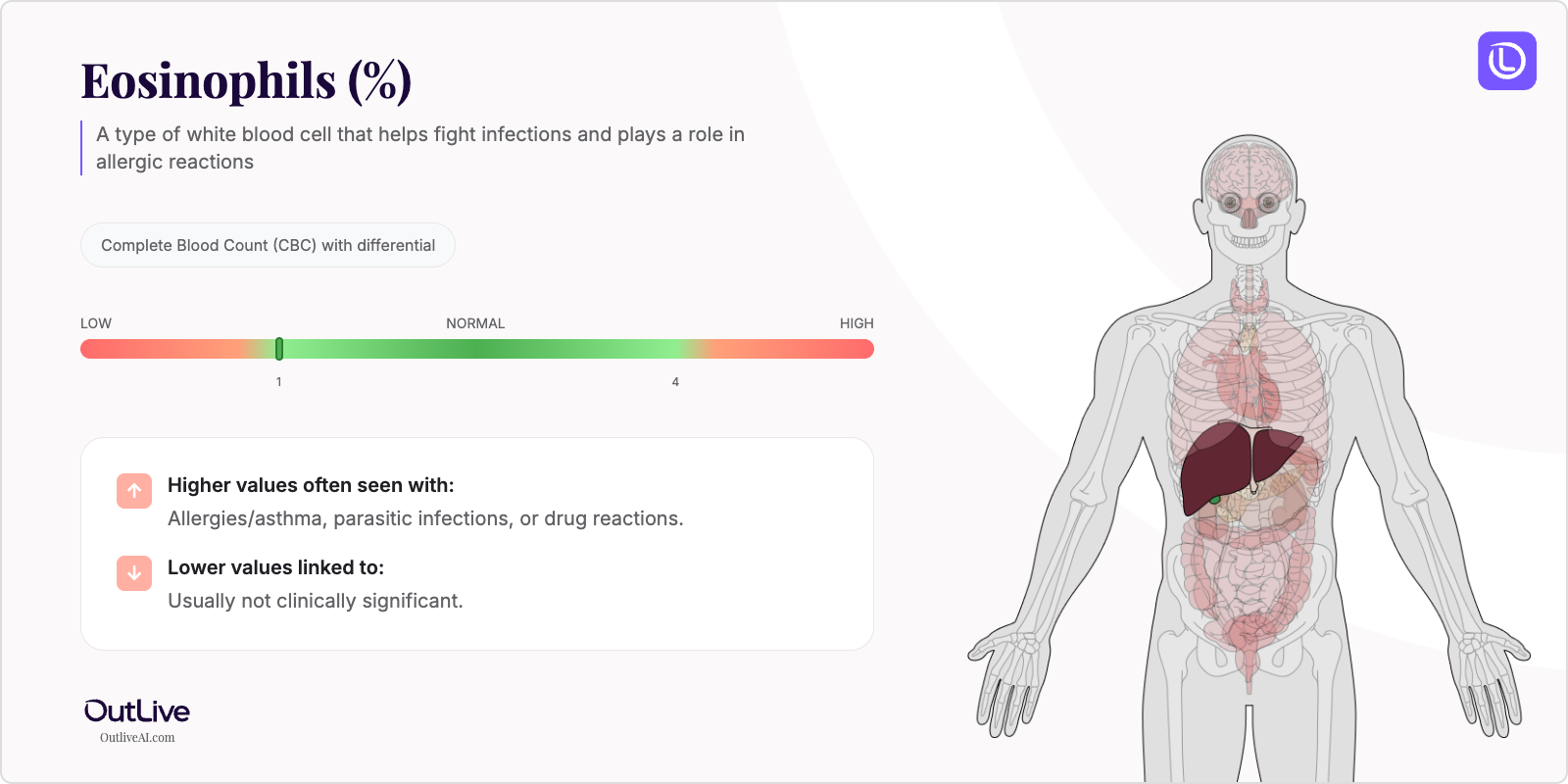
- What it is: A type of white blood cell that helps fight infections and plays a role in allergic reactions
- Found in tests: Complete Blood Count (CBC) with differential, specifically in the white blood cell differential panel
- Normal range: 1-4% of total white blood cells, or 30-350 cells per microliter
If you're looking at your lab results and wondering what eosinophils means, you're in the right place. Think of eosinophils as your body's specialized cleanup crew—they're like hazmat workers who show up when there's an allergic reaction, parasite invasion, or certain types of inflammation. Let's break down what your numbers mean in plain English.
Why Is Eosinophils Tested?
Your doctor includes eosinophils as part of a Complete Blood Count (CBC) with differential, one of the most common blood tests ordered during routine checkups or when you're feeling unwell. This test gives your healthcare provider a detailed picture of your immune system's current state.
Doctors specifically look at eosinophil levels when you have symptoms like persistent allergies, unexplained rashes, breathing difficulties, or digestive issues that might suggest parasitic infections. It's also routinely checked if you've traveled to areas where parasitic infections are common, or if you're being monitored for certain inflammatory conditions.
The eosinophil count matters because it can be one of the first clues that your body is dealing with an allergic response, fighting off parasites, or experiencing certain types of inflammation. Unlike a fever that tells you something's wrong right now, eosinophil levels can reveal ongoing, sometimes subtle immune system activity that might otherwise go unnoticed.
What Does Eosinophils Do in Your Body?
Eosinophils are specialized white blood cells produced in your bone marrow that make up a small but mighty portion of your immune system. Once released into your bloodstream, they travel to tissues throughout your body, particularly concentrating in your digestive tract, lungs, and skin—areas that frequently encounter allergens and foreign invaders.
These cells contain powerful granules filled with toxic proteins that can destroy parasites, particularly worms that are too large for other immune cells to handle. Think of them as carrying tiny chemical weapons that they release when they encounter their targets. They also play a crucial role in allergic reactions, sometimes contributing to the inflammation you experience during asthma attacks or severe allergies.
While eosinophils are essential defenders, having too many can actually cause problems. When overactive, they can damage your own tissues, contributing to conditions like asthma, eczema, and certain digestive disorders. It's all about balance—you need enough to protect you, but not so many that they cause collateral damage.
What Do My Eosinophils Results Mean?
Normal Eosinophils Ranges
| Population | Normal Range | Optimal Range |
|---|---|---|
| Adult Male | 1-4% of WBC or 30-350 cells/μL | 1-3% or 50-250 cells/μL |
| Adult Female | 1-4% of WBC or 30-350 cells/μL | 1-3% or 50-250 cells/μL |
| Children | 1-5% of WBC or 50-400 cells/μL | 1-3% or 50-300 cells/μL |
| Pregnancy | 1-4% of WBC or 30-350 cells/μL | May slightly increase |
Note: Reference ranges may vary slightly between laboratories. Always compare your results to the range provided on your specific lab report.
What Does High Eosinophils Mean?
Common Causes:
- Allergic conditions: Hay fever, asthma, eczema, food allergies, and drug reactions
- Parasitic infections: Particularly worm infections like hookworm, roundworm, or tapeworm
- Autoimmune diseases: Inflammatory bowel disease, rheumatoid arthritis, lupus
- Skin conditions: Atopic dermatitis, pemphigus, dermatitis herpetiformis
- Certain cancers: Hodgkin's lymphoma, some leukemias, and other blood cancers
- Medication reactions: Antibiotics, anti-seizure drugs, and some psychiatric medications
- Hypereosinophilic syndrome: A rare condition with persistently high eosinophils
Possible Symptoms:
- Skin rashes or itching
- Wheezing or difficulty breathing
- Nasal congestion or runny nose
- Abdominal pain or diarrhea
- Fatigue or weakness
- Swollen lymph nodes
When to Be Concerned: If your eosinophil count is above 1,500 cells/μL, this is considered moderate to severe eosinophilia and requires prompt medical evaluation. Extremely high levels (above 5,000 cells/μL) can damage organs and require immediate attention. Contact your doctor right away if you experience chest pain, severe breathing difficulties, or signs of organ dysfunction along with high eosinophils.
What Does Low Eosinophils Mean?
Common Causes:
- Acute infections: Bacterial infections or sepsis can temporarily suppress eosinophils
- Corticosteroid use: Prednisone and other steroids significantly lower eosinophil counts
- Cushing's syndrome: Excess cortisol production naturally suppresses eosinophils
- Severe stress: Physical or emotional stress increases cortisol, lowering eosinophils
- Alcohol intoxication: Acute alcohol consumption can temporarily reduce levels
- Early pregnancy: Normal hormonal changes can slightly decrease eosinophils
- Certain medications: Some immunosuppressants and chemotherapy drugs
Possible Symptoms:
- Usually no specific symptoms from low eosinophils alone
- May have symptoms related to the underlying cause
- Increased susceptibility to parasitic infections (rare)
When to Be Concerned: Low eosinophils alone are rarely concerning and often reflect your body's normal stress response or medication effects. However, if accompanied by signs of severe infection, adrenal problems, or unexplained illness, discuss with your doctor. Persistently absent eosinophils might warrant investigation for underlying hormonal or immune issues.
What Can Affect My Eosinophils Levels?
Factors That May Increase Levels:
- Medications: Antibiotics (penicillin, sulfonamides), NSAIDs, phenytoin, allopurinol
- Lifestyle: Exposure to allergens, poor air quality, certain foods (if allergic)
- Conditions: Seasonal allergies, recent parasitic exposure, healing wounds
- Supplements: Some herbal supplements, particularly those causing allergic reactions
Factors That May Decrease Levels:
- Medications: Corticosteroids, epinephrine, thyroid hormones
- Lifestyle: High stress, excessive alcohol consumption, intense exercise
- Conditions: Morning testing (levels naturally lower), acute infections
- Time of Day: Eosinophils follow a circadian rhythm, lowest in morning, highest at night
How Is Eosinophils Related to Other Tests?
Eosinophils are always evaluated as part of your complete white blood cell differential, which includes neutrophils, lymphocytes, monocytes, and basophils. The relationship between these cells can provide important clues about your health.
Often tested alongside: Neutrophils, lymphocytes, basophils, monocytes, total WBC count Part of: Complete Blood Count (CBC) Ratio calculations: Eosinophil percentage of total WBC, absolute eosinophil count Follow-up tests: IgE levels for allergies, stool tests for parasites, chest X-ray for lung involvement, tryptase levels
Frequently Asked Questions
How often should eosinophils be tested? For healthy individuals, eosinophils are checked during routine annual physicals as part of a CBC. If you have allergies or autoimmune conditions, your doctor may monitor them more frequently, typically every 3-6 months or when symptoms change.
Can I improve my eosinophils levels naturally? If elevated due to allergies, avoiding triggers and managing stress can help normalize levels. For parasitic causes, proper treatment is essential. Maintaining good hygiene, eating a balanced diet, and managing allergic conditions effectively can help keep levels in check.
Should I fast before an eosinophils test? No fasting is required for an eosinophil count or CBC. You can eat and drink normally before the test.
How quickly can eosinophils levels change? Eosinophil levels can change within hours to days. Steroid medications can lower them within 4-6 hours. Allergic reactions can raise them within hours. Parasitic infections may take weeks to significantly elevate levels.
Next Steps After Your Eosinophils Test
Questions to Ask Your Doctor:
- What do my eosinophils results mean for my overall health?
- Are my levels related to my symptoms?
- Do I need additional testing?
- Should we monitor this over time?
- Are there lifestyle changes that could help?
Download our Eosinophils Doctor Questions Checklist
🔬 Ready to Track Your Eosinophils Over Time?
Understanding a single eosinophils result is just the beginning. Our free Lab Analyzer tool helps you:
- Track how your Eosinophils changes over time
- See how it relates to your other lab values
- Identify patterns your doctor might miss
- Get personalized insights based on your trends
[Upload Your Lab Report for Free Analysis →]