
📋 At a Glance
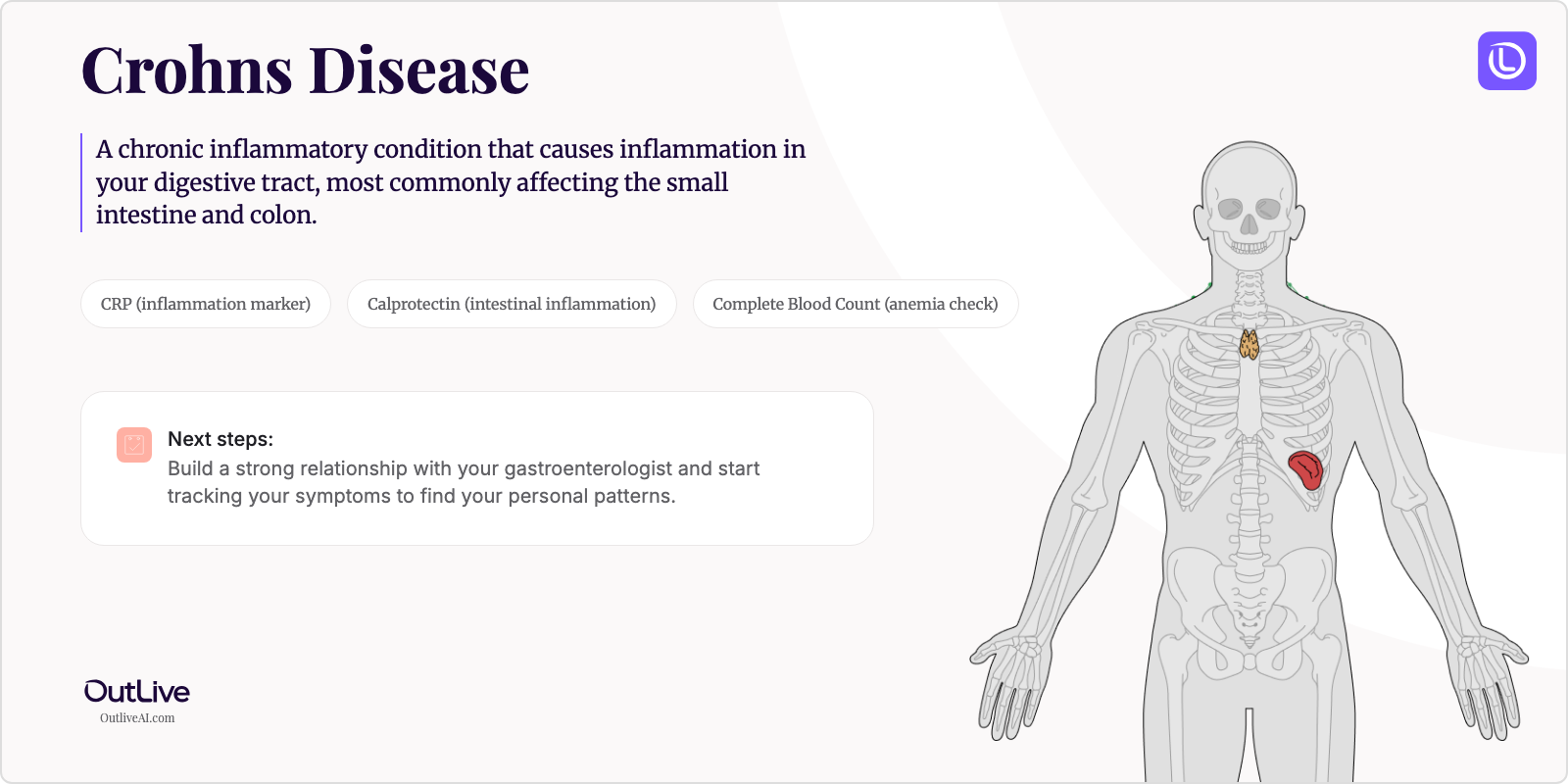
- What it is: A chronic inflammatory condition that causes inflammation in your digestive tract, most commonly affecting the small intestine and colon.
- Key lab tests: CRP (inflammation marker), Calprotectin (intestinal inflammation), Complete Blood Count (anemia check)
- Your first goal: Build a strong relationship with your gastroenterologist and start tracking your symptoms to find your personal patterns.
Receiving a new diagnosis for Crohn's Disease can be overwhelming. You might be feeling anxious, confused, and unsure of what comes next. That's completely normal. This guide is here to help you understand your condition in simple terms, know which lab tests matter most, and feel prepared for your next steps.
First, Take a Breath: What is Crohn's Disease in Simple Terms?
Think of your digestive tract like a garden hose that runs from your mouth to your rectum. In Crohn's Disease, your immune system mistakenly attacks parts of this "hose," causing patches of inflammation that can appear anywhere along its length. These inflamed areas become swollen, painful, and can't do their job properly - which is absorbing nutrients from your food. Unlike a simple stomach bug that goes away, Crohn's is a chronic condition, meaning it's something you'll manage long-term. But here's the important part: with the right treatment and monitoring, most people with Crohn's live full, active lives. You're not alone in this, and there are effective treatments available.
Understanding Your Diagnosis: The Key Lab Tests
This is the most important section. These are the lab tests your doctor will use to monitor your condition and adjust your treatment:
Key Tests for Crohn's Disease:
- C-Reactive Protein (CRP): This test measures overall inflammation in your body - think of it as your inflammation thermometer that helps track if your Crohn's is active or calm.
- Fecal Calprotectin: This stool test specifically measures inflammation in your intestines - it's like a GPS that pinpoints inflammation right where your Crohn's is active.
- Complete Blood Count (CBC): This blood test checks for anemia (low red blood cells) and infection markers, both common complications when Crohn's prevents proper nutrient absorption.
- Erythrocyte Sedimentation Rate (ESR): Another inflammation marker that, combined with CRP, gives your doctor a fuller picture of how active your disease is.
Your First Specialist Appointment: What to Ask
What to Expect: You'll be seeing a gastroenterologist - a doctor who specializes in digestive system conditions. They'll review your test results, discuss your symptoms in detail, and may order additional tests like a colonoscopy or MRI to map exactly where your Crohn's is located. This appointment typically lasts 30-45 minutes, and it's perfectly okay to bring a trusted person with you for support and to help remember information.
Questions to Ask Your Doctor:
- "Where exactly is my Crohn's located, and how severe is the inflammation right now?"
- "What treatment options do you recommend starting with, and what are the potential side effects?"
- "How often will I need follow-up appointments and lab work?"
- "Are there any dietary changes I should make immediately, or should I see a nutritionist?"
- "What symptoms would indicate I need to contact you between appointments?"
Download our [Checklist of Questions to Ask Your Crohn's Disease Specialist](# to feel prepared.
How to Track Your Journey
Tracking your Crohn's Disease journey is crucial for understanding how your treatment is working and spotting important trends. Here's what you should monitor:
Symptoms to Track:
- Bowel movement frequency and consistency (yes, you'll become an expert on this)
- Abdominal pain levels and location (rate it 1-10 daily)
- Energy levels and fatigue patterns
- Any blood in stool or unexplained weight changes
- Foods that seem to trigger symptoms
Lab Results to Monitor:
- CRP and ESR levels - Check every 3-6 months when stable, more frequently during flares
- Complete Blood Count - Every 3-6 months to monitor for anemia
- Fecal Calprotectin - Every 3-6 months or when symptoms change
- Vitamin levels (B12, D, Iron) - Annually or as recommended
Why Tracking Matters: Your symptoms and lab results tell a story over time. By tracking them, you'll start to see patterns - maybe stress triggers flares, or certain foods cause problems. This information is gold for your doctor, helping them fine-tune your treatment plan. Plus, seeing improvement trends can be incredibly motivating on tough days.
Next Steps After Your Diagnosis
Immediate Actions (This Week):
- Schedule your follow-up appointment with your gastroenterologist
- Start a simple symptom diary (even just notes on your phone work)
- Fill any prescriptions your doctor has given you and understand how to take them
- Reach out to one trusted friend or family member for emotional support
Short-term Goals (Next Month):
- Establish a routine for taking medications consistently
- Connect with a Crohn's support group (online or in-person)
- Meet with a dietitian familiar with inflammatory bowel disease
- Learn your personal "baseline" - what feels normal for you
Long-term Management:
- Build a healthcare team you trust (GI doctor, primary care, dietitian, mental health support)
- Develop a flare action plan with your doctor
- Stay current with vaccinations and preventive care (Crohn's medications can affect your immune system)
Frequently Asked Questions
How quickly can I expect to feel better? Most people start noticing improvement within 2-8 weeks of starting treatment, though full remission can take 3-6 months. Everyone's timeline is different, and finding the right medication combination sometimes takes patience.
Will I need to change my diet? While there's no one-size-fits-all "Crohn's diet," many people find keeping a food diary helps identify trigger foods. Common culprits include high-fiber foods during flares, dairy, and spicy foods, but your triggers may be completely different.
How often will I need to see my doctor? Initially, expect appointments every 4-8 weeks until your symptoms are controlled. Once stable, most people see their gastroenterologist every 3-6 months, with annual check-ups including colonoscopy screening.
Can I still exercise/work/travel? Absolutely! Once your symptoms are managed, most people with Crohn's maintain active lifestyles. You might need to plan ahead (knowing where bathrooms are located), but Crohn's doesn't have to stop you from living your life.
When to Seek Immediate Medical Attention
Contact your doctor immediately if you experience:
- Severe abdominal pain that doesn't improve with your usual management
- High fever (over 101°F) with abdominal symptoms
- Persistent vomiting or inability to keep fluids down
- Signs of severe dehydration (dizziness, dark urine, extreme thirst)
- Significant blood in stool or black, tarry stools
- Sudden, severe worsening of symptoms
🔬 Ready to Organize Your Health Journey?
Understanding your condition is the first step. Our free Lab Analyzer tool helps you:
- Track all your lab results for Crohn's Disease in one place
- Spot important trends over time
- Generate personalized questions for your doctor
[Upload Your Lab Report for Free Analysis →]