
📋 At a Glance
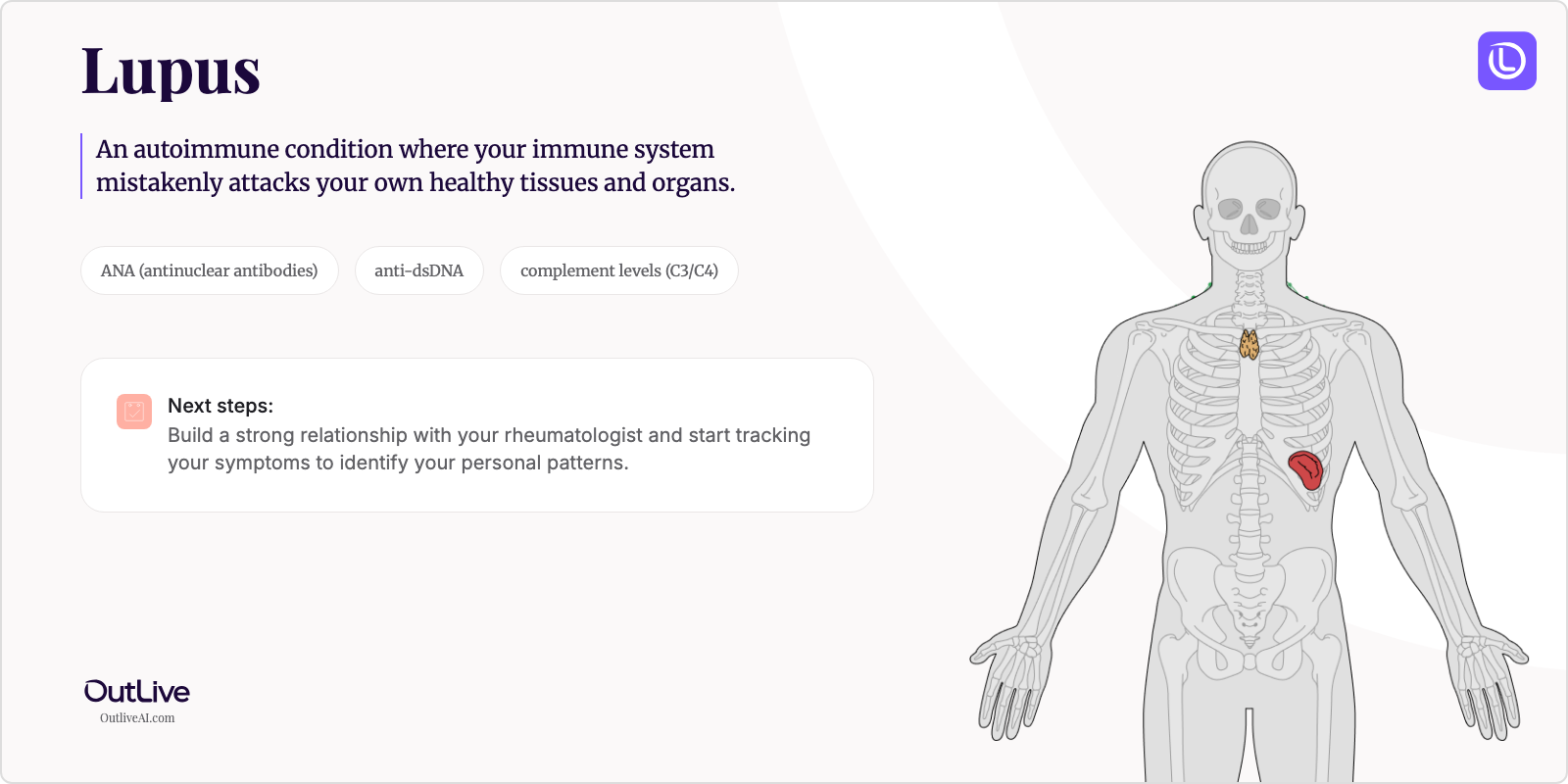
- What it is: An autoimmune condition where your immune system mistakenly attacks your own healthy tissues and organs.
- Key lab tests: ANA (antinuclear antibodies), anti-dsDNA, complement levels (C3/C4)
- Your first goal: Build a strong relationship with your rheumatologist and start tracking your symptoms to identify your personal patterns.
Receiving a new diagnosis for Lupus can be overwhelming. You might be feeling anxious, confused, and unsure of what comes next. That's completely normal. This guide is here to help you understand your condition in simple terms, know which lab tests matter most, and feel prepared for your next steps.
First, Take a Breath: What is Lupus in Simple Terms?
Think of your immune system as your body's security team. Normally, this team protects you by fighting off invaders like viruses and bacteria. With lupus, your security team gets confused and starts attacking your own healthy cells—like friendly fire in your own body. This can affect many different parts of your body including your skin, joints, kidneys, heart, and brain. The good news? While lupus is chronic (meaning it's long-term), many people with lupus live full, active lives with proper treatment and management. You're not alone in this journey, and understanding your condition is your first powerful step forward.
Understanding Your Diagnosis: The Key Lab Tests
This is the most important section. These are the tests your doctor uses to diagnose and monitor your lupus. Understanding them helps you become an active partner in your care.
Key Tests for Lupus:
- ANA (Antinuclear Antibodies): This test looks for antibodies that attack your own cell nuclei—it's positive in about 97% of people with lupus and acts like a "screening test" for autoimmune conditions.
- Anti-dsDNA: These antibodies specifically target your DNA and are more specific to lupus—high levels often correlate with disease activity, especially kidney involvement.
- Complement C3 and C4: These proteins help your immune system clear damaged cells—when they're low, it often means your lupus is more active because they're being "used up" fighting inflammation.
- ESR and CRP: These inflammation markers help track how much inflammation is happening in your body—they rise during flares and fall when treatment is working.
Your First Specialist Appointment: What to Ask
You'll be seeing a rheumatologist—a doctor who specializes in autoimmune conditions like lupus. Think of them as your lupus quarterback, coordinating your care team and treatment plan.
What to Expect: Your rheumatologist will review your symptoms, examine you thoroughly, and may order additional tests to understand which organs lupus is affecting. This first visit is usually longer (45-60 minutes) because they need to get your complete health picture. Bring a list of all your symptoms, even ones that seem unrelated—with lupus, everything matters.
Questions to Ask Your Doctor:
- "Which type of lupus do I have, and which organs are currently affected?"
- "How active is my lupus right now, and what specific lab results show this?"
- "What treatment plan do you recommend, and what are the goals of each medication?"
- "How often will I need follow-up appointments and lab work?"
- "What symptoms should prompt me to call your office versus going to the emergency room?"
Download our [Checklist of Questions to Ask Your Lupus Specialist](# to feel prepared.
How to Track Your Journey
Tracking your lupus journey is crucial for understanding how your treatment is working and spotting important trends. Here's what you should monitor:
Symptoms to Track:
- Fatigue levels (rate 1-10 daily)—this helps identify your baseline versus flare fatigue
- Joint pain and swelling—note which joints and time of day
- Skin changes—photograph any rashes, especially the butterfly rash on your face
- Sun sensitivity—track reactions to sun exposure
- Brain fog or memory issues—note when these occur and their severity
Lab Results to Monitor:
- Complete Blood Count (CBC) - Every 3-6 months to check for anemia and low white blood cells
- Kidney function tests (creatinine, urinalysis) - Every 3-6 months to catch kidney involvement early
- Anti-dsDNA and complement levels - Every 3-6 months to track disease activity
Why Tracking Matters: Lupus is unpredictable and affects everyone differently. By tracking your patterns, you'll learn your personal warning signs of a flare, identify triggers (like stress or sun exposure), and provide your doctor with valuable information that blood tests alone can't show. This empowers you to catch problems early when they're easier to treat.
Next Steps After Your Diagnosis
Immediate Actions (This Week):
- Schedule your first rheumatologist appointment if you haven't already
- Start a symptom diary (even a simple notebook works)
- Gather all your medical records and lab results in one place
- Research lupus support groups in your area or online
Short-term Goals (Next Month):
- Establish care with other specialists if needed (nephrologist for kidneys, dermatologist for skin)
- Learn about your medications—what they do and potential side effects
- Develop a sun protection routine (SPF 30+, protective clothing, avoiding peak sun hours)
- Create an emergency contact list including your rheumatologist's after-hours number
Long-term Management:
- Build a sustainable exercise routine that works with your energy levels
- Develop stress management techniques (lupus often flares with stress)
- Consider working with a nutritionist familiar with anti-inflammatory diets
- Plan for regular preventive care including vaccinations and bone density monitoring
Frequently Asked Questions
How quickly can I expect to feel better? Most people start noticing improvement within 4-8 weeks of starting treatment, but finding the right medication combination can take 3-6 months. Be patient with yourself—lupus management is a marathon, not a sprint.
Will I need to change my diet? While there's no specific "lupus diet," many people feel better with an anti-inflammatory diet rich in omega-3s, fruits, and vegetables. Some find avoiding alfalfa and garlic helpful. Work with your doctor before making major dietary changes.
How often will I need to see my doctor? Initially, expect visits every 1-3 months until your lupus is stable. Once controlled, most people see their rheumatologist every 3-6 months, with lab work done a few days before each visit.
Can I still exercise/work/travel? Absolutely! Most people with lupus continue working and enjoying activities. You'll learn to pace yourself, plan for rest days, and modify activities during flares. Many find gentle exercise like swimming or yoga especially helpful.
When to Seek Immediate Medical Attention
Contact your doctor immediately if you experience:
- Severe chest pain or difficulty breathing (could indicate heart or lung involvement)
- Sudden severe headache, confusion, or seizures (possible nervous system involvement)
- Blood in urine or foamy urine with swelling (signs of kidney problems)
- High fever over 101°F (you're more susceptible to infections)
- Sudden vision changes or loss
- Severe abdominal pain (could indicate organ involvement)
🔬 Ready to Organize Your Health Journey?
Understanding your condition is the first step. Our free Lab Analyzer tool helps you:
- Track all your lab results for Lupus in one place
- Spot important trends over time
- Generate personalized questions for your doctor
[Upload Your Lab Report for Free Analysis →]