
📋 At a Glance
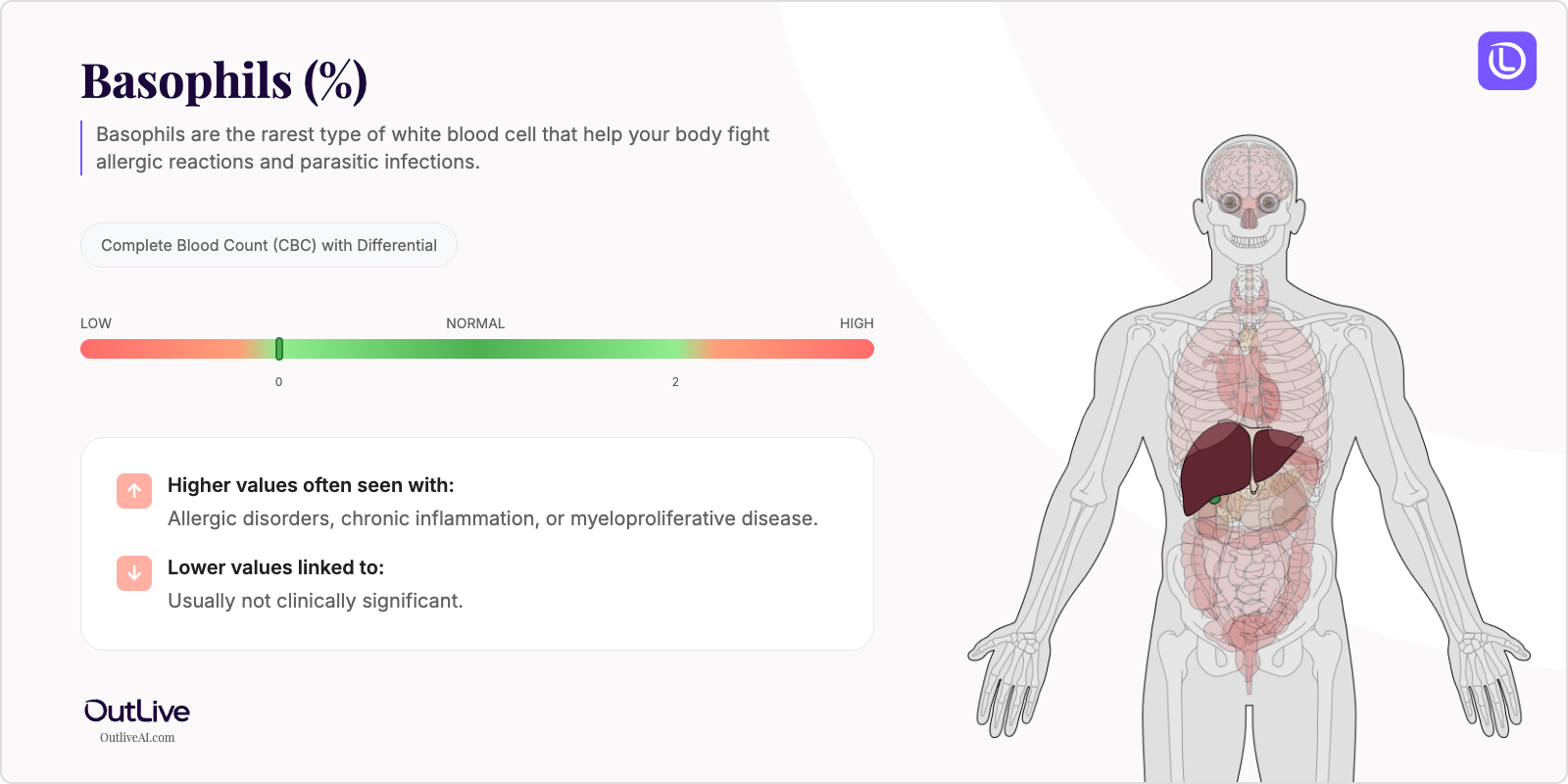
- What it is: Basophils are the rarest type of white blood cell that help your body fight allergic reactions and parasitic infections.
- Found in tests: Complete Blood Count (CBC) with Differential
- Normal range: 0-2% of total white blood cells or 0-200 cells per microliter
If you're looking at your lab results and wondering what basophils means, you're in the right place. Think of basophils as your body's allergy first responders – they're like smoke detectors that alert your immune system when something potentially harmful enters your body. While they make up less than 1% of your white blood cells, these tiny defenders play an important role in keeping you healthy. Let's break down what your numbers mean in plain English.
Why Is Basophils Tested?
Your doctor includes basophils as part of a Complete Blood Count (CBC) with differential, one of the most common blood tests ordered during routine check-ups or when you're not feeling well. This test gives your healthcare provider a snapshot of your overall health and immune system function.
Doctors specifically look at basophil levels when investigating allergic conditions, unexplained itching, chronic inflammation, or when monitoring certain blood disorders. If you've been experiencing symptoms like persistent fatigue, unexplained rashes, or recurring infections, your basophil count can provide valuable clues about what might be happening in your body.
The test also helps monitor how well your body is responding to treatments for allergies, autoimmune conditions, or certain cancers. Because basophils work closely with other white blood cells, changes in their numbers often signal that your immune system is actively responding to something.
What Does Basophils Do in Your Body?
Basophils are like your body's early warning system for allergic reactions and certain infections. These cells contain granules filled with chemicals like histamine and heparin – think of them as tiny medicine cabinets that open when triggered by allergens or parasites. When basophils detect these threats, they release their contents to help coordinate your body's defensive response.
These cells primarily circulate in your bloodstream but can also move into tissues when needed. They work hand-in-hand with other immune cells, particularly eosinophils and mast cells, to mount allergic responses and fight parasitic infections. While you might associate histamine with annoying allergy symptoms, it's actually an important chemical messenger that helps increase blood flow to affected areas and attracts other immune cells to help.
The right balance of basophils is crucial – too few might mean your body can't mount proper allergic responses when needed, while too many could indicate ongoing inflammation or other health concerns. Your bone marrow constantly produces new basophils to maintain this delicate balance, with each cell living for just a few days before being replaced.
What Do My Basophils Results Mean?
Normal Basophils Ranges
| Population | Normal Range | Optimal Range |
|---|---|---|
| Adult Male | 0-2% or 0-200 cells/μL | 0.5-1% |
| Adult Female | 0-2% or 0-200 cells/μL | 0.5-1% |
| Children | 0-2% or 0-200 cells/μL | 0.5-1% |
| Pregnancy | 0-2% or 0-200 cells/μL | May be slightly elevated |
Note: Reference ranges may vary slightly between laboratories. Always compare your results to the range provided on your specific lab report.
What Does High Basophils Mean?
Common Causes:
- Allergic reactions (food allergies, environmental allergens, drug reactions)
- Chronic myeloid leukemia (CML) or other blood cancers
- Hypothyroidism (underactive thyroid gland)
- Inflammatory conditions like ulcerative colitis or rheumatoid arthritis
- Chronic infections, particularly parasitic infections
- Recovery from acute infection or illness
- Certain medications, including estrogen and antithyroid drugs
Possible Symptoms:
- Itching or skin rashes
- Fatigue or weakness
- Joint pain or swelling
- Digestive issues
- Night sweats
- Unexplained weight loss
When to Be Concerned: If your basophil count is significantly elevated (above 2% or 300 cells/μL), especially if accompanied by other abnormal blood counts, your doctor will likely order additional tests. Extremely high levels (above 5%) warrant immediate medical attention as they may indicate a serious blood disorder.
What Does Low Basophils Mean?
Common Causes:
- Acute infections or severe illness (your body is using up basophils faster than making them)
- Hyperthyroidism (overactive thyroid)
- Prolonged stress or anxiety
- Corticosteroid medications (like prednisone)
- Pregnancy (especially first trimester)
- Recent chemotherapy or radiation therapy
- Acute allergic reactions (basophils have moved from blood to tissues)
Possible Symptoms:
- Usually no specific symptoms from low basophils alone
- Increased susceptibility to parasitic infections
- Reduced allergic response (which might actually feel like an improvement if you have allergies)
When to Be Concerned: Low basophils alone are rarely concerning and often go unnoticed. However, if accompanied by other low white blood cell counts or persistent infections, further evaluation may be needed.
What Can Affect My Basophils Levels?
Factors That May Increase Levels:
- Medications: Estrogen, antithyroid medications, some antidepressants
- Lifestyle: Chronic stress, poor sleep, exposure to allergens
- Conditions: Recent vaccinations, recovery from illness, chronic sinusitis
- Supplements: High doses of certain herbs with immune-stimulating properties
Factors That May Decrease Levels:
- Medications: Corticosteroids, chemotherapy drugs, some antibiotics
- Lifestyle: Acute stress, intensive exercise, pregnancy
- Conditions: Active infections, hyperthyroidism, shock
- Time of Day: Levels can be slightly lower in the morning
How Is Basophils Related to Other Tests?
Basophils are always evaluated as part of your complete white blood cell picture, never in isolation. They're one of five types of white blood cells measured in a CBC with differential.
Often tested alongside: Eosinophils, neutrophils, lymphocytes, monocytes Part of: Complete Blood Count (CBC) Ratio calculations: Basophil percentage of total WBC count Follow-up tests: Allergy testing, thyroid function tests, bone marrow biopsy (if significantly abnormal)
Frequently Asked Questions
How often should basophils be tested? For most people, basophils are checked during annual physicals as part of a routine CBC. If you have allergies or chronic conditions, your doctor may monitor them more frequently.
Can I improve my basophils levels naturally? Since basophils respond to your body's needs, the best approach is maintaining overall health through good sleep, stress management, and avoiding unnecessary allergen exposure.
Should I fast before a basophils test? No fasting is required for a CBC that includes basophils. You can eat and drink normally before the test.
How quickly can basophils levels change? Basophil levels can change within hours during acute allergic reactions or infections, but typically return to normal within a few days once the trigger is removed.
Next Steps After Your Basophils Test
Questions to Ask Your Doctor:
- What do my basophils results mean for my overall health?
- Are my levels related to my symptoms?
- Do I need additional testing?
- Should we monitor this over time?
- Are there lifestyle changes that could help?
Download our Basophils Doctor Questions Checklist
🔬 Ready to Track Your Basophils Over Time?
Understanding a single basophils result is just the beginning. Our free Lab Analyzer tool helps you:
- Track how your Basophils changes over time
- See how it relates to your other lab values
- Identify patterns your doctor might miss
- Get personalized insights based on your trends
[Upload Your Lab Report for Free Analysis →]