
📋 At a Glance
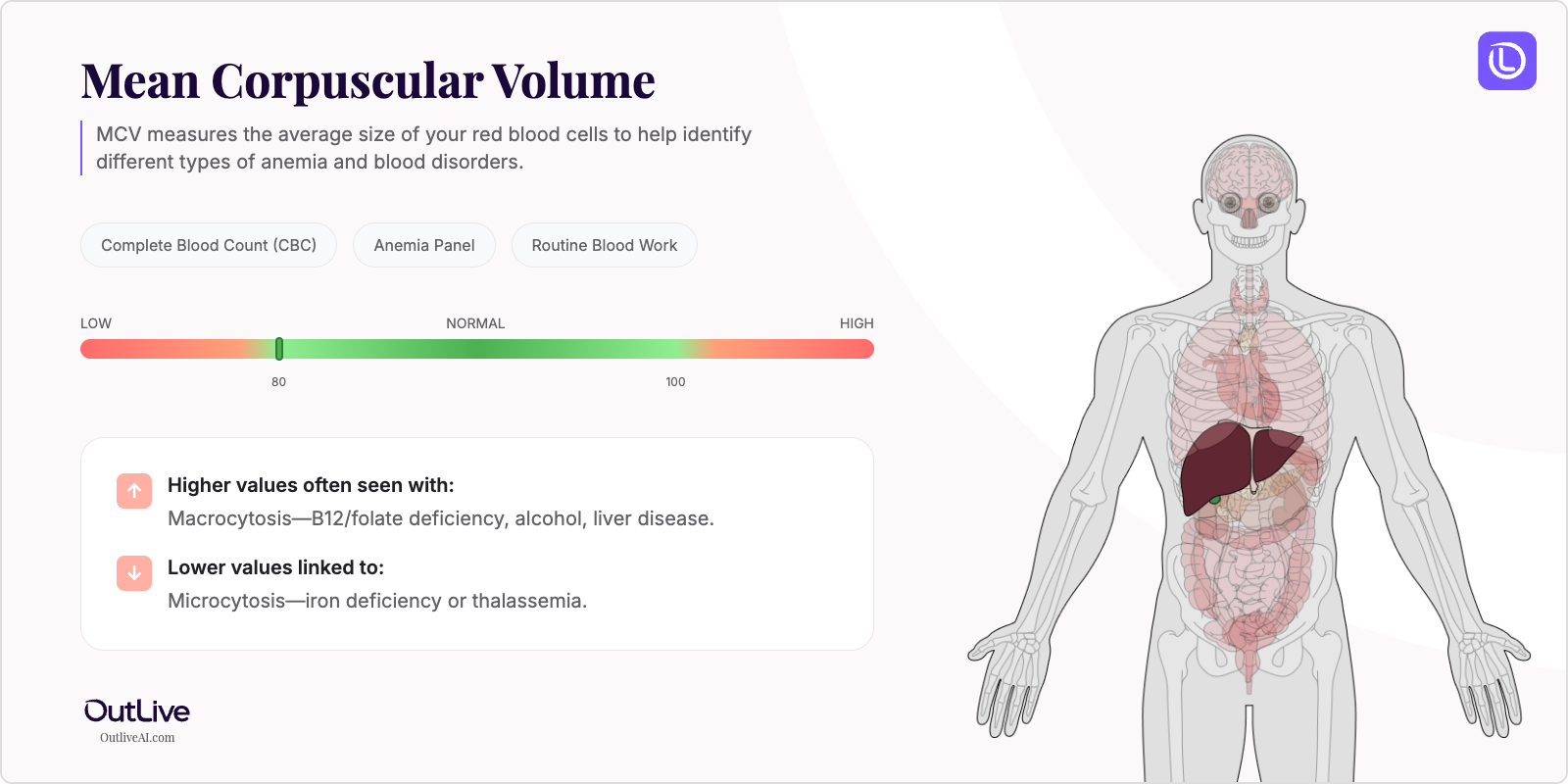
- What it is: MCV measures the average size of your red blood cells to help identify different types of anemia and blood disorders.
- Found in tests: Complete Blood Count (CBC), Anemia Panel, Routine Blood Work
- Normal range: 80-100 femtoliters (fL) for most adults
If you're looking at your lab results and wondering what MCV means, you're in the right place. Think of MCV as a measuring tape for your red blood cells – it tells us whether they're the right size, too big, or too small. Just like Goldilocks looking for the "just right" porridge, your doctor uses MCV to determine if your red blood cells are "just right" for carrying oxygen efficiently throughout your body. Let's break down what your numbers mean in plain English.
Why Is MCV Tested?
MCV is one of the most valuable clues your doctor has for understanding what's happening with your blood. It's automatically calculated every time you get a Complete Blood Count (CBC), which is one of the most common blood tests ordered during routine check-ups, pre-surgical evaluations, or when you're feeling unusually tired or weak.
Doctors specifically look at MCV when they suspect anemia or want to understand why you might be experiencing symptoms like fatigue, weakness, shortness of breath, or pale skin. The beauty of MCV is that it doesn't just tell us if you have anemia – it helps narrow down which type of anemia you might have, guiding your doctor toward the right diagnosis and treatment.
Your MCV is also monitored if you have certain chronic conditions like liver disease, thyroid disorders, or if you're taking medications that can affect your blood cells. It's like a vital sign for your blood cells, giving us insight into how well your body is producing and maintaining these oxygen-carrying vehicles.
What Does MCV Do in Your Body?
MCV doesn't actually "do" anything in your body – it's a measurement, not a substance. Specifically, it measures the average volume (size) of your red blood cells in femtoliters, which are incredibly tiny units of measurement. To put this in perspective, one femtoliter is one quadrillionth of a liter – we're talking about measurements so small they're hard to imagine!
Your bone marrow produces red blood cells, and various factors influence their size during production. These cells need to be the right size to squeeze through tiny blood vessels while carrying enough hemoglobin to deliver oxygen to every corner of your body. When red blood cells are too large (like oversized delivery trucks trying to navigate narrow streets), or too small (like tiny cars with limited cargo space), they can't do their job effectively.
MCV works hand-in-hand with other measurements like hemoglobin and hematocrit to give your doctor a complete picture of your blood health. While hemoglobin tells us how much oxygen-carrying protein you have, and hematocrit shows the percentage of blood made up of red cells, MCV reveals whether those cells are properly formed and sized.
What Do My MCV Results Mean?
Normal MCV Ranges
| Population | Normal Range | Optimal Range |
|---|---|---|
| Adult Male | 80-100 fL | 85-95 fL |
| Adult Female | 80-100 fL | 85-95 fL |
| Children (6-12 years) | 77-95 fL | 80-90 fL |
| Pregnancy | 81-100 fL | 85-95 fL |
| Newborns | 95-121 fL | Not applicable |
Note: Reference ranges may vary slightly between laboratories. Always compare your results to the range provided on your specific lab report.
What Does High MCV Mean?
Common Causes:
- Vitamin B12 deficiency - Your body needs B12 to make properly sized red blood cells
- Folate deficiency - Another crucial vitamin for red blood cell production
- Alcohol use disorder - Alcohol directly affects how your bone marrow makes blood cells
- Hypothyroidism - An underactive thyroid can lead to larger red blood cells
- Certain medications - Including metformin, some HIV medications, and chemotherapy drugs
- Liver disease - Your liver plays a role in processing nutrients needed for blood cell production
- Reticulocytosis - When your body rapidly produces new, larger red blood cells
Possible Symptoms:
- Extreme fatigue and weakness
- Pale or yellowish skin
- Shortness of breath
- Heart palpitations
- Numbness or tingling in hands and feet
- Balance problems or dizziness
- Smooth, swollen tongue
When to Be Concerned: An MCV above 100 fL warrants discussion with your doctor, especially if accompanied by symptoms. Values above 115 fL are considered significantly elevated and may indicate severe vitamin deficiencies or other serious conditions requiring prompt evaluation. If you're experiencing neurological symptoms like numbness, confusion, or difficulty walking along with high MCV, seek medical attention promptly.
What Does Low MCV Mean?
Common Causes:
- Iron deficiency anemia - The most common cause, your body can't make properly sized cells without enough iron
- Thalassemia - An inherited blood disorder affecting hemoglobin production
- Chronic disease anemia - Conditions like rheumatoid arthritis or kidney disease
- Lead poisoning - Rare but serious, especially in children
- Sideroblastic anemia - When your body has iron but can't use it properly
- Chronic blood loss - From heavy periods, ulcers, or other sources
- Certain genetic conditions - That affect red blood cell production
Possible Symptoms:
- Fatigue and weakness
- Pale skin and nail beds
- Frequent infections
- Brittle nails or spoon-shaped nails
- Sore or swollen tongue
- Cravings for ice, dirt, or starch (pica)
- Restless leg syndrome
When to Be Concerned: An MCV below 80 fL suggests microcytic anemia and should be evaluated by your doctor. Values below 70 fL are more concerning and often indicate significant iron deficiency or thalassemia. If you're experiencing chest pain, severe shortness of breath, or rapid heartbeat along with low MCV, seek immediate medical attention.
What Can Affect My MCV Levels?
Factors That May Increase Levels:
- Medications: Metformin, antiretroviral drugs, methotrexate, hydroxyurea, azathioprine
- Lifestyle: Heavy alcohol consumption, strict vegan diet without B12 supplementation
- Conditions: Recent blood loss followed by rapid red cell production, pregnancy (slight increase)
- Supplements: Excessive folic acid without adequate B12
Factors That May Decrease Levels:
- Medications: Some antibiotics, NSAIDs with chronic use causing bleeding
- Lifestyle: Poor dietary iron intake, excessive tea or coffee with meals (blocks iron absorption)
- Conditions: Heavy menstrual periods, frequent blood donation, endurance athletics
- Time of Day: MCV remains relatively stable throughout the day
How Is MCV Related to Other Tests?
MCV is like one piece of a puzzle that, when combined with other pieces, reveals the complete picture of your blood health. It's always reported as part of a Complete Blood Count (CBC) alongside red blood cell count, hemoglobin, and hematocrit.
Often tested alongside: MCH (mean corpuscular hemoglobin), MCHC (mean corpuscular hemoglobin concentration), RDW (red cell distribution width) Part of: Complete Blood Count (CBC), Anemia Panel Ratio calculations: Used with RDW to classify different types of anemia Follow-up tests: Iron studies, vitamin B12, folate, thyroid function tests, hemoglobin electrophoresis
Frequently Asked Questions
How often should MCV be tested? For healthy adults, MCV is typically checked during annual physicals as part of a CBC. If you have anemia or are being treated for a blood condition, your doctor may check it every 3-6 months or more frequently to monitor your response to treatment.
Can I improve my MCV levels naturally? Yes, if your abnormal MCV is due to nutritional deficiencies. Eating iron-rich foods (for low MCV) or foods high in B12 and folate (for high MCV) can help. However, always work with your doctor to identify the underlying cause first.
Should I fast before an MCV test? No fasting is required for an MCV test. You can eat and drink normally before having your blood drawn.
How quickly can MCV levels change? MCV changes slowly because red blood cells live about 120 days. After starting treatment for deficiencies, it typically takes 2-3 months to see significant changes in MCV, though you might feel better much sooner.
Next Steps After Your MCV Test
Questions to Ask Your Doctor:
- What do my MCV results mean for my overall health?
- Are my levels related to my symptoms?
- Do I need additional testing?
- Should we monitor this over time?
- Are there lifestyle changes that could help?
Download our MCV Doctor Questions Checklist
🔬 Ready to Track Your MCV Over Time?
Understanding a single MCV result is just the beginning. Our free Lab Analyzer tool helps you:
- Track how your MCV changes over time
- See how it relates to your other lab values
- Identify patterns your doctor might miss
- Get personalized insights based on your trends
[Upload Your Lab Report for Free Analysis →]