
📋 At a Glance
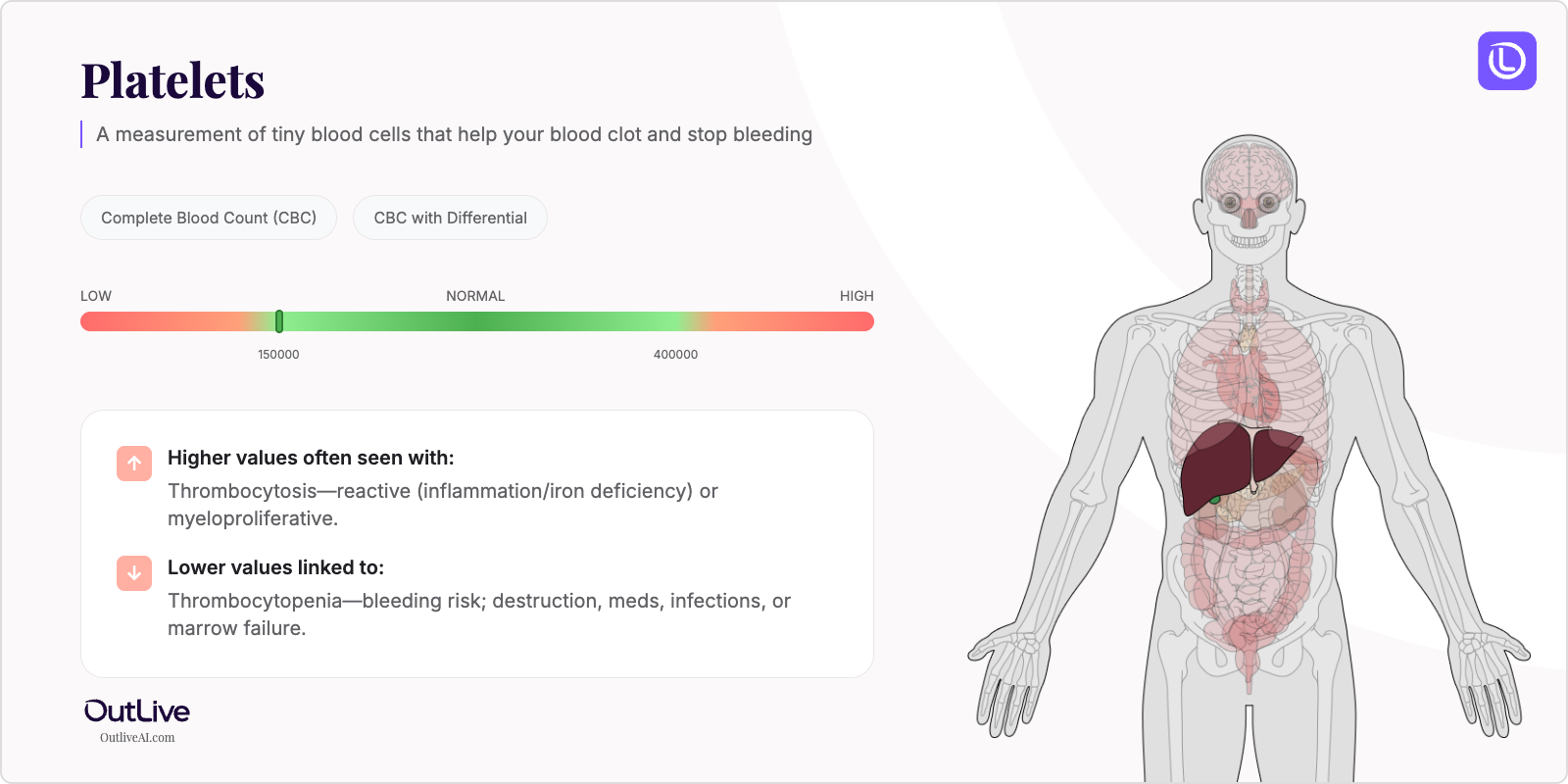
- What it is: A measurement of tiny blood cells that help your blood clot and stop bleeding
- Found in tests: Complete Blood Count (CBC), CBC with Differential
- Normal range: 150,000-400,000 platelets per microliter of blood
If you're looking at your lab results and wondering what platelet count means, you're in the right place. Think of platelets as your body's emergency repair crew – like tiny band-aids floating in your bloodstream, ready to rush to any injury site and patch things up. Let's break down what your numbers mean in plain English.
Why Is Platelet Count Tested?
Your doctor orders a platelet count as part of your Complete Blood Count (CBC), one of the most common blood tests performed. This test gives your healthcare team a snapshot of how well your blood's clotting system is working. It's often ordered during routine check-ups, before surgeries, or when you're experiencing unexplained symptoms.
Doctors specifically look at platelet counts when you have symptoms like easy bruising, frequent nosebleeds, or bleeding that takes longer than usual to stop. They also monitor platelets if you're taking medications that affect blood clotting, undergoing chemotherapy, or have conditions that impact your bone marrow where platelets are made.
This simple test matters because having too many or too few platelets can signal various health conditions – from infections and vitamin deficiencies to more serious blood disorders. Understanding your platelet count helps your doctor determine if your blood can clot properly when needed.
What Does Platelet Count Do in Your Body?
Platelets are the smallest of your blood cells, but they have an enormous job. When you get a cut or injury, platelets are the first responders, sticking together like puzzle pieces to form a plug that stops bleeding. They work alongside proteins in your blood called clotting factors to create a strong mesh that seals wounds.
Your bone marrow produces platelets continuously, releasing millions into your bloodstream where they survive for about 7-10 days. Your spleen, an organ near your stomach, stores extra platelets and removes old ones from circulation. This constant production and removal keeps your platelet count in a delicate balance.
Beyond wound healing, platelets play surprising roles in your immune system and blood vessel health. They interact with white blood cells to fight infections and help maintain the integrity of your blood vessel walls. When platelet counts are off, it affects not just clotting but your overall health resilience.
What Do My Platelet Results Mean?
Normal Platelet Ranges
| Population | Normal Range | Optimal Range |
|---|---|---|
| Adult Male | 150,000-400,000/μL | 200,000-350,000/μL |
| Adult Female | 150,000-400,000/μL | 200,000-350,000/μL |
| Children | 150,000-450,000/μL | 200,000-400,000/μL |
| Pregnancy | 150,000-400,000/μL* | 200,000-350,000/μL |
Note: Reference ranges may vary slightly between laboratories. Always compare your results to the range provided on your specific lab report. Platelet counts may naturally decrease slightly during pregnancy, especially in the third trimester.
What Does High Platelet Count Mean?
Common Causes:
- Iron deficiency anemia (your body produces extra platelets to compensate)
- Recent surgery or trauma (temporary increase as part of healing)
- Chronic inflammatory conditions like rheumatoid arthritis or inflammatory bowel disease
- Certain cancers, particularly blood cancers
- Removal of the spleen (splenectomy)
- Medications like corticosteroids or birth control pills
- Essential thrombocythemia (a bone marrow disorder)
Possible Symptoms:
- Headaches or dizziness
- Chest pain or weakness
- Tingling in hands and feet
- Vision changes
- Easy bruising (paradoxically, too many platelets can interfere with normal clotting)
When to Be Concerned: Platelet counts above 450,000/μL need medical attention, and counts over 1,000,000/μL require immediate evaluation as they significantly increase your risk of blood clots or paradoxical bleeding. Seek immediate care if you experience chest pain, difficulty breathing, sudden weakness, or signs of stroke.
What Does Low Platelet Count Mean?
Common Causes:
- Viral infections (including recent COVID-19, flu, or mononucleosis)
- Certain medications (antibiotics, blood thinners, chemotherapy drugs)
- Autoimmune disorders like lupus or ITP (immune thrombocytopenia)
- Vitamin B12 or folate deficiency
- Excessive alcohol consumption
- Liver disease or cirrhosis
- Enlarged spleen trapping platelets
- Bone marrow disorders like aplastic anemia or leukemia
Possible Symptoms:
- Easy or excessive bruising
- Prolonged bleeding from cuts
- Spontaneous nosebleeds or bleeding gums
- Heavy menstrual periods
- Tiny red spots on skin (petechiae)
- Blood in urine or stool
When to Be Concerned: Platelet counts below 50,000/μL increase bleeding risk and require close monitoring. Counts below 20,000/μL are considered critical and may require immediate treatment. Seek emergency care for uncontrolled bleeding, severe headaches, or blood in vomit or stool.
What Can Affect My Platelet Levels?
Factors That May Increase Levels:
- Medications: Birth control pills, hormone replacement therapy, corticosteroids
- Lifestyle: Smoking, high-altitude living, intense exercise
- Conditions: Recent blood loss, recovery from illness, dehydration
- Supplements: Iron supplements (if treating deficiency)
Factors That May Decrease Levels:
- Medications: Aspirin, ibuprofen, antibiotics (especially penicillin), heparin, chemotherapy drugs
- Lifestyle: Heavy alcohol consumption, poor nutrition, extreme stress
- Conditions: Recent viral infections, pregnancy (mild decrease), autoimmune flares
- Time of Day: Slight variations throughout the day (usually highest in afternoon)
How Is Platelet Count Related to Other Tests?
Platelet count is always evaluated alongside other blood cell counts in your CBC. Your doctor looks at the complete picture, including your red blood cells, white blood cells, and hemoglobin levels to understand what's happening in your body.
Often tested alongside: Red blood cell count, white blood cell count, hemoglobin, hematocrit Part of: Complete Blood Count (CBC) Ratio calculations: Platelet-to-lymphocyte ratio (PLR) for inflammation assessment Follow-up tests: Platelet function tests, bleeding time, coagulation studies, bone marrow biopsy (if severely abnormal)
Frequently Asked Questions
How often should platelet count be tested? For healthy individuals, once a year during routine check-ups is sufficient. If you have a condition affecting platelets or take medications that impact them, your doctor may recommend testing every 3-6 months or more frequently.
Can I improve my platelet levels naturally? For mild imbalances, eating foods rich in folate (leafy greens), vitamin B12 (fish, eggs), and iron (lean meats, beans) can help. Staying hydrated, managing stress, and avoiding excessive alcohol support healthy platelet production.
Should I fast before a platelet count test? No fasting is required for a platelet count test. You can eat and drink normally before your blood draw.
How quickly can platelet levels change? Platelet counts can change within days to weeks depending on the cause. Infections may drop counts within 2-3 days, while recovery typically takes 1-2 weeks after the underlying issue resolves.
Next Steps After Your Platelet Count Test
Questions to Ask Your Doctor:
- What do my platelet results mean for my overall health?
- Are my levels related to my current symptoms?
- Do I need additional testing to find the cause?
- Should we monitor this over time?
- Are there lifestyle changes that could help normalize my count?
Download our Platelet Count Doctor Questions Checklist
🔬 Ready to Track Your Platelet Count Over Time?
Understanding a single platelet result is just the beginning. Our free Lab Analyzer tool helps you:
- Track how your platelet count changes over time
- See how it relates to your other lab values
- Identify patterns your doctor might miss
- Get personalized insights based on your trends
[Upload Your Lab Report for Free Analysis →]