
📋 At a Glance
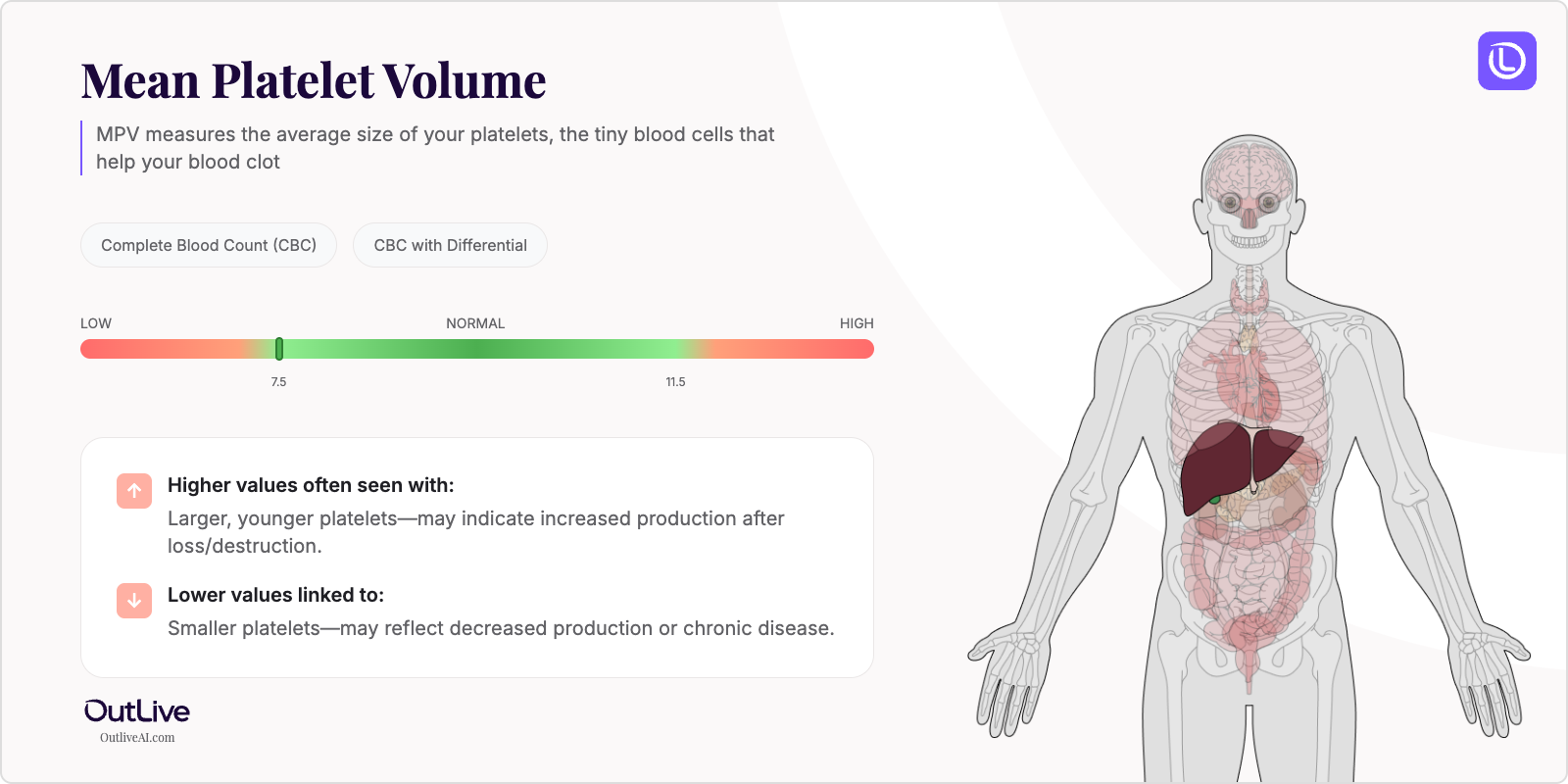
- What it is: MPV measures the average size of your platelets, the tiny blood cells that help your blood clot
- Found in tests: Complete Blood Count (CBC), CBC with Differential
- Normal range: 7.5-11.5 femtoliters (fL) for most adults
If you're looking at your lab results and wondering what MPV means, you're in the right place. Think of MPV as a quality control measure for your body's bandage-makers – it tells us whether your platelets are coming off the production line in the right size. Just like Goldilocks looking for the perfect porridge, we want your platelets to be not too big, not too small, but just right. Let's break down what your numbers mean in plain English.
Why Is MPV Tested?
Your doctor includes MPV as part of your Complete Blood Count (CBC) because it provides valuable clues about how well your bone marrow is producing platelets and how your body is using them. This simple measurement can reveal a surprising amount about what's happening inside your body, often before you notice any symptoms.
MPV testing becomes particularly important when you're experiencing unexplained bruising, excessive bleeding, or when your platelet count is abnormal. It helps your doctor understand whether a platelet problem is due to production issues in your bone marrow or increased destruction in your bloodstream. Think of it as checking not just how many workers showed up to the job site, but whether they brought the right tools for the job.
Doctors also monitor MPV when tracking certain chronic conditions like cardiovascular disease, diabetes, or autoimmune disorders. Changes in platelet size can sometimes signal that these conditions are becoming more active or that treatment adjustments might be needed.
What Does MPV Do in Your Body?
MPV doesn't actually "do" anything itself – it's a measurement that tells us about your platelets' characteristics. Your platelets are like tiny emergency responders circulating in your bloodstream, ready to rush to any injury site and form a plug to stop bleeding. The size of these platelets matters because larger platelets tend to be younger and more reactive, while smaller ones are usually older and less active.
Your bone marrow constantly produces new platelets to replace old ones, which typically live for about 7-10 days. When your body needs more clotting power quickly – perhaps due to bleeding or inflammation – your bone marrow releases younger, larger platelets into circulation. This is why MPV can rise during certain illnesses or conditions. It's your body's way of sending out the most effective emergency responders when they're needed most.
The relationship between platelet size and function is remarkably consistent. Larger platelets contain more granules – think of them as emergency supply kits – packed with clotting factors and other substances that help stop bleeding and promote healing. This is why understanding your MPV helps your doctor assess not just the quantity of your platelets, but their quality and readiness to respond to injury.
What Do My MPV Results Mean?
Normal MPV Ranges
| Population | Normal Range | Optimal Range |
|---|---|---|
| Adult Male | 7.5-11.5 fL | 8.5-10.5 fL |
| Adult Female | 7.5-11.5 fL | 8.5-10.5 fL |
| Children (2-12 years) | 7.4-10.8 fL | 8.0-10.0 fL |
| Pregnancy | 7.5-12.0 fL | 8.5-11.0 fL |
Note: Reference ranges may vary slightly between laboratories. Always compare your results to the range provided on your specific lab report.
What Does High MPV Mean?
Common Causes:
- Immune Thrombocytopenia (ITP): Your immune system mistakenly attacks platelets, causing your bone marrow to produce larger, younger replacements
- Cardiovascular conditions: Heart disease and stroke risk can be associated with larger, more reactive platelets
- Diabetes: Poorly controlled blood sugar can lead to increased platelet size and reactivity
- Hyperthyroidism: An overactive thyroid gland can stimulate increased platelet production
- Vitamin D deficiency: Low vitamin D levels have been linked to increased MPV
- Recent blood loss: Your body produces larger platelets to enhance clotting ability
- Certain cancers: Some blood cancers and solid tumors can affect platelet production
Possible Symptoms:
- Easy bruising or petechiae (small red spots on skin)
- Prolonged bleeding from cuts
- Heavy menstrual periods
- Fatigue (if associated with anemia)
- Headaches or dizziness
When to Be Concerned: An MPV above 12 fL, especially when combined with abnormal platelet counts or unexplained bleeding or clotting symptoms, warrants prompt medical attention. If your MPV is elevated along with chest pain, sudden weakness, or difficulty breathing, seek immediate medical care as these could indicate a cardiovascular event.
What Does Low MPV Mean?
Common Causes:
- Aplastic anemia: Bone marrow fails to produce enough blood cells, including platelets
- Inflammatory bowel disease: Crohn's disease or ulcerative colitis can affect platelet production
- Chemotherapy effects: Cancer treatments can suppress bone marrow function
- Certain medications: Some drugs like valproic acid can reduce platelet size
- Chronic kidney disease: Kidney problems can affect platelet production and size
- Iron deficiency anemia: Low iron can lead to smaller platelet production
- Wiskott-Aldrich syndrome: A rare genetic disorder affecting platelet size
Possible Symptoms:
- Increased susceptibility to infections
- Fatigue and weakness
- Pale skin
- Shortness of breath
- Dizziness or lightheadedness
When to Be Concerned: An MPV below 7 fL, particularly if accompanied by a low platelet count or signs of bleeding, requires medical evaluation. If you experience severe fatigue, recurring infections, or unexplained bleeding with a low MPV, contact your healthcare provider promptly.
What Can Affect My MPV Levels?
Factors That May Increase Levels:
- Medications: Oral contraceptives, some antibiotics, corticosteroids
- Lifestyle: Smoking, high altitude living, intense exercise
- Conditions: Recent surgery, pregnancy, dehydration
- Supplements: High-dose vitamin B12, folate supplements
Factors That May Decrease Levels:
- Medications: Aspirin, chemotherapy drugs, some anti-seizure medications
- Lifestyle: Excessive alcohol consumption, poor nutrition
- Conditions: Recent viral infections, spleen enlargement
- Time of Day: MPV can be slightly lower in the morning
How Is MPV Related to Other Tests?
MPV is like a supporting actor that helps complete the story your other blood tests are telling. It's always measured alongside your platelet count in a CBC, providing context about platelet quality versus quantity. Think of platelet count as telling you how many firefighters you have, while MPV tells you how well-equipped each one is.
Often tested alongside: Platelet count, PDW (Platelet Distribution Width), White Blood Cell count, Hemoglobin Part of: Complete Blood Count (CBC), CBC with Differential Ratio calculations: MPV/Platelet count ratio (used in some cardiovascular risk assessments) Follow-up tests: Platelet function tests, coagulation studies, bone marrow biopsy (if indicated)
Frequently Asked Questions
How often should MPV be tested? For most people, MPV is checked annually as part of routine CBC testing. If you have a condition affecting your platelets or are on medications that impact blood cells, your doctor may recommend testing every 3-6 months.
Can I improve my MPV levels naturally? Yes, maintaining a healthy lifestyle can help normalize MPV. This includes eating a balanced diet rich in omega-3 fatty acids, staying hydrated, managing stress, avoiding smoking, and getting regular exercise. However, always work with your doctor to address underlying causes.
Should I fast before an MPV test? No fasting is required for MPV testing. You can eat and drink normally before your blood draw, which makes this test very convenient.
How quickly can MPV levels change? MPV can change within days to weeks depending on the cause. Acute conditions like infections can alter MPV within 24-48 hours, while lifestyle changes typically show effects over several weeks to months.
Next Steps After Your MPV Test
Questions to Ask Your Doctor:
- What do my MPV results mean for my overall health?
- Are my levels related to my symptoms?
- Do I need additional testing?
- Should we monitor this over time?
- Are there lifestyle changes that could help?
Download our MPV Doctor Questions Checklist
🔬 Ready to Track Your MPV Over Time?
Understanding a single MPV result is just the beginning. Our free Lab Analyzer tool helps you:
- Track how your MPV changes over time
- See how it relates to your other lab values
- Identify patterns your doctor might miss
- Get personalized insights based on your trends
[Upload Your Lab Report for Free Analysis →]