
📋 At a Glance
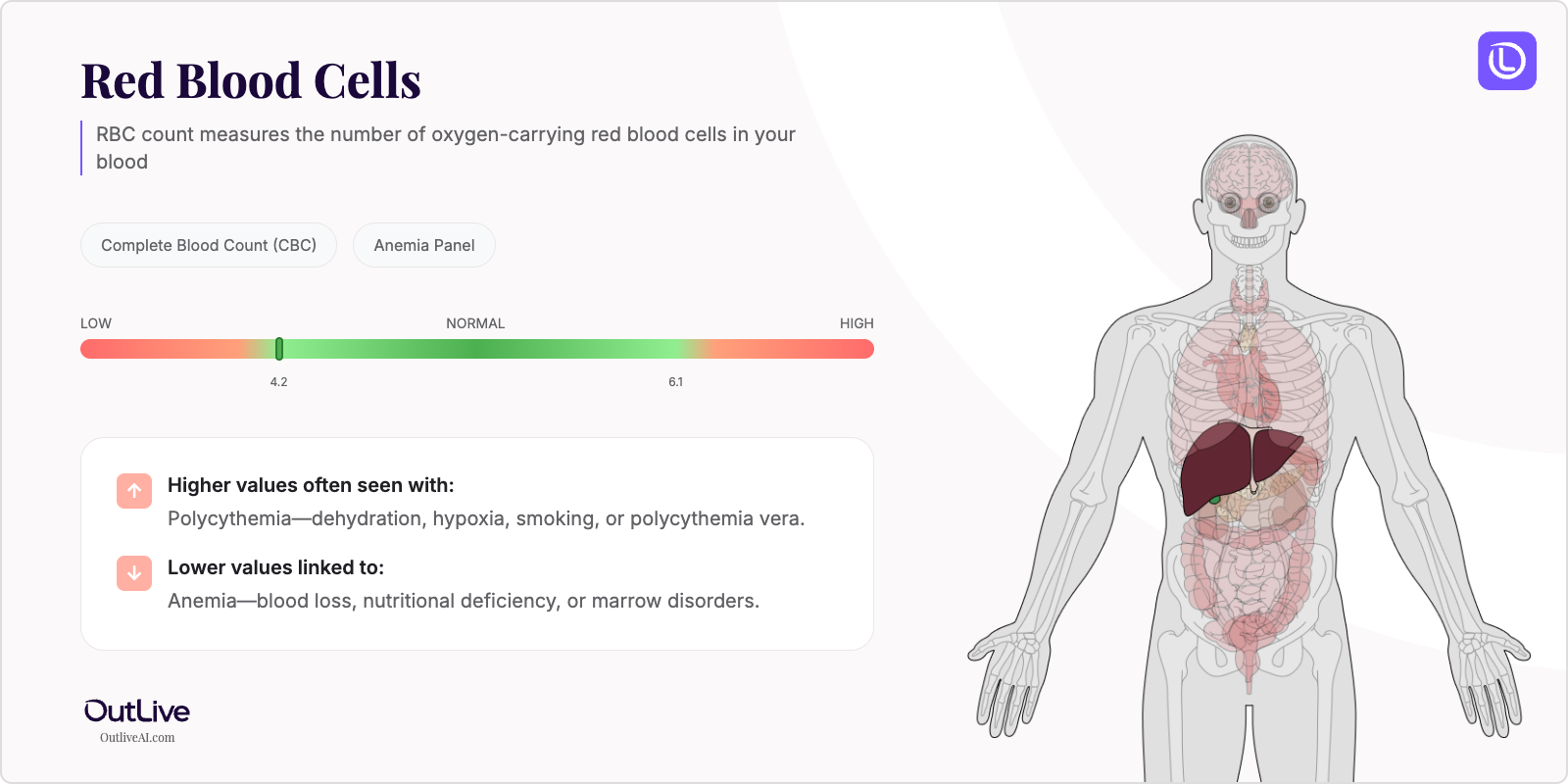
- What it is: RBC count measures the number of oxygen-carrying red blood cells in your blood
- Found in tests: Complete Blood Count (CBC), Anemia Panel
- Normal range: Men: 4.7-6.1 million cells/mcL | Women: 4.2-5.4 million cells/mcL
If you're looking at your lab results and wondering what your RBC or red blood cell count means, you're in the right place. Think of red blood cells as your body's delivery fleet—millions of tiny trucks carrying oxygen from your lungs to every tissue in your body and bringing carbon dioxide back for removal. When your RBC count is off, it's like having too many or too few delivery trucks on the road, affecting how efficiently your body gets the oxygen it needs. Let's break down what your numbers mean in plain English.
Why Is Red Blood Cell Count Tested?
Your doctor orders an RBC count as part of a Complete Blood Count (CBC), one of the most fundamental blood tests in medicine. It's like taking inventory of your oxygen delivery system to ensure you have the right number of vehicles making deliveries throughout your body.
RBC testing is crucial when investigating symptoms of anemia such as fatigue, weakness, pale skin, shortness of breath, or dizziness. These symptoms suggest your tissues aren't getting enough oxygen, often due to too few red blood cells. The test is also essential for detecting polycythemia—too many red blood cells—which can thicken your blood and increase clot risk.
During routine health screenings, RBC counts help catch problems before symptoms develop. If you have chronic conditions like kidney disease, heart disease, or lung disorders that affect oxygen levels, regular RBC monitoring tracks how these conditions impact your blood. The test also monitors responses to treatments like iron supplementation for anemia or therapeutic phlebotomy for polycythemia. Before surgery, doctors check your RBC to ensure you can handle potential blood loss and maintain adequate oxygen delivery during recovery.
What Does Red Blood Cell Count Do in Your Body?
Red blood cells are your body's oxygen transport specialists, produced in your bone marrow at an astounding rate of about 2 million cells per second. These cells live for approximately 120 days, constantly circulating through your bloodstream to deliver life-sustaining oxygen to every cell in your body.
Each red blood cell is packed with hemoglobin, an iron-containing protein that binds to oxygen in your lungs and releases it in your tissues. Your RBC count tells doctors how many of these oxygen carriers you have, while related tests like hemoglobin and hematocrit provide additional information about their quality and concentration. Together, these measurements paint a complete picture of your oxygen-carrying capacity.
Your body carefully regulates RBC production through a hormone called erythropoietin (EPO), primarily made by your kidneys. When oxygen levels drop, your kidneys produce more EPO, signaling your bone marrow to increase red blood cell production. This elegant feedback system usually maintains your RBC count within a narrow range, so abnormal values often indicate an underlying health issue that needs attention.
What Do My RBC Results Mean?
Normal RBC Ranges
Red blood cell counts vary by sex, age, and altitude. Here are the typical ranges:
| Population | Normal Range | Optimal Range |
|---|---|---|
| Adult Male | 4.7-6.1 million cells/mcL | 5.0-5.5 million cells/mcL |
| Adult Female | 4.2-5.4 million cells/mcL | 4.5-5.0 million cells/mcL |
| Children (6-12 years) | 4.0-5.5 million cells/mcL | Varies by age |
| Newborns | 4.8-7.1 million cells/mcL | Decreases over first months |
| Pregnancy | 3.8-5.0 million cells/mcL | Lower due to blood volume expansion |
| High Altitude ( >8,000 ft) | 5-10% higher | Adaptation to lower oxygen |
Note: Reference ranges may vary slightly between laboratories. Always compare your results to the range provided on your specific lab report.
What Does High RBC (Polycythemia) Mean?
When your RBC count exceeds the upper normal limit, it's called polycythemia or erythrocytosis. This thickens your blood, potentially impeding flow and increasing clot risk.
Common Causes:
- Dehydration - Concentrates blood cells; most common and reversible cause
- Living at high altitude - Body adapts by producing more RBCs for oxygen capture
- Smoking - Carbon monoxide triggers compensatory RBC production
- Sleep apnea - Nighttime oxygen deprivation stimulates RBC production
- Lung diseases - COPD or pulmonary fibrosis reduce oxygen uptake
- Heart disease - Congenital heart defects causing chronic low oxygen
- Polycythemia vera - Rare blood cancer causing excessive RBC production
- Kidney tumors - Can produce excess erythropoietin
- Performance-enhancing drugs - EPO or testosterone abuse
Possible Symptoms:
- Headaches and dizziness
- Blurred vision
- Red or flushed face
- Itching, especially after hot showers
- Fatigue despite high RBC
- High blood pressure
- Blood clots or stroke symptoms
When to Be Concerned: RBC counts persistently above 6.5 million cells/mcL in men or 5.8 million cells/mcL in women require investigation. Very high counts increase risk of blood clots, stroke, and heart attack. If you have high RBC with headaches, vision changes, or chest pain, seek immediate medical attention.
What Does Low RBC (Anemia) Mean?
When your RBC count falls below normal, you have too few oxygen carriers, a condition contributing to anemia.
Common Causes:
- Iron deficiency - Most common cause; inadequate iron for RBC production
- Vitamin deficiencies - B12 deficiency or folate deficiency
- Chronic diseases - Kidney disease, cancer, rheumatoid arthritis
- Blood loss - Heavy menstruation, GI bleeding, trauma, frequent blood donation
- Bone marrow disorders - Aplastic anemia, myelodysplastic syndromes
- Hemolytic conditions - RBC destruction (sickle cell disease, autoimmune hemolytic anemia)
- Pregnancy - Normal dilution from increased blood volume
- Chronic kidney disease - Reduced erythropoietin production
- Medications - Chemotherapy, some antibiotics, anti-seizure drugs
Possible Symptoms:
- Fatigue and weakness
- Pale skin, lips, and nail beds
- Shortness of breath
- Dizziness or lightheadedness
- Cold hands and feet
- Rapid or irregular heartbeat
- Headaches
- Difficulty concentrating
When to Be Concerned: RBC counts below 3.5 million cells/mcL often cause noticeable symptoms requiring treatment. Severe anemia (below 2.5 million cells/mcL) can strain your heart and requires urgent evaluation. If you experience chest pain, severe shortness of breath, or fainting with low RBC, seek immediate care.
What Can Affect My RBC Levels?
Factors That May Increase Levels:
- Medications: Testosterone, erythropoietin, corticosteroids
- Lifestyle: Smoking, dehydration, high-altitude living, intense athletic training
- Conditions: Sleep disorders, chronic hypoxia, stress
- Supplements: Iron supplements (if previously deficient)
- Time factors: Levels slightly higher in morning
Factors That May Decrease Levels:
- Medications: Chemotherapy, antibiotics (chloramphenicol), ACE inhibitors, hydralazine
- Lifestyle: Overhydration, alcohol abuse, vegetarian/vegan diet (without B12 supplementation)
- Conditions: Recent blood donation, menstruation, pregnancy, aging
- Nutritional: Poor diet, malabsorption disorders
- Exercise: Endurance athletes may have lower counts due to plasma volume expansion
How Is RBC Related to Other Tests?
Your RBC count is one piece of a comprehensive blood picture and is always interpreted alongside related measurements.
Often tested alongside:
- Hemoglobin - The oxygen-carrying protein in RBCs
- Hematocrit - Percentage of blood volume occupied by RBCs
- MCV - Average size of your red blood cells
- MCH and MCHC - Hemoglobin content of RBCs
- RDW - Variation in RBC size
- Reticulocyte count - Young RBCs, indicating production rate
Part of these test panels:
- Complete Blood Count (CBC) - Always includes RBC
- Anemia Panel - Comprehensive anemia evaluation
- Pre-operative screening - Ensures adequate oxygen delivery for surgery
Follow-up tests if abnormal:
- Iron studies - If anemia suspected
- Vitamin B12 and folate levels - For macrocytic anemia
- Reticulocyte count - Assess bone marrow response
- Hemoglobin electrophoresis - For inherited disorders
- Bone marrow biopsy - If production problem suspected
- Erythropoietin level - Evaluate kidney function
Frequently Asked Questions
How often should RBC be tested?
For healthy adults, annual testing during routine check-ups is sufficient. If you have anemia, polycythemia, or conditions affecting RBC, your doctor may recommend testing every 3-6 months or more frequently during treatment adjustments.
Can I improve my RBC levels naturally?
For low RBC due to nutritional deficiencies, eating iron-rich foods (red meat, leafy greens, legumes) with vitamin C for absorption, plus adequate B12 and folate can help. Stay hydrated, get enough sleep, and exercise moderately. However, medical causes require proper diagnosis and treatment.
Should I fast before an RBC test?
No fasting is required for an RBC count. You can eat and drink normally. However, being well-hydrated ensures accurate results, as dehydration can falsely elevate your count.
How quickly can RBC levels change?
RBC counts change slowly because red blood cells live about 120 days. After starting iron supplements for deficiency, it typically takes 2-3 weeks to see improvement and 2-3 months for full correction. Acute changes usually reflect hydration status rather than actual cell number changes.
Why is my RBC different from my hemoglobin?
While related, they measure different things. RBC counts cells, while hemoglobin measures the oxygen-carrying protein. You can have normal RBC with low hemoglobin (cells lacking iron) or low RBC with normal hemoglobin (fewer but well-filled cells).
Next Steps After Your RBC Test
Questions to Ask Your Doctor:
- What do my RBC results mean alongside my other CBC values?
- Could my symptoms be related to my RBC count?
- Do I need iron studies or vitamin levels checked?
- What's causing my abnormal RBC count?
- How often should I recheck my levels?
- Are there lifestyle changes that could help?
- Should I see a hematologist (blood specialist)?
[Download our RBC Doctor Questions Checklist](#
🔬 Ready to Track Your RBC Over Time?
Understanding a single RBC result is just the beginning. Our free Lab Analyzer tool helps you:
- Track how your RBC changes over time
- See how it relates to your hemoglobin and iron levels
- Identify patterns your doctor might miss
- Get personalized insights based on your trends
[Upload Your Lab Report for Free Analysis →]
Remember, your RBC count is a fundamental indicator of your blood's oxygen-carrying capacity. While abnormal results can be concerning, most causes are treatable once identified. Whether you're dealing with anemia or polycythemia, understanding your RBC count empowers you to work with your healthcare provider toward optimal health. Always discuss your results in context with your symptoms and other lab values for the complete picture.