
📋 At a Glance
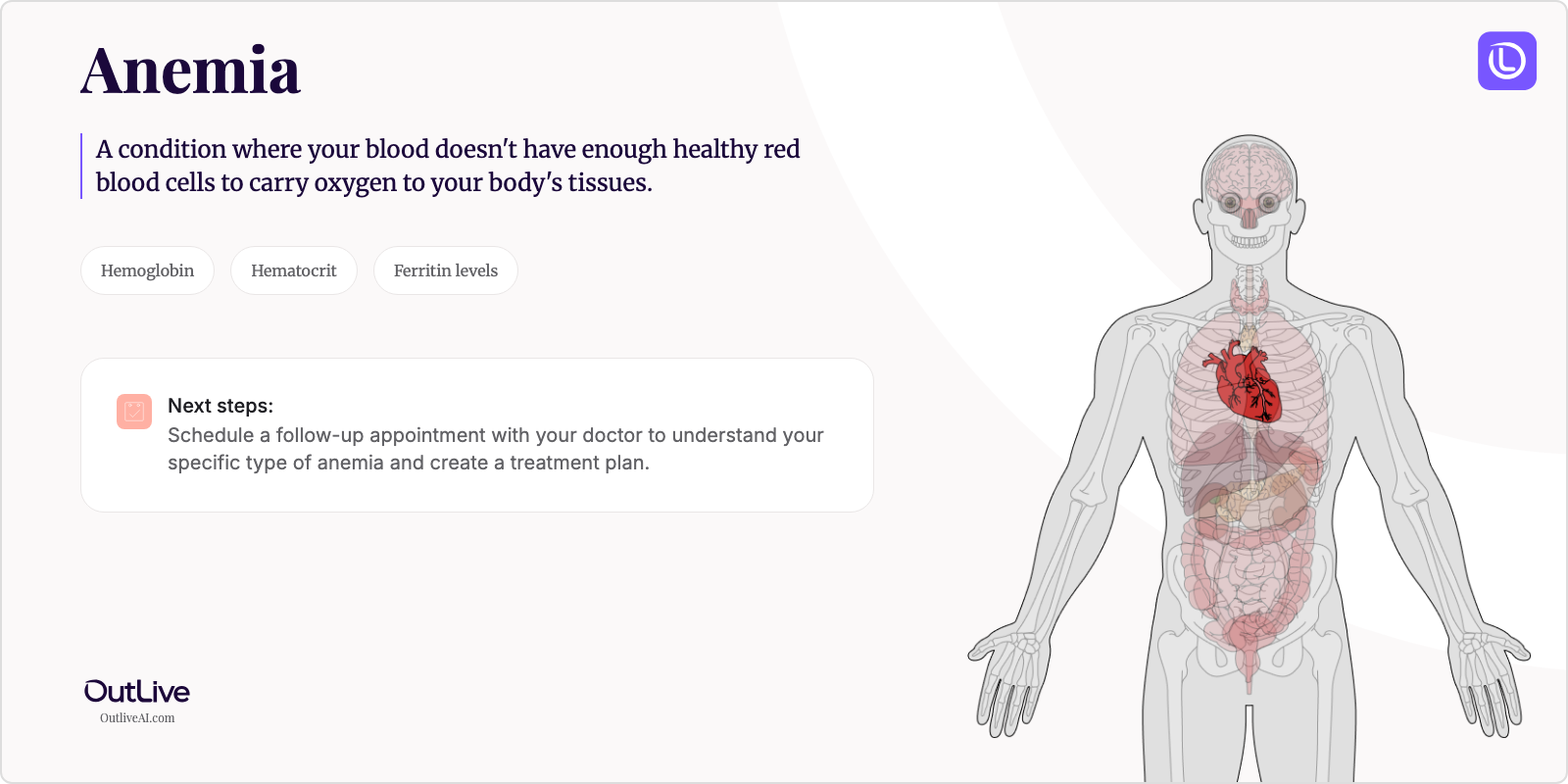
- What it is: A condition where your blood doesn't have enough healthy red blood cells to carry oxygen to your body's tissues.
- Key lab tests: Hemoglobin, Hematocrit, and Ferritin levels
- Your first goal: Schedule a follow-up appointment with your doctor to understand your specific type of anemia and create a treatment plan.
Receiving a new diagnosis for Anemia can be overwhelming. You might be feeling anxious, confused, and unsure of what comes next. That's completely normal. This guide is here to help you understand your condition in simple terms, know which lab tests matter most, and feel prepared for your next steps.
First, Take a Breath: What is Anemia in Simple Terms?
Think of your red blood cells as delivery trucks carrying oxygen to every part of your body. When you have anemia, you either don't have enough trucks (red blood cells), or the trucks you have aren't working properly. This means your body's tissues aren't getting the oxygen they need, which is why you might feel tired, weak, or short of breath. The good news is that anemia is very treatable once we understand what's causing your particular shortage of "delivery trucks."
Understanding Your Diagnosis: The Key Lab Tests
This is the most important section. List the 2-4 most critical biomarkers used to diagnose and monitor Anemia. For each one, provide a one-sentence explanation and link to its full biomarker page.
Key Tests for Anemia:
- Hemoglobin: This measures the protein in your red blood cells that actually carries oxygen - think of it as checking how much cargo space your delivery trucks have.
- Hematocrit: This tells us what percentage of your blood is made up of red blood cells - essentially counting how many delivery trucks you have on the road.
- Ferritin: This measures your body's iron stores - iron is like the fuel that helps build and maintain your red blood cells.
- Mean Corpuscular Volume (MCV): This measures the average size of your red blood cells - helping us understand if your "trucks" are the right size or if they're too small or too large.
Your First Specialist Appointment: What to Ask
What to Expect: You'll likely see either your primary care doctor for follow-up or be referred to a hematologist (a blood specialist). During this appointment, your doctor will review your lab results in detail, ask about your symptoms and medical history, and may order additional tests to determine the specific cause of your anemia. The appointment typically lasts 30-45 minutes, and you should bring a list of all medications and supplements you're taking.
Questions to Ask Your Doctor:
- What specific type of anemia do I have, and what's causing it?
- How severe is my anemia on a scale from mild to severe?
- Will I need additional tests to find the underlying cause?
- What treatment options are available for my type of anemia?
- How long will it take for treatment to improve my symptoms?
Download our [Checklist of Questions to Ask Your Anemia Specialist](# to feel prepared.
How to Track Your Journey
Tracking your Anemia journey is crucial for understanding how your treatment is working and spotting important trends. Here's what you should monitor:
Symptoms to Track:
- Energy levels throughout the day (rate them 1-10)
- Episodes of dizziness or lightheadedness
- Shortness of breath during normal activities
- Headache frequency and intensity
- Heart palpitations or rapid heartbeat
Lab Results to Monitor:
- Hemoglobin levels - Usually checked every 4-12 weeks initially
- Ferritin levels - Checked every 3-6 months if iron deficiency is involved
- Complete Blood Count (CBC) - Checked at each follow-up visit
Why Tracking Matters: Tracking helps you and your doctor see patterns that might not be obvious from a single appointment. For example, you might notice your energy improves gradually over weeks, or that certain activities trigger symptoms. This information helps your doctor adjust your treatment plan and gives you a sense of control over your health journey.
Next Steps After Your Diagnosis
Immediate Actions (This Week):
- Schedule your follow-up appointment with your doctor
- Start a symptom diary to track how you feel each day
- Gather all your recent lab results in one place
- Make a list of all medications and supplements you're currently taking
Short-term Goals (Next Month):
- Complete any additional testing your doctor recommends
- Begin your prescribed treatment plan
- Adjust your daily activities to conserve energy while you're recovering
- Learn about dietary changes that might help your specific type of anemia
Long-term Management:
- Establish a regular monitoring schedule with your healthcare team
- Develop sustainable lifestyle habits that support healthy blood production
- Build a support system of family, friends, and healthcare providers
Frequently Asked Questions
How quickly can I expect to feel better? This varies depending on your type of anemia and its severity. With iron deficiency anemia, you might start feeling more energetic within 2-3 weeks of treatment, though it can take 3-6 months to fully replenish iron stores. Other types may have different timelines, which your doctor can discuss with you.
Will I need to change my diet? Many people with anemia benefit from dietary changes. If you have iron deficiency anemia, you'll want to include iron-rich foods like lean meats, beans, and leafy greens. Your doctor might also recommend vitamin C to help iron absorption. The specific recommendations depend on your type of anemia.
How often will I need to see my doctor? Initially, you'll likely have follow-up appointments every 4-6 weeks to monitor your response to treatment. Once your levels stabilize, visits may decrease to every 3-6 months. Your doctor will create a schedule based on your specific needs.
Can I still exercise/work/travel? Most people with mild to moderate anemia can continue their normal activities with some modifications. Listen to your body - you may need to reduce intensity or take more breaks. As your treatment progresses and your energy improves, you can gradually return to your usual activity level.
When to Seek Immediate Medical Attention
Contact your doctor immediately if you experience:
- Chest pain or pressure
- Severe shortness of breath that doesn't improve with rest
- Fainting or severe dizziness
- Rapid or irregular heartbeat that persists
- Unusual bleeding or bruising
- Severe headache or confusion
🔬 Ready to Organize Your Health Journey?
Understanding your condition is the first step. Our free Lab Analyzer tool helps you:
- Track all your lab results for Anemia in one place
- Spot important trends over time
- Generate personalized questions for your doctor
[Upload Your Lab Report for Free Analysis →]