
📋 At a Glance
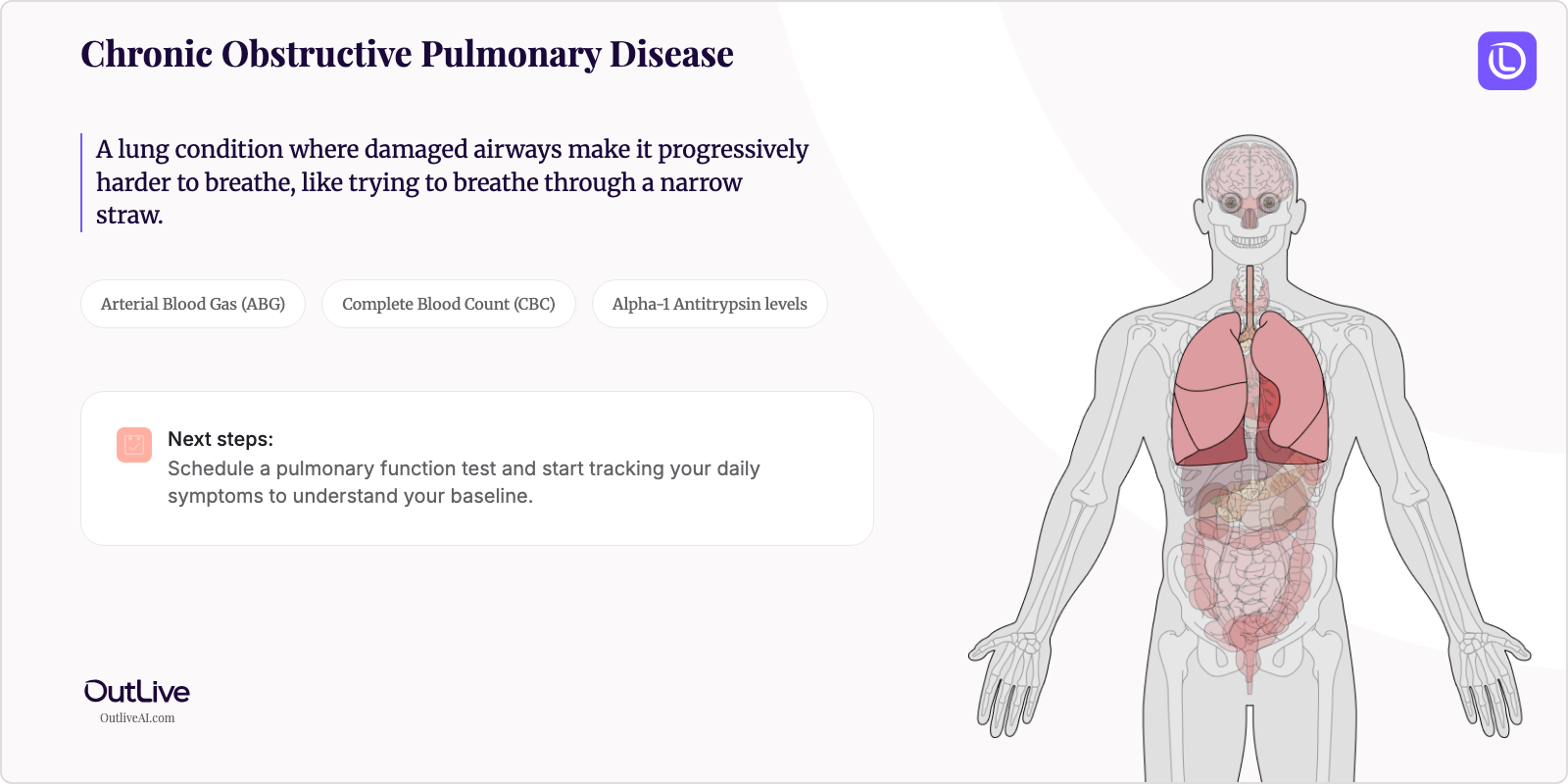
- What it is: A lung condition where damaged airways make it progressively harder to breathe, like trying to breathe through a narrow straw.
- Key lab tests: Arterial Blood Gas (ABG), Complete Blood Count (CBC), and Alpha-1 Antitrypsin levels
- Your first goal: Schedule a pulmonary function test and start tracking your daily symptoms to understand your baseline.
Receiving a new diagnosis for Chronic Obstructive Pulmonary Disease can be overwhelming. You might be feeling anxious, confused, and unsure of what comes next. That's completely normal. This guide is here to help you understand your condition in simple terms, know which lab tests matter most, and feel prepared for your next steps.
First, Take a Breath: What is Chronic Obstructive Pulmonary Disease in Simple Terms?
Imagine your lungs as a tree with millions of tiny branches (airways) ending in small balloons (air sacs). In COPD, these branches become inflamed and narrowed, while the balloons lose their elasticity - like old rubber bands that don't snap back anymore. This makes it harder for air to flow in and especially out of your lungs, leaving you feeling short of breath. Think of it like trying to breathe through a coffee stirrer instead of a regular straw - you have to work much harder to get the same amount of air. The good news is that while COPD can't be cured, it can be managed effectively with the right treatment plan, allowing many people to maintain active, fulfilling lives.
Understanding Your Diagnosis: The Key Lab Tests
This is the most important section. List the 2-4 most critical biomarkers used to diagnose and monitor Chronic Obstructive Pulmonary Disease. For each one, provide a one-sentence explanation and link to its full biomarker page.
Key Tests for Chronic Obstructive Pulmonary Disease:
- Arterial Blood Gas (ABG): This test measures oxygen and carbon dioxide levels in your blood, showing how well your lungs are transferring oxygen to your bloodstream and removing waste gases.
- Complete Blood Count (CBC): This checks for elevated red blood cells (polycythemia), which your body may produce to compensate for low oxygen levels, and helps monitor for infections that COPD patients are prone to.
- Alpha-1 Antitrypsin: This test checks for a genetic deficiency that can cause COPD at a younger age, important for understanding your specific type of COPD and informing family members about their risk.
- C-Reactive Protein (CRP): This inflammation marker helps track disease activity and predict flare-ups, as higher levels often indicate worsening COPD or complications.
Your First Specialist Appointment: What to Ask
What to Expect: You'll likely see a pulmonologist (lung specialist) who will perform a thorough breathing assessment including spirometry - a simple test where you blow into a tube to measure your lung function. They'll review your medical history, discuss your symptoms, and may order a chest X-ray or CT scan. The appointment typically lasts 45-60 minutes, and you should bring a list of all medications, your symptom diary if you've started one, and any previous test results.
Questions to Ask Your Doctor:
- "What stage is my COPD, and what does that mean for my daily life and prognosis?"
- "Should I be tested for Alpha-1 Antitrypsin deficiency, and do my family members need testing?"
- "What are my specific triggers for flare-ups, and how can I avoid them?"
- "When should I use my rescue inhaler versus my maintenance medications?"
- "What vaccination schedule do you recommend to prevent respiratory infections?"
Download our [Checklist of Questions to Ask Your Chronic Obstructive Pulmonary Disease Specialist](# to feel prepared.
How to Track Your Journey
Tracking your Chronic Obstructive Pulmonary Disease journey is crucial for understanding how your treatment is working and spotting important trends. Here's what you should monitor:
Symptoms to Track:
- Breathlessness level (rate 1-10) during different activities like walking, climbing stairs, or at rest
- Cough frequency and whether it's productive (bringing up mucus) - note the color and amount
- Energy levels throughout the day and any patterns you notice
Lab Results to Monitor:
- Spirometry (FEV1) - Every 6-12 months to track lung function changes
- Arterial Blood Gas - During flare-ups or if symptoms worsen
- Complete Blood Count - Every 3-6 months or as directed
Why Tracking Matters: Tracking helps you and your doctor identify patterns that predict flare-ups before they become severe. For example, you might notice your breathlessness increases two days before you develop a chest infection. This early warning system allows for prompt treatment, potentially avoiding hospitalization. It also shows how well your medications are working and whether adjustments are needed.
Next Steps After Your Diagnosis
Immediate Actions (This Week):
- If you smoke, contact a smoking cessation program - this is the single most important step you can take
- Learn proper inhaler technique (ask for a demonstration and practice with your pharmacist)
- Start a simple symptom diary noting your breathing, activity level, and any triggers
Short-term Goals (Next Month):
- Complete pulmonary rehabilitation assessment if recommended by your doctor
- Get vaccinated against flu and pneumonia if you haven't already
- Create an action plan with your doctor for managing flare-ups
Long-term Management:
- Establish a regular exercise routine appropriate for your fitness level
- Build a support network including family, friends, and possibly a COPD support group
- Regular monitoring with your healthcare team every 3-6 months
Frequently Asked Questions
How quickly can I expect to feel better? Many people notice improvement within 2-4 weeks of starting bronchodilator medications, though full benefits may take 2-3 months. Quitting smoking can improve symptoms within days to weeks, while pulmonary rehabilitation typically shows benefits after 6-8 weeks of participation.
Will I need to change my diet? Yes, nutrition plays an important role. You may need smaller, more frequent meals if large meals make breathing difficult. Focus on nutrient-dense foods, maintain a healthy weight (being underweight or overweight can worsen symptoms), and stay hydrated to keep mucus thin and easier to clear.
How often will I need to see my doctor? Initially, expect monthly visits until your treatment plan is optimized. Once stable, most patients see their pulmonologist every 3-6 months, with primary care visits in between. During flare-ups or medication changes, you'll need more frequent monitoring.
Can I still exercise/work/travel? Absolutely! Exercise is crucial for COPD management - start slowly with activities like walking or chair exercises. Many people continue working with accommodations like avoiding irritants or adjusting physical demands. Travel is possible with planning - bring extra medications, get travel oxygen if needed, and know healthcare facilities at your destination.
When to Seek Immediate Medical Attention
Contact your doctor immediately if you experience:
- Sudden worsening of breathlessness that doesn't improve with your rescue inhaler
- Chest pain, rapid heartbeat, or feeling like you're going to pass out
- Fever with increased cough and change in mucus color (yellow, green, or blood-tinged)
- Swelling in your ankles or legs (could indicate heart strain)
- Confusion, extreme drowsiness, or blue/gray color in lips or fingernails
🔬 Ready to Organize Your Health Journey?
Understanding your condition is the first step. Our free Lab Analyzer tool helps you:
- Track all your lab results for Chronic Obstructive Pulmonary Disease in one place
- Spot important trends over time
- Generate personalized questions for your doctor
[Upload Your Lab Report for Free Analysis →]