
📋 At a Glance
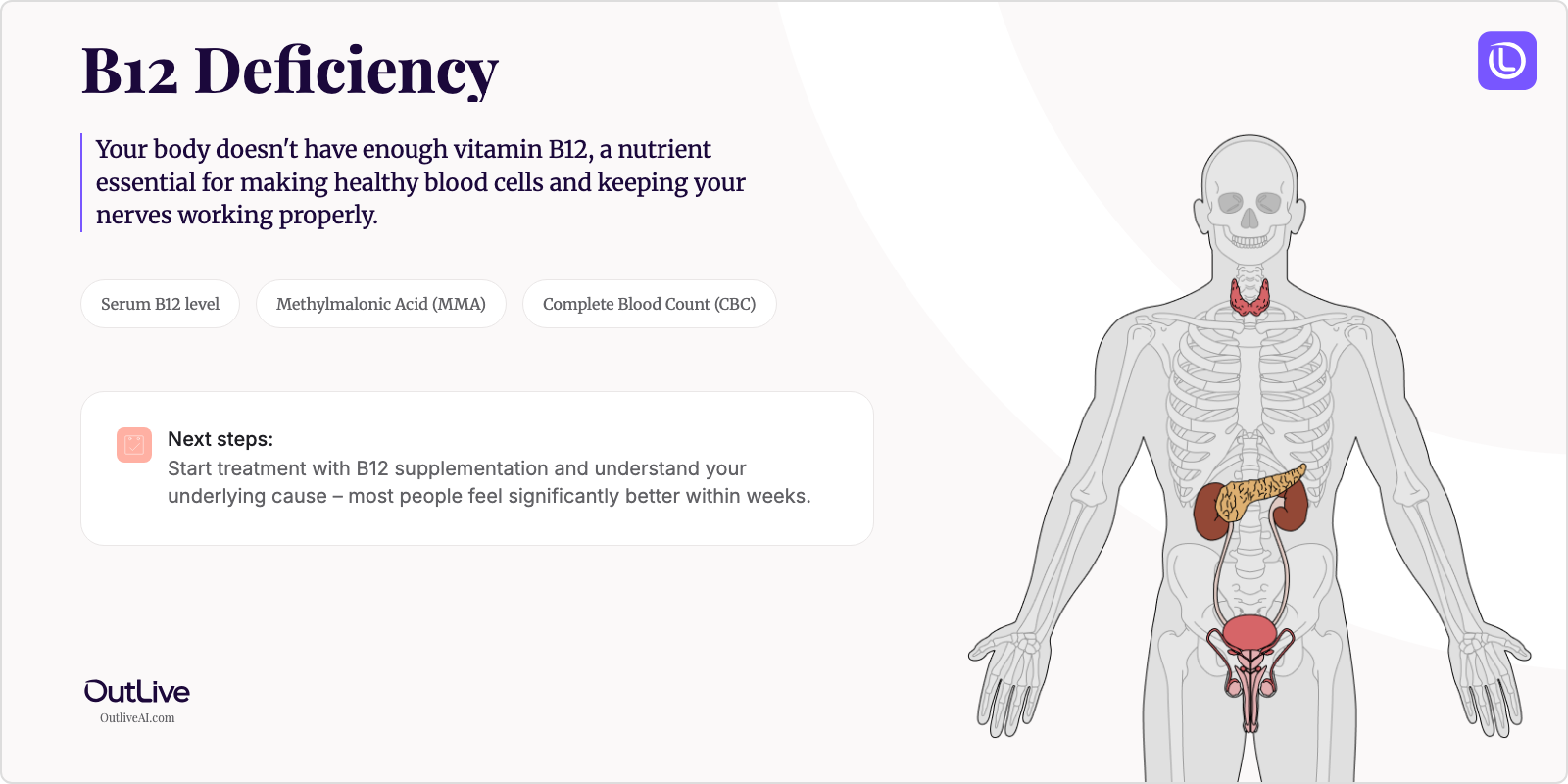
- What it is: Your body doesn't have enough vitamin B12, a nutrient essential for making healthy blood cells and keeping your nerves working properly.
- Key lab tests: Serum B12 level, Methylmalonic Acid (MMA), Complete Blood Count (CBC)
- Your first goal: Start treatment with B12 supplementation and understand your underlying cause – most people feel significantly better within weeks.
Receiving a new diagnosis for B12 Deficiency can be overwhelming. You might be feeling anxious, confused, and unsure of what comes next. That's completely normal. This guide is here to help you understand your condition in simple terms, know which lab tests matter most, and feel prepared for your next steps.
First, Take a Breath: What is B12 Deficiency in Simple Terms?
Think of vitamin B12 as the conductor of an orchestra in your body. Just as a conductor ensures every musician plays in harmony, B12 helps coordinate the production of healthy red blood cells, maintains your nerve cells' protective coating, and helps create DNA in every cell. When you don't have enough B12, it's like the orchestra trying to perform without its conductor – things start to go out of sync. You might feel tired because your red blood cells can't carry oxygen efficiently, or experience tingling in your hands and feet because your nerves aren't properly protected. The good news? Once we restore your B12 levels, your body's orchestra can play beautifully again, and most people feel remarkably better within just a few weeks of treatment.
Understanding Your Diagnosis: The Key Lab Tests
This is the most important section. These are the tests your doctor used to diagnose your B12 deficiency and will continue monitoring as you heal:
Key Tests for B12 Deficiency:
- Serum B12 Level: This measures the amount of B12 floating in your bloodstream – normal is typically above 300 pg/mL, and yours is likely below 200 pg/mL if you've been diagnosed.
- Methylmalonic Acid (MMA): When B12 is low, MMA builds up in your blood like traffic backing up on a highway – this test is more sensitive than B12 alone and helps confirm your diagnosis.
- Complete Blood Count (CBC): This checks if your red blood cells are larger than normal (called macrocytosis), which happens when B12 deficiency affects blood cell production.
- Homocysteine: This amino acid accumulates when B12 is low, and elevated levels can affect your heart and blood vessel health.
Your First Specialist Appointment: What to Ask
What to Expect: You'll likely see your primary care doctor first, who may refer you to a hematologist (blood specialist) or gastroenterologist (digestive specialist) depending on the suspected cause. The appointment will focus on finding why you developed B12 deficiency – whether it's dietary, absorption issues, or an autoimmune condition – and starting appropriate treatment. Your doctor will review your symptoms, examine you for neurological signs, and discuss your treatment options, which typically include B12 injections or high-dose oral supplements.
Questions to Ask Your Doctor:
- "What's causing my B12 deficiency – is it my diet, absorption problems, or something else?"
- "Should I get B12 injections or oral supplements, and what dose do I need?"
- "How quickly should I expect my symptoms to improve, and which ones will get better first?"
- "Do I need testing for pernicious anemia or other conditions that affect B12 absorption?"
- "How often should I have my B12 levels checked, and what numbers are we aiming for?"
Download our [Checklist of Questions to Ask Your B12 Deficiency Specialist](# to feel prepared.
How to Track Your Journey
Tracking your B12 deficiency journey is crucial for understanding how your treatment is working and spotting important trends. Here's what you should monitor:
Symptoms to Track:
- Energy levels and fatigue (rate daily from 1-10)
- Tingling, numbness, or "pins and needles" in hands and feet
- Memory, concentration, or mood changes
- Tongue soreness or changes in taste
- Balance problems or difficulty walking
Lab Results to Monitor:
- Serum B12 level - Check monthly for first 3 months, then every 3-6 months
- MMA level - Check after 3 months of treatment to confirm improvement
- CBC with MCV - Check at 3 months to see if red blood cell size normalizes
Why Tracking Matters: Your symptoms often improve before your lab numbers normalize, and tracking helps you and your doctor see the full picture. Some symptoms like fatigue improve within days to weeks, while nerve symptoms may take months. By tracking both symptoms and labs, you'll know if your treatment dose needs adjustment and can celebrate the improvements along the way.
Next Steps After Your Diagnosis
Immediate Actions (This Week):
- Start your prescribed B12 treatment (injections or supplements) exactly as directed
- Schedule follow-up appointments and lab tests for 4-6 weeks out
- Begin a symptom diary to track your energy, mood, and any neurological symptoms
Short-term Goals (Next Month):
- Establish a routine for taking your B12 supplements or getting injections
- Review your diet with your doctor or nutritionist if dietary factors contributed
- Get tested for underlying conditions if recommended (like pernicious anemia or celiac disease)
Long-term Management:
- Understand if you'll need lifelong B12 supplementation (many people do, and that's okay)
- Learn to recognize early signs of deficiency returning
- Establish a monitoring schedule with your doctor for ongoing lab work
Frequently Asked Questions
How quickly can I expect to feel better? Most people notice improved energy within 1-2 weeks of starting treatment. Neurological symptoms like tingling may take 3-6 months to fully resolve, and some severe cases may take up to a year. The key is starting treatment promptly – the sooner you begin, the better your recovery.
Will I need to change my diet? If your deficiency is diet-related (common in vegans/vegetarians), you'll need to add B12-rich foods like meat, fish, eggs, and dairy, or take supplements permanently. If it's an absorption problem, dietary changes alone won't help – you'll need injections or high-dose supplements to bypass the absorption issue.
How often will I need to see my doctor? Initially, you'll have follow-ups every 4-6 weeks to monitor your response. Once stable, most people see their doctor every 3-6 months for monitoring. If you're on lifelong treatment, annual check-ups may be sufficient once your levels normalize.
Can I still exercise/work/travel? Absolutely! As your B12 levels improve, so will your energy and stamina. Start gentle exercise as tolerated and gradually increase. Most people return to full activities within a few months. If traveling, ensure you have enough B12 supplies and know how to continue treatment abroad.
When to Seek Immediate Medical Attention
Contact your doctor immediately if you experience:
- Sudden severe weakness or inability to walk
- Chest pain, rapid heartbeat, or severe shortness of breath
- Sudden confusion, severe memory problems, or personality changes
- Loss of bladder or bowel control
- Severe depression or thoughts of self-harm
🔬 Ready to Organize Your Health Journey?
Understanding your condition is the first step. Our free Lab Analyzer tool helps you:
- Track all your lab results for B12 Deficiency in one place
- Spot important trends over time
- Generate personalized questions for your doctor
[Upload Your Lab Report for Free Analysis →]