
📋 At a Glance
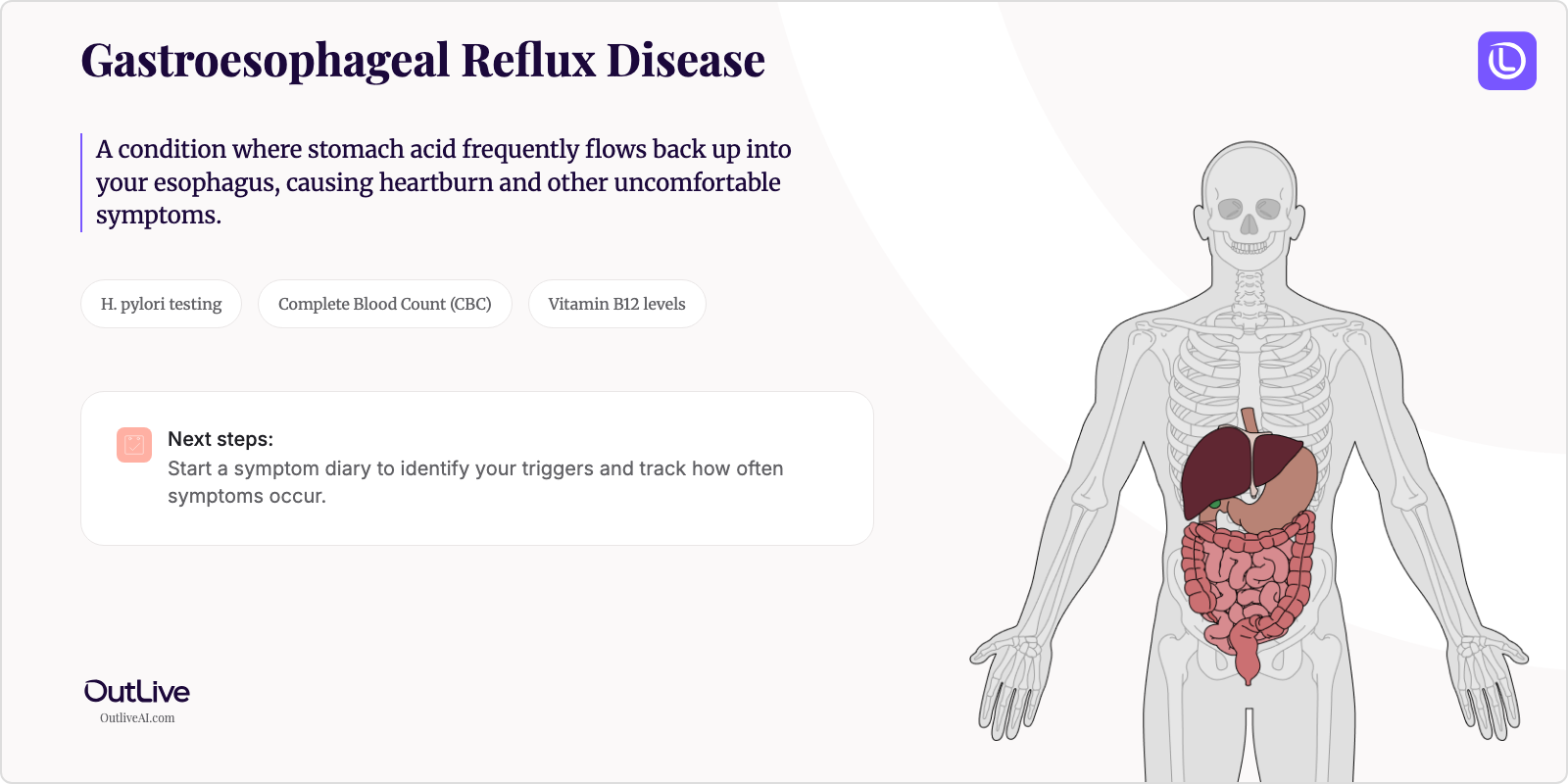
- What it is: A condition where stomach acid frequently flows back up into your esophagus, causing heartburn and other uncomfortable symptoms.
- Key lab tests: H. pylori testing, Complete Blood Count (CBC), and Vitamin B12 levels
- Your first goal: Start a symptom diary to identify your triggers and track how often symptoms occur.
Receiving a new diagnosis for Gastroesophageal Reflux Disease can be overwhelming. You might be feeling anxious, confused, and unsure of what comes next. That's completely normal. This guide is here to help you understand your condition in simple terms, know which lab tests matter most, and feel prepared for your next steps.
First, Take a Breath: What is Gastroesophageal Reflux Disease in Simple Terms?
Think of your stomach as a washing machine with a lid that's supposed to stay closed while it's running. In GERD (as we often call it), that lid—which is actually a muscle ring called the lower esophageal sphincter—doesn't close properly. This allows the "wash water" (stomach acid) to splash back up into your esophagus, the tube that connects your mouth to your stomach. Unlike your stomach, which has a protective lining built to handle acid, your esophagus is more like a garden hose—it wasn't designed for this harsh environment. That's why you feel that burning sensation we call heartburn. The good news? GERD is very manageable, and most people find significant relief with the right treatment plan.
Understanding Your Diagnosis: The Key Lab Tests
This is the most important section. While GERD is often diagnosed based on symptoms and response to treatment, certain lab tests help rule out complications and guide your care.
Key Tests for Gastroesophageal Reflux Disease:
- H. pylori Testing: This test checks for a bacteria that can live in your stomach and worsen acid problems, helping your doctor decide if you need antibiotics along with acid-reducing medications.
- Complete Blood Count (CBC): This blood test looks for signs of anemia (low red blood cells) which can occur if GERD has caused bleeding in your esophagus over time.
- Vitamin B12: Long-term acid suppression medications can affect your body's ability to absorb this important vitamin, so monitoring helps prevent deficiency.
- Ferritin: This test measures your iron stores and can help detect slow, chronic blood loss that sometimes occurs with severe GERD.
Your First Specialist Appointment: What to Ask
What to Expect: You'll likely see a gastroenterologist—a doctor who specializes in digestive system disorders. They'll ask detailed questions about your symptoms, review your medical history, and may recommend an endoscopy (a camera test to look at your esophagus) if your symptoms are severe or don't respond to initial treatment. Don't worry—they see GERD patients every day and are experts at creating personalized treatment plans.
Questions to Ask Your Doctor:
- "Based on my symptoms, do you think I have simple GERD or could there be complications I should know about?"
- "Will I need an endoscopy, and if so, when should we schedule it?"
- "What lifestyle changes will make the biggest difference for my specific situation?"
- "How long should I try medication before we know if it's working?"
- "Are there any warning signs that would mean I should call you immediately?"
Download our [Checklist of Questions to Ask Your Gastroesophageal Reflux Disease Specialist](# to feel prepared.
How to Track Your Journey
Tracking your Gastroesophageal Reflux Disease journey is crucial for understanding how your treatment is working and spotting important trends. Here's what you should monitor:
Symptoms to Track:
- Heartburn episodes (time of day, severity, and what you ate beforehand)
- Regurgitation (sour taste or food coming back up)
- Difficulty swallowing or feeling like food gets stuck
- Chest pain or pressure (always rule out heart issues first)
- Morning hoarseness or chronic cough
Lab Results to Monitor:
- H. pylori status - Check once initially, then as needed
- CBC - Every 6-12 months if on long-term medication
- Vitamin B12 - Annually if taking proton pump inhibitors (PPIs)
- Ferritin - Annually or if experiencing fatigue
Why Tracking Matters: Think of tracking as creating a roadmap of your health. By noting when symptoms occur and what triggers them, you and your doctor can fine-tune your treatment plan. Plus, seeing improvements over time—even small ones—can be incredibly motivating and reassuring.
Next Steps After Your Diagnosis
Immediate Actions (This Week):
- Start a food and symptom diary to identify your personal triggers
- Elevate the head of your bed by 6-8 inches using blocks under the bedposts (not just extra pillows)
- Stop eating 3 hours before bedtime to give your stomach time to empty
Short-term Goals (Next Month):
- Establish a medication routine if prescribed and set reminders to take them consistently
- Experiment with smaller, more frequent meals instead of three large ones
- Identify and reduce your trigger foods (common ones include coffee, chocolate, tomatoes, and spicy foods)
Long-term Management:
- Work toward a healthy weight if recommended by your doctor, as extra weight can worsen GERD
- Develop stress management techniques, as stress can increase acid production
- Schedule regular check-ins with your doctor to adjust treatment as needed
Frequently Asked Questions
How quickly can I expect to feel better? Many people notice improvement within 2-4 weeks of starting medication and making lifestyle changes. However, healing of the esophagus can take 8-12 weeks, so be patient with yourself. If you don't feel better after a month, definitely talk to your doctor about adjusting your treatment.
Will I need to change my diet? You don't need to follow a strict "GERD diet," but identifying and avoiding your personal trigger foods can make a huge difference. Common triggers include citrus, tomatoes, chocolate, mint, fatty foods, and caffeine, but everyone is different. Your symptom diary will be your best guide.
How often will I need to see my doctor? Initially, you'll likely have a follow-up in 4-8 weeks to see how treatment is working. Once your symptoms are controlled, annual check-ups are usually sufficient unless problems arise. If you're on long-term medication, your doctor may want to monitor you more closely.
Can I still exercise/work/travel? Absolutely! GERD shouldn't stop you from living your life. Just make some adjustments: wait 2-3 hours after eating before exercising, avoid exercises that involve lying flat or bending over repeatedly, and pack your medications when traveling. Many people with GERD lead completely normal, active lives.
When to Seek Immediate Medical Attention
Contact your doctor immediately if you experience:
- Difficulty or pain when swallowing that gets progressively worse
- Unintentional weight loss of more than 10 pounds
- Vomiting blood or material that looks like coffee grounds
- Black, tarry stools (which could indicate bleeding)
- Severe chest pain (always call 911 for chest pain to rule out heart problems)
- Persistent vomiting that prevents you from keeping food down
🔬 Ready to Organize Your Health Journey?
Understanding your condition is the first step. Our free Lab Analyzer tool helps you:
- Track all your lab results for Gastroesophageal Reflux Disease in one place
- Spot important trends over time
- Generate personalized questions for your doctor
[Upload Your Lab Report for Free Analysis →]