
📋 At a Glance
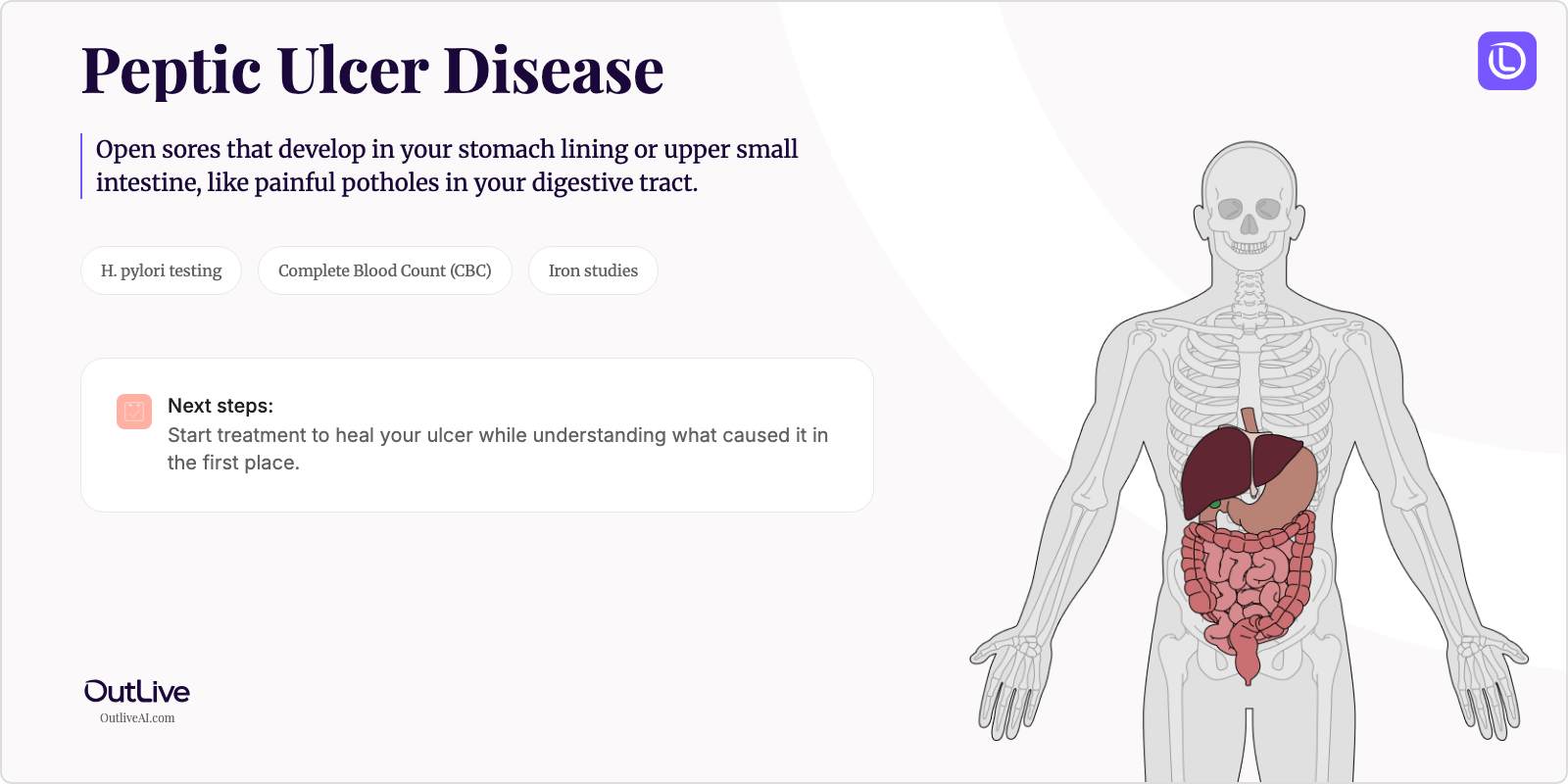
- What it is: Open sores that develop in your stomach lining or upper small intestine, like painful potholes in your digestive tract.
- Key lab tests: H. pylori testing, Complete Blood Count (CBC), and Iron studies
- Your first goal: Start treatment to heal your ulcer while understanding what caused it in the first place.
Receiving a new diagnosis for Peptic Ulcer Disease can be overwhelming. You might be feeling anxious, confused, and unsure of what comes next. That's completely normal. This guide is here to help you understand your condition in simple terms, know which lab tests matter most, and feel prepared for your next steps.
First, Take a Breath: What is Peptic Ulcer Disease in Simple Terms?
Think of your stomach lining as a protective raincoat that shields your stomach walls from powerful digestive acids. When you have peptic ulcer disease, this protective coating has developed one or more open sores – like worn spots in that raincoat where the acid can seep through and irritate the tissue underneath. These sores can occur in your stomach (gastric ulcers) or in the upper part of your small intestine (duodenal ulcers). The good news? With proper treatment, these ulcers can heal completely, and most people return to their normal lives without long-term complications.
Understanding Your Diagnosis: The Key Lab Tests
This is the most important section. Here are the critical tests your doctor uses to diagnose and monitor your peptic ulcer disease:
Key Tests for Peptic Ulcer Disease:
- H. pylori Testing: This test checks for a spiral-shaped bacteria that causes about 60-90% of all peptic ulcers by weakening your stomach's protective lining.
- Complete Blood Count (CBC): This blood test looks for signs of anemia (low red blood cells) which can occur if your ulcer has been bleeding slowly over time.
- Ferritin: This measures your body's iron stores, which can be depleted if you've had chronic blood loss from your ulcer.
- Gastrin Level: This hormone test helps rule out rare conditions that cause excessive stomach acid production.
Your First Specialist Appointment: What to Ask
What to Expect: You'll likely see a gastroenterologist – a doctor who specializes in digestive system disorders. They may perform an endoscopy (a thin, flexible tube with a camera) to directly visualize your ulcer, take tissue samples, and check for H. pylori bacteria. Don't worry – you'll receive sedation to make this procedure comfortable.
Questions to Ask Your Doctor:
- "What caused my ulcer – was it H. pylori, NSAIDs (pain medications), or something else?"
- "How large is my ulcer, and where exactly is it located?"
- "What medications will I need to take, and for how long?"
- "Are there any foods or medications I should avoid while healing?"
- "When should we recheck to make sure my ulcer is healing properly?"
Download our [Checklist of Questions to Ask Your Peptic Ulcer Disease Specialist](# to feel prepared.
How to Track Your Journey
Tracking your peptic ulcer disease journey is crucial for understanding how your treatment is working and spotting important trends. Here's what you should monitor:
Symptoms to Track:
- Pain levels (especially burning stomach pain between meals or at night)
- Nausea or vomiting episodes
- Changes in appetite or unexpected weight loss
- Dark, tarry stools (which could indicate bleeding)
Lab Results to Monitor:
- H. pylori test - After completing antibiotic treatment (usually 4-6 weeks later)
- CBC and iron studies - Every 3-6 months if you had anemia
- Gastrin levels - Only if your doctor suspects an underlying condition
Why Tracking Matters: Monitoring helps you and your doctor see if your treatment is working. For example, if your hemoglobin levels are rising, it means any bleeding has stopped. If H. pylori tests negative after treatment, you've successfully eliminated the main cause of most ulcers.
Next Steps After Your Diagnosis
Immediate Actions (This Week):
- Fill your prescriptions for acid-blocking medications (like PPIs) and start taking them as directed
- If H. pylori positive, begin your antibiotic regimen and take every dose
- Stop taking NSAIDs (like ibuprofen or aspirin) unless your doctor says otherwise
Short-term Goals (Next Month):
- Complete your full course of medications, even if you feel better
- Schedule your follow-up appointment to confirm healing
- Identify and reduce stress factors that may slow healing
Long-term Management:
- Maintain a balanced diet with regular meal times
- Avoid excessive alcohol and quit smoking if applicable
- Learn which pain medications are safe for you to use going forward
Frequently Asked Questions
How quickly can I expect to feel better? Most people notice significant improvement within 2-4 weeks of starting treatment. Complete healing typically takes 4-8 weeks for stomach ulcers and 2-4 weeks for duodenal ulcers.
Will I need to change my diet? While healing, avoid spicy foods, caffeine, and alcohol if they worsen your symptoms. Once healed, most people can return to their normal diet. There's no need for a bland diet unless specific foods bother you.
How often will I need to see my doctor? Initially, you'll have a follow-up in 4-8 weeks to ensure healing. After that, annual check-ups are usually sufficient unless symptoms return.
Can I still exercise/work/travel? Yes! Most people can maintain their normal activities. Just avoid NSAIDs for pain relief and manage stress levels, as both can slow healing.
When to Seek Immediate Medical Attention
Contact your doctor immediately if you experience:
- Severe, sudden abdominal pain that doesn't improve
- Vomiting blood or material that looks like coffee grounds
- Black, tarry, or bloody stools
- Dizziness, weakness, or fainting (could indicate significant blood loss)
- Severe nausea preventing you from keeping medications down
🔬 Ready to Organize Your Health Journey?
Understanding your condition is the first step. Our free Lab Analyzer tool helps you:
- Track all your lab results for Peptic Ulcer Disease in one place
- Spot important trends over time
- Generate personalized questions for your doctor
[Upload Your Lab Report for Free Analysis →]