
📋 At a Glance
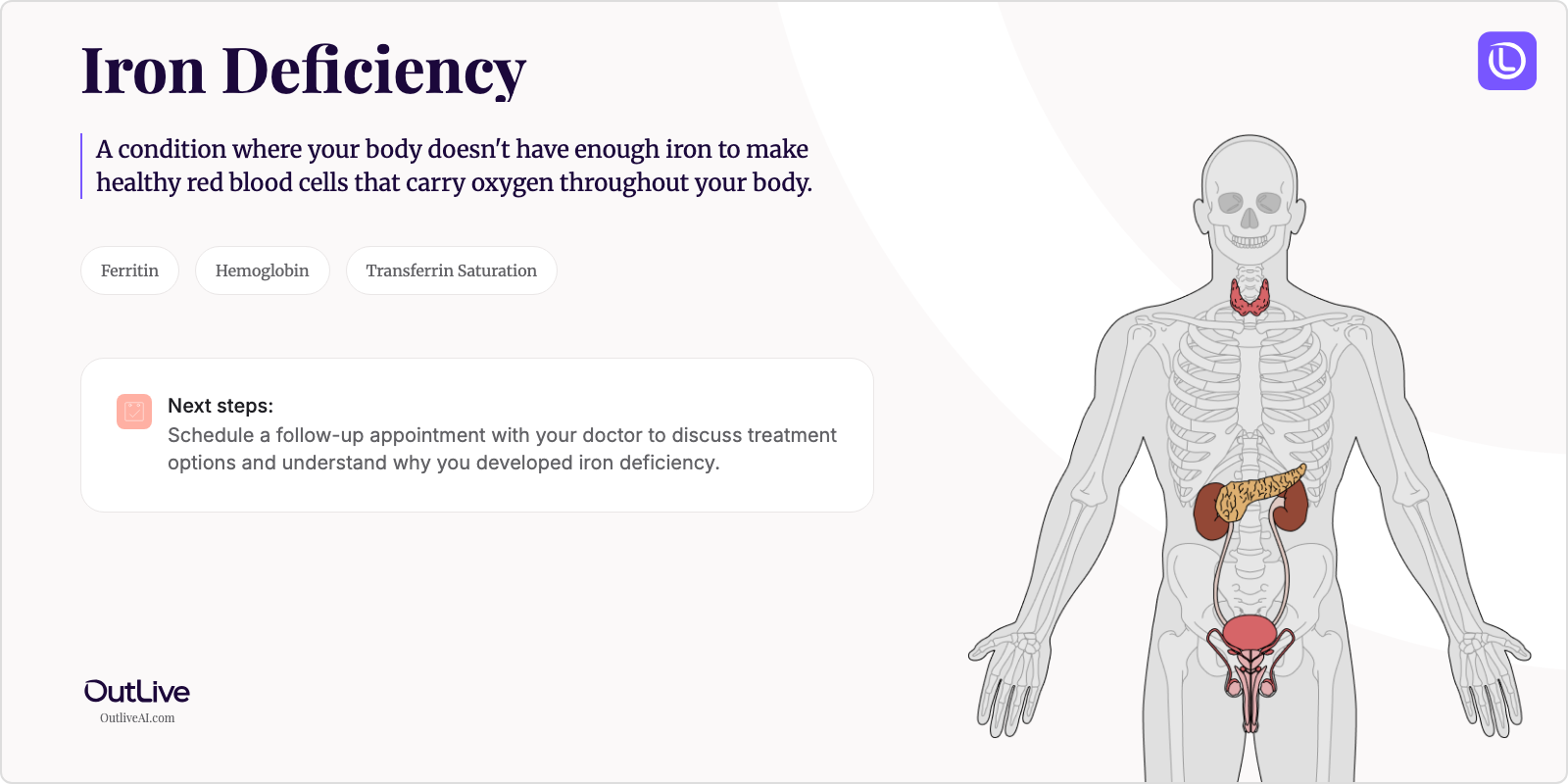
- What it is: A condition where your body doesn't have enough iron to make healthy red blood cells that carry oxygen throughout your body.
- Key lab tests: Ferritin, Hemoglobin, and Transferrin Saturation
- Your first goal: Schedule a follow-up appointment with your doctor to discuss treatment options and understand why you developed iron deficiency.
Receiving a new diagnosis for Iron Deficiency can be overwhelming. You might be feeling anxious, confused, and unsure of what comes next. That's completely normal. This guide is here to help you understand your condition in simple terms, know which lab tests matter most, and feel prepared for your next steps.
First, Take a Breath: What is Iron Deficiency in Simple Terms?
Think of iron as the delivery trucks in your body's highway system. These trucks (red blood cells) need iron to carry oxygen packages to every cell, tissue, and organ. When you don't have enough iron, it's like having fewer delivery trucks on the road – your body's tissues don't get the oxygen they need to function properly. This is why you might feel tired, weak, or short of breath. The good news? Iron deficiency is one of the most common nutritional deficiencies worldwide, and it's very treatable. With the right approach, most people start feeling better within a few weeks of treatment.
Understanding Your Diagnosis: The Key Lab Tests
This is the most important section. These are the main blood tests your doctor uses to diagnose and monitor your iron deficiency. Understanding these numbers will help you track your progress and have more informed conversations with your healthcare team.
Key Tests for Iron Deficiency:
- Ferritin: This test measures your body's iron storage – think of it as checking how much iron you have in your savings account for future use.
- Hemoglobin: This measures the oxygen-carrying protein in your red blood cells – it tells us if your blood can deliver enough oxygen to your body.
- Transferrin Saturation: This shows how much iron is being transported in your bloodstream – like checking how full your delivery trucks are with iron packages.
- Serum Iron: This measures the amount of iron circulating in your blood at the moment of testing – it's like checking your iron "checking account" balance.
Your First Specialist Appointment: What to Ask
What to Expect: You'll likely continue seeing your primary care doctor for iron deficiency management, though in some cases you might be referred to a hematologist (blood specialist) or gastroenterologist (digestive system doctor) if there's concern about blood loss. Your appointment will involve discussing your symptoms, reviewing your lab results, exploring possible causes, and creating a treatment plan. Don't be surprised if your doctor orders additional tests to find the root cause of your iron deficiency.
Questions to Ask Your Doctor:
- "What caused my iron deficiency? Do we need to investigate further?"
- "Should I take iron supplements, and if so, what type and dose do you recommend?"
- "How often should I have my iron levels checked during treatment?"
- "Are there any foods I should eat more of or avoid while treating my iron deficiency?"
- "Could any of my current medications be contributing to my iron deficiency?"
Download our [Checklist of Questions to Ask Your Iron Deficiency Specialist](# to feel prepared.
How to Track Your Journey
Tracking your Iron Deficiency journey is crucial for understanding how your treatment is working and spotting important trends. Here's what you should monitor:
Symptoms to Track:
- Fatigue levels (rate your energy on a scale of 1-10 daily)
- Shortness of breath during normal activities
- Dizziness or lightheadedness episodes
- Headache frequency and intensity
- Unusual cravings (ice, dirt, starch)
Lab Results to Monitor:
- Ferritin levels - Check every 3-4 months during treatment
- Hemoglobin - Check monthly initially, then every 3 months
- Complete Blood Count (CBC) - Check with each follow-up visit
Why Tracking Matters: Tracking helps you and your doctor see if treatment is working. Iron levels don't improve overnight – it typically takes 2-3 months to rebuild iron stores. By tracking your symptoms alongside your lab results, you can identify patterns, celebrate improvements, and quickly spot if something isn't working as expected.
Next Steps After Your Diagnosis
Immediate Actions (This Week):
- Fill any iron supplement prescriptions your doctor provided
- Schedule your follow-up appointment (usually in 4-6 weeks)
- Start a symptom diary to track how you're feeling each day
- Review your diet and identify iron-rich foods you enjoy
Short-term Goals (Next Month):
- Establish a routine for taking iron supplements (usually on an empty stomach with vitamin C)
- Learn which foods enhance iron absorption (citrus, tomatoes) and which block it (tea, coffee, dairy)
- Get your first follow-up blood work to check if treatment is working
- Address any side effects from iron supplements with your doctor
Long-term Management:
- Continue regular monitoring even after iron levels normalize
- Maintain an iron-rich diet with foods like lean meats, beans, and fortified cereals
- Address the underlying cause to prevent recurrence
Frequently Asked Questions
How quickly can I expect to feel better? Many people notice improved energy within 2-4 weeks of starting iron supplements, but it takes about 3 months to fully replenish iron stores. Your hemoglobin typically improves within 2 months, while ferritin (storage iron) takes longer to normalize.
Will I need to change my diet? While diet alone rarely fixes iron deficiency, eating iron-rich foods helps support your treatment. Focus on lean meats, beans, fortified cereals, and dark leafy greens. Pair these with vitamin C-rich foods like oranges or bell peppers to boost absorption.
How often will I need to see my doctor? Initially, expect follow-ups every 4-6 weeks to monitor your response to treatment. Once your levels stabilize, you might only need checks every 3-6 months. If you have ongoing blood loss or absorption issues, you'll need more frequent monitoring.
Can I still exercise/work/travel? Yes, but listen to your body. Start with gentle activities and gradually increase as your energy improves. Avoid intense exercise until your hemoglobin normalizes. Most people can continue working and traveling, though you might need to pace yourself more than usual.
When to Seek Immediate Medical Attention
Contact your doctor immediately if you experience:
- Chest pain or heart palpitations that don't improve with rest
- Severe shortness of breath or difficulty breathing
- Fainting or severe dizziness
- Black, tarry stools or visible blood in stool (could indicate bleeding)
- Severe abdominal pain or persistent vomiting
🔬 Ready to Organize Your Health Journey?
Understanding your condition is the first step. Our free Lab Analyzer tool helps you:
- Track all your lab results for Iron Deficiency in one place
- Spot important trends over time
- Generate personalized questions for your doctor
[Upload Your Lab Report for Free Analysis →]