
📋 At a Glance
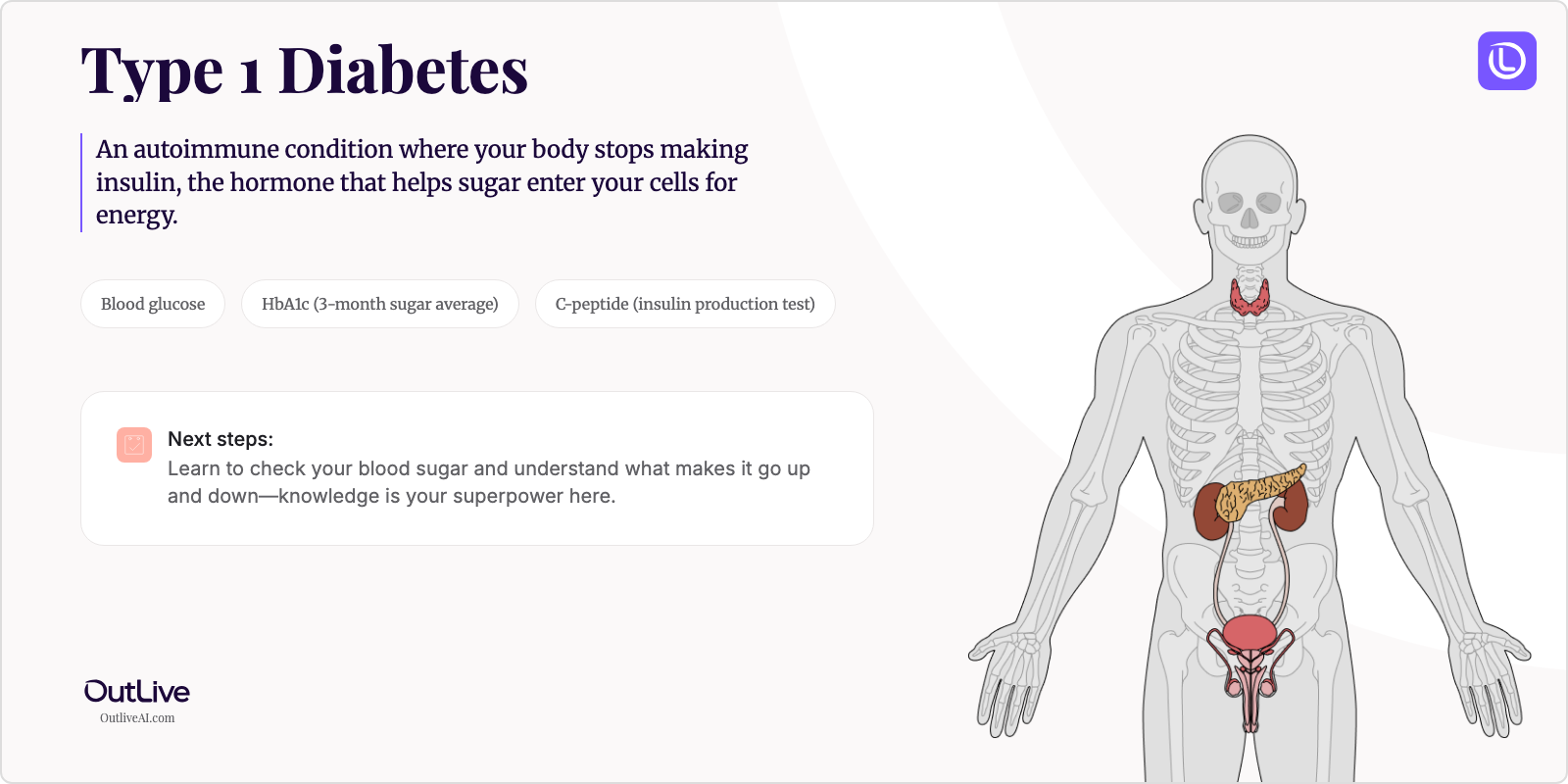
- What it is: An autoimmune condition where your body stops making insulin, the hormone that helps sugar enter your cells for energy.
- Key lab tests: Blood glucose, HbA1c (3-month sugar average), and C-peptide (insulin production test)
- Your first goal: Learn to check your blood sugar and understand what makes it go up and down—knowledge is your superpower here.
Receiving a new diagnosis for Type 1 Diabetes can be overwhelming. You might be feeling anxious, confused, and unsure of what comes next. That's completely normal. This guide is here to help you understand your condition in simple terms, know which lab tests matter most, and feel prepared for your next steps.
First, Take a Breath: What is Type 1 Diabetes in Simple Terms?
Think of insulin as a key that unlocks the doors to your cells, allowing sugar (glucose) from your food to enter and provide energy. In Type 1 Diabetes, your immune system has mistakenly attacked the insulin-making cells in your pancreas—like a case of mistaken identity. Without these insulin "keys," sugar builds up in your bloodstream instead of fueling your cells. The good news? We can replace that insulin from the outside, and with the right tools and knowledge, you can live a full, healthy life. This isn't about what you did wrong—Type 1 is an autoimmune condition that simply happened to you, and now we're going to tackle it together.
Understanding Your Diagnosis: The Key Lab Tests
This is the most important section. These tests will become your roadmap for managing Type 1 Diabetes successfully.
Key Tests for Type 1 Diabetes:
- Blood Glucose: This measures the amount of sugar in your blood right now—think of it as your fuel gauge that you'll check multiple times daily to stay in the safe zone.
- Hemoglobin A1c (HbA1c): This shows your average blood sugar over the past 3 months—like a report card that helps you and your doctor see the bigger picture of your diabetes management.
- C-Peptide: This test measures how much insulin your pancreas is still making—it confirms Type 1 diagnosis and helps your doctor understand your specific insulin needs.
- Autoantibody Panel: These tests look for specific antibodies that attack insulin-producing cells—they're like fingerprints that confirm Type 1 Diabetes versus other types.
Your First Specialist Appointment: What to Ask
You'll be seeing an endocrinologist—a hormone specialist who will become your diabetes management partner. Think of them as your coach who will help you develop your personalized game plan.
What to Expect: Your endocrinologist will review your lab results, discuss insulin options, and start teaching you the fundamentals of blood sugar management. This first appointment is usually longer (45-60 minutes) and focuses on education and creating your initial treatment plan. Don't worry about remembering everything—this is just the beginning of your learning journey.
Questions to Ask Your Doctor:
- "What type of insulin regimen do you recommend for me, and why?"
- "How often should I check my blood sugar, and what numbers should I aim for?"
- "What should I do if my blood sugar goes too high or too low?"
- "Can you connect me with a diabetes educator and nutritionist?"
- "How do I adjust my insulin for exercise, illness, or different meals?"
Download our [Checklist of Questions to Ask Your Type 1 Diabetes Specialist](# to feel prepared.
How to Track Your Journey
Tracking your Type 1 Diabetes journey is crucial for understanding how your treatment is working and spotting important trends. Here's what you should monitor:
Symptoms to Track:
- Energy levels throughout the day (fatigue can signal high or low blood sugar)
- Thirst and urination frequency (excessive thirst often means high blood sugar)
- Mood changes or difficulty concentrating (your brain needs steady glucose to function well)
- Any episodes of shakiness, sweating, or confusion (signs of low blood sugar)
Lab Results to Monitor:
- Blood glucose - Check 4-8 times daily or use a continuous glucose monitor
- HbA1c - Every 3 months to assess overall control
- Kidney function tests - Annually to catch any complications early
- Cholesterol panel - Annually to monitor heart health
Why Tracking Matters: Patterns are everything in diabetes management. By tracking your numbers alongside what you eat, how you exercise, and how you feel, you'll start to see connections—like how pizza affects you differently than salad, or why you need less insulin on workout days. This knowledge becomes your power to predict and prevent blood sugar swings.
Next Steps After Your Diagnosis
Immediate Actions (This Week):
- Get your glucose meter and learn how to use it (your pharmacy can help)
- Start a simple log of your blood sugars and what you ate
- Schedule appointments with a diabetes educator and nutritionist
Short-term Goals (Next Month):
- Master carbohydrate counting (it's easier than it sounds!)
- Establish a routine for checking blood sugars and taking insulin
- Connect with a Type 1 Diabetes support group or online community
Long-term Management:
- Consider a continuous glucose monitor (CGM) for easier tracking
- Build your sick-day management plan with your doctor
- Learn to adjust insulin for special situations (travel, sports, celebrations)
Frequently Asked Questions
How quickly can I expect to feel better? Many people feel dramatically better within days of starting insulin—you'll have more energy, less thirst, and clearer thinking. Fine-tuning your doses takes a few weeks to months, but that initial relief comes quickly.
Will I need to change my diet? You don't need a special "diabetic diet," but you'll learn to count carbohydrates and understand how different foods affect your blood sugar. You can still enjoy your favorite foods—you'll just become an expert at matching your insulin to them.
How often will I need to see my doctor? Initially, you'll have frequent visits (every 2-4 weeks) as you learn and adjust. Once stable, most people see their endocrinologist every 3-4 months for routine management.
Can I still exercise/work/travel? Absolutely! People with Type 1 Diabetes do everything—they're Olympic athletes, pilots, teachers, and parents. You'll just need to learn how to adjust your management for different activities, and always carry supplies with you.
When to Seek Immediate Medical Attention
Contact your doctor immediately if you experience:
- Persistent vomiting or inability to keep fluids down (risk of diabetic ketoacidosis)
- Blood sugar over 300 mg/dL that won't come down with insulin
- Severe confusion, loss of consciousness, or seizures (severe low blood sugar)
- Fruity-smelling breath with nausea and deep, rapid breathing (signs of ketoacidosis)
- Any illness with blood sugars consistently over 250 mg/dL
🔬 Ready to Organize Your Health Journey?
Understanding your condition is the first step. Our free Lab Analyzer tool helps you:
- Track all your lab results for Type 1 Diabetes in one place
- Spot important trends over time
- Generate personalized questions for your doctor
[Upload Your Lab Report for Free Analysis →]