
📋 At a Glance
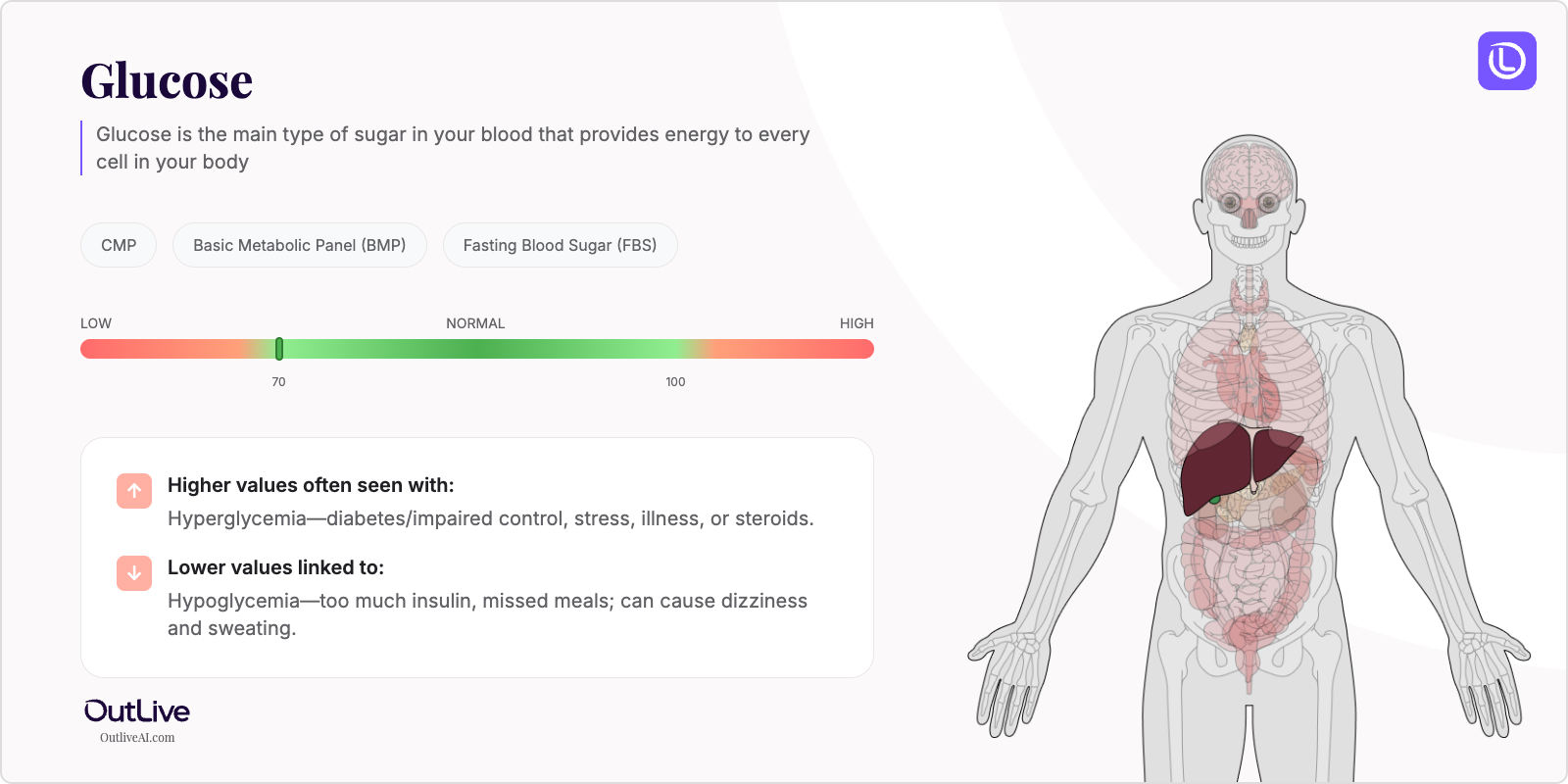
- What it is: Glucose is the main type of sugar in your blood that provides energy to every cell in your body
- Found in tests: Comprehensive Metabolic Panel (CMP), Basic Metabolic Panel (BMP), Fasting Blood Sugar (FBS), Random Blood Sugar
- Normal range: 70-100 mg/dL when fasting (higher after meals)
If you're looking at your lab results and wondering what glucose means, you're in the right place. Think of glucose as the gasoline that keeps your body's engine running – it's the primary fuel that powers everything from your brain to your muscles. Just like a car needs the right amount of fuel to run smoothly, your body needs the right amount of glucose in your blood. Let's break down what your numbers mean in plain English.
Why Is Glucose Tested?
Your doctor orders a glucose test as one of the most fundamental checks of your body's metabolic health. It's included in routine screening tests like the Comprehensive Metabolic Panel (CMP) and Basic Metabolic Panel (BMP) because glucose levels can reveal so much about how well your body is managing energy.
Specific symptoms that might prompt glucose testing include unexplained fatigue, frequent urination, excessive thirst, blurred vision, slow-healing wounds, or unexpected weight changes. These symptoms could signal that your body is struggling to maintain proper glucose levels.
This test is crucial for diagnosing and monitoring diabetes, prediabetes, and hypoglycemia (low blood sugar). It also helps assess your risk for heart disease and stroke, since glucose management is closely tied to cardiovascular health. Regular glucose monitoring matters because catching problems early – before symptoms appear – gives you the best chance to prevent serious complications through lifestyle changes or treatment.
What Does Glucose Do in Your Body?
Glucose is your body's preferred source of quick energy. When you eat carbohydrates – whether it's bread, fruit, or vegetables – your digestive system breaks them down into glucose, which then enters your bloodstream. From there, it travels to cells throughout your body, where it's either used immediately for energy or stored for later use.
Your pancreas plays the starring role in glucose management by producing insulin, a hormone that acts like a key, unlocking your cells so glucose can enter. Your liver also plays a crucial supporting role, storing extra glucose when levels are high and releasing it when you need energy between meals or during sleep. Your muscles store glucose too, ready to fuel physical activity.
This intricate system relates closely to other biomarkers in your blood work. For instance, your hemoglobin A1c reflects your average glucose levels over the past 2-3 months, while insulin levels show how hard your pancreas is working to manage glucose. When everything works properly, your body maintains a delicate balance – enough glucose for energy, but not so much that it damages your blood vessels and organs.
What Do My Glucose Results Mean?
Normal Glucose Ranges
| Population | Normal Range | Optimal Range |
|---|---|---|
| Adult Male | 70-100 mg/dL (fasting) | 70-90 mg/dL |
| Adult Female | 70-100 mg/dL (fasting) | 70-90 mg/dL |
| Children | 70-100 mg/dL (fasting) | 70-90 mg/dL |
| Pregnancy | 60-95 mg/dL (fasting) | 70-90 mg/dL |
Note: Reference ranges may vary slightly between laboratories. Always compare your results to the range provided on your specific lab report.
What Does High Glucose Mean?
Common Causes:
- Diabetes (Type 1 or Type 2): Your body either doesn't make enough insulin or can't use it effectively
- Prediabetes: Blood sugar levels higher than normal but not yet in the diabetes range
- Stress or illness: Physical or emotional stress triggers hormones that raise glucose
- Certain medications: Steroids, some blood pressure medications, and antipsychotics can increase levels
- Pancreatic disorders: Problems with the pancreas affect insulin production
- Cushing's syndrome: Excess cortisol hormone raises blood sugar
- Dawn phenomenon: Natural early morning rise in glucose (especially in diabetics)
Possible Symptoms:
- Increased thirst and dry mouth
- Frequent urination
- Fatigue and weakness
- Blurred vision
- Slow-healing cuts or sores
- Unexplained weight loss
- Tingling in hands or feet
When to Be Concerned: Glucose levels above 126 mg/dL (fasting) on two separate tests typically indicate diabetes. Levels between 100-125 mg/dL suggest prediabetes. Extremely high levels (over 250 mg/dL) require immediate medical attention, especially if accompanied by symptoms like confusion, extreme thirst, or fruity-smelling breath, which could indicate a dangerous condition called diabetic ketoacidosis.
What Does Low Glucose Mean?
Common Causes:
- Too much diabetes medication: Taking too much insulin or other glucose-lowering drugs
- Skipping meals or not eating enough: Especially problematic if you take diabetes medications
- Excessive alcohol consumption: Alcohol interferes with your liver's glucose production
- Intense physical exercise: Muscles use up glucose faster than your body can replace it
- Hormone deficiencies: Problems with cortisol, growth hormone, or thyroid hormones
- Liver disease: Your liver can't produce or release glucose properly
- Reactive hypoglycemia: Blood sugar drops 2-4 hours after eating
Possible Symptoms:
- Shakiness and trembling
- Sweating and clamminess
- Rapid heartbeat
- Confusion or difficulty concentrating
- Irritability or mood changes
- Hunger and nausea
- Headache and dizziness
When to Be Concerned: Glucose below 70 mg/dL is considered low and needs attention. Below 54 mg/dL is seriously low and requires immediate treatment with fast-acting carbohydrates. If glucose drops below 40 mg/dL, or if someone becomes unconscious or has seizures, this is a medical emergency requiring immediate professional help.
What Can Affect My Glucose Levels?
Factors That May Increase Levels:
- Medications: Corticosteroids, thiazide diuretics, beta-blockers, statins, some antidepressants
- Lifestyle: High-carbohydrate meals, sedentary behavior, inadequate sleep, smoking
- Conditions: Infections, fever, surgery, trauma, pregnancy (gestational diabetes)
- Supplements: Niacin (vitamin B3), certain herbal supplements like ginseng
Factors That May Decrease Levels:
- Medications: Insulin, metformin, sulfonylureas, aspirin in high doses
- Lifestyle: Vigorous exercise, alcohol consumption, prolonged fasting, very low-carb diets
- Conditions: Kidney disease, liver disease, adrenal insufficiency
- Time of Day: Glucose is typically lowest in early morning before eating
How Is Glucose Related to Other Tests?
Glucose testing rarely stands alone – it's part of a bigger picture of your metabolic health. It's often tested alongside electrolytes (sodium, potassium, chloride) and kidney function markers (creatinine, BUN) in the Comprehensive Metabolic Panel.
Often tested alongside: Hemoglobin A1c, insulin, C-peptide, lipid panel (cholesterol and triglycerides) Part of: Comprehensive Metabolic Panel, Basic Metabolic Panel Ratio calculations: Glucose/insulin ratio can assess insulin resistance Follow-up tests: If glucose is abnormal, your doctor might order hemoglobin A1c, oral glucose tolerance test, or continuous glucose monitoring
Frequently Asked Questions
How often should glucose be tested? For healthy adults, annual testing during routine check-ups is typically sufficient. If you have prediabetes, testing every 6 months is recommended. People with diabetes may need to check glucose daily at home and have lab tests every 3-6 months.
Can I improve my glucose levels naturally? Absolutely! Regular physical activity, maintaining a healthy weight, eating a balanced diet with controlled portions of carbohydrates, managing stress, and getting adequate sleep can all help optimize glucose levels. Even modest changes can make a significant difference.
Should I fast before a glucose test? For a fasting glucose test, you'll need to avoid all food and drinks except water for 8-12 hours before your blood draw. Random glucose tests don't require fasting. Always follow your doctor's specific instructions.
How quickly can glucose levels change? Glucose can change within minutes after eating or exercising. That's why the timing of your test matters. Long-term improvements in average glucose (reflected in A1c) take weeks to months of consistent healthy habits.
Next Steps After Your Glucose Test
Questions to Ask Your Doctor:
- What do my glucose results mean for my overall health?
- Are my levels related to my symptoms?
- Do I need additional testing like hemoglobin A1c or glucose tolerance test?
- Should we monitor this over time?
- Are there lifestyle changes that could help?
- Do I need to see a diabetes educator or nutritionist?
- Should I be checking my glucose at home?
Download our Glucose Doctor Questions Checklist
🔬 Ready to Track Your Glucose Over Time?
Understanding a single glucose result is just the beginning. Our free Lab Analyzer tool helps you:
- Track how your glucose changes over time
- See how it relates to your other lab values
- Identify patterns your doctor might miss
- Get personalized insights based on your trends
[Upload Your Lab Report for Free Analysis →]