
📋 At a Glance
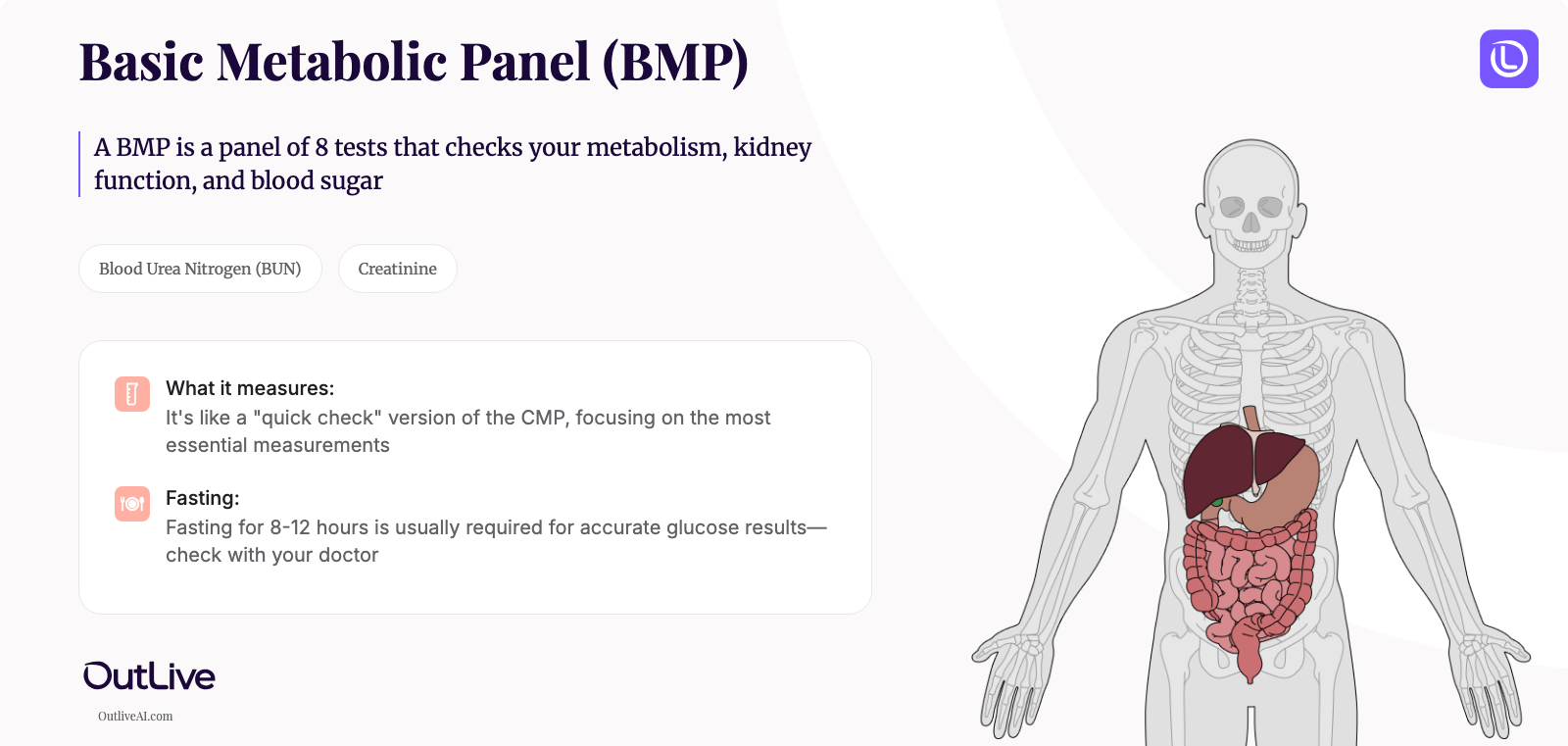
- A BMP is a panel of 8 tests that checks your metabolism, kidney function, and blood sugar
- It's like a "quick check" version of the CMP, focusing on the most essential measurements
- Fasting for 8-12 hours is usually required for accurate glucose results—check with your doctor
If you're reading this, you've likely just had a Basic Metabolic Panel—or BMP—and are looking at a report with 8 different measurements that might feel like a foreign language. Take a breath. You're in the right place. This guide will walk you through what a BMP test is, what each of those numbers means, and most importantly, what you should do next. Think of us as your translator—we're here to help you understand your results so you can have a more informed conversation with your healthcare provider.
Why Is a BMP Test Ordered?
Your doctor might order a BMP test for several reasons. Think of it as a quick but essential health snapshot—like checking your car's vital signs: oil, coolant, and battery all at once. It's often chosen when your doctor needs important information fast or when they want to monitor specific conditions without the broader testing of a CMP.
The most common reasons include:
Emergency situations: In urgent care or emergency rooms, a BMP provides critical information quickly about kidney function and electrolyte balance.
Routine monitoring: If you have diabetes, kidney disease, or high blood pressure, regular BMPs help track how well your treatment is working without the expense of more comprehensive testing.
Medication checks: Certain medications, especially blood pressure drugs, diuretics, and some heart medications, can affect your electrolytes and kidney function. A BMP monitors for these effects.
Investigating symptoms: If you're experiencing symptoms like fatigue, weakness, confusion, excessive thirst, or irregular heartbeat, a BMP helps identify potential causes related to electrolyte imbalances or kidney issues.
Pre-procedure screening: Before certain medical procedures or surgeries, doctors need to ensure your kidneys are functioning well and your electrolytes are balanced.
Remember, a BMP is often ordered precisely because it's efficient—your doctor can get essential information without ordering unnecessary tests.
How to Prepare for a BMP Test
Preparing for a BMP test is straightforward, though it may require some advance planning:
Fasting requirements: Most doctors will ask you to fast for 8-12 hours before your test to ensure an accurate glucose reading. This means no food or drinks except water. Even black coffee or tea can affect results, so stick to water only.
Medication considerations: Continue taking your regular medications unless your doctor specifically tells you otherwise. If you take diabetes medications, ask your doctor for specific instructions about timing, as fasting might affect when you should take them.
Timing tips: Many people find it easiest to schedule their test first thing in the morning. That way, you fast overnight while sleeping and can eat right after the blood draw. Bring a snack for afterward if you've been fasting.
The blood draw itself is quick and simple—usually taking less than 5 minutes. A healthcare professional will clean a small area on your arm, insert a tiny needle to collect blood (typically just one small tube for a BMP), and bandage the site. You can return to your normal activities immediately.
Understanding the Components of Your BMP Report
Your BMP report contains 8 essential measurements that give your doctor crucial information about your body's chemical balance and how well your kidneys are functioning. Let's break them down into logical groups that make sense.
What Do the Kidney Tests in a BMP Mean?
Your kidneys work 24/7 as your body's filtration system, removing waste products and excess water from your blood. The BMP includes two main markers that show how well they're performing this vital job:
Blood Urea Nitrogen (BUN): This measures the amount of nitrogen from urea (a waste product from protein breakdown) in your blood. Think of it as checking how much "waste" is waiting to be filtered out. When kidneys aren't working well, BUN levels rise.
Creatinine: A waste product from normal muscle activity that's produced at a steady rate throughout the day. Since healthy kidneys filter creatinine at a constant rate, it's an excellent marker for kidney function. Rising creatinine levels often indicate declining kidney function.
The BUN/Creatinine Ratio: While not always reported separately, doctors often calculate this ratio mentally. It helps distinguish between kidney problems and other issues like dehydration. A normal ratio is typically between 10:1 and 20:1.
Here are the typical adult ranges for kidney function markers:
| Component | Abbreviation | Typical Adult Range |
|---|---|---|
| Blood Urea Nitrogen | BUN | 7-20 mg/dL |
| Creatinine | Cr | Male: 0.7-1.3 mg/dL <br/ >Female: 0.6-1.1 mg/dL |
What Do My Glucose and Electrolyte Levels Mean?
The rest of your BMP measures glucose (blood sugar) and electrolytes—minerals that conduct electricity when dissolved in your blood. These substances work together to maintain your body's chemical balance, affecting everything from your heartbeat to muscle function.
Glucose: Your blood sugar level, which is your body's primary energy source. Think of it as the fuel that keeps your cells running. The fasting requirement ensures we see your baseline level without the influence of recent meals.
Sodium (Na): The body's main electrolyte for controlling blood pressure and fluid balance. Sodium works like a water magnet—where sodium goes, water follows. This is why too much sodium can cause fluid retention and affect blood pressure.
Potassium (K): Critical for proper heart rhythm and muscle contractions. Your heart is especially sensitive to potassium levels—too much or too little can cause dangerous irregular heartbeats.
Chloride (Cl): Works closely with sodium to maintain fluid balance and proper blood pH. It's like sodium's partner in managing your body's water distribution.
Carbon Dioxide (CO2): Despite its name, this actually measures bicarbonate, not the CO2 you exhale. Bicarbonate acts as a buffer, helping maintain your blood's pH within the narrow range needed for proper body function.
Calcium (Ca): Essential for bone health, muscle contractions, nerve signaling, and blood clotting. While most calcium is stored in bones, the small amount in your blood is carefully regulated and vital for many body functions.
Here are the typical adult ranges for glucose and electrolytes:
| Component | Abbreviation | Typical Adult Range |
|---|---|---|
| Glucose (Fasting) | Glu | 70-99 mg/dL |
| Sodium | Na | 136-145 mEq/L |
| Potassium | K | 3.5-5.1 mEq/L |
| Chloride | Cl | 98-107 mEq/L |
| Carbon Dioxide | CO2 | 22-29 mEq/L |
| Calcium | Ca | 8.5-10.5 mg/dL |
What Do Abnormal Results Mean? (A High-Level Guide)
Seeing results outside the "normal" range can be worrying, but remember: context is everything. A single abnormal value doesn't tell the whole story. Many factors can affect your results, including hydration status, recent illness, medications, exercise, stress, and even the time of day the test was taken.
Here are some general patterns your doctor might investigate:
Kidney-related abnormalities:
- High BUN might suggest: dehydration, kidney problems, high protein diet, heart failure, or certain medications
- High creatinine might suggest: kidney disease, dehydration, muscle injury, or certain medications
- Low BUN might suggest: liver problems, malnutrition, or overhydration
- Low creatinine might suggest: decreased muscle mass or severe liver disease
Glucose abnormalities:
- High glucose might suggest: diabetes, prediabetes, recent meal (if not properly fasted), stress, or certain medications
- Low glucose might suggest: diabetes medication issues, liver problems, or certain hormonal conditions
Electrolyte imbalances:
Sodium issues:
- High sodium might suggest: dehydration, kidney problems, or excessive salt intake
- Low sodium might suggest: overhydration, heart failure, kidney disease, or certain medications
Potassium issues:
- High potassium might suggest: kidney problems, dehydration, or certain medications (like ACE inhibitors)
- Low potassium might suggest: diuretics, vomiting, diarrhea, or excessive sweating
Chloride and CO2 issues:
- These often change together and might suggest: acid-base imbalances, breathing problems, or kidney issues
Calcium issues:
- High calcium might suggest: overactive parathyroid glands, certain cancers, or vitamin D excess
- Low calcium might suggest: underactive parathyroid glands, vitamin D deficiency, or kidney disease
Important disclaimer: This list is not exhaustive, and many conditions can cause similar changes. Only your healthcare provider can interpret your results in the context of your symptoms, medical history, physical exam, and other tests. Never try to diagnose yourself based on BMP results alone.
Next Steps After Your BMP Test
So you've read through your results—what now? Here's your action plan:
1. Schedule a follow-up with your doctor: Even if your results look normal to you, discuss them with your healthcare provider. They can explain what the numbers mean for your specific health situation.
2. Prepare your questions: Not sure what to ask? We've created a helpful checklist of questions to bring to your appointment. [Download our BMP Doctor Questions Checklist](# to make sure you cover everything important.
3. Keep track of your results: Save a copy of your BMP report. If you have regular BMPs done, tracking changes over time provides valuable information about trends in your health.
4. Don't panic about mild abnormalities: Many people have results slightly outside the normal range and are perfectly healthy. Your doctor will let you know if anything needs immediate attention.
5. Follow your doctor's recommendations: If your doctor suggests lifestyle changes, additional tests, or treatment, make sure you understand the plan and follow through. Ask about when you should have your next BMP if monitoring is needed.
🔬 Ready to Translate Your Full Report?
Understanding your BMP is just the beginning. Our free Lab Analyzer tool helps you:
- Track all your lab results in one place
- Spot important trends over time
- Generate personalized questions for your doctor
- Get plain-English explanations of every test
[Upload Your Lab Report for Free Analysis →]
Join 50,000+ people taking control of their health journey
Remember, knowledge is power when it comes to your health. Understanding your BMP results is an important step in taking an active role in your healthcare journey. You've already taken the first step by educating yourself—now use that knowledge to have better, more productive conversations with your healthcare provider.