
📋 At a Glance
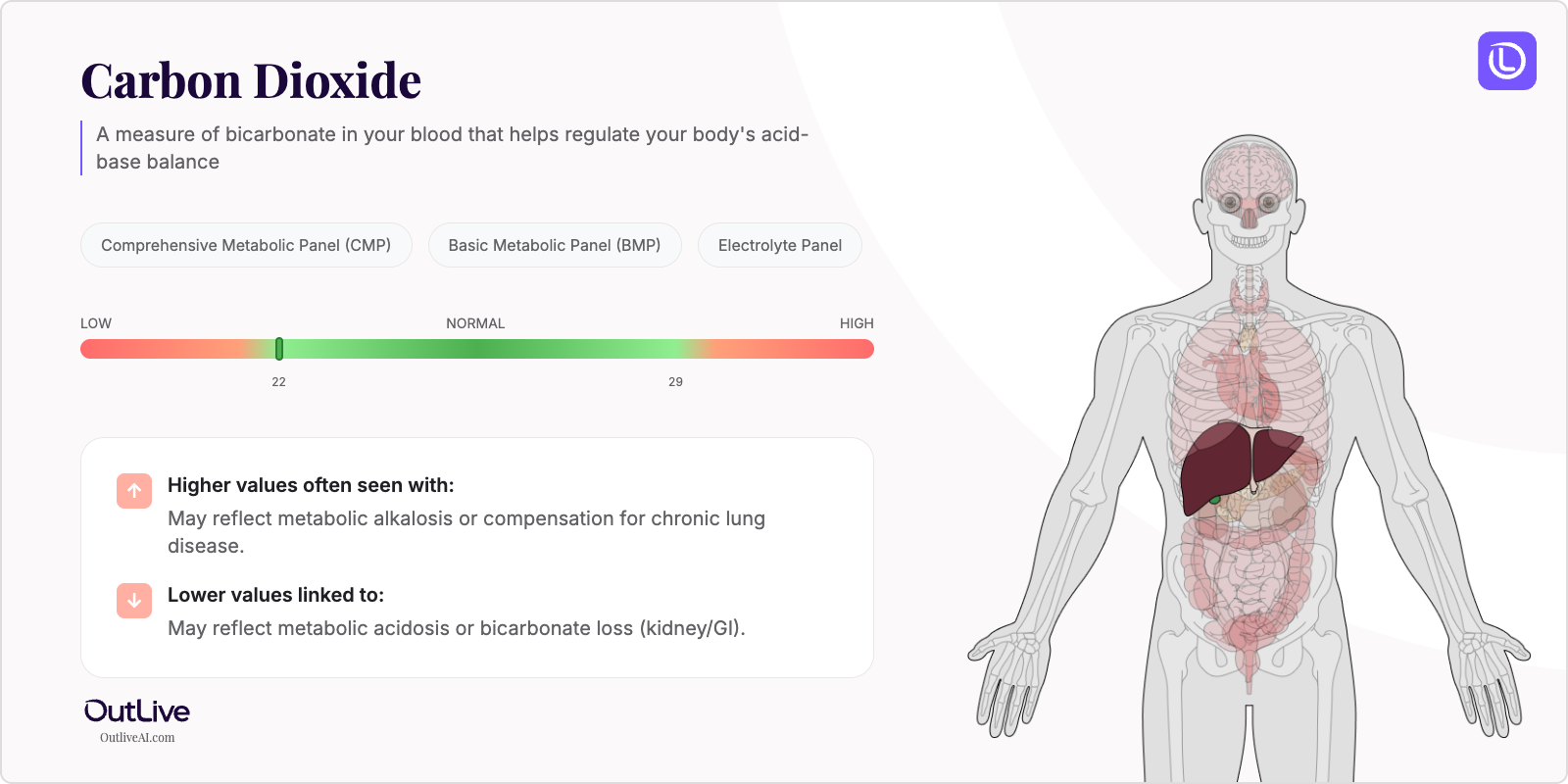
- What it is: A measure of bicarbonate in your blood that helps regulate your body's acid-base balance
- Found in tests: Comprehensive Metabolic Panel (CMP), Basic Metabolic Panel (BMP), Electrolyte Panel
- Normal range: 22-29 mEq/L (milliequivalents per liter)
If you're looking at your lab results and wondering what carbon dioxide (CO2) means, you're in the right place. Think of carbon dioxide in your blood like a pH balancer in a swimming pool – it helps keep your body's acid levels just right, not too acidic and not too alkaline. Let's break down what your numbers mean in plain English, so you can walk into your next doctor's appointment feeling informed and confident.
Why Is Carbon Dioxide (Bicarbonate) Tested?
Your doctor orders a carbon dioxide test as part of routine health screening through a Comprehensive Metabolic Panel (CMP) or Basic Metabolic Panel (BMP). It's one of those tests that gives us a quick snapshot of how well your body is maintaining its chemical balance. Think of it as checking the thermostat in your home – we want to make sure everything is running at the right temperature.
This test becomes especially important when you're experiencing symptoms like difficulty breathing, prolonged vomiting, persistent fatigue, or confusion. Your doctor might also order it if you have kidney disease, lung disease, or if you're taking certain medications that can affect your body's acid-base balance. It helps us understand whether your kidneys and lungs are working together properly to keep your blood at the right pH level.
The carbon dioxide measurement matters because it's one of the key players in preventing your blood from becoming too acidic or too alkaline – both of which can affect how well your organs function. When this balance is off, it can impact everything from your breathing to your heart rhythm.
What Does Carbon Dioxide (Bicarbonate) Do in Your Body?
Here's where it gets interesting – the "carbon dioxide" on your lab report is actually measuring bicarbonate, which is the main form that CO2 takes in your blood. Your body is constantly producing carbon dioxide as a waste product when cells use oxygen for energy. But rather than just being waste, bicarbonate acts as a crucial buffer system, like a shock absorber that prevents sudden changes in your blood's pH.
Your lungs and kidneys work as a team to maintain this balance. When you breathe, your lungs remove excess carbon dioxide. Meanwhile, your kidneys either hold onto bicarbonate or release it in your urine, depending on what your body needs. It's like having both heating and air conditioning in your house – they work together to maintain the perfect temperature.
This bicarbonate system is closely related to other electrolytes in your blood, particularly chloride and sodium. They all work together to maintain proper fluid balance, nerve function, and muscle contractions. When one is off, it often affects the others, which is why your doctor looks at all these values together.
What Do My Bicarbonate Results Mean?
Normal Bicarbonate Ranges
| Population | Normal Range | Optimal Range |
|---|---|---|
| Adult Male | 22-29 mEq/L | 24-26 mEq/L |
| Adult Female | 22-29 mEq/L | 24-26 mEq/L |
| Children (2-18 years) | 20-28 mEq/L | 22-26 mEq/L |
| Infants (0-2 years) | 16-24 mEq/L | 18-22 mEq/L |
| Pregnancy | 22-29 mEq/L | 23-27 mEq/L |
Note: Reference ranges may vary slightly between laboratories. Always compare your results to the range provided on your specific lab report.
What Does High Bicarbonate Mean?
Common Causes:
- Prolonged vomiting (losing stomach acid makes blood more alkaline)
- Chronic lung disease like COPD (body compensates for retained CO2)
- Certain diuretics or "water pills" (cause loss of hydrogen ions)
- Cushing's syndrome (excess cortisol affects electrolyte balance)
- Excessive antacid use (adds alkaline substances to your system)
- Primary aldosteronism (hormone imbalance affecting kidneys)
- Severe potassium deficiency (affects acid-base balance)
Possible Symptoms:
- Muscle twitching or hand tremors
- Nausea or vomiting
- Numbness or tingling around mouth and fingers
- Confusion or irritability
- Muscle cramps
- Lightheadedness
When to Be Concerned: If your bicarbonate is above 32 mEq/L and you're experiencing confusion, severe muscle spasms, or difficulty breathing, seek immediate medical attention. These could be signs of severe alkalosis that needs prompt treatment.
What Does Low Bicarbonate Mean?
Common Causes:
- Diabetic ketoacidosis (body produces excess acid)
- Kidney disease (kidneys can't remove acid properly)
- Severe diarrhea (loss of bicarbonate in stool)
- Lactic acidosis from intense exercise or certain conditions
- Aspirin or methanol poisoning
- Addison's disease (adrenal insufficiency)
- Certain medications like metformin or topiramate
Possible Symptoms:
- Rapid, deep breathing (Kussmaul breathing)
- Fatigue and weakness
- Confusion or drowsiness
- Headache
- Loss of appetite
- Nausea and vomiting
- Increased heart rate
When to Be Concerned: If your bicarbonate is below 15 mEq/L, especially with symptoms like severe shortness of breath, chest pain, or altered mental status, this requires immediate medical evaluation as it may indicate dangerous acidosis.
What Can Affect My Bicarbonate Levels?
Factors That May Increase Levels:
- Medications: Loop diuretics (furosemide), thiazide diuretics, corticosteroids, excessive antacids
- Lifestyle: Low-potassium diet, excessive licorice consumption, chronic alcohol use
- Conditions: Recent vomiting episodes, anxiety-related hyperventilation, dehydration
- Supplements: Sodium bicarbonate (baking soda), calcium carbonate antacids
Factors That May Decrease Levels:
- Medications: Metformin, topiramate, acetazolamide, high-dose aspirin
- Lifestyle: Extreme exercise, high-protein diets, fasting or starvation
- Conditions: Recent diarrhea, respiratory infections, uncontrolled diabetes
- Time of Day: Levels can be slightly lower in the morning after overnight fasting
How Is Carbon Dioxide (Bicarbonate) Related to Other Tests?
Your bicarbonate level is like one instrument in an orchestra – it needs to harmonize with other values to give the full picture. It's always evaluated alongside other electrolytes to calculate something called the "anion gap," which helps identify the cause of acid-base imbalances.
Often tested alongside: Sodium, Potassium, Chloride, BUN, Creatinine, Glucose Part of: Comprehensive Metabolic Panel, Basic Metabolic Panel Ratio calculations: Anion gap = Sodium - (Chloride + Bicarbonate) Follow-up tests: Arterial blood gases (ABG), urine pH, lactate levels, ketone levels
Frequently Asked Questions
How often should bicarbonate be tested? For healthy adults, annual testing during routine check-ups is typically sufficient. If you have kidney disease, diabetes, or take medications affecting electrolytes, your doctor may recommend testing every 3-6 months.
Can I improve my bicarbonate levels naturally? In many cases, yes. Staying well-hydrated, managing underlying conditions like diabetes, avoiding excessive antacid use, and maintaining a balanced diet with adequate fruits and vegetables can help. However, always work with your doctor before making changes, as the underlying cause needs to be addressed.
Should I fast before a bicarbonate test? Typically, no special fasting is required specifically for bicarbonate testing. However, since it's usually part of a comprehensive panel that includes glucose, you may be asked to fast for 8-12 hours.
How quickly can bicarbonate levels change? Bicarbonate levels can change within hours to days depending on the cause. Acute conditions like vomiting or diarrhea can alter levels within hours, while kidney-related changes may develop over days to weeks.
Next Steps After Your Bicarbonate Test
Questions to Ask Your Doctor:
- What do my bicarbonate results mean for my overall health?
- Are my levels related to my current symptoms or medications?
- Do I need additional testing like arterial blood gases?
- Should we monitor this over time, and how frequently?
- Are there lifestyle changes or medication adjustments that could help?
Download our Carbon Dioxide (Bicarbonate) Doctor Questions Checklist
🔬 Ready to Track Your Carbon Dioxide (Bicarbonate) Over Time?
Understanding a single bicarbonate result is just the beginning. Our free Lab Analyzer tool helps you:
- Track how your carbon dioxide changes over time
- See how it relates to your other lab values
- Identify patterns your doctor might miss
- Get personalized insights based on your trends
[Upload Your Lab Report for Free Analysis →]