
📋 At a Glance
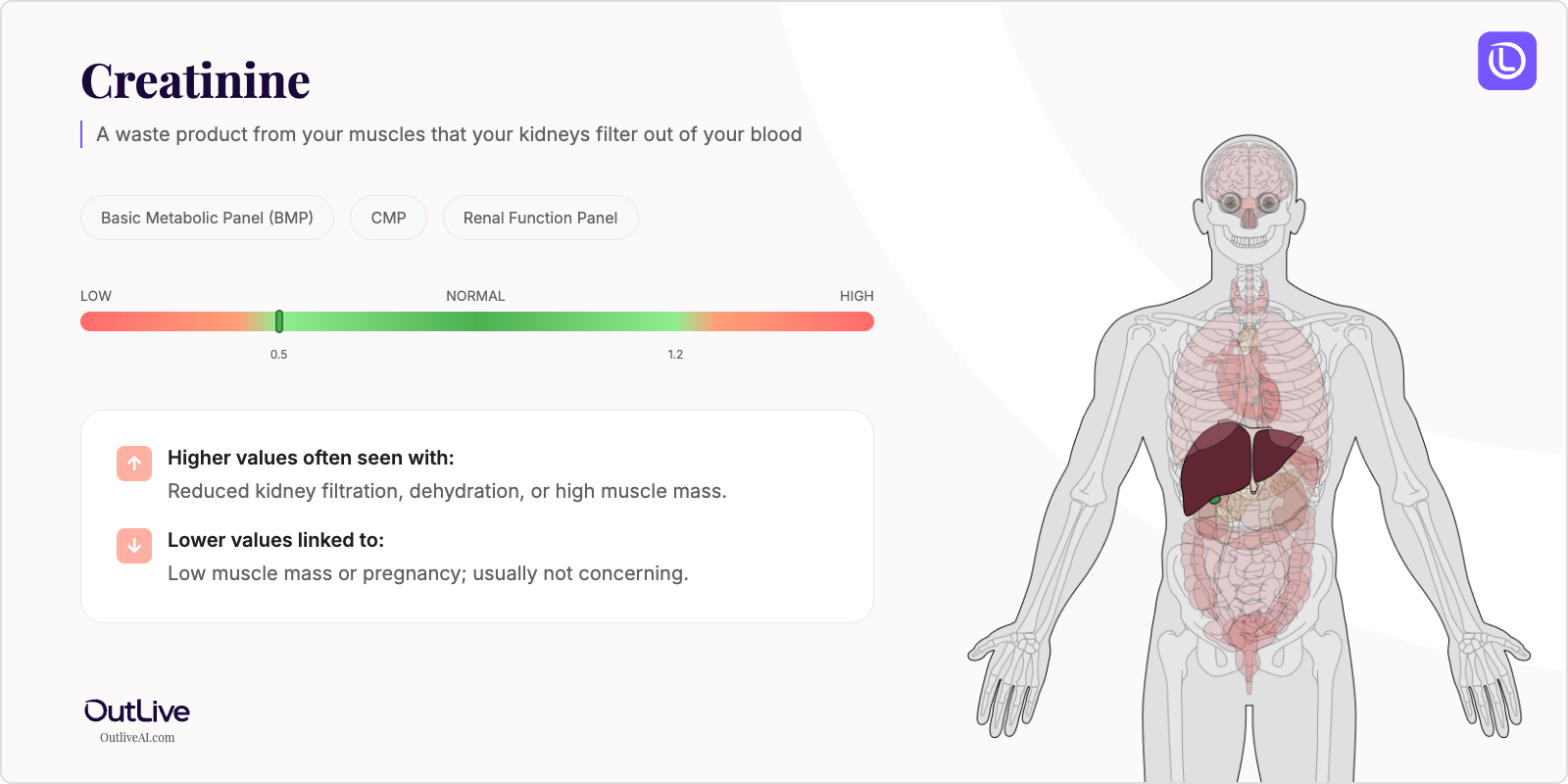
- What it is: A waste product from your muscles that your kidneys filter out of your blood
- Found in tests: Basic Metabolic Panel (BMP), Comprehensive Metabolic Panel (CMP), Renal Function Panel
- Normal range: 0.6-1.2 mg/dL for men, 0.5-1.1 mg/dL for women
If you're looking at your lab results and wondering what creatinine means, you're in the right place. Think of creatinine as the exhaust from your muscle's engine - it's a normal waste product that your kidneys should be filtering out like a well-functioning car's exhaust system. When this number is off, it's often telling us how well your kidneys are doing their job. Let's break down what your numbers mean in plain English.
Why Is Creatinine Tested?
Your doctor orders a creatinine test as part of routine health screening or when they want to check how well your kidneys are working. It's included in common blood panels like your Basic Metabolic Panel (BMP) or Comprehensive Metabolic Panel (CMP) that you might get during an annual physical or hospital visit. Think of it as one of your body's vital signs - just like blood pressure tells us about your heart, creatinine tells us about your kidneys.
Doctors specifically look at creatinine when you have symptoms like fatigue, swelling in your feet or ankles, changes in urination, or if you're taking medications that could affect your kidneys. It's also regularly monitored if you have diabetes, high blood pressure, or a family history of kidney disease. The beauty of this test is its simplicity - one number can give us valuable insight into whether your kidneys are keeping up with their filtering duties.
What Does Creatinine Do in Your Body?
Here's what's happening behind the scenes: every time you move a muscle - whether you're lifting groceries or simply breathing - your muscles produce creatinine as a waste product. It's like the ash left over after a fire. This creatinine travels through your bloodstream to your kidneys, which act as your body's filtration system, removing it through your urine at a steady, predictable rate.
The amount of creatinine in your blood stays remarkably stable day to day because your muscles produce it at a constant rate, and healthy kidneys remove it just as consistently. It's this predictability that makes creatinine such a reliable marker. When levels rise, it usually means your kidneys aren't filtering as efficiently as they should be. When levels are low, it might mean you have less muscle mass producing it. Your creatinine level works hand-in-hand with other kidney function tests like BUN (blood urea nitrogen) and eGFR (estimated glomerular filtration rate) to give your doctor a complete picture of your kidney health.
What Do My Creatinine Results Mean?
Normal Creatinine Ranges
| Population | Normal Range | Optimal Range |
|---|---|---|
| Adult Male | 0.6-1.2 mg/dL | 0.8-1.0 mg/dL |
| Adult Female | 0.5-1.1 mg/dL | 0.6-0.9 mg/dL |
| Children (3-18 years) | 0.5-1.0 mg/dL | Age-dependent |
| Pregnancy | 0.4-0.8 mg/dL | 0.5-0.7 mg/dL |
Note: Reference ranges may vary slightly between laboratories. Always compare your results to the range provided on your specific lab report.
What Does High Creatinine Mean?
Common Causes:
- Kidney disease or damage - When kidneys can't filter properly, creatinine builds up like traffic during rush hour
- Dehydration - Less fluid means concentrated blood and temporarily higher readings
- Certain medications - NSAIDs (like ibuprofen), some antibiotics, and blood pressure medications can raise levels
- High protein diet or supplements - More protein means more creatinine production
- Intense exercise - Muscle breakdown from heavy workouts releases extra creatinine
- Diabetes complications - High blood sugar over time can damage kidney filters
- High blood pressure - Puts extra strain on kidney blood vessels
Possible Symptoms:
- Swelling in feet, ankles, or around eyes
- Fatigue or weakness
- Shortness of breath
- Confusion or difficulty concentrating
- Decreased urine output or foamy urine
- Nausea or loss of appetite
- Muscle cramps
When to Be Concerned: If your creatinine is above 1.5 mg/dL, your doctor will likely want to investigate further. Levels above 2.0 mg/dL suggest significant kidney impairment and require prompt medical attention. Any sudden jump in your levels - even within the "normal" range - deserves a conversation with your healthcare provider.
What Does Low Creatinine Mean?
Common Causes:
- Low muscle mass - Common in elderly individuals or those with muscle-wasting conditions
- Pregnancy - Normal dilution of blood and increased kidney filtration
- Severe liver disease - The liver plays a role in creatinine production
- Vegetarian or vegan diet - Less dietary protein can mean lower baseline levels
- Overhydration - Diluted blood shows lower concentrations
- Certain medications - Some antibiotics and diuretics can lower levels
- Malnutrition - Poor protein intake affects muscle mass and creatinine production
Possible Symptoms:
- Muscle weakness or wasting
- Fatigue
- Weight loss
- Poor appetite
- Difficulty with physical activities
When to Be Concerned: Low creatinine is rarely dangerous on its own but can signal underlying issues. Levels below 0.5 mg/dL in adults warrant discussion with your doctor, especially if accompanied by muscle weakness or unexplained weight loss.
What Can Affect My Creatinine Levels?
Factors That May Increase Levels:
- Medications: ACE inhibitors, NSAIDs (ibuprofen, naproxen), certain antibiotics (trimethoprim), cimetidine
- Lifestyle: High protein diet, creatine supplements, intense weightlifting, dehydration
- Conditions: Fever, infection, recent surgery, pregnancy complications
- Supplements: Creatine monohydrate, high-dose vitamin C, certain herbal supplements
Factors That May Decrease Levels:
- Medications: Certain antibiotics (cefoxitin), corticosteroids
- Lifestyle: Low protein diet, prolonged bed rest, significant weight loss
- Conditions: Advanced liver disease, muscular dystrophy, myasthenia gravis
- Time of Day: Levels can be slightly lower in the afternoon compared to morning
How Is Creatinine Related to Other Tests?
Your creatinine doesn't work alone - it's part of a team of tests that paint your kidney health picture. It's almost always tested alongside BUN (blood urea nitrogen) to calculate your BUN/creatinine ratio, which helps determine if kidney issues are present. Your doctor uses your creatinine level, along with your age, sex, and race, to calculate your eGFR (estimated glomerular filtration rate) - think of this as your kidney's performance score.
Often tested alongside: BUN, electrolytes (sodium, potassium, chloride), glucose, eGFR calculation Part of: Basic Metabolic Panel, Comprehensive Metabolic Panel, Renal Function Panel Ratio calculations: BUN/Creatinine ratio (normal is 10:1 to 20:1) Follow-up tests: Urinalysis, 24-hour urine collection, kidney ultrasound, cystatin C
Frequently Asked Questions
How often should creatinine be tested? For healthy adults, annual testing during routine check-ups is typically sufficient. If you have diabetes, high blood pressure, or kidney disease, your doctor may recommend testing every 3-6 months. Those on medications affecting the kidneys might need more frequent monitoring.
Can I improve my creatinine levels naturally? Yes, staying well-hydrated, managing blood pressure and blood sugar, limiting NSAIDs use, and maintaining a balanced diet can help. However, never stop prescribed medications without consulting your doctor first.
Should I fast before a creatinine test? Fasting isn't required for creatinine alone, but if it's part of a comprehensive panel including glucose or lipids, your doctor may request an 8-12 hour fast.
How quickly can creatinine levels change? Creatinine can change within hours due to dehydration or medication, but meaningful kidney function changes typically occur over weeks to months. A single abnormal result often needs repeating to confirm a trend.
Next Steps After Your Creatinine Test
Questions to Ask Your Doctor:
- What do my creatinine results mean for my overall health?
- Are my levels related to my symptoms?
- Do I need additional testing?
- Should we monitor this over time?
- Are there lifestyle changes that could help?
Download our Creatinine Doctor Questions Checklist
🔬 Ready to Track Your Creatinine Over Time?
Understanding a single creatinine result is just the beginning. Our free Lab Analyzer tool helps you:
- Track how your creatinine changes over time
- See how it relates to your other lab values
- Identify patterns your doctor might miss
- Get personalized insights based on your trends
[Upload Your Lab Report for Free Analysis →]