
📋 At a Glance
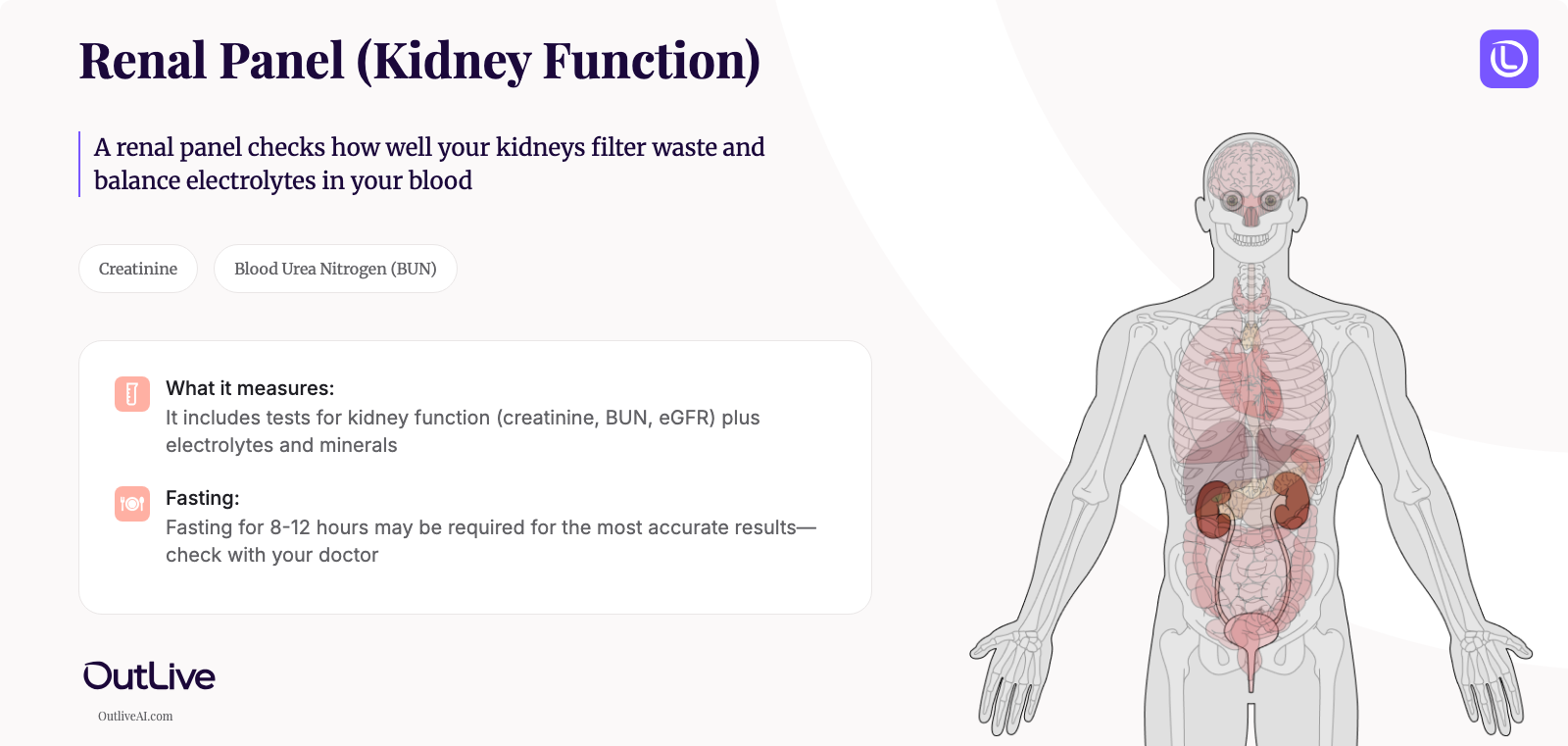
- A renal panel checks how well your kidneys filter waste and balance electrolytes in your blood
- It includes tests for kidney function (creatinine, BUN, eGFR) plus electrolytes and minerals
- Fasting for 8-12 hours may be required for the most accurate results—check with your doctor
If you're reading this, you've likely just had a Renal Panel—also called a Kidney Function Panel—and are looking at results with terms like "creatinine," "eGFR," and "BUN" that might feel overwhelming. Take a breath. You're in the right place. This guide will walk you through what a renal panel is, what each of those measurements means for your kidney health, and most importantly, what you should do next. Think of us as your translator—we're here to help you understand your results so you can have a more informed conversation with your healthcare provider.
Why Is a Renal Panel Ordered?
Your doctor might order a renal panel for several reasons. Think of your kidneys as your body's master filtration system—they work 24/7 to clean your blood, remove waste, balance minerals, and regulate blood pressure. When they're not working properly, waste builds up and your body's delicate chemical balance gets disrupted.
The most common reasons include:
Routine health screening: For people with risk factors like diabetes, high blood pressure, or family history of kidney disease, regular renal panels help catch problems early when they're most treatable.
Investigating symptoms: If you're experiencing fatigue, swelling (especially in legs and ankles), changes in urination, back pain, or unexplained nausea, a renal panel helps determine if your kidneys are the cause.
Monitoring chronic conditions: If you have diabetes, high blood pressure, or known kidney disease, regular panels track how these conditions affect your kidneys and whether treatments are working.
Medication monitoring: Many medications are filtered through the kidneys or can affect kidney function. Drugs like NSAIDs, certain antibiotics, and blood pressure medications require periodic kidney monitoring.
Pre-surgery evaluation: Before surgery, doctors need to ensure your kidneys can handle anesthesia and filter medications properly during recovery.
Evaluating abnormal results: If a basic metabolic panel or urinalysis showed concerning results, a comprehensive renal panel provides more detailed information.
Emergency situations: In cases of severe dehydration, suspected kidney injury, or electrolyte imbalances, a renal panel provides critical information quickly.
Remember, kidney disease often has no symptoms in early stages—you can lose up to 90% of kidney function before feeling sick. That's why regular testing is so important.
How to Prepare for a Renal Panel Test
Preparing for a renal panel requires some planning to ensure accurate results:
Fasting requirements: Some doctors require 8-12 hours of fasting for accurate glucose and phosphorus measurements. Others don't require fasting. Follow your specific instructions.
Hydration: Maintain normal hydration. Don't over-hydrate as it can dilute results, but avoid dehydration which can falsely elevate creatinine and BUN.
Medication considerations: Continue taking prescribed medications unless told otherwise. Tell your doctor about all medications and supplements, as some can affect results:
- NSAIDs (ibuprofen, naproxen) can affect kidney function
- Some antibiotics can elevate creatinine
- Supplements like creatine can affect results
Exercise timing: Avoid strenuous exercise for 24 hours before the test. Intense physical activity can temporarily increase creatinine levels from muscle breakdown.
Protein intake: Eating a very high-protein meal before the test can temporarily elevate BUN. Maintain your normal diet unless instructed otherwise.
The blood draw is routine—typically one or two tubes of blood. You can usually return to normal activities immediately.
Understanding the Components of Your Renal Panel Report
Your renal panel tells the story of how well your kidneys are filtering blood and maintaining your body's chemical balance. Each measurement provides a different piece of the puzzle.
What Do the Kidney Function Tests Mean?
These tests directly measure how well your kidneys filter waste from your blood:
Creatinine: A waste product from normal muscle activity, produced at a steady rate. Since healthy kidneys filter creatinine constantly, rising levels indicate declining kidney function. Think of creatinine as a marker showing how efficiently your kidney filters are working.
Blood Urea Nitrogen (BUN): Measures nitrogen waste from protein breakdown. Unlike creatinine, BUN can be affected by diet, hydration, and liver function. It's like checking how much "trash" is waiting to be filtered out.
eGFR (Estimated Glomerular Filtration Rate): Calculated from your creatinine, age, sex, and race, this estimates how much blood your kidneys filter per minute. Think of it as your kidneys' efficiency rating—it's the best overall measure of kidney function. An eGFR above 90 is normal, while below 15 indicates kidney failure.
BUN/Creatinine Ratio: This calculation helps determine if kidney problems are due to the kidneys themselves or other factors like dehydration. A normal ratio is 10:1 to 20:1.
Cystatin C: A newer, more sensitive marker of kidney function, not affected by muscle mass like creatinine. Not always included but useful in certain situations.
Creatinine Clearance: Sometimes calculated from a 24-hour urine collection plus blood test. Provides a more accurate measure of kidney filtration than eGFR alone.
Here are the typical adult ranges for kidney function markers:
| Component | Abbreviation | Male Range | Female Range |
|---|---|---|---|
| Creatinine | Cr | 0.7-1.3 mg/dL | 0.6-1.1 mg/dL |
| BUN | BUN | 7-20 mg/dL | 7-20 mg/dL |
| eGFR | eGFR | >90mL/min/1.73m² (normal) 60-89 (mild decrease) 30-59 (moderate decrease) 15-29 (severe decrease) <15 (kidney failure) | Same as male |
| BUN/Creatinine Ratio | BUN/Cr | 10:1 to 20:1 | 10:1 to 20:1 |
| Cystatin C | Cys C | 0.53-0.95 mg/L | 0.53-0.95 mg/L |
What Do the Electrolyte and Mineral Tests Mean?
Your kidneys carefully regulate minerals and electrolytes. Imbalances can indicate kidney problems or result from them:
Sodium: Your kidneys regulate sodium to control blood pressure and fluid balance. Abnormal levels might indicate kidney problems or dehydration.
Potassium: Critical for heart and muscle function. Kidneys remove excess potassium—when they fail, dangerous levels can build up, affecting heart rhythm.
Chloride: Works with sodium to maintain fluid balance and blood pH. Often changes alongside sodium.
Carbon Dioxide (CO2/Bicarbonate): Helps maintain blood pH. Kidneys regulate bicarbonate levels—abnormalities might indicate kidney disease or acid-base imbalances.
Calcium: Kidneys help regulate calcium and activate vitamin D. Kidney disease can cause calcium imbalances, affecting bones and heart.
Phosphorus: Works with calcium for bone health. Failing kidneys can't remove excess phosphorus, leading to bone problems and calcium deposits in blood vessels.
Magnesium: Important for muscle and nerve function. Kidney disease can cause magnesium wasting or accumulation.
Albumin: While made by the liver, low albumin can indicate kidney disease if protein is being lost in urine.
Anion Gap: Calculated from electrolytes, helps identify acid-base imbalances that might indicate kidney problems.
Here are the typical ranges for electrolytes and minerals:
| Component | Abbreviation | Typical Adult Range |
|---|---|---|
| Sodium | Na | 136-145 mEq/L |
| Potassium | K | 3.5-5.1 mEq/L |
| Chloride | Cl | 98-107 mEq/L |
| CO2/Bicarbonate | CO2 | 22-29 mEq/L |
| Calcium | Ca | 8.5-10.5 mg/dL |
| Phosphorus | Phos | 2.5-4.5 mg/dL |
| Magnesium | Mg | 1.7-2.2 mg/dL |
| Albumin | Alb | 3.5-5.0 g/dL |
| Anion Gap | AG | 8-12 mEq/L |
What Do Abnormal Results Mean? (A High-Level Guide)
Renal panel results need to be interpreted together, as patterns tell more than individual values:
Acute Kidney Injury (Sudden Kidney Damage) Pattern:
- Rapid rise in creatinine (increases by 0.3 mg/dL or more within 48 hours)
- Elevated BUN
- Decreased eGFR
- Often elevated potassium
- Common causes: Dehydration, medications, infection, blocked urine flow
- Usually reversible if caught and treated quickly
Chronic Kidney Disease (CKD) Pattern:
- Persistently elevated creatinine
- Decreased eGFR for 3+ months
- Often high phosphorus, low calcium
- May have anemia (low red blood cells)
- Staged by eGFR:
- Stage 1: eGFR ≥90 with kidney damage signs
- Stage 2: eGFR 60-89
- Stage 3a: eGFR 45-59
- Stage 3b: eGFR 30-44
- Stage 4: eGFR 15-29
- Stage 5: eGFR <15 (kidney failure)
Dehydration Pattern:
- Elevated BUN more than creatinine
- BUN/Creatinine ratio >20:1
- High sodium
- Concentrated urine
- Usually improves quickly with fluids
Diabetic Kidney Disease Pattern:
- Gradually declining eGFR
- Protein in urine (checked separately)
- Often normal or only slightly elevated creatinine initially
- May have other diabetes complications
Hypertensive (High Blood Pressure) Kidney Disease:
- Slowly progressive decline in eGFR
- Mild to moderate creatinine elevation
- Often accompanied by heart changes
- May have protein in urine
Electrolyte Imbalance Patterns:
- High potassium + high phosphorus + low calcium = Advanced kidney disease
- Low sodium + low chloride = Often volume depletion
- Low CO2/bicarbonate = Metabolic acidosis (kidneys not removing acid)
When to Worry:
- Creatinine doubling from baseline
- eGFR <60 (especially if declining)
- Potassium >5.5 mEq/L (can affect heart)
- Severe acidosis (low CO2)
- Multiple abnormalities together
Important considerations:
- Age affects normal values (eGFR naturally declines with age)
- Muscle mass affects creatinine (bodybuilders may have higher levels)
- Single abnormal results often need repeat testing
- Trends over time matter more than single values
Important disclaimer: Kidney disease interpretation requires medical expertise. Many factors affect results, and early kidney disease is treatable. Only your healthcare provider can diagnose kidney conditions considering your complete health picture. Never change medications or treatments based on lab results alone.
Next Steps After Your Renal Panel Test
So you've read through your results—what now? Here's your action plan:
1. Schedule a follow-up with your doctor: Any abnormalities need discussion. Early kidney disease is often reversible or manageable with proper treatment.
2. Prepare your questions: Not sure what to ask? We've created a helpful checklist of questions to bring to your appointment. [Download our Renal Panel Doctor Questions Checklist](# to make sure you cover everything important.
3. Understand your kidney disease risk:
- Calculate your risk if you have diabetes or high blood pressure
- Know your family history
- Review all medications with your doctor
4. Get additional testing if needed:
- Urine tests for protein (albumin/creatinine ratio)
- Kidney ultrasound or other imaging
- Sometimes kidney biopsy for definitive diagnosis
5. Take protective actions:
- Control blood pressure (target usually <130/80)
- Manage blood sugar if diabetic
- Avoid NSAIDs and other kidney-harmful drugs
- Stay hydrated but don't overdo it
- Limit sodium and possibly protein/potassium/phosphorus
- Don't smoke
6. Know when to see a specialist: If eGFR <60, rapidly declining function, or complex cases, ask about referral to a nephrologist (kidney specialist).
🔬 Ready to Translate Your Full Report?
Understanding your renal panel is just the beginning. Our free Lab Analyzer tool helps you:
- Track all your lab results in one place
- Spot important trends over time
- Generate personalized questions for your doctor
- Get plain-English explanations of every test
[Upload Your Lab Report for Free Analysis →]
Join 50,000+ people taking control of their health journey
Remember, knowledge is power when it comes to your health. Understanding your renal panel results empowers you to protect your kidney health. The good news is that kidney disease progression can often be slowed or even stopped with proper treatment. Early detection and management make all the difference. You've already taken the first step by educating yourself—now use that knowledge to work with your healthcare provider toward better kidney health.