
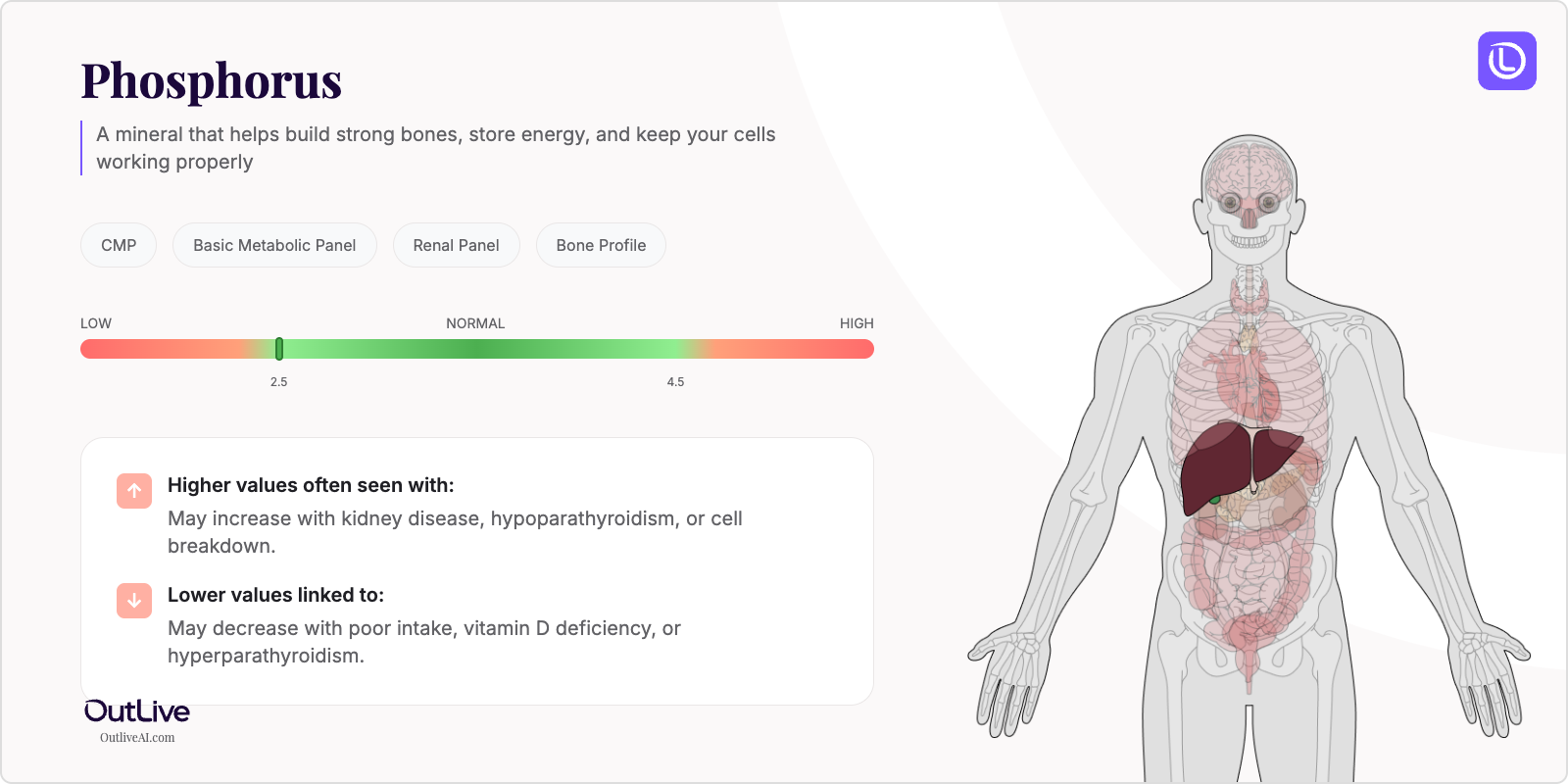
📋 At a Glance
- What it is: A mineral that helps build strong bones, store energy, and keep your cells working properly
- Found in tests: Comprehensive Metabolic Panel (CMP), Basic Metabolic Panel (BMP), Renal Panel, Bone Profile
- Normal range: 2.5-4.5 mg/dL for adults (slightly higher in children)
If you're looking at your lab results and wondering what phosphorus means, you're in the right place. Think of phosphorus as your body's construction worker and energy manager rolled into one - it helps build your bones, powers your cells, and keeps your muscles contracting properly. Let's break down what your numbers mean in plain English, so you can walk into your doctor's office feeling informed and confident.
Why Is Phosphorus Tested?
Your doctor orders a phosphorus test to get a snapshot of how well your kidneys are working and whether your bones are healthy. It's routinely included in renal panels when monitoring kidney function, and it's often checked alongside calcium levels since these two minerals work as partners in your body.
Specific symptoms that might prompt your doctor to check phosphorus include unexplained fatigue, muscle weakness, bone pain, or changes in appetite. If you have kidney disease, parathyroid problems, or are taking certain medications like antacids, your doctor will likely monitor your phosphorus levels regularly.
This test matters because phosphorus imbalances can signal underlying health issues that need attention. Too much or too little can affect everything from your energy levels to your heart rhythm, making it an important piece of your overall health puzzle.
What Does Phosphorus Do in Your Body?
Phosphorus is the second most abundant mineral in your body after calcium, and about 85% of it lives in your bones and teeth. Think of it as the backbone of your body's energy currency - it's essential for making ATP, the molecule that powers every cell in your body. Without proper phosphorus levels, your cells would be like phones with dead batteries.
Your kidneys are the main regulators of phosphorus, filtering out excess amounts through your urine. They work closely with hormones from your parathyroid glands and vitamin D to maintain the perfect balance. When this system works smoothly, phosphorus helps your muscles contract, your nerves send signals, and your body repair damaged tissues.
Phosphorus and calcium maintain a delicate dance in your bloodstream - when one goes up, the other often goes down. This relationship is why your doctor often checks both minerals together, as imbalances in this partnership can affect your bone health and many other body functions.
What Do My Phosphorus Results Mean?
Normal Phosphorus Ranges
| Population | Normal Range | Optimal Range |
|---|---|---|
| Adult Male | 2.5-4.5 mg/dL | 3.0-4.0 mg/dL |
| Adult Female | 2.5-4.5 mg/dL | 3.0-4.0 mg/dL |
| Children (1-12 years) | 3.5-5.5 mg/dL | 4.0-5.0 mg/dL |
| Infants | 4.5-6.5 mg/dL | 5.0-6.0 mg/dL |
| Pregnancy | 2.5-4.5 mg/dL | 3.0-4.0 mg/dL |
Note: Reference ranges may vary slightly between laboratories. Always compare your results to the range provided on your specific lab report.
What Does High Phosphorus Mean?
Common Causes:
- Kidney disease or kidney failure (most common cause - kidneys can't filter excess phosphorus)
- Hypoparathyroidism (underactive parathyroid glands)
- Excessive vitamin D supplementation
- Diabetic ketoacidosis (a serious diabetes complication)
- Certain medications like laxatives containing phosphate
- Tumor lysis syndrome (when cancer cells break down rapidly)
- Rhabdomyolysis (severe muscle breakdown)
Possible Symptoms:
- Itchy skin
- Joint pain and stiffness
- Muscle cramps or spasms
- Calcium deposits in soft tissues
- Fatigue and weakness
- Nausea or upset stomach
When to Be Concerned: Phosphorus levels above 5.5 mg/dL require prompt medical attention, especially if you have kidney disease. Levels above 7.0 mg/dL can be dangerous and may cause calcium to deposit in your blood vessels and organs. If you experience severe muscle cramps, confusion, or difficulty breathing along with high phosphorus, seek immediate medical care.
What Does Low Phosphorus Mean?
Common Causes:
- Malnutrition or eating disorders
- Chronic alcoholism
- Overuse of antacids containing aluminum or magnesium
- Hyperparathyroidism (overactive parathyroid glands)
- Vitamin D deficiency
- Severe burns or recovery from diabetic ketoacidosis
- Refeeding syndrome (when malnourished people start eating again)
Possible Symptoms:
- Muscle weakness or pain
- Bone pain or fragility
- Loss of appetite
- Anxiety or irritability
- Numbness and tingling
- Difficulty walking or coordination problems
- In severe cases, confusion or seizures
When to Be Concerned: Phosphorus levels below 2.0 mg/dL need medical evaluation, and levels below 1.0 mg/dL are considered critical and require immediate treatment. Severe hypophosphatemia can affect your breathing muscles and heart function, so don't delay seeking care if you have concerning symptoms.
What Can Affect My Phosphorus Levels?
Factors That May Increase Levels:
- Medications: Phosphate-containing laxatives, some chemotherapy drugs, excessive vitamin D supplements
- Lifestyle: High phosphorus diet (processed foods, dark sodas, organ meats)
- Conditions: Dehydration, recent bone fracture, prolonged immobilization
- Supplements: Phosphorus supplements, some protein powders
Factors That May Decrease Levels:
- Medications: Antacids (aluminum or magnesium-based), insulin, diuretics, some seizure medications
- Lifestyle: Poor nutrition, chronic alcohol use, excessive calcium supplementation
- Conditions: Chronic diarrhea, severe vomiting, recovery from surgery
- Time of Day: Phosphorus levels can be slightly lower in the morning
How Is Phosphorus Related to Other Tests?
Phosphorus is rarely evaluated in isolation - it's like one instrument in an orchestra that needs to harmonize with others. It's most commonly tested alongside calcium, as these two minerals have an inverse relationship. Your doctor will also look at your kidney function tests (creatinine and BUN) since your kidneys regulate phosphorus levels.
Often tested alongside: Calcium, PTH (parathyroid hormone), Vitamin D, Magnesium, Alkaline Phosphatase Part of: Renal Panel, Comprehensive Metabolic Panel Ratio calculations: Calcium-phosphorus product (important in kidney disease) Follow-up tests: If abnormal, your doctor may order PTH levels, vitamin D levels, or 24-hour urine phosphorus
Frequently Asked Questions
How often should phosphorus be tested? For healthy adults, phosphorus is typically checked during annual physicals as part of routine blood work. If you have kidney disease, your doctor may check it monthly or every few months. Those with parathyroid disorders might need testing every 3-6 months.
Can I improve my phosphorus levels naturally? Yes! If your levels are high due to diet, reducing processed foods, dark sodas, and foods with phosphate additives can help. For low levels, eating phosphorus-rich foods like dairy, meat, nuts, and whole grains can help, but always work with your doctor to address the underlying cause.
Should I fast before a phosphorus test? Fasting isn't typically required for a phosphorus test alone, but if it's part of a comprehensive panel that includes glucose or lipids, you may need to fast for 8-12 hours. Always follow your doctor's specific instructions.
How quickly can phosphorus levels change? Phosphorus levels can change within hours to days depending on the cause. Dietary changes might show effects within 24-48 hours, while treating underlying conditions like vitamin D deficiency may take weeks to normalize levels.
Next Steps After Your Phosphorus Test
Questions to Ask Your Doctor:
- What do my phosphorus results mean for my overall health?
- Are my levels related to my symptoms?
- Do I need additional testing?
- Should we monitor this over time?
- Are there lifestyle changes that could help?
- Should I adjust my diet or supplements?
- Could any of my medications be affecting my phosphorus?
Download our Phosphorus Doctor Questions Checklist
🔬 Ready to Track Your Phosphorus Over Time?
Understanding a single phosphorus result is just the beginning. Our free Lab Analyzer tool helps you:
- Track how your phosphorus changes over time
- See how it relates to your other lab values
- Identify patterns your doctor might miss
- Get personalized insights based on your trends
[Upload Your Lab Report for Free Analysis →]