
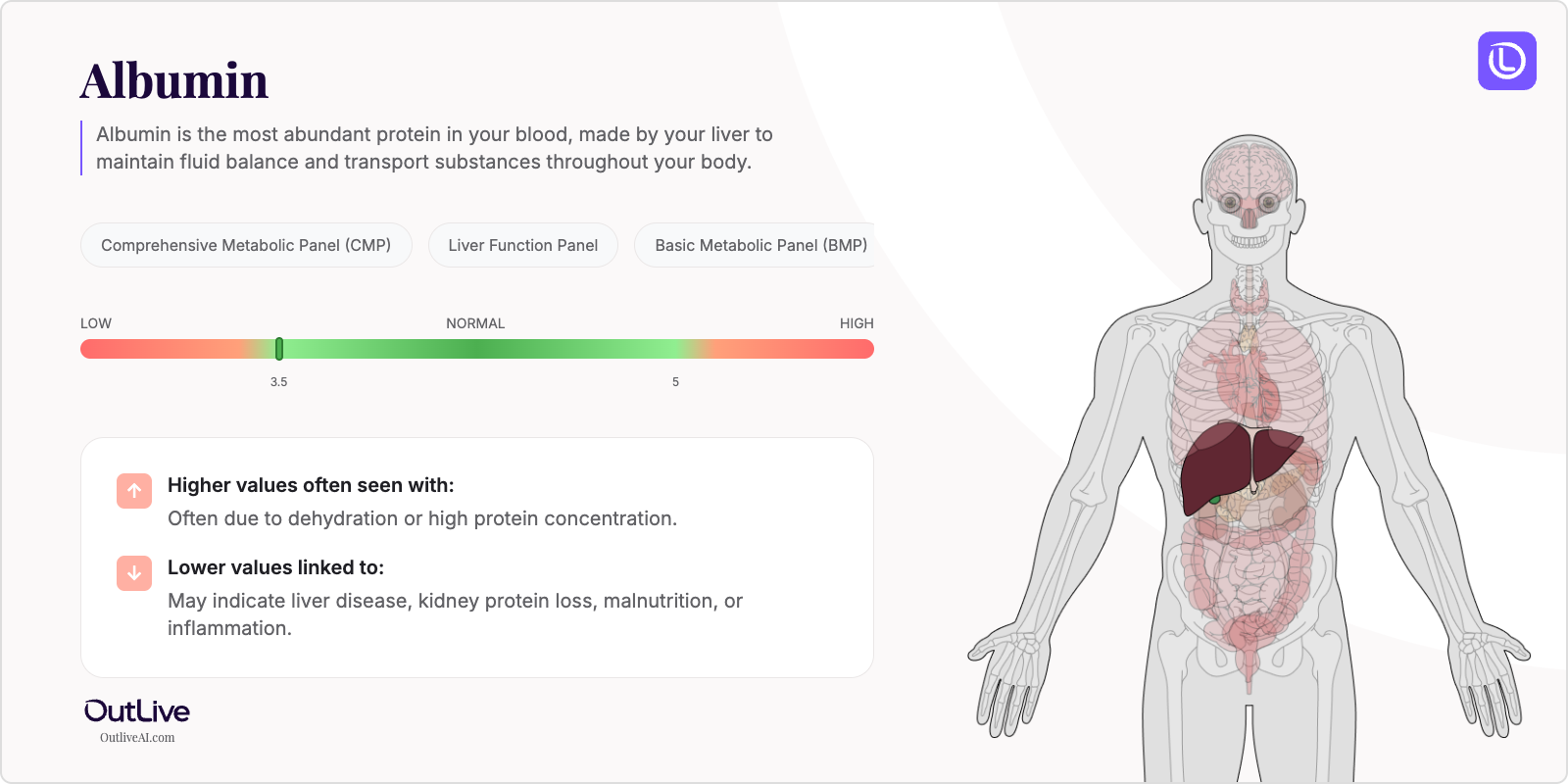
📋 At a Glance
- What it is: Albumin is the most abundant protein in your blood, made by your liver to maintain fluid balance and transport substances throughout your body.
- Found in tests: Comprehensive Metabolic Panel (CMP), Liver Function Panel, Basic Metabolic Panel (BMP), Kidney Function Tests
- Normal range: 3.5-5.0 g/dL (35-50 g/L) for most adults
If you're looking at your lab results and wondering what albumin means, you're in the right place. Think of albumin as your body's delivery truck and sponge combined – it carries important cargo like hormones and medications through your bloodstream while also keeping the right amount of fluid in your blood vessels. Let's break down what your numbers mean in plain English.
Why Is Albumin Tested?
Your doctor orders an albumin test as part of routine health screening or when they need to check how well your liver and kidneys are functioning. It's automatically included in comprehensive metabolic panels that many people get during annual checkups, so you might see this result even when you're feeling perfectly healthy.
Specific symptoms that often prompt albumin testing include unexplained swelling (especially in your legs, ankles, or abdomen), persistent fatigue, unexpected weight changes, or if you've been experiencing poor appetite or malnutrition. Doctors also monitor albumin levels closely if you have chronic conditions affecting your liver, kidneys, or digestive system.
This simple blood test helps diagnose and monitor conditions ranging from liver disease and kidney problems to nutritional deficiencies and inflammatory conditions. Because albumin plays such a crucial role in so many body functions, abnormal levels can be an early warning sign that something needs attention.
What Does Albumin Do in Your Body?
Your liver works around the clock producing about 12 grams of albumin daily – that's roughly the weight of two quarters. This hardworking protein makes up about 60% of all the protein in your blood plasma, and it's essential for keeping you healthy in ways you might not realize.
Albumin acts like a molecular taxi service, binding to and transporting hormones, vitamins, medications, and other substances that don't dissolve well in water. Without adequate albumin, these important passengers can't reach their destinations effectively. It also maintains what doctors call "oncotic pressure" – essentially acting like a sponge that keeps fluid in your blood vessels instead of letting it leak into your tissues, which would cause swelling.
Your albumin level reflects both your liver's ability to produce this protein and your body's overall nutritional status. When albumin drops, it often signals that either your liver is struggling, you're losing protein through your kidneys or gut, or you're not getting enough nutrition to support protein production.
What Do My Albumin Results Mean?
Normal Albumin Ranges
| Population | Normal Range | Optimal Range |
|---|---|---|
| Adult Male | 3.5-5.0 g/dL (35-50 g/L) | 4.0-4.8 g/dL |
| Adult Female | 3.5-5.0 g/dL (35-50 g/L) | 4.0-4.8 g/dL |
| Children (1-18 years) | 3.8-5.4 g/dL (38-54 g/L) | 4.2-5.0 g/dL |
| Newborns | 2.8-4.4 g/dL (28-44 g/L) | N/A |
| Pregnancy (3rd trimester) | 2.8-4.0 g/dL (28-40 g/L) | 3.2-3.8 g/dL |
Note: Reference ranges may vary slightly between laboratories. Always compare your results to the range provided on your specific lab report.
What Does High Albumin Mean?
Common Causes:
- Dehydration (most common cause – your blood becomes concentrated)
- High protein diet combined with intense exercise
- Certain medications like corticosteroids or growth hormone
- Chronic inflammation or infection causing increased production
- Laboratory error or improper blood collection technique
- Prolonged tourniquet use during blood draw
- Severe burns (in the recovery phase)
Possible Symptoms:
- Often no symptoms if mildly elevated
- Signs of dehydration (dry mouth, decreased urination, dizziness)
- Fatigue or weakness
- Headaches
When to Be Concerned: Albumin levels above 5.5 g/dL are uncommon and usually indicate severe dehydration requiring medical attention. If your albumin is high and you're experiencing confusion, rapid heartbeat, or severe weakness, seek immediate medical care as these could indicate dangerous dehydration.
What Does Low Albumin Mean?
Common Causes:
- Liver disease (cirrhosis, hepatitis, fatty liver disease)
- Kidney disease causing protein loss in urine (nephrotic syndrome)
- Malnutrition or severe dietary protein restriction
- Inflammatory bowel disease (Crohn's disease, ulcerative colitis)
- Severe infections or sepsis
- Burns or severe skin conditions causing protein loss
- Heart failure causing fluid overload and dilution
Possible Symptoms:
- Swelling in legs, ankles, feet, or abdomen (edema)
- Fatigue and weakness
- Poor wound healing
- Muscle wasting or loss
- Frequent infections
- Foamy urine (if kidney-related)
When to Be Concerned: Albumin levels below 2.5 g/dL are considered severely low and require immediate medical evaluation. If you experience sudden swelling, difficulty breathing, confusion, or severe abdominal pain along with low albumin, seek emergency care as these could indicate serious complications.
What Can Affect My Albumin Levels?
Factors That May Increase Levels:
- Medications: Anabolic steroids, androgens, growth hormone, insulin
- Lifestyle: High-protein diet, dehydration from exercise or heat exposure
- Conditions: Recent blood transfusion, prolonged bed rest (causing hemoconcentration)
- Supplements: Excessive protein supplements, branched-chain amino acids
Factors That May Decrease Levels:
- Medications: Estrogen, oral contraceptives, aspirin (high doses), certain antibiotics
- Lifestyle: Low-protein diet, excessive alcohol consumption, smoking
- Conditions: Pregnancy, overhydration, lying flat for extended periods before blood draw
- Time of Day: Levels can be 10-15% lower when lying down vs. standing
How Is Albumin Related to Other Tests?
Albumin is rarely evaluated in isolation – it's part of a bigger picture of your health. It's routinely tested alongside total protein to calculate the albumin/globulin (A/G) ratio, which helps identify specific protein abnormalities. Your doctor often looks at albumin together with liver enzymes (ALT, AST, ALP) to assess liver function comprehensively.
Often tested alongside: Total protein, globulin, liver enzymes, bilirubin, creatinine, BUN Part of: Comprehensive Metabolic Panel, Liver Function Panel Ratio calculations: Albumin/Globulin ratio, Albumin/Creatinine ratio (in urine) Follow-up tests: Protein electrophoresis, 24-hour urine protein, liver ultrasound, kidney function tests
Frequently Asked Questions
How often should albumin be tested? For healthy adults, albumin is typically checked annually as part of routine blood work. If you have liver or kidney disease, your doctor may monitor it monthly or quarterly. During acute illness or hospitalization, it might be checked daily or weekly.
Can I improve my albumin levels naturally? Yes, if low albumin is due to poor nutrition, eating adequate protein (0.8-1.2 grams per kilogram of body weight daily), staying hydrated, and addressing any underlying digestive issues can help. However, always work with your doctor since low albumin often indicates an underlying condition needing treatment.
Should I fast before an albumin test? Fasting is not specifically required for albumin testing alone, but since it's usually part of a comprehensive panel that includes glucose and lipids, your doctor may request an 8-12 hour fast. Follow your specific lab's instructions.
How quickly can albumin levels change? Albumin has a half-life of about 20 days, so levels change gradually. Acute changes (within days) usually reflect fluid shifts rather than true albumin changes. Nutritional improvements typically show results in 2-4 weeks, while recovery from liver disease may take months.
Next Steps After Your Albumin Test
Questions to Ask Your Doctor:
- What do my albumin results mean for my overall health?
- Are my levels related to my symptoms?
- Do I need additional testing?
- Should we monitor this over time?
- Are there lifestyle changes that could help?
Download our Albumin Doctor Questions Checklist
🔬 Ready to Track Your Albumin Over Time?
Understanding a single albumin result is just the beginning. Our free Lab Analyzer tool helps you:
- Track how your Albumin changes over time
- See how it relates to your other lab values
- Identify patterns your doctor might miss
- Get personalized insights based on your trends
[Upload Your Lab Report for Free Analysis →]