
📋 At a Glance
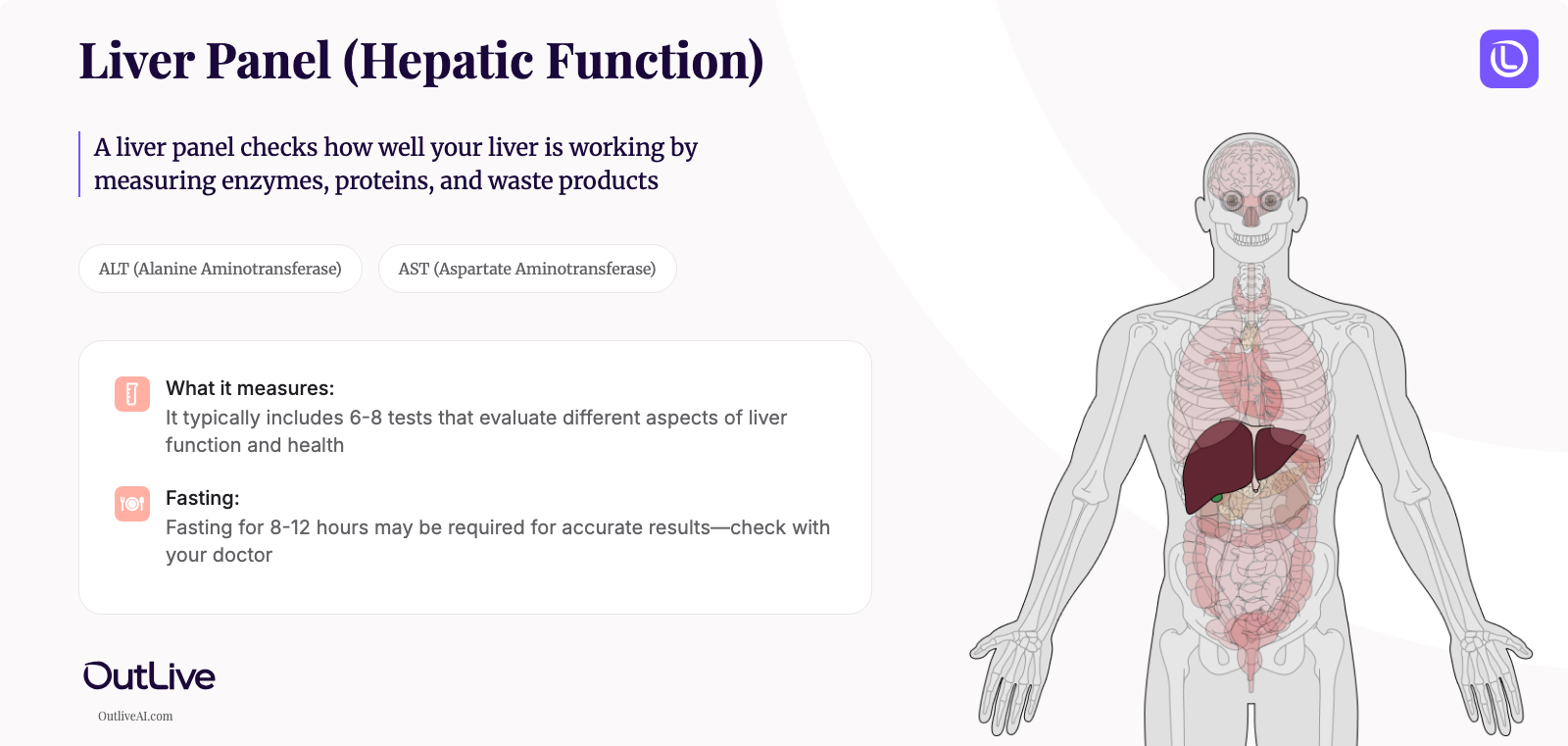
- A liver panel checks how well your liver is working by measuring enzymes, proteins, and waste products
- It typically includes 6-8 tests that evaluate different aspects of liver function and health
- Fasting for 8-12 hours may be required for accurate results—check with your doctor
If you're reading this, you've likely just had a Liver Panel—also called a Hepatic Function Panel or Liver Function Tests (LFTs)—and are looking at results filled with abbreviations like ALT, AST, and ALP that might seem confusing. Take a breath. You're in the right place. This guide will walk you through what a liver panel is, what each of those measurements means for your health, and most importantly, what you should do next. Think of us as your translator—we're here to help you understand your results so you can have a more informed conversation with your healthcare provider.
Why Is a Liver Panel Ordered?
Your doctor might order a liver panel for several reasons. Think of your liver as your body's chemical factory and filtration plant—it processes nutrients, filters toxins, makes proteins, and produces bile for digestion. When it's not working properly, the effects ripple throughout your entire body.
The most common reasons include:
Routine health screening: A liver panel is often part of your annual physical exam or comprehensive metabolic panel. It can detect liver problems before symptoms appear.
Investigating symptoms: If you're experiencing fatigue, abdominal pain, jaundice (yellowing of skin or eyes), dark urine, pale stools, itching, or unexplained weight loss, a liver panel helps identify if your liver is the cause.
Monitoring liver conditions: If you have known liver disease like hepatitis, fatty liver disease, or cirrhosis, regular panels track disease progression and treatment effectiveness.
Medication monitoring: Many medications are processed by the liver. Drugs like statins, acetaminophen, and certain antibiotics require periodic liver monitoring to ensure they're not causing damage.
Alcohol use assessment: Regular or heavy alcohol consumption can damage the liver. A liver panel helps assess if alcohol is affecting your liver health.
Pre-surgery evaluation: Before surgery, doctors need to ensure your liver can handle anesthesia and produce clotting factors for proper healing.
Risk factor screening: If you have diabetes, obesity, high cholesterol, or a family history of liver disease, regular screening helps catch problems early.
Remember, your liver is remarkably resilient and can often function well even when partially damaged—which is why regular testing is important for early detection.
How to Prepare for a Liver Panel Test
Preparing for a liver panel may require some advance planning:
Fasting requirements: Some doctors require 8-12 hours of fasting for the most accurate results, while others don't. Follow your specific instructions. Fasting helps ensure that recent meals don't affect certain measurements.
Medication considerations: Tell your doctor about all medications, supplements, and herbal remedies you take. Some can affect liver enzymes. Don't stop prescribed medications unless instructed.
Alcohol avoidance: Avoid alcohol for at least 24 hours before the test, as it can temporarily elevate liver enzymes and affect results.
Exercise timing: Avoid strenuous exercise for 24 hours before the test. Intense physical activity can temporarily raise some liver enzymes, particularly AST.
Hydration: Stay normally hydrated. Don't over-hydrate as it can dilute results, but dehydration can falsely elevate some values.
The blood draw itself is routine—typically one or two tubes of blood. You can usually return to normal activities immediately, though if you fasted, you might want to have a snack ready.
Understanding the Components of Your Liver Panel Report
Your liver panel measures different substances that tell various stories about your liver's health. Think of it like checking different gauges in your car—oil pressure, temperature, and fuel level each provide different but important information.
What Do the Liver Enzymes Mean?
Liver enzymes are proteins that help chemical reactions happen in your liver. When liver cells are damaged, these enzymes leak into your bloodstream:
ALT (Alanine Aminotransferase): This enzyme is found mainly in liver cells. It's the most specific indicator of liver cell injury. Think of ALT as your liver's distress signal—when liver cells are damaged, ALT escapes into the blood.
AST (Aspartate Aminotransferase): Found in liver, heart, muscles, and other organs. While less specific than ALT for liver damage, the AST/ALT ratio helps identify the cause of liver problems. AST is like a general alarm that could indicate liver or other organ issues.
ALP (Alkaline Phosphatase): Found in liver, bones, intestines, and placenta. In the liver, it's concentrated in bile ducts. High ALP might indicate bile duct problems or bone disorders. It's like checking if the liver's drainage system is blocked.
GGT (Gamma-Glutamyl Transferase): Very sensitive to liver and bile duct problems, especially those related to alcohol or medications. Often used to confirm that elevated ALP is from the liver rather than bones.
[LDH (Lactate Dehydrogenase)]: Found throughout the body. Less specific but can indicate severe liver damage when very elevated. Not always included in basic panels.
Here are the typical adult ranges for liver enzymes:
| Component | Abbreviation | Male Range | Female Range |
|---|---|---|---|
| ALT | ALT | 7-55 U/L | 7-45 U/L |
| AST | AST | 8-48 U/L | 8-43 U/L |
| ALP | ALP | 44-147 U/L | 44-147 U/L |
| GGT | GGT | 9-48 U/L | 7-32 U/L |
| LDH | LDH | 140-280 U/L | 140-280 U/L |
What Do the Protein and Bilirubin Tests Mean?
These tests evaluate your liver's ability to make proteins and process waste products:
Total Protein: Measures all proteins in your blood. Your liver makes most blood proteins, so low levels might indicate liver disease or malnutrition.
Albumin: The main protein made by your liver. It maintains fluid balance and transports substances. Low albumin suggests chronic liver disease or poor nutrition. Think of albumin as a marker of your liver's manufacturing capacity.
Globulin: Includes antibodies and other proteins. Some are made by the liver, others by your immune system. The albumin/globulin ratio helps evaluate liver and immune function.
Total Bilirubin: A yellow waste product from breaking down old red blood cells. Your liver processes it for removal. High levels cause jaundice—yellowing of skin and eyes.
Direct Bilirubin: The portion of bilirubin that's been processed by the liver and is ready for removal. High levels suggest the liver has processed bilirubin but can't excrete it (often due to blocked bile ducts).
Indirect Bilirubin: Bilirubin that hasn't been processed yet. High levels might indicate increased red blood cell breakdown or liver's inability to process bilirubin.
PT/INR (Prothrombin Time): Measures blood clotting time. Your liver makes clotting factors, so prolonged PT suggests severe liver dysfunction. This is like testing if your liver's emergency response system (clotting) is working.
Here are the typical ranges for proteins and bilirubin:
| Component | Abbreviation | Typical Adult Range |
|---|---|---|
| Total Protein | TP | 6.0-8.3 g/dL |
| Albumin | Alb | 3.5-5.0 g/dL |
| Globulin | Glob | 2.3-3.5 g/dL |
| A/G Ratio | A/G | 1.1-2.5 |
| Total Bilirubin | T.Bili | 0.2-1.2 mg/dL |
| Direct Bilirubin | D.Bili | 0.0-0.3 mg/dL |
| Indirect Bilirubin | I.Bili | 0.2-0.8 mg/dL |
| PT | PT | 11-13.5 seconds |
| INR | INR | 0.8-1.1 |
What Do Abnormal Results Mean? (A High-Level Guide)
Liver panel results often need to be interpreted as patterns. The degree of elevation and which tests are abnormal help identify the type and severity of liver problems:
Hepatocellular Pattern (Liver Cell Damage):
- Very high ALT and AST (often 10-100 times normal)
- ALT usually higher than AST
- Common causes: Acute viral hepatitis, drug-induced liver injury, autoimmune hepatitis
- Chronic moderate elevations: Chronic hepatitis, fatty liver disease
Cholestatic Pattern (Bile Flow Problems):
- High ALP and GGT
- Often elevated direct bilirubin
- Normal or mildly elevated ALT/AST
- Common causes: Bile duct obstruction, gallstones, primary biliary cholangitis, medications
Mixed Pattern:
- Elevations in both liver enzymes and cholestatic markers
- Common causes: Alcoholic liver disease, cirrhosis, drug reactions
Alcoholic Pattern:
- AST higher than ALT (usually AST:ALT ratio > 2:1)
- Elevated GGT
- Common in chronic alcohol use
Fatty Liver Pattern:
- Mild to moderate ALT elevation (usually < 4 times normal)
- ALT higher than AST
- Often associated with obesity, diabetes, high triglycerides
Cirrhosis Pattern:
- Low albumin
- Prolonged PT/elevated INR
- Elevated bilirubin
- Enzymes may be normal or only mildly elevated in advanced cirrhosis
- Indicates significant chronic liver damage
Severity Indicators:
- Mild elevation: 1-3 times normal (often chronic conditions)
- Moderate elevation: 3-10 times normal
- Severe elevation: >10 times normal (often acute injury)
- Very severe: >25 times normal (suggests acute liver failure)
Important considerations:
- Single abnormal results often need repeat testing
- Many factors can temporarily affect results (medications, exercise, illness)
- Pattern and degree of abnormality matter more than individual values
- Normal results don't always rule out liver disease
Important disclaimer: Liver test interpretation is complex and requires medical expertise. Many conditions can cause similar patterns. Only your healthcare provider can diagnose liver conditions considering your complete health picture, symptoms, and additional testing. Never self-diagnose or change medications based on liver panel results alone.
Next Steps After Your Liver Panel Test
So you've read through your results—what now? Here's your action plan:
1. Schedule a follow-up with your doctor: Even mild abnormalities deserve discussion. Your doctor will interpret results considering your risk factors, medications, and symptoms.
2. Prepare your questions: Not sure what to ask? We've created a helpful checklist of questions to bring to your appointment. [Download our Liver Panel Doctor Questions Checklist](# to make sure you cover everything important.
3. Understand if additional testing is needed: Abnormal results often require:
- Repeat testing to confirm
- Additional blood tests (hepatitis screening, autoimmune markers)
- Imaging (ultrasound, CT, or MRI)
- Sometimes liver biopsy for definitive diagnosis
4. Review your medications and supplements: Many substances affect the liver. Bring a complete list to your appointment, including over-the-counter drugs and herbal supplements.
5. Consider lifestyle factors:
- Limit or avoid alcohol
- Maintain healthy weight
- Control diabetes and cholesterol
- Avoid unnecessary medications
- Get vaccinated against hepatitis A and B
6. Know when to seek immediate care: Severe symptoms like confusion, extreme fatigue, severe abdominal pain, or worsening jaundice need urgent evaluation.
🔬 Ready to Translate Your Full Report?
Understanding your liver panel is just the beginning. Our free Lab Analyzer tool helps you:
- Track all your lab results in one place
- Spot important trends over time
- Generate personalized questions for your doctor
- Get plain-English explanations of every test
[Upload Your Lab Report for Free Analysis →]
Join 50,000+ people taking control of their health journey
Remember, knowledge is power when it comes to your health. Understanding your liver panel results empowers you to be an active participant in your healthcare. The liver has remarkable regenerative abilities—many liver conditions can improve significantly with proper treatment and lifestyle changes. You've already taken the first step by educating yourself—now use that knowledge to work with your healthcare provider toward better liver health.