
📋 At a Glance
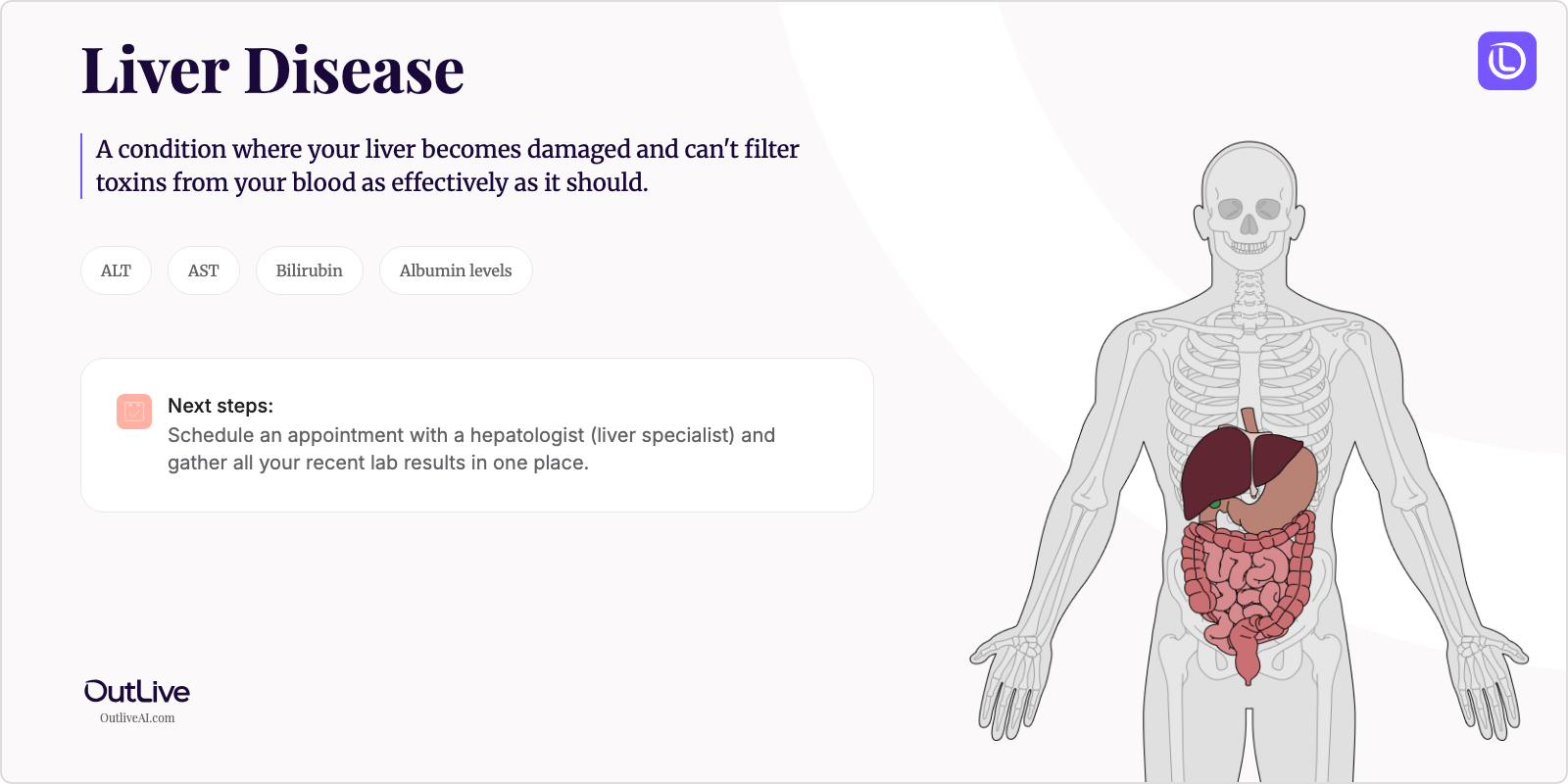
- What it is: A condition where your liver becomes damaged and can't filter toxins from your blood as effectively as it should.
- Key lab tests: ALT, AST, Bilirubin, and Albumin levels
- Your first goal: Schedule an appointment with a hepatologist (liver specialist) and gather all your recent lab results in one place.
Receiving a new diagnosis for Liver Disease can be overwhelming. You might be feeling anxious, confused, and unsure of what comes next. That's completely normal. This guide is here to help you understand your condition in simple terms, know which lab tests matter most, and feel prepared for your next steps.
First, Take a Breath: What is Liver Disease in Simple Terms?
Think of your liver as your body's main processing plant and filter system. Just like a water treatment facility cleans water before it reaches your home, your liver filters everything that enters your bloodstream - from the nutrients in your food to medications you take. When you have liver disease, this vital filter isn't working properly. It's like having a clogged filter that can't clean things as efficiently, causing a backup of substances that should have been processed and removed.
The good news? Your liver is remarkably resilient. Unlike most organs, it can actually regenerate and heal itself when given the right support. With proper care and monitoring, many people with liver disease lead full, active lives.
Understanding Your Diagnosis: The Key Lab Tests
This is the most important section. These are the main blood tests your doctor uses to understand how well your liver is functioning:
Key Tests for Liver Disease:
- ALT (Alanine Aminotransferase): This enzyme normally lives inside liver cells - when it shows up in high amounts in your blood, it means liver cells are damaged and leaking their contents.
- AST (Aspartate Aminotransferase): Similar to ALT, this enzyme increases when liver cells are injured, helping doctors assess the extent of liver inflammation or damage.
- Bilirubin: This yellow substance builds up when your liver can't process old red blood cells properly, which is why jaundice (yellowing of skin and eyes) can occur in liver disease.
- Albumin: Your liver makes this important protein - low levels suggest your liver isn't producing proteins normally, indicating more advanced disease.
Your First Specialist Appointment: What to Ask
What to Expect: You'll likely be referred to a hepatologist - a doctor who specializes in liver conditions. During your first visit, they'll review your medical history, perform a physical exam focusing on your abdomen, and may order additional tests like an ultrasound or fibroscan (a special scan that measures liver stiffness). The appointment typically lasts 30-45 minutes, and it's perfectly okay to bring a family member or friend for support.
Questions to Ask Your Doctor:
- "What specific type of liver disease do I have, and what stage is it?"
- "What caused my liver disease, and are there any lifestyle changes that could help slow its progression?"
- "How often will I need blood work, and which specific tests should I monitor most closely?"
- "Are there medications I should avoid because of my liver condition?"
- "What symptoms should prompt me to call your office versus going to the emergency room?"
Download our [Checklist of Questions to Ask Your Liver Disease Specialist](# to feel prepared.
How to Track Your Journey
Tracking your Liver Disease journey is crucial for understanding how your treatment is working and spotting important trends. Here's what you should monitor:
Symptoms to Track:
- Fatigue levels (rate your energy on a scale of 1-10 daily)
- Abdominal swelling or discomfort
- Changes in urine color (dark or tea-colored) or stool color (pale or clay-colored)
- Appetite changes or unexpected weight loss
- Any itching, especially if it's worse at night
Lab Results to Monitor:
- Liver enzymes (ALT/AST) - Usually every 3-6 months
- Complete metabolic panel including bilirubin - Every 3-6 months
- Complete blood count (CBC) - Every 3-6 months
- INR/PT (blood clotting tests) - As recommended by your doctor
Why Tracking Matters: Your liver enzymes can fluctuate, and a single test is just a snapshot. By tracking trends over time, you and your doctor can see if treatments are working, catch problems early, and make informed decisions about your care. Think of it like tracking the weather - one rainy day doesn't mean much, but a pattern tells you the season is changing.
Next Steps After Your Diagnosis
Immediate Actions (This Week):
- Contact your insurance to understand your coverage for specialist visits and testing
- Create a folder (physical or digital) to organize all your medical records and lab results
- Write down all medications and supplements you're taking, including over-the-counter ones
- Avoid alcohol completely until you speak with your specialist
Short-term Goals (Next Month):
- Establish care with a hepatologist if you haven't already
- Learn about your specific type of liver disease through reputable sources
- Consider joining a support group for people with liver disease
- Review your diet with a nutritionist familiar with liver conditions
Long-term Management:
- Develop a routine for regular monitoring and follow-up appointments
- Build a relationship with your healthcare team for ongoing support
- Focus on liver-friendly lifestyle habits that become second nature
Frequently Asked Questions
How quickly can I expect to feel better? This varies greatly depending on your specific condition and its severity. Some people notice improvements in energy and well-being within weeks of starting treatment and making lifestyle changes, while others may take months. The key is consistency with your treatment plan and patience with your body's healing process.
Will I need to change my diet? Most likely, yes. A liver-friendly diet typically means limiting sodium (to reduce fluid retention), eating smaller, more frequent meals, choosing lean proteins, and avoiding alcohol completely. Your doctor may refer you to a dietitian who specializes in liver disease for personalized guidance.
How often will I need to see my doctor? Initially, you'll likely see your hepatologist every 3-4 months to establish your baseline and adjust treatments. Once stable, visits may stretch to every 6 months. You'll need blood work more frequently - usually every 3 months at first.
Can I still exercise/work/travel? In most cases, yes! Unless you're experiencing severe symptoms, moderate exercise is actually beneficial for liver health. Most people continue working, though you may need accommodations if you experience fatigue. Travel is usually fine, but discuss vaccination needs and carry a medical summary with you.
When to Seek Immediate Medical Attention
Contact your doctor immediately if you experience:
- Sudden confusion, difficulty concentrating, or personality changes (could indicate hepatic encephalopathy)
- Vomiting blood or having black, tarry stools
- Severe abdominal pain or rapid swelling of your belly
- Fever above 101°F (38.3°C) with chills
- Yellowing of skin or eyes that appears suddenly or worsens rapidly
🔬 Ready to Organize Your Health Journey?
Understanding your condition is the first step. Our free Lab Analyzer tool helps you:
- Track all your lab results for Liver Disease in one place
- Spot important trends over time
- Generate personalized questions for your doctor
[Upload Your Lab Report for Free Analysis →]