
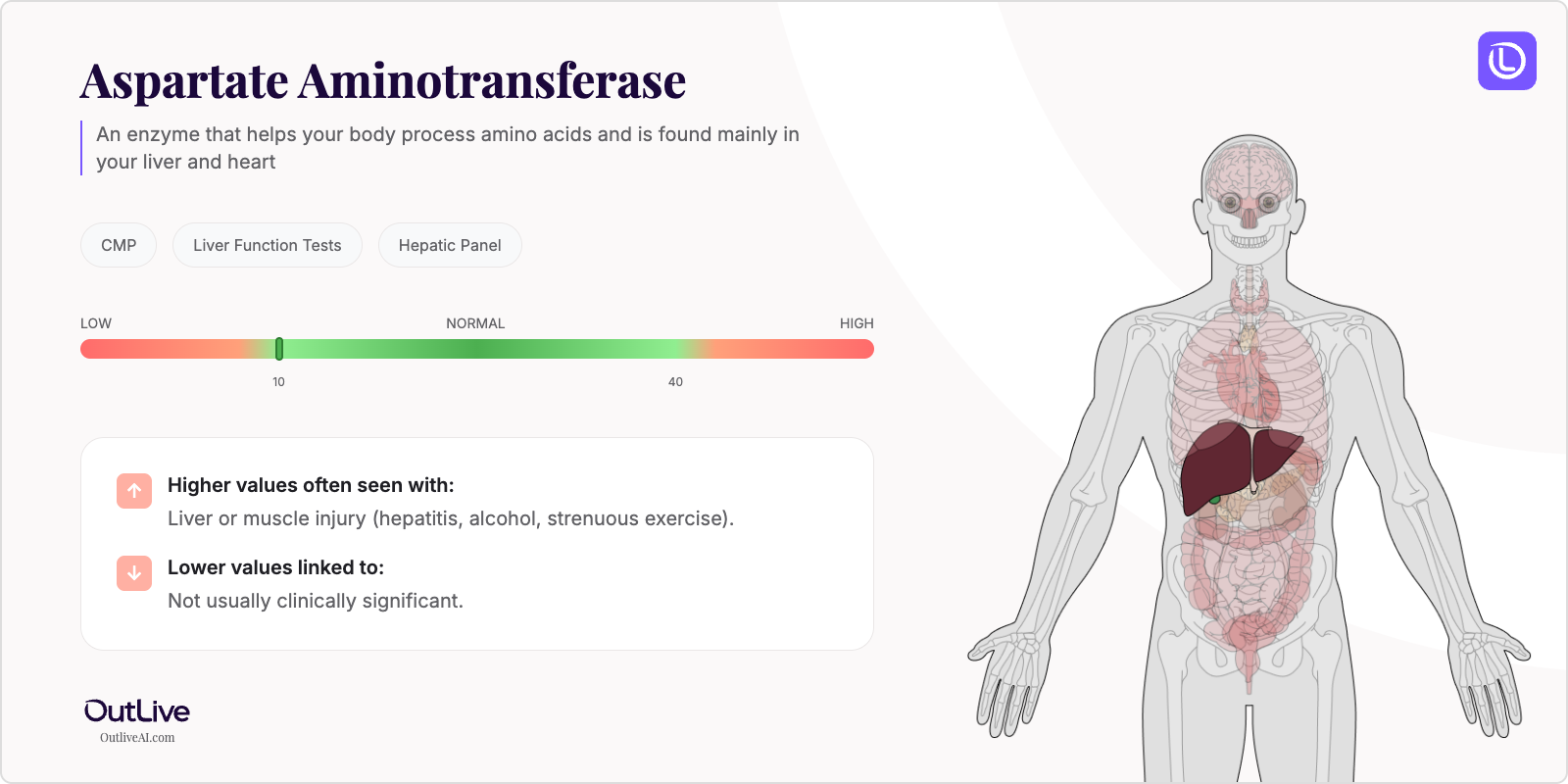
📋 At a Glance
- What it is: An enzyme that helps your body process amino acids and is found mainly in your liver and heart
- Found in tests: Comprehensive Metabolic Panel (CMP), Liver Function Tests, Hepatic Panel
- Normal range: 10-40 U/L for most adults (may vary slightly by lab)
If you're looking at your lab results and wondering what AST means, you're in the right place. Think of AST as a helpful worker enzyme that normally stays inside your cells, quietly doing its job. When those cells become damaged or stressed, AST spills into your bloodstream like coffee overflowing from a cup—and that's what your blood test measures. Let's break down what your numbers mean in plain English.
Why Is AST (Aspartate Aminotransferase) Tested?
Your doctor orders an AST test as part of routine health screening or when they want to check how well your liver is functioning. It's automatically included in comprehensive metabolic panels (CMP) and liver function tests that many people get during annual check-ups. Think of it as one of several vital signs for your liver's health—like checking your car's oil level during routine maintenance.
Doctors specifically look at AST when you have symptoms that might suggest liver problems, such as yellowing of the skin or eyes (jaundice), unusual fatigue, dark urine, or abdominal pain. They also monitor AST levels if you're taking medications that can affect your liver, have a history of alcohol use, or have been exposed to hepatitis. The test helps paint a picture of what's happening inside your body, especially when combined with other liver enzymes.
AST testing matters because catching liver problems early can make a significant difference in treatment outcomes. It's also valuable for monitoring heart health, as AST can rise after a heart attack, though other tests are now more commonly used for that purpose.
What Does AST (Aspartate Aminotransferase) Do in Your Body?
AST is like a specialized construction worker in your cells, helping to build and break down amino acids—the building blocks of proteins your body needs to function. While AST lives primarily in your liver cells, it's also found in your heart, muscles, kidneys, brain, and red blood cells. Under normal circumstances, only small amounts circulate in your bloodstream.
When cells containing AST become damaged or inflamed, they release this enzyme into your blood, similar to how a damaged pipe might leak water. Your liver cells are particularly rich in AST, which is why elevated levels often point to liver issues. However, because AST exists in multiple organs, elevated levels don't automatically mean liver disease—it's like hearing a smoke alarm and needing to check which room it's coming from.
AST works closely with its cousin enzyme, ALT (alanine aminotransferase), and doctors often look at both together. The relationship between these two enzymes—called the AST/ALT ratio—can provide clues about what type of problem might be occurring and where it's located in your body.
What Do My Aspartate Aminotransferase Results Mean?
Normal Aspartate Aminotransferase Ranges
| Population | Normal Range | Optimal Range |
|---|---|---|
| Adult Male | 10-40 U/L | 15-25 U/L |
| Adult Female | 9-32 U/L | 15-25 U/L |
| Children (1-3 years) | 20-60 U/L | Not established |
| Children (4-6 years) | 15-50 U/L | Not established |
| Children (7-12 years) | 10-40 U/L | Not established |
| Pregnancy | May increase slightly in third trimester | Similar to non-pregnant |
Note: Reference ranges may vary slightly between laboratories. Always compare your results to the range provided on your specific lab report.
What Does High Aspartate Aminotransferase Mean?
Common Causes:
- Alcohol-related liver disease: Regular heavy drinking can inflame and damage liver cells
- Non-alcoholic fatty liver disease (NAFLD): Fat buildup in the liver, often related to obesity or diabetes
- Viral hepatitis: Infections like hepatitis A, B, or C causing liver inflammation
- Medication side effects: Certain drugs like acetaminophen (in high doses), statins, or antibiotics
- Muscle injury: Intense exercise, muscle disorders, or trauma releasing AST from muscle cells
- Heart attack: Damaged heart muscle releases AST, though this is less commonly used for diagnosis now
- Cirrhosis: Advanced scarring of the liver from long-term damage
Possible Symptoms:
- Fatigue and weakness
- Yellowing of skin or eyes (jaundice)
- Abdominal pain or swelling
- Dark urine or pale stools
- Nausea or loss of appetite
- Itchy skin
- Easy bruising or bleeding
When to Be Concerned: If your AST is more than 10 times the upper normal limit (over 400 U/L), this suggests significant liver damage and requires immediate medical attention. Levels 2-3 times normal (80-120 U/L) warrant follow-up with your doctor, especially if accompanied by symptoms. Even mild elevations should be discussed with your healthcare provider to determine if additional testing is needed.
What Does Low Aspartate Aminotransferase Mean?
Common Causes:
- Vitamin B6 deficiency: This vitamin is needed for AST to function properly
- Chronic kidney disease: Advanced kidney disease requiring dialysis can lower AST
- Pregnancy: Some women have naturally lower levels during pregnancy
- Genetic variations: Some people naturally produce less AST
- Severe malnutrition: Lack of protein and nutrients
Possible Symptoms:
- Usually no symptoms from low AST itself
- Symptoms related to underlying cause (fatigue from B6 deficiency)
- Muscle weakness
- Mood changes or confusion
When to Be Concerned: Low AST levels are rarely a cause for concern on their own. However, if your levels are significantly below normal and you're experiencing symptoms like severe fatigue, muscle weakness, or neurological symptoms, discuss this with your doctor. They may want to check your vitamin B6 levels or investigate other potential causes.
What Can Affect My Aspartate Aminotransferase Levels?
Factors That May Increase Levels:
- Medications: Acetaminophen (especially high doses), statins, antibiotics, antifungals, anti-seizure medications
- Lifestyle: Heavy alcohol consumption, obesity, intense exercise within 24-48 hours of testing
- Conditions: Recent surgery, burns, heatstroke, pregnancy complications
- Supplements: High doses of vitamin A, kava, comfrey, or other hepatotoxic herbs
Factors That May Decrease Levels:
- Medications: Metronidazole, trifluoperazine
- Lifestyle: Long-term dialysis, severe protein restriction
- Conditions: Vitamin B6 deficiency, beri-beri, severe malnutrition
- Time of Day: AST can be slightly lower in the morning
How Is AST (Aspartate Aminotransferase) Related to Other Tests?
AST is rarely interpreted alone—it's like one instrument in an orchestra that needs to play with others to create the full picture. It's most commonly evaluated alongside ALT, and the AST/ALT ratio helps doctors determine the likely cause of liver problems. An AST/ALT ratio greater than 2 often suggests alcohol-related liver disease, while a ratio less than 1 typically points to other causes.
Often tested alongside: ALT, alkaline phosphatase (ALP), bilirubin, albumin, GGT Part of: Comprehensive Metabolic Panel, Liver Function Tests Ratio calculations: AST/ALT ratio for determining liver disease patterns Follow-up tests: Hepatitis panel, ultrasound, CT scan, or liver biopsy if abnormal
Frequently Asked Questions
How often should Aspartate Aminotransferase be tested? For healthy adults, AST is typically checked annually as part of routine blood work. If you have liver disease, take medications that affect the liver, or have risk factors, your doctor may recommend testing every 3-6 months or more frequently.
Can I improve my Aspartate Aminotransferase levels naturally? Yes, many lifestyle changes can help normalize AST levels: limiting alcohol, maintaining a healthy weight, exercising regularly (but avoiding extreme workouts before testing), eating a balanced diet rich in fruits and vegetables, and managing diabetes if present.
Should I fast before an Aspartate Aminotransferase test? Fasting is not specifically required for AST testing alone, but since it's often part of a comprehensive metabolic panel that includes glucose testing, your doctor may ask you to fast for 8-12 hours beforehand.
How quickly can Aspartate Aminotransferase levels change? AST levels can change within hours to days. After acute liver injury, levels may peak within 24-48 hours and return to normal within 3-7 days if the cause is removed. Chronic conditions cause more gradual changes over weeks to months.
Next Steps After Your Aspartate Aminotransferase Test
Questions to Ask Your Doctor:
- What do my Aspartate Aminotransferase results mean for my overall health?
- Are my levels related to my symptoms?
- Do I need additional testing?
- Should we monitor this over time?
- Are there lifestyle changes that could help?
- Could any of my medications be affecting my AST levels?
- What's my AST/ALT ratio, and what does it suggest?
Download our AST (Aspartate Aminotransferase) Doctor Questions Checklist
🔬 Ready to Track Your AST (Aspartate Aminotransferase) Over Time?
Understanding a single Aspartate Aminotransferase result is just the beginning. Our free Lab Analyzer tool helps you:
- Track how your AST changes over time
- See how it relates to your other lab values
- Identify patterns your doctor might miss
- Get personalized insights based on your trends
[Upload Your Lab Report for Free Analysis →]