
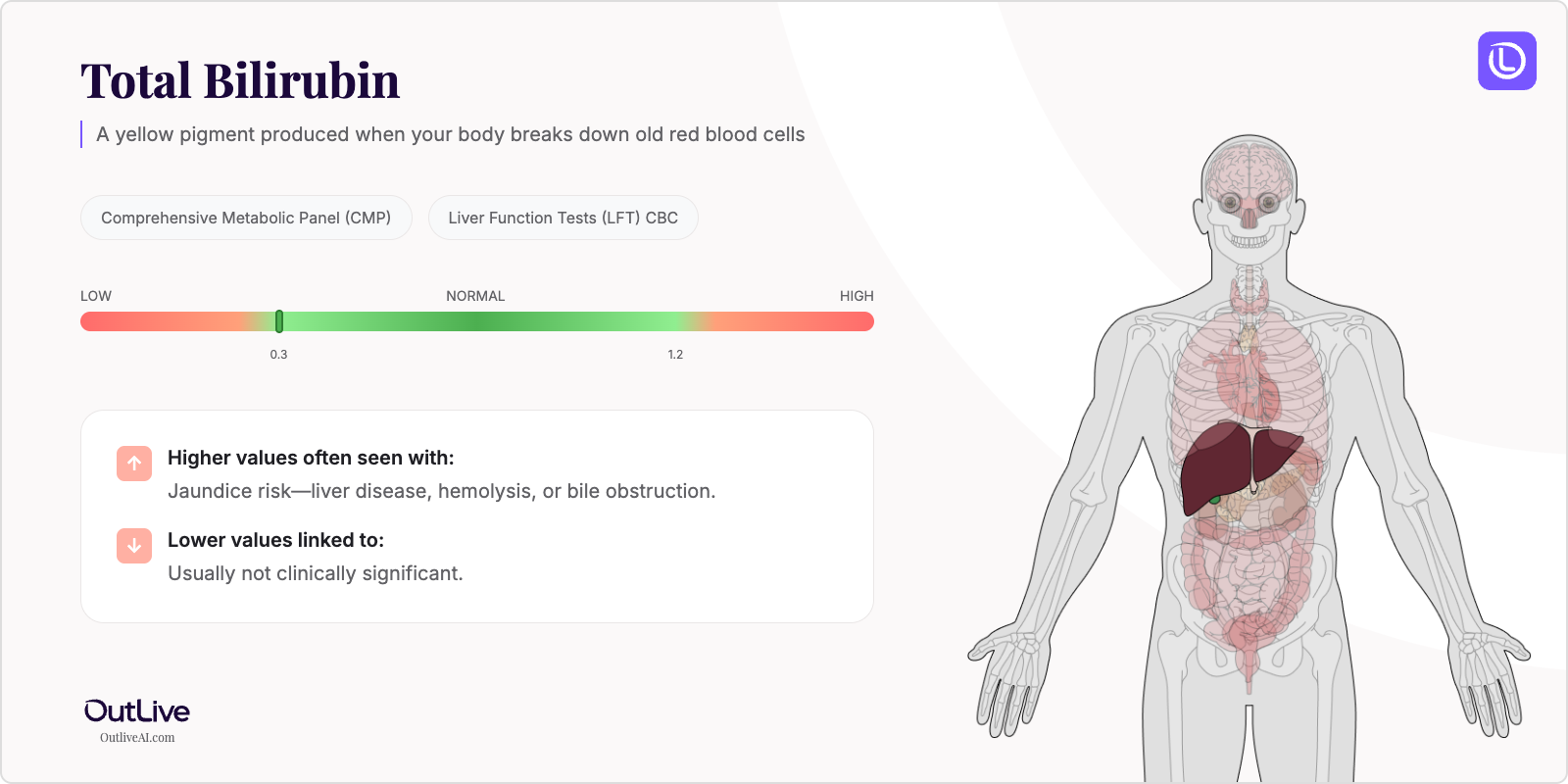
📋 At a Glance
- What it is: A yellow pigment produced when your body breaks down old red blood cells
- Found in tests: Comprehensive Metabolic Panel (CMP), Liver Function Tests (LFT), Complete Blood Count (CBC) follow-up
- Normal range: 0.3-1.2 mg/dL for total bilirubin in adults
If you're looking at your lab results and wondering what bilirubin means, you're in the right place. Think of bilirubin as your body's recycling byproduct – like the sawdust left over when a carpenter breaks down old wood to make something new. Your body constantly breaks down old red blood cells (which live about 120 days), and bilirubin is what's left behind. Let's break down what your numbers mean in plain English.
Why Is Bilirubin Tested?
Your doctor orders a bilirubin test as part of routine health screening or when they're investigating specific symptoms. It's commonly included in your annual physical through a Comprehensive Metabolic Panel (CMP) or when checking your liver function. This simple blood test gives your healthcare team valuable insights into how well your liver is processing waste and whether your red blood cells are breaking down normally.
Doctors specifically look at bilirubin levels when you have symptoms like yellowing of the skin or eyes (jaundice), dark urine, light-colored stools, or unexplained fatigue. It's also monitored in newborns, where elevated levels are common but need careful watching. For adults with known liver conditions, gallbladder problems, or certain blood disorders, regular bilirubin testing helps track disease progression and treatment effectiveness.
The test matters because bilirubin levels can reveal problems before you feel sick. Think of it as an early warning system – catching issues when they're easier to address rather than waiting for more serious symptoms to develop.
What Does Bilirubin Do in Your Body?
Bilirubin is part of your body's natural cleanup crew. When red blood cells reach the end of their life cycle, your spleen breaks them down, releasing hemoglobin. This hemoglobin is converted into bilirubin, which travels through your bloodstream to your liver. Think of your liver as a processing plant that takes this raw bilirubin (called unconjugated or indirect bilirubin) and packages it for disposal.
Your liver adds a special coating to the bilirubin (making it conjugated or direct bilirubin), which allows it to dissolve in water. This processed bilirubin then flows into your bile ducts, travels to your intestines, and eventually leaves your body through stool – giving it that characteristic brown color. A small amount also exits through your urine.
This entire process involves multiple organs working in harmony: your spleen, liver, gallbladder, and intestines. When any part of this assembly line slows down or stops working properly, bilirubin can build up in your blood, leading to the yellow discoloration we call jaundice. Understanding this process helps explain why bilirubin testing gives us such valuable information about multiple body systems at once.
What Do My Bilirubin Results Mean?
Normal Bilirubin Ranges
| Population | Normal Range | Optimal Range |
|---|---|---|
| Adult Male | 0.3-1.2 mg/dL (total) | 0.3-0.8 mg/dL |
| Adult Female | 0.3-1.2 mg/dL (total) | 0.3-0.8 mg/dL |
| Children (>1 month) | 0.2-1.0 mg/dL | 0.2-0.7 mg/dL |
| Newborns (24 hours) | <6.0 mg/dL | <5.0 mg/dL |
| Pregnancy | 0.3-1.0 mg/dL | 0.3-0.8 mg/dL |
| Direct Bilirubin | 0.0-0.3 mg/dL | 0.0-0.2 mg/dL |
| Indirect Bilirubin | 0.2-0.8 mg/dL | 0.2-0.7 mg/dL |
Note: Reference ranges may vary slightly between laboratories. Always compare your results to the range provided on your specific lab report.
What Does High Bilirubin Mean?
Common Causes:
- Liver disease: Hepatitis, cirrhosis, or fatty liver disease impair the liver's ability to process bilirubin
- Gallstones or bile duct obstruction: Physical blockages prevent bilirubin from leaving the liver
- Hemolytic anemia: Red blood cells break down faster than normal, overwhelming the system
- Gilbert's syndrome: A harmless genetic condition affecting 3-7% of the population
- Medications: Certain antibiotics, birth control pills, or pain medications can elevate levels
- Alcohol consumption: Both acute and chronic alcohol use can impair liver function
- Infections: Viral infections like mononucleosis or bacterial infections affecting the liver
Possible Symptoms:
- Yellowing of skin and whites of eyes (jaundice)
- Dark, tea-colored urine
- Clay-colored or pale stools
- Itchy skin without rash
- Fatigue and weakness
- Abdominal pain, especially upper right side
- Nausea or loss of appetite
When to Be Concerned: Seek immediate medical attention if your bilirubin is above 3 mg/dL with symptoms like confusion, severe abdominal pain, or fever. Levels above 20 mg/dL require emergency evaluation. However, if you have known Gilbert's syndrome and your levels are mildly elevated (under 3 mg/dL) without other symptoms, this may be your normal baseline.
What Does Low Bilirubin Mean?
Common Causes:
- Certain medications: Barbiturates, caffeine, or high-dose vitamin C can lower levels
- Oxidative stress: Intense physical training or certain supplements may reduce bilirubin
- Laboratory variation: Slightly low levels are rarely clinically significant
- Time of testing: Levels can be lower in the afternoon than morning
- Genetic variations: Some people naturally produce less bilirubin
Possible Symptoms:
- Usually no symptoms from low bilirubin itself
- May indicate excellent antioxidant status
- Could suggest very efficient liver function
When to Be Concerned: Low bilirubin is rarely a cause for concern. In fact, some research suggests that people with slightly lower bilirubin may have increased cardiovascular risk, but this is still being studied. Focus on the overall picture of your health rather than an isolated low bilirubin reading.
What Can Affect My Bilirubin Levels?
Factors That May Increase Levels:
- Medications: Antibiotics (especially penicillin), statins, birth control pills, acetaminophen (in high doses)
- Lifestyle: Heavy alcohol use, fasting for more than 24 hours, dehydration
- Conditions: Recent blood transfusion, vigorous exercise, stress, pregnancy
- Supplements: High doses of niacin, vitamin A, or certain herbal supplements like kava
Factors That May Decrease Levels:
- Medications: Barbiturates, caffeine, penicillin (in some cases), theophylline
- Lifestyle: Regular moderate exercise, high vegetable intake, adequate hydration
- Conditions: Recent meal consumption, afternoon testing versus morning
- Time of Day: Bilirubin levels are typically highest in the morning after fasting
How Is Bilirubin Related to Other Tests?
Bilirubin is rarely evaluated in isolation – it's part of a bigger picture of your health. Think of it as one instrument in an orchestra that helps create the full symphony of your metabolic health.
Often tested alongside: ALT, AST (liver enzymes), Alkaline Phosphatase, Albumin, Total Protein Part of: Comprehensive Metabolic Panel (CMP), Liver Function Tests Ratio calculations: Direct to Total Bilirubin ratio helps identify the type of liver problem Follow-up tests: If abnormal, doctors may order hepatitis panel, ultrasound, or complete blood count
Frequently Asked Questions
How often should bilirubin be tested? For healthy adults, annual testing during routine physicals is sufficient. If you have liver disease, blood disorders, or take medications affecting the liver, your doctor may recommend testing every 3-6 months or more frequently during treatment changes.
Can I improve my bilirubin levels naturally? Yes, if levels are mildly elevated due to lifestyle factors. Stay hydrated, limit alcohol, maintain a healthy weight, and eat a balanced diet rich in fruits and vegetables. However, underlying medical conditions require proper treatment – lifestyle changes alone won't fix structural liver problems.
Should I fast before a bilirubin test? Fasting isn't always required for bilirubin alone, but since it's often part of a comprehensive panel that includes glucose and lipids, your doctor may request an 8-12 hour fast. Follow your specific lab's instructions.
How quickly can bilirubin levels change? Bilirubin can fluctuate within hours to days. Acute conditions like gallstone obstruction can cause rapid rises, while resolving mild hepatitis might show improvement within 1-2 weeks. Gilbert's syndrome causes fluctuations based on stress, fasting, or illness.
Next Steps After Your Bilirubin Test
Questions to Ask Your Doctor:
- What do my bilirubin results mean for my overall health?
- Are my levels related to my symptoms?
- Do I need additional testing?
- Should we monitor this over time?
- Are there lifestyle changes that could help?
- Could any of my medications be affecting my levels?
- Is this something I need to worry about?
Download our Bilirubin Doctor Questions Checklist
🔬 Ready to Track Your Bilirubin Over Time?
Understanding a single bilirubin result is just the beginning. Our free Lab Analyzer tool helps you:
- Track how your bilirubin changes over time
- See how it relates to your other lab values
- Identify patterns your doctor might miss
- Get personalized insights based on your trends
[Upload Your Lab Report for Free Analysis →]