
📋 At a Glance
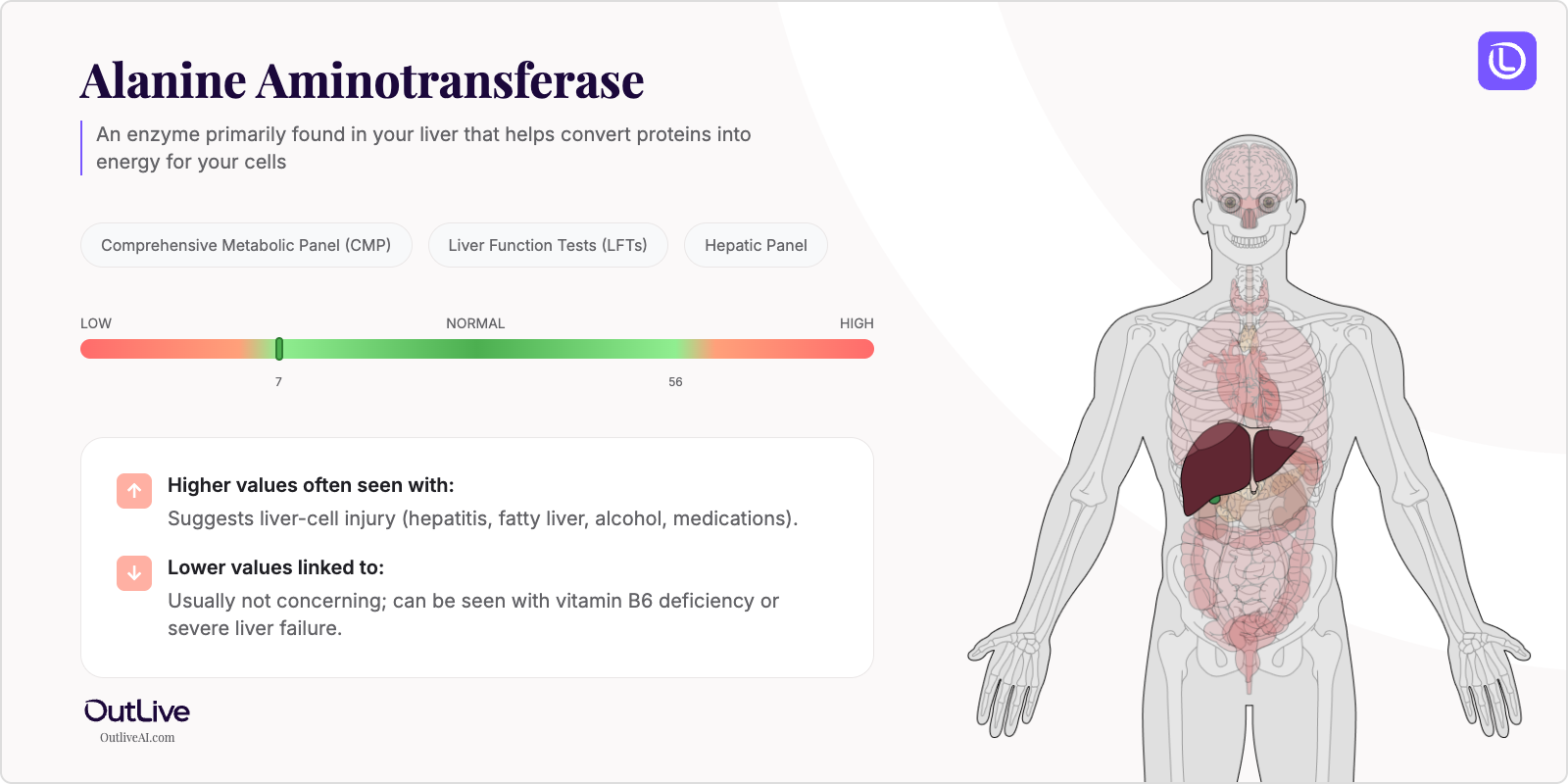
- What it is: An enzyme primarily found in your liver that helps convert proteins into energy for your cells
- Found in tests: Comprehensive Metabolic Panel (CMP), Liver Function Tests (LFTs), Hepatic Panel
- Normal range: 7-56 units per liter (U/L), though this can vary slightly between labs
If you're looking at your lab results and wondering what ALT means, you're in the right place. Think of ALT as your liver's "check engine light" – when it's elevated, it's often your body's way of signaling that your liver cells might be under stress or damaged. Let's break down what your numbers mean in plain English, so you can walk into your next doctor's appointment feeling informed and confident.
Why Is ALT (Alanine Aminotransferase) Tested?
Your doctor orders an ALT test as part of routine health screenings or when they want to check how well your liver is functioning. It's automatically included in comprehensive metabolic panels (CMP) that many people get during annual physicals, making it one of the most commonly performed blood tests.
Beyond routine screening, doctors specifically order ALT tests when you're experiencing symptoms that might indicate liver problems – things like unexplained fatigue, abdominal pain (especially on your right side), yellowing of the skin or eyes, dark urine, or unusual itching. It's also used to monitor people taking medications that can affect the liver, track the progress of liver diseases, or evaluate whether treatments are working.
This test matters because your liver is essentially your body's chemical processing plant, handling everything from breaking down nutrients to filtering toxins. When liver cells are damaged, they release ALT into your bloodstream, making elevated levels an early warning sign that something needs attention.
What Does ALT (Alanine Aminotransferase) Do in Your Body?
ALT is an enzyme – think of it as a specialized worker – that lives primarily inside your liver cells. Its main job is to help convert amino acids (the building blocks of proteins) into forms your body can use for energy. Under normal circumstances, only small amounts of ALT circulate in your bloodstream because most of it stays safely tucked inside healthy liver cells.
Your liver contains the highest concentration of ALT, though smaller amounts exist in your kidneys, heart, and muscles. When liver cells become inflamed, damaged, or die, they release their contents – including ALT – into your bloodstream. This is why ALT levels rise when your liver is stressed, making it a sensitive indicator of liver health.
ALT works alongside other liver enzymes like AST (aspartate aminotransferase), and doctors often look at both together. The relationship between these two enzymes can provide clues about what's happening in your liver and whether damage might be acute (sudden) or chronic (long-term).
What Do My Alanine Aminotransferase Results Mean?
Normal Alanine Aminotransferase Ranges
| Population | Normal Range | Optimal Range |
|---|---|---|
| Adult Male | 10-40 U/L | 10-25 U/L |
| Adult Female | 7-35 U/L | 7-25 U/L |
| Children (0-12 months) | 13-45 U/L | Not established |
| Children (1-18 years) | 10-40 U/L | Not established |
| Pregnancy | May decrease slightly | 7-30 U/L |
Note: Reference ranges may vary slightly between laboratories. Always compare your results to the range provided on your specific lab report.
What Does High Alanine Aminotransferase Mean?
Common Causes:
- Non-alcoholic fatty liver disease (NAFLD): The most common cause in developed countries, often related to obesity and metabolic syndrome
- Alcohol-related liver damage: Regular heavy drinking can cause ongoing liver inflammation
- Viral hepatitis: Hepatitis A, B, or C infections cause liver inflammation and cell damage
- Medication effects: Common culprits include acetaminophen (Tylenol), statins, antibiotics, and some herbal supplements
- Autoimmune hepatitis: When your immune system mistakenly attacks liver cells
- Celiac disease: This gluten sensitivity can cause mild ALT elevations
- Hemochromatosis: Iron overload that damages liver cells over time
Possible Symptoms:
- Fatigue and weakness
- Right upper abdominal discomfort
- Nausea or loss of appetite
- Yellowing of skin or eyes (jaundice)
- Dark urine or pale stools
- Unexplained weight loss
- Swelling in legs or abdomen
When to Be Concerned: ALT levels 2-3 times above normal often warrant further investigation. Levels above 1000 U/L suggest acute liver injury and require immediate medical attention. However, even mild elevations (1.5-2 times normal) that persist for months can indicate chronic liver disease that needs evaluation.
What Does Low Alanine Aminotransferase Mean?
Common Causes:
- Vitamin B6 deficiency: This vitamin is needed for ALT to function properly
- Advanced kidney disease: Can affect enzyme production and clearance
- Severe malnutrition: Lack of protein can reduce enzyme production
- Aging: ALT levels naturally decline slightly with age
- Certain genetic variations: Some people naturally produce less ALT
Possible Symptoms:
- Muscle weakness or fatigue
- Numbness or tingling in hands and feet
- Mood changes or confusion
- Skin problems or rashes
- Anemia symptoms (if related to B6 deficiency)
When to Be Concerned: Low ALT is rarely concerning on its own and often goes unnoticed. However, if accompanied by other abnormal lab values or symptoms, it may indicate nutritional deficiencies that need addressing.
What Can Affect My Alanine Aminotransferase Levels?
Factors That May Increase Levels:
- Medications: Acetaminophen, statins, antibiotics (especially erythromycin), antifungals, NSAIDs, some blood pressure medications
- Lifestyle: Heavy alcohol use, obesity, rapid weight loss, intense exercise (temporary elevation)
- Conditions: Diabetes, metabolic syndrome, sleep apnea, thyroid disorders
- Supplements: Kava, comfrey, green tea extract (in high doses), vitamin A excess
Factors That May Decrease Levels:
- Medications: Metformin (in some cases), uremia treatments
- Lifestyle: Regular moderate exercise, healthy diet, weight loss (if overweight)
- Conditions: Chronic kidney disease, severe B6 deficiency
- Time of Day: ALT can be slightly lower in the morning
How Is ALT (Alanine Aminotransferase) Related to Other Tests?
ALT is rarely evaluated in isolation. It's typically part of a liver panel that provides a complete picture of liver health.
Often tested alongside: AST, alkaline phosphatase (ALP), bilirubin, albumin, total protein Part of: Comprehensive Metabolic Panel, Liver Function Tests Ratio calculations: AST/ALT ratio helps distinguish between different types of liver damage Follow-up tests: If ALT is elevated, doctors may order hepatitis panels, iron studies, autoimmune markers, or imaging studies
Frequently Asked Questions
How often should Alanine Aminotransferase be tested? For healthy adults, ALT is typically checked annually as part of routine blood work. If you have liver disease or take medications that affect the liver, your doctor may check it every 3-6 months or more frequently.
Can I improve my Alanine Aminotransferase levels naturally? Yes! Losing weight (if overweight), limiting alcohol, eating a Mediterranean-style diet, exercising regularly, and managing diabetes can all help normalize ALT levels. Coffee consumption has also been associated with healthier liver enzymes.
Should I fast before a Alanine Aminotransferase test? While ALT itself doesn't require fasting, it's often part of a comprehensive panel that does. Follow your doctor's specific instructions, but typically an 8-12 hour fast is recommended.
How quickly can Alanine Aminotransferase levels change? ALT can rise within hours of liver injury and may stay elevated for days to weeks. With treatment or lifestyle changes, levels typically start improving within 2-4 weeks, though complete normalization may take several months.
Next Steps After Your Alanine Aminotransferase Test
Questions to Ask Your Doctor:
- What do my Alanine Aminotransferase results mean for my overall health?
- Are my levels related to my symptoms?
- Do I need additional testing?
- Should we monitor this over time?
- Are there lifestyle changes that could help?
Download our ALT (Alanine Aminotransferase) Doctor Questions Checklist
🔬 Ready to Track Your ALT (Alanine Aminotransferase) Over Time?
Understanding a single Alanine Aminotransferase result is just the beginning. Our free Lab Analyzer tool helps you:
- Track how your ALT changes over time
- See how it relates to your other lab values
- Identify patterns your doctor might miss
- Get personalized insights based on your trends
[Upload Your Lab Report for Free Analysis →]