
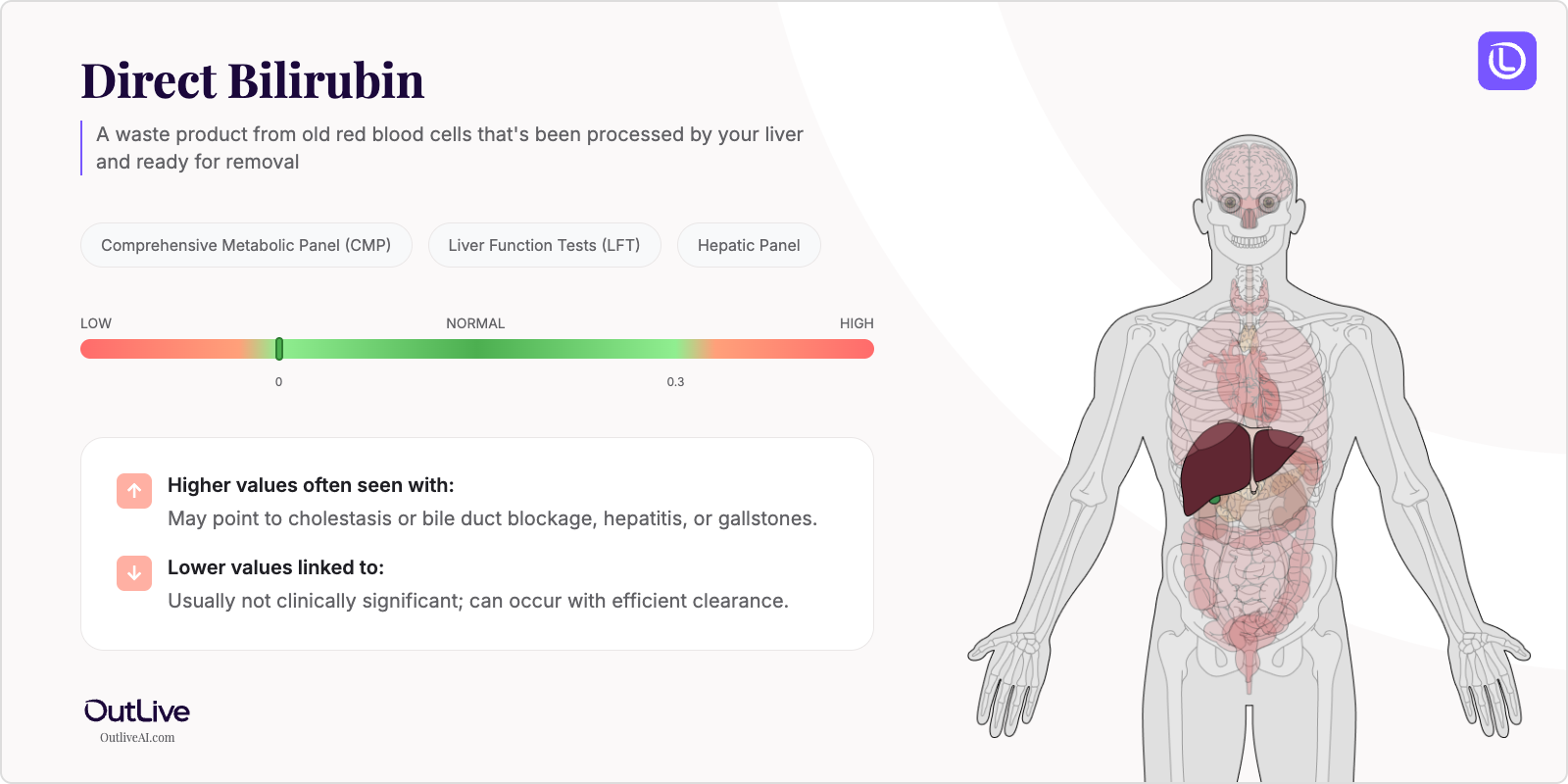
📋 At a Glance
- What it is: A waste product from old red blood cells that's been processed by your liver and ready for removal
- Found in tests: Comprehensive Metabolic Panel (CMP), Liver Function Tests (LFT), Hepatic Panel
- Normal range: 0.0-0.3 mg/dL (same for adults regardless of sex)
If you're looking at your lab results and wondering what direct bilirubin means, you're in the right place. Think of direct bilirubin as processed trash that's been properly bagged and tagged by your liver, ready for pickup. When your red blood cells reach the end of their 120-day lifespan, they break down and create bilirubin—a yellow waste product. Your liver then "stamps" this bilirubin (making it "direct" or "conjugated"), allowing it to dissolve in water so your body can flush it out through bile and urine. Let's break down what your numbers mean in plain English.
Why Is Direct Bilirubin Tested?
Your doctor orders a direct bilirubin test to check how well your liver is processing and clearing waste from your body. It's routinely included in liver function panels when you have your annual physical or when you're experiencing symptoms like yellowing of the skin or eyes (jaundice), dark urine, or unexplained fatigue.
This test is particularly valuable because it helps your doctor pinpoint where a problem might be occurring. While total bilirubin tells us the overall amount of this waste product in your blood, direct bilirubin specifically shows us how much has been processed by your liver. If your direct bilirubin is elevated, it often points to issues with your liver's ability to drain bile properly, rather than problems with breaking down red blood cells.
Direct bilirubin testing helps diagnose and monitor conditions affecting your liver, gallbladder, and bile ducts. It's especially important if you're experiencing abdominal pain, have a history of liver disease, or are taking medications that can affect liver function.
What Does Direct Bilirubin Do in Your Body?
Direct bilirubin is essentially the "water-soluble" form of bilirubin that your liver creates. When old red blood cells break down in your spleen, they release hemoglobin, which gets converted into unconjugated (indirect) bilirubin. This indirect form is like oil—it doesn't mix with water and needs a special carrier protein to travel through your bloodstream to your liver.
Once in your liver, special enzymes attach sugar molecules to the bilirubin, transforming it into direct (conjugated) bilirubin. This process is like adding soap to oil—suddenly it can mix with water. This water-soluble form can now flow with your bile into your intestines, where bacteria break it down further. Most of it leaves your body in stool (giving it its brown color), while a small amount exits through urine.
The balance between indirect and direct bilirubin tells your doctor a lot about where potential problems might be. High direct bilirubin usually means your liver is doing its job processing the bilirubin, but something is blocking its exit route—like a clogged drain in your sink.
What Do My Direct Bilirubin Results Mean?
Normal Direct Bilirubin Ranges
| Population | Normal Range | Optimal Range |
|---|---|---|
| Adult Male | 0.0-0.3 mg/dL | 0.0-0.2 mg/dL |
| Adult Female | 0.0-0.3 mg/dL | 0.0-0.2 mg/dL |
| Children | 0.0-0.2 mg/dL | 0.0-0.1 mg/dL |
| Newborns ( >1month) | 0.0-0.2 mg/dL | 0.0-0.1 mg/dL |
| Pregnancy | 0.0-0.3 mg/dL | 0.0-0.2 mg/dL |
Note: Reference ranges may vary slightly between laboratories. Always compare your results to the range provided on your specific lab report.
What Does High Direct Bilirubin Mean?
Common Causes:
- Bile duct obstruction: Gallstones or tumors blocking the drainage pathway
- Hepatitis: Viral or autoimmune inflammation of liver cells
- Cirrhosis: Scarring of liver tissue affecting bile flow
- Primary biliary cholangitis: Autoimmune destruction of small bile ducts
- Medications: Certain antibiotics, birth control pills, or anabolic steroids
- Pancreatic cancer: Tumors pressing on bile ducts
- Cholestasis of pregnancy: Temporary bile flow problems during pregnancy
Possible Symptoms:
- Yellowing of skin and whites of eyes (jaundice)
- Dark, tea-colored urine
- Pale or clay-colored stools
- Intense itching without rash
- Upper right abdominal pain
- Fatigue and weakness
- Nausea or loss of appetite
When to Be Concerned: Seek immediate medical attention if your direct bilirubin is above 2.0 mg/dL, especially if accompanied by severe abdominal pain, high fever, confusion, or rapid yellowing of skin. Levels above 5.0 mg/dL require urgent evaluation as they may indicate serious liver dysfunction or complete bile duct blockage.
What Does Low Direct Bilirubin Mean?
Common Causes:
- Normal variation: Many healthy people have undetectable direct bilirubin
- Laboratory variation: Different testing methods have different detection limits
- Recent blood transfusion: Temporary dilution effect
- Certain medications: Some drugs may slightly lower levels
- Excellent liver function: Efficient processing and clearance
Possible Symptoms:
- Usually no symptoms (low direct bilirubin is rarely concerning)
- May be associated with general good health
- No specific symptoms related to low levels alone
When to Be Concerned: Low direct bilirubin is almost never a cause for concern. In fact, having low or undetectable levels is typically a sign that your liver is efficiently processing and clearing bilirubin. Focus should be on other liver markers if you're experiencing symptoms.
What Can Affect My Direct Bilirubin Levels?
Factors That May Increase Levels:
- Medications: Erythromycin, certain statins, anabolic steroids, oral contraceptives
- Lifestyle: Excessive alcohol consumption, high-fat meals before testing
- Conditions: Dehydration, recent gallbladder attacks, viral infections
- Supplements: High doses of vitamin A, kava, or certain herbal remedies
Factors That May Decrease Levels:
- Medications: Barbiturates, certain seizure medications
- Lifestyle: Regular exercise, maintaining healthy weight
- Conditions: Recent resolution of liver inflammation
- Time of Day: Levels may be slightly lower in early morning
How Is Direct Bilirubin Related to Other Tests?
Direct bilirubin is rarely evaluated alone—it's part of a bigger picture of liver health. It's typically measured alongside total bilirubin to calculate indirect bilirubin (total minus direct). This ratio helps determine whether a problem is before, in, or after the liver.
Often tested alongside: Total bilirubin, ALT, AST, alkaline phosphatase, GGT, albumin, prothrombin time Part of: Liver Function Tests, Comprehensive Metabolic Panel Ratio calculations: Direct/Total bilirubin ratio (normally less than 20% in healthy individuals) Follow-up tests: Ultrasound, MRCP, hepatitis panel, autoimmune markers
Frequently Asked Questions
How often should direct bilirubin be tested? For healthy individuals, testing during annual check-ups is sufficient. If you have liver disease or take medications affecting the liver, your doctor may recommend testing every 3-6 months. During acute illness or medication changes, more frequent monitoring may be needed.
Can I improve my direct bilirubin levels naturally? If elevated due to lifestyle factors, you can help by limiting alcohol, maintaining a healthy weight, staying hydrated, and avoiding unnecessary medications or supplements. However, most causes of elevated direct bilirubin require medical treatment of the underlying condition.
Should I fast before a direct bilirubin test? Fasting is not typically required for bilirubin testing alone, but if it's part of a comprehensive metabolic panel, you may need to fast for 8-12 hours. Follow your doctor's specific instructions.
How quickly can direct bilirubin levels change? Levels can change within hours to days depending on the cause. Acute bile duct obstruction can cause rapid rises, while resolution of blockages or successful treatment of hepatitis can show improvement within days to weeks.
Next Steps After Your Direct Bilirubin Test
Questions to Ask Your Doctor:
- What do my direct bilirubin results mean for my overall liver health?
- Is my direct/total bilirubin ratio normal?
- Do I need imaging studies to check my bile ducts?
- Should we test for specific liver conditions?
- Are any of my medications affecting my bilirubin levels?
- When should we recheck my levels?
Download our Direct Bilirubin Doctor Questions Checklist
🔬 Ready to Track Your Direct Bilirubin Over Time?
Understanding a single direct bilirubin result is just the beginning. Our free Lab Analyzer tool helps you:
- Track how your direct bilirubin changes over time
- See how it relates to your other liver function values
- Identify patterns your doctor might miss
- Get personalized insights based on your trends
[Upload Your Lab Report for Free Analysis →]