
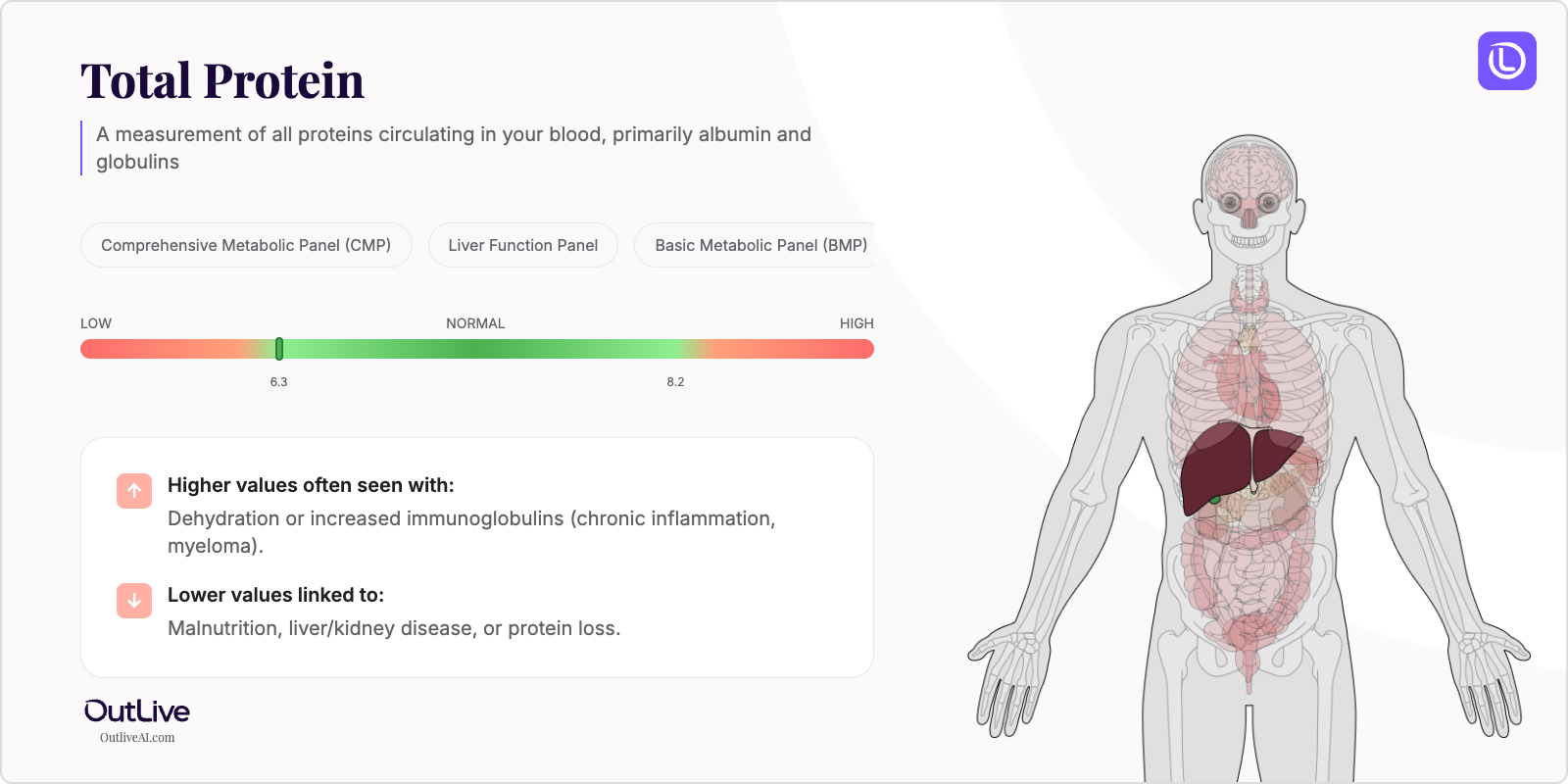
📋 At a Glance
- What it is: A measurement of all proteins circulating in your blood, primarily albumin and globulins
- Found in tests: Comprehensive Metabolic Panel (CMP), Liver Function Panel, Basic Metabolic Panel (BMP)
- Normal range: 6.3-8.2 g/dL (may vary slightly by lab and age)
If you're looking at your lab results and wondering what total protein means, you're in the right place. Think of total protein as a measure of your body's workforce – proteins are the hardworking molecules that build, repair, and maintain nearly everything in your body, from fighting infections to carrying nutrients. Let's break down what your numbers mean in plain English.
Why Is Total Protein Tested?
Your doctor orders a total protein test as part of routine health screening, often included in your annual physical's comprehensive metabolic panel. It's like taking your car's engine temperature – it gives us a quick snapshot of how well several important systems are working together.
This test becomes especially important when you're experiencing unexplained weight loss, fatigue, swelling (particularly in your legs or abdomen), or if you've been feeling generally unwell without a clear cause. Doctors also use it to monitor liver and kidney health, check your nutritional status, and investigate problems with your immune system.
The beauty of this test is its simplicity – from just one number, your healthcare team can get valuable clues about multiple organ systems. If something's off, it often prompts more specific testing to pinpoint exactly what needs attention.
What Does Total Protein Do in Your Body?
Proteins in your blood are like a Swiss Army knife – each type has multiple essential jobs. The two main players are albumin (about 60% of your total protein) and globulins (about 40%). Albumin acts like a delivery truck, transporting hormones, vitamins, and medications throughout your body while also maintaining the right fluid balance to prevent swelling. Globulins include your antibodies – your body's defense force against infections – plus proteins that transport iron and help with blood clotting.
Your liver manufactures most of these proteins, which is why total protein levels often reflect liver health. Think of your liver as a protein factory working around the clock. When the factory slows down or gets damaged, protein production drops. Meanwhile, your kidneys act as quality control, making sure proteins stay in your blood where they belong rather than leaking into your urine.
The relationship between total protein and other biomarkers is like a symphony – each instrument needs to play its part for the music to sound right. When protein levels are off, it can affect everything from your immune response to how medications work in your body.
What Do My Total Protein Results Mean?
Normal Total Protein Ranges
| Population | Normal Range | Optimal Range |
|---|---|---|
| Adult Male | 6.3-8.2 g/dL | 6.8-7.8 g/dL |
| Adult Female | 6.3-8.2 g/dL | 6.8-7.8 g/dL |
| Children (1-3 years) | 5.9-7.0 g/dL | Not established |
| Children (4-18 years) | 6.2-8.0 g/dL | Not established |
| Pregnancy | 5.7-7.5 g/dL | Varies by trimester |
Note: Reference ranges may vary slightly between laboratories. Always compare your results to the range provided on your specific lab report.
What Does High Total Protein Mean?
Common Causes:
- Dehydration - The most common cause; when you're dehydrated, proteins become more concentrated in your blood
- Chronic inflammation or infection - Your body produces extra antibodies (globulins) to fight illness
- Multiple myeloma - A type of blood cancer that produces abnormal proteins
- HIV/AIDS - Can cause increased globulin production as the immune system responds
- Hepatitis B or C - Chronic liver inflammation triggers increased antibody production
- Autoimmune disorders - Conditions like lupus or rheumatoid arthritis increase immune proteins
- Certain medications - Including corticosteroids, insulin, and growth hormone
Possible Symptoms:
- Unexplained fatigue or weakness
- Bone pain (especially with multiple myeloma)
- Frequent infections
- Unexplained weight loss
- Night sweats
- Swollen lymph nodes
When to Be Concerned: If your total protein is above 8.5 g/dL, especially if accompanied by symptoms like bone pain, severe fatigue, or recurring infections, contact your doctor promptly. Levels above 9.0 g/dL warrant immediate medical evaluation as they may indicate serious conditions requiring treatment.
What Does Low Total Protein Mean?
Common Causes:
- Malnutrition or severe dietary restriction - Not getting enough protein in your diet
- Liver disease - Including cirrhosis or hepatitis affecting protein production
- Kidney disease - Proteins leak into urine instead of staying in blood
- Inflammatory bowel disease - Crohn's disease or ulcerative colitis affecting protein absorption
- Severe burns or bleeding - Direct protein loss from the body
- Overhydration - Too much fluid dilutes protein concentration
- Pregnancy - Normal dilution effect, especially in later trimesters
Possible Symptoms:
- Swelling in legs, feet, or abdomen (edema)
- Fatigue and weakness
- Frequent infections
- Slow wound healing
- Brittle hair and nails
- Loss of muscle mass
When to Be Concerned: Total protein levels below 5.5 g/dL need prompt medical attention, especially with swelling or shortness of breath. Levels below 5.0 g/dL are considered critical and may require hospitalization for evaluation and treatment.
What Can Affect My Total Protein Levels?
Factors That May Increase Levels:
- Medications: Anabolic steroids, corticosteroids, insulin, progesterone, growth hormone
- Lifestyle: Strenuous exercise right before testing, high-protein diet, alcohol withdrawal
- Conditions: Standing for prolonged periods before blood draw, tourniquet left on too long during blood collection
- Supplements: Protein supplements, certain herbal preparations
Factors That May Decrease Levels:
- Medications: Estrogen, oral contraceptives, certain chemotherapy drugs
- Lifestyle: Low-protein diet, excessive water intake, prolonged bed rest
- Conditions: Recent surgery, severe stress, extensive burns
- Time of Day: Levels can be slightly lower when lying down versus standing
How Is Total Protein Related to Other Tests?
Total protein is rarely evaluated in isolation – it's part of a bigger picture of your health. Think of it as one piece of a puzzle that becomes clearer when combined with other pieces.
Often tested alongside: Albumin, liver enzymes (ALT, AST), kidney function (BUN, creatinine), complete blood count (CBC) Part of: Comprehensive Metabolic Panel, Liver Function Panel Ratio calculations: Albumin/Globulin (A/G) ratio helps identify specific protein imbalances Follow-up tests: Serum protein electrophoresis (SPEP) to identify specific protein abnormalities, urinalysis to check for protein loss
Frequently Asked Questions
How often should total protein be tested? For healthy adults, annual testing during routine check-ups is typically sufficient. If you have liver or kidney disease, your doctor may recommend testing every 3-6 months to monitor your condition.
Can I improve my total protein levels naturally? Yes, if levels are low due to diet, eating adequate protein (0.8-1.2 grams per kilogram of body weight daily) from sources like lean meats, fish, eggs, legumes, and dairy can help. Staying well-hydrated and treating underlying conditions are equally important.
Should I fast before a total protein test? Fasting is not typically required for total protein alone, but since it's often part of a comprehensive panel that includes glucose and lipids, your doctor may request an 8-12 hour fast.
How quickly can total protein levels change? Dehydration can change levels within hours. Nutritional improvements typically show results in 2-4 weeks. Changes from treating underlying diseases may take several months to normalize.
Next Steps After Your Total Protein Test
Questions to Ask Your Doctor:
- What do my total protein results mean for my overall health?
- Are my levels related to my current symptoms?
- Do I need additional testing like protein electrophoresis?
- Should we monitor this over time?
- Are there lifestyle changes that could help normalize my levels?
Download our Total Protein Doctor Questions Checklist
🔬 Ready to Track Your Total Protein Over Time?
Understanding a single total protein result is just the beginning. Our free Lab Analyzer tool helps you:
- Track how your total protein changes over time
- See how it relates to your other lab values
- Identify patterns your doctor might miss
- Get personalized insights based on your trends
[Upload Your Lab Report for Free Analysis →]