
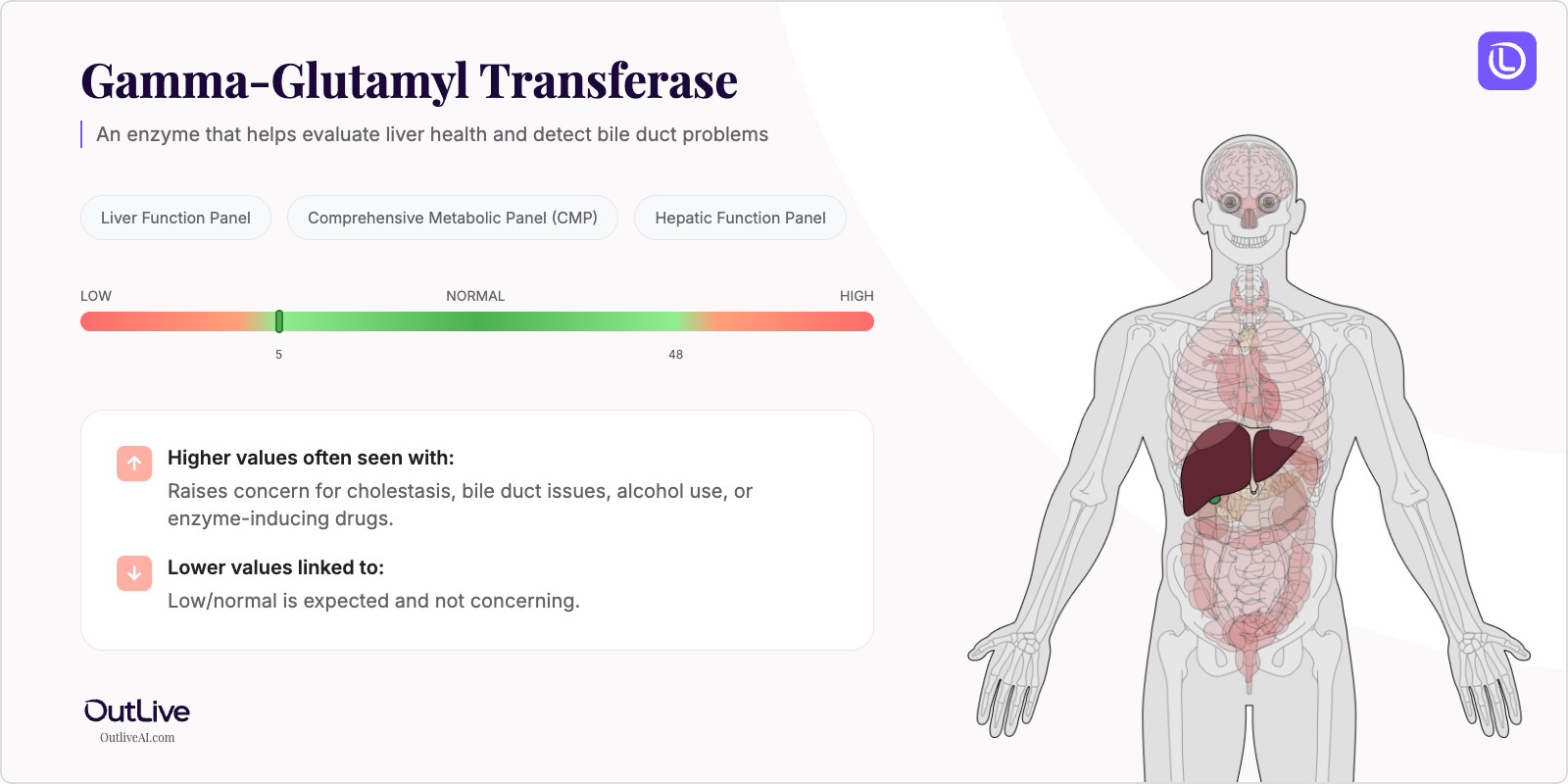
📋 At a Glance
- What it is: An enzyme that helps evaluate liver health and detect bile duct problems
- Found in tests: Liver Function Panel, Comprehensive Metabolic Panel (CMP), Hepatic Function Panel
- Normal range: 9-48 U/L for men, 5-36 U/L for women (varies by lab)
If you're looking at your lab results and wondering what GGT means, you're in the right place. Think of GGT as your liver's smoke detector – it's one of the first alarms to go off when something's affecting your liver or bile ducts, even before you feel any symptoms. Let's break down what your numbers mean in plain English.
Why Is GGT Tested?
Your doctor ordered a GGT test because it's one of the most sensitive indicators of liver and bile duct health. It's commonly included in liver function panels when you're having routine health screenings, especially if you're over 40 or have risk factors for liver disease. Unlike some other liver enzymes that can be elevated from muscle damage or other causes, GGT is quite specific to your liver and bile system.
Doctors often request this test when you're experiencing unexplained fatigue, abdominal pain (especially in the upper right area), yellowing of the skin or eyes, or dark urine. It's also a go-to test for monitoring alcohol consumption effects, checking medication side effects, or investigating unexplained elevations in other liver enzymes like alkaline phosphatase (ALP).
The beauty of the GGT test is its sensitivity – it often rises before you have any symptoms at all, giving you and your doctor an early warning system for potential liver issues. It's particularly useful for distinguishing between liver problems and bone problems when alkaline phosphatase is elevated, since GGT doesn't come from bone tissue.
What Does GGT Do in Your Body?
Gamma-glutamyl transferase (GGT) is an enzyme that works like a cellular delivery service. Its main job is to help transport amino acids and peptides across cell membranes, particularly in your liver, kidneys, pancreas, and bile ducts. Think of it as a ferry operator that helps important building blocks move in and out of cells where they're needed.
Your liver cells produce most of the GGT in your bloodstream, especially the cells lining your bile ducts – those tiny tubes that carry bile from your liver to your gallbladder and intestines. When these cells are irritated, inflamed, or damaged, they release extra GGT into your bloodstream, like a distress signal. This is why GGT is such a reliable marker for liver and bile duct problems.
GGT also plays a crucial role in your body's antioxidant defense system by helping to recycle glutathione, one of your body's most important antioxidants. This connection explains why GGT levels can rise when your body is under oxidative stress from alcohol, medications, or metabolic conditions like diabetes.
What Do My GGT Results Mean?
Normal GGT Ranges
| Population | Normal Range | Optimal Range |
|---|---|---|
| Adult Male | 9-48 U/L | 10-25 U/L |
| Adult Female | 5-36 U/L | 8-22 U/L |
| Children (1-12 years) | 5-17 U/L | 5-15 U/L |
| Newborns | Up to 150 U/L | N/A |
| Pregnancy | May decrease 25-40% | Lower third of normal range |
Note: Reference ranges may vary slightly between laboratories. Always compare your results to the range provided on your specific lab report.
What Does High GGT Mean?
Common Causes:
- Alcohol consumption: Even moderate drinking can elevate GGT for weeks after stopping
- Fatty liver disease (NAFLD): Excess fat in liver cells triggers enzyme release
- Medications: Particularly phenytoin, carbamazepine, barbiturates, and some antibiotics
- Bile duct obstruction: Gallstones or tumors blocking bile flow
- Hepatitis: Viral or autoimmune liver inflammation
- Cirrhosis: Advanced scarring of liver tissue
- Diabetes or metabolic syndrome: Insulin resistance affects liver function
Possible Symptoms:
- Fatigue or weakness
- Upper right abdominal discomfort
- Nausea or loss of appetite
- Jaundice (yellowing of skin/eyes)
- Dark urine or pale stools
- Unexplained weight loss
- Itchy skin
When to Be Concerned: If your GGT is more than 3 times the upper normal limit, or if it's elevated along with symptoms like jaundice, severe abdominal pain, or confusion, contact your healthcare provider promptly. Levels above 200 U/L warrant immediate medical evaluation, especially if accompanied by other abnormal liver tests.
What Does Low GGT Mean?
Common Causes:
- Hypothyroidism: Low thyroid hormone reduces enzyme production
- Magnesium deficiency: Essential mineral for GGT function
- Genetic variations: Some people naturally produce less GGT
- Recent pregnancy: Hormonal changes can suppress GGT
- Certain medications: Clofibrate, oral contraceptives
- Excellent liver health: Sometimes just indicates optimal function
- Low protein intake: Severe malnutrition can reduce production
Possible Symptoms:
- Usually no symptoms from low GGT itself
- Fatigue if related to hypothyroidism
- Muscle cramps if magnesium deficient
- Generally feeling well if naturally low
When to Be Concerned: Low GGT is rarely concerning on its own. However, if it's accompanied by symptoms of hypothyroidism (fatigue, weight gain, cold intolerance) or signs of malnutrition, discuss with your doctor.
What Can Affect My GGT Levels?
Factors That May Increase Levels:
- Medications: Anticonvulsants, NSAIDs, statins, antifungals, some antidepressants
- Lifestyle: Alcohol use (even social drinking), smoking, obesity, sedentary behavior
- Conditions: Recent heart attack, pancreatitis, kidney disease, hyperthyroidism
- Supplements: High-dose vitamin A, kava, black cohosh
Factors That May Decrease Levels:
- Medications: Clofibrate, oral contraceptives, ursodeoxycholic acid
- Lifestyle: Regular exercise, weight loss, Mediterranean diet
- Conditions: Hypothyroidism, pregnancy (second/third trimester)
- Time of Day: Slightly lower in early morning
How Is GGT Related to Other Tests?
GGT is rarely interpreted alone – it's most valuable when viewed alongside other liver markers. It's commonly tested with ALT and AST (liver cell enzymes), alkaline phosphatase (ALP), and bilirubin as part of a comprehensive liver panel. When ALP is elevated, GGT helps determine if the problem is in your liver (both elevated) or bones (only ALP elevated).
Often tested alongside: ALT, AST, ALP, Bilirubin, Albumin Part of: Liver Function Panel, Comprehensive Metabolic Panel Ratio calculations: GGT/ALP ratio helps locate bile duct problems Follow-up tests: Ultrasound, hepatitis panel, iron studies, autoimmune markers
Frequently Asked Questions
How often should GGT be tested? For healthy adults, annual testing during routine check-ups is sufficient. If you have liver disease or take medications affecting the liver, your doctor may recommend testing every 3-6 months. After stopping alcohol, weekly testing can track improvement.
Can I improve my GGT levels naturally? Yes! Avoiding alcohol for 2-4 weeks can significantly lower elevated GGT. Weight loss, regular exercise, and a Mediterranean-style diet rich in vegetables, fruits, and omega-3 fatty acids also help. Coffee consumption (2-3 cups daily) has been shown to support liver health.
Should I fast before a GGT test? Fasting isn't strictly required for GGT alone, but since it's usually part of a liver panel that includes glucose and lipids, your doctor will likely request an 8-12 hour fast. Follow your specific lab's instructions.
How quickly can GGT levels change? GGT has a half-life of about 2-3 weeks. After stopping alcohol, levels typically start declining within days but may take 4-8 weeks to normalize. Medication-induced elevations usually resolve 2-4 weeks after stopping the drug.
Next Steps After Your GGT Test
Questions to Ask Your Doctor:
- What do my GGT results mean for my overall health?
- Are my levels related to my symptoms?
- Do I need additional testing?
- Should we monitor this over time?
- Are there lifestyle changes that could help?
Download our GGT Doctor Questions Checklist
🔬 Ready to Track Your GGT Over Time?
Understanding a single GGT result is just the beginning. Our free Lab Analyzer tool helps you:
- Track how your GGT changes over time
- See how it relates to your other lab values
- Identify patterns your doctor might miss
- Get personalized insights based on your trends
[Upload Your Lab Report for Free Analysis →]