
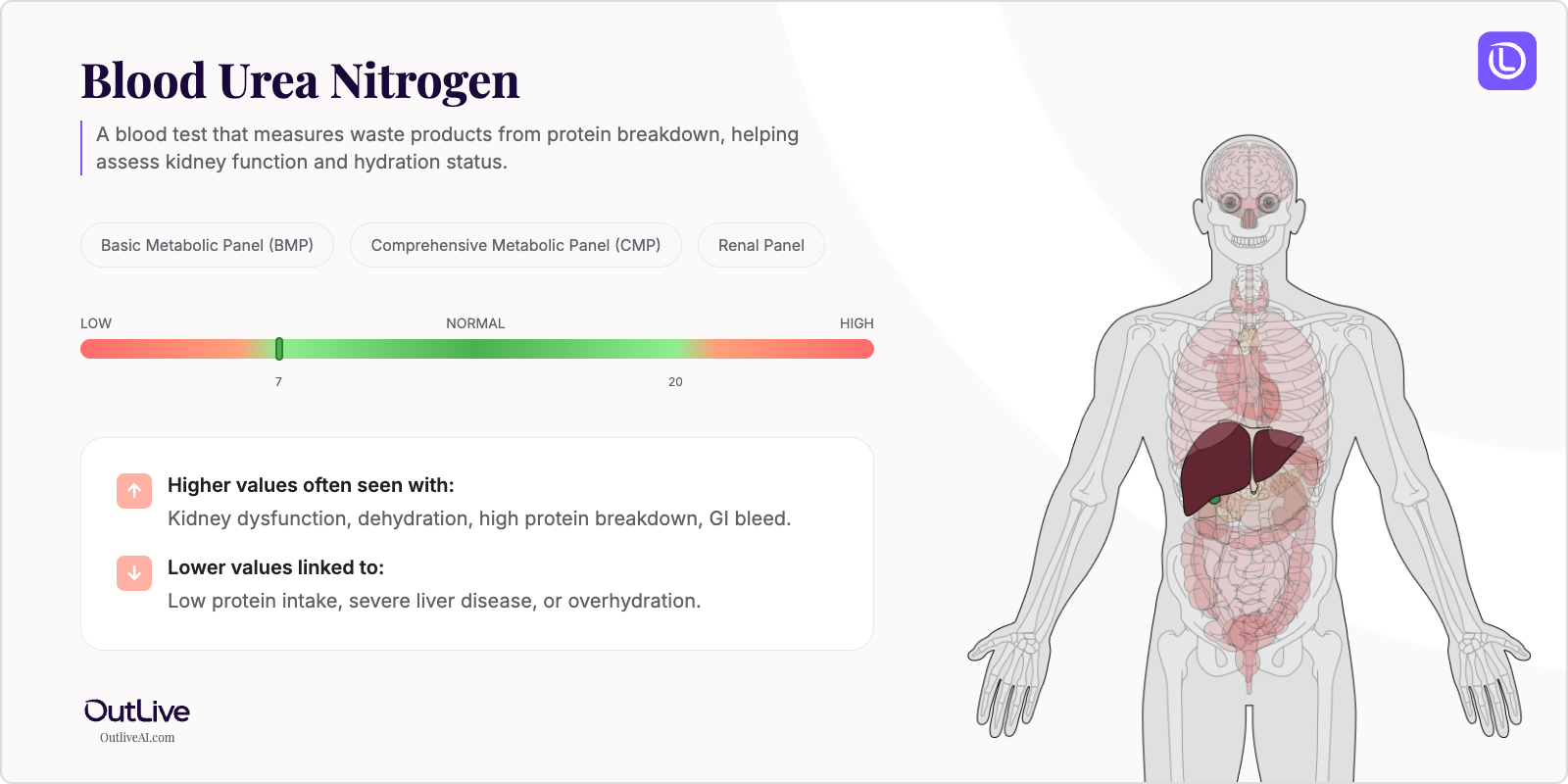
📋 At a Glance
- What it is: A blood test that measures waste products from protein breakdown, helping assess kidney function and hydration status.
- Found in tests: Basic Metabolic Panel (BMP), Comprehensive Metabolic Panel (CMP), Renal Panel
- Normal range: 7-20 mg/dL for most adults (may vary slightly by lab)
If you're looking at your lab results and wondering what BUN means, you're in the right place. Think of BUN as your body's trash indicator – it shows how well your kidneys are filtering out the waste products from the proteins you eat, much like how a water filter removes impurities from your drinking water. Let's break down what your numbers mean in plain English.
Why Is BUN (Blood Urea Nitrogen) Tested?
Your doctor orders a BUN test as part of routine health screening or when they want to check how well your kidneys are working. It's automatically included in common blood panels like the Basic Metabolic Panel (BMP) and Comprehensive Metabolic Panel (CMP), which means you've probably had this test done even if you didn't specifically ask for it.
Doctors particularly look at BUN levels when you're experiencing symptoms like fatigue, changes in urination patterns, swelling in your legs or feet, or if you have conditions like diabetes or high blood pressure that can affect kidney function. The test also helps monitor how certain medications might be affecting your kidneys, especially if you're taking drugs that can be hard on these vital organs.
BUN is especially valuable because it gives us a quick snapshot of both kidney function and hydration status. When paired with other tests like creatinine, it provides a more complete picture of your kidney health and can alert your healthcare team to problems before they become serious.
What Does BUN (Blood Urea Nitrogen) Do in Your Body?
When you eat protein – whether it's from chicken, beans, or any other source – your body breaks it down and uses what it needs. The leftover waste product is called urea, which contains nitrogen. Your liver produces this urea, and it travels through your bloodstream to your kidneys, which act like sophisticated filters, removing the urea and sending it out through your urine.
Think of your kidneys as your body's waste management system. Just as a city needs efficient garbage collection to stay clean and healthy, your body needs properly functioning kidneys to remove waste products. When everything works correctly, your BUN levels stay within a healthy range. But if your kidneys struggle to filter properly, or if your body produces too much waste, BUN levels can rise.
The relationship between BUN and other markers like creatinine is particularly important. While both reflect kidney function, BUN can also be affected by factors outside the kidneys, such as dehydration or high protein intake. This is why doctors often look at both values together – it's like getting two different perspectives on the same story.
What Do My Blood Urea Nitrogen Results Mean?
Normal Blood Urea Nitrogen Ranges
| Population | Normal Range | Optimal Range |
|---|---|---|
| Adult Male | 8-24 mg/dL | 10-20 mg/dL |
| Adult Female | 6-21 mg/dL | 10-20 mg/dL |
| Children (1-17 years) | 7-20 mg/dL | 10-18 mg/dL |
| Infants (0-12 months) | 4-19 mg/dL | Not established |
| Pregnancy | 7-20 mg/dL | 8-18 mg/dL |
| Adults over 60 | 8-23 mg/dL | 10-20 mg/dL |
Note: Reference ranges may vary slightly between laboratories. Always compare your results to the range provided on your specific lab report.
What Does High Blood Urea Nitrogen Mean?
Common Causes:
- Dehydration - The most common cause; when you're dehydrated, your blood becomes more concentrated
- High protein diet - Eating lots of meat or protein supplements increases waste products
- Kidney problems - Reduced kidney function means less efficient waste removal
- Heart failure - Poor blood flow to kidneys affects their filtering ability
- Gastrointestinal bleeding - Blood in the digestive tract gets broken down into proteins
- Certain medications - Some antibiotics, NSAIDs, and blood pressure medications
- Urinary blockage - Kidney stones or enlarged prostate preventing urine flow
Possible Symptoms:
- Fatigue and weakness
- Decreased urination or changes in urine color
- Swelling in legs, ankles, or feet
- Shortness of breath
- Confusion or difficulty concentrating
- Nausea or loss of appetite
- Metallic taste in mouth
When to Be Concerned: If your BUN is above 50 mg/dL, especially with symptoms like confusion, severe fatigue, or difficulty breathing, contact your healthcare provider immediately. Levels above 100 mg/dL typically require urgent medical attention. However, remember that slightly elevated levels (21-30 mg/dL) are often due to simple dehydration and may resolve with increased fluid intake.
What Does Low Blood Urea Nitrogen Mean?
Common Causes:
- Low protein diet - Not eating enough protein means less waste to filter
- Overhydration - Too much fluid dilutes your blood
- Liver disease - The liver produces urea, so liver problems can lower BUN
- Malnutrition - Overall poor nutrition affects protein metabolism
- Pregnancy - Increased blood volume and kidney filtration during pregnancy
- SIADH - Syndrome causing body to retain too much water
- Growth hormone use - Can increase protein synthesis and lower BUN
Possible Symptoms:
- Often no symptoms with mild decreases
- Swelling or puffiness (if due to overhydration)
- Fatigue or weakness (if due to malnutrition)
- Yellowing of skin or eyes (if liver-related)
- Muscle wasting (with severe malnutrition)
When to Be Concerned: Low BUN is generally less concerning than high levels. However, if your BUN is below 6 mg/dL and you're experiencing symptoms like unexplained weight loss, persistent fatigue, or signs of liver problems (yellowing skin, abdominal swelling), discuss this with your doctor promptly.
What Can Affect My Blood Urea Nitrogen Levels?
Factors That May Increase Levels:
- Medications: Tetracycline antibiotics, NSAIDs (ibuprofen, naproxen), ACE inhibitors, diuretics, corticosteroids
- Lifestyle: High-protein diets, intense exercise, inadequate water intake, alcohol consumption
- Conditions: Fever, stress, recent surgery, burns, pregnancy complications
- Supplements: Creatine, excessive protein powders, amino acid supplements
Factors That May Decrease Levels:
- Medications: Growth hormone, insulin, anabolic steroids
- Lifestyle: Very low protein diet, excessive water consumption, vegetarian/vegan diet
- Conditions: Pregnancy (normal decrease), recent IV fluid administration
- Time of Day: BUN can be slightly lower in the morning after overnight fasting
How Is BUN (Blood Urea Nitrogen) Related to Other Tests?
BUN is rarely interpreted alone – it's like one instrument in an orchestra that needs others to create the full picture. It's most commonly evaluated alongside creatinine to calculate the BUN/creatinine ratio, which helps determine whether kidney problems are the main issue or if other factors like dehydration are at play.
Often tested alongside: Creatinine, eGFR (estimated glomerular filtration rate), electrolytes (sodium, potassium, chloride, CO2) Part of: Basic Metabolic Panel, Comprehensive Metabolic Panel, Renal Panel Ratio calculations: BUN/Creatinine ratio (normal is 10:1 to 20:1) Follow-up tests: Urinalysis, 24-hour urine collection, kidney ultrasound, cystatin C
Frequently Asked Questions
How often should Blood Urea Nitrogen be tested? For healthy adults, annual testing during routine check-ups is typically sufficient. If you have kidney disease, diabetes, or high blood pressure, your doctor may recommend testing every 3-6 months. Those on medications affecting kidney function might need more frequent monitoring.
Can I improve my Blood Urea Nitrogen levels naturally? Yes! Staying well-hydrated (8-10 glasses of water daily), eating a balanced diet with moderate protein intake, managing blood pressure and diabetes, and avoiding excessive use of NSAIDs can help maintain healthy BUN levels.
Should I fast before a Blood Urea Nitrogen test? Fasting is not specifically required for BUN alone, but since it's usually part of a metabolic panel that includes glucose testing, you may be asked to fast for 8-12 hours. Follow your doctor's specific instructions.
How quickly can Blood Urea Nitrogen levels change? BUN can change within hours to days. Dehydration can raise levels within 24 hours, while rehydration can normalize them just as quickly. Changes due to kidney function typically occur more gradually over weeks to months.
Next Steps After Your Blood Urea Nitrogen Test
Questions to Ask Your Doctor:
- What do my Blood Urea Nitrogen results mean for my overall health?
- Are my levels related to my current symptoms or medications?
- Do I need additional kidney function testing?
- Should we monitor this over time, and if so, how often?
- Are there specific lifestyle changes that could help optimize my levels?
Download our BUN (Blood Urea Nitrogen) Doctor Questions Checklist
🔬 Ready to Track Your BUN (Blood Urea Nitrogen) Over Time?
Understanding a single Blood Urea Nitrogen result is just the beginning. Our free Lab Analyzer tool helps you:
- Track how your BUN changes over time
- See how it relates to your other lab values
- Identify patterns your doctor might miss
- Get personalized insights based on your trends
[Upload Your Lab Report for Free Analysis →]