
📋 At a Glance
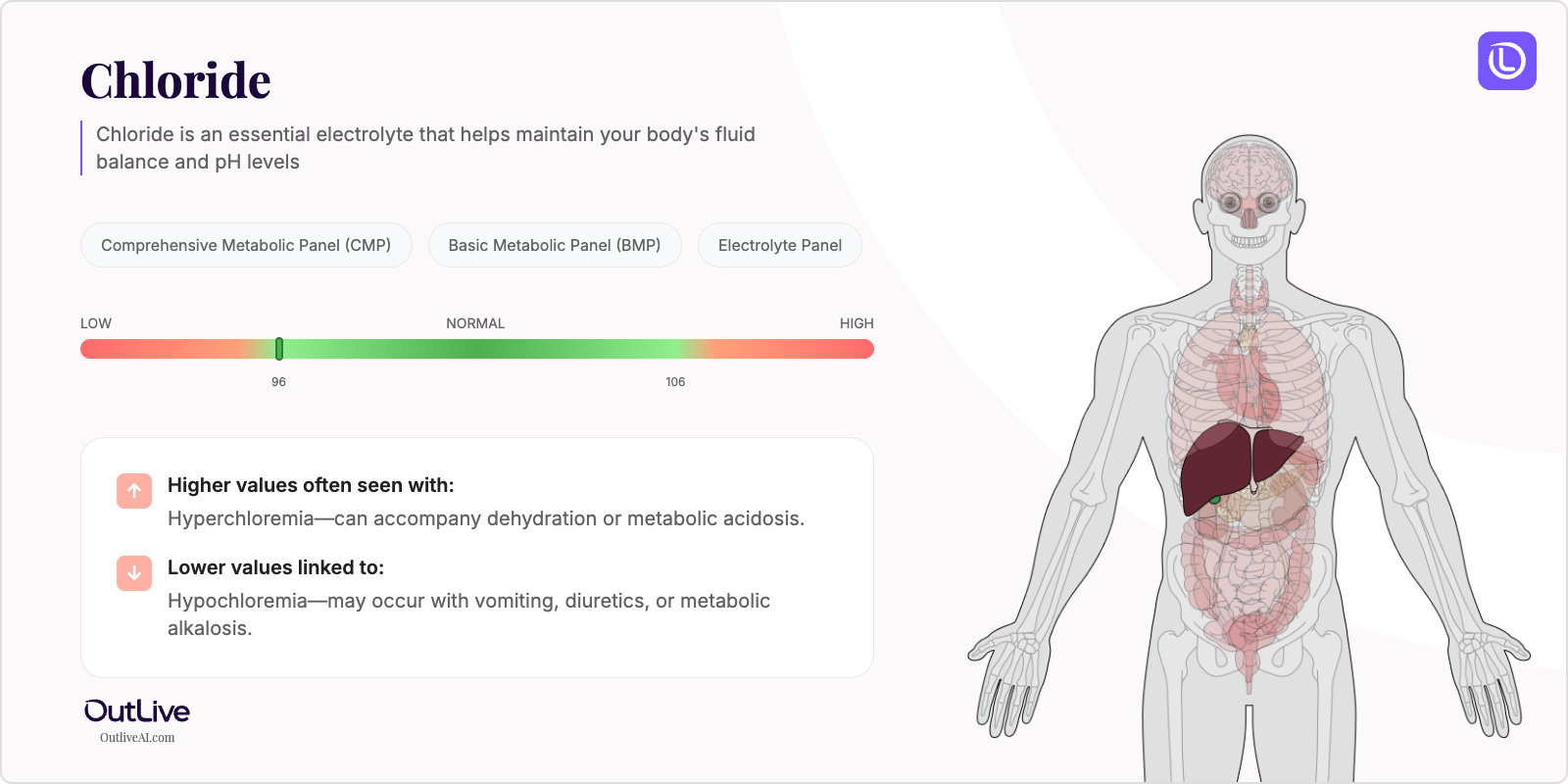
- What it is: Chloride is an essential electrolyte that helps maintain your body's fluid balance and pH levels
- Found in tests: Comprehensive Metabolic Panel (CMP), Basic Metabolic Panel (BMP), Electrolyte Panel
- Normal range: 96-106 mEq/L for most adults
If you're looking at your lab results and wondering what chloride means, you're in the right place. Think of chloride as your body's "balance keeper" – like a thermostat that helps maintain the perfect environment inside your cells. Just as your home needs the right temperature to be comfortable, your body needs the right amount of chloride to function properly. Let's break down what your numbers mean in plain English.
Why Is Chloride Tested?
Your doctor orders a chloride test as part of routine health screening, usually included in your annual physical's blood work through the Comprehensive Metabolic Panel (CMP) or Basic Metabolic Panel (BMP). It's one of those behind-the-scenes tests that gives your healthcare team valuable information about how well your body is maintaining its internal balance.
Beyond routine screening, chloride testing becomes particularly important when you're experiencing symptoms like persistent vomiting, diarrhea, excessive sweating, or breathing difficulties. Your doctor might also order this test if you're being treated for high blood pressure, kidney disease, or heart failure, as these conditions can affect your chloride levels. The test helps monitor how well your kidneys are working and whether your body's acid-base balance is where it should be.
This simple blood test matters because chloride works closely with other electrolytes like sodium and potassium to keep your body functioning smoothly. When chloride levels are off, it's often a sign that something else needs attention – making it a valuable clue in your overall health picture.
What Does Chloride Do in Your Body?
Chloride is like a multitasking assistant in your body, working alongside sodium to regulate the amount of fluid inside and outside your cells. Imagine your cells as water balloons – chloride helps ensure they're neither too full nor too empty, maintaining just the right pressure for optimal function. This electrolyte makes up about 70% of the negatively charged particles in your blood, playing a crucial role in maintaining electrical neutrality.
Your stomach relies heavily on chloride to produce hydrochloric acid, which breaks down food and protects you from harmful bacteria. Meanwhile, your kidneys use chloride as a key player in filtering waste and maintaining your body's pH balance – that delicate acid-base equilibrium that keeps all your chemical reactions running smoothly. When you breathe, chloride even helps your red blood cells exchange carbon dioxide for oxygen.
The relationship between chloride and other electrolytes is like a carefully choreographed dance. When sodium levels change, chloride often follows suit. Similarly, when your body's pH shifts, chloride and bicarbonate work together to restore balance. This interconnected system is why your doctor looks at chloride alongside other electrolytes to get the full picture of your health.
What Do My Chloride Results Mean?
Normal Chloride Ranges
| Population | Normal Range | Optimal Range |
|---|---|---|
| Adult Male | 96-106 mEq/L | 98-104 mEq/L |
| Adult Female | 96-106 mEq/L | 98-104 mEq/L |
| Children (1-17 years) | 98-107 mEq/L | 100-105 mEq/L |
| Pregnancy | 95-105 mEq/L | 97-103 mEq/L |
| Newborns | 96-113 mEq/L | Not established |
Note: Reference ranges may vary slightly between laboratories. Always compare your results to the range provided on your specific lab report.
What Does High Chloride Mean?
Common Causes:
- Dehydration: The most common cause – when you lose water, chloride becomes more concentrated in your blood
- Kidney problems: Certain kidney diseases prevent proper chloride excretion
- Metabolic acidosis: When your blood becomes too acidic, often from diabetes complications
- Excessive salt intake: Too much table salt (sodium chloride) in your diet
- Certain medications: Some blood pressure medications and hormone treatments
- Hyperparathyroidism: Overactive parathyroid glands affecting calcium and chloride balance
- Prolonged diarrhea: Specifically types that cause bicarbonate loss
Possible Symptoms:
- Excessive thirst
- Frequent urination
- Weakness or fatigue
- High blood pressure
- Rapid breathing
- Confusion or irritability
When to Be Concerned: Chloride levels above 110 mEq/L warrant prompt medical attention, especially if accompanied by confusion, difficulty breathing, or severe weakness. Levels above 115 mEq/L are considered critical and require immediate medical evaluation. However, remember that slightly elevated levels (107-109 mEq/L) are often due to simple dehydration and can improve with proper fluid intake.
What Does Low Chloride Mean?
Common Causes:
- Prolonged vomiting: Stomach acid loss directly depletes chloride
- Congestive heart failure: Fluid retention dilutes chloride concentration
- Chronic lung diseases: COPD and emphysema can cause CO2 retention affecting chloride
- Overhydration: Too much water dilutes electrolyte concentrations
- Diuretic medications: "Water pills" can cause excessive chloride loss through urine
- Metabolic alkalosis: When blood becomes too alkaline
- Addison's disease: Adrenal gland insufficiency affecting electrolyte balance
Possible Symptoms:
- Muscle cramps or spasms
- Irregular heartbeat
- Confusion or difficulty concentrating
- Seizures (in severe cases)
- Numbness or tingling
- Shallow breathing
When to Be Concerned: Chloride levels below 90 mEq/L require medical evaluation, particularly if you're experiencing muscle twitching, confusion, or breathing difficulties. Levels below 85 mEq/L are considered critical and need immediate attention. Even mild decreases (94-95 mEq/L) should be discussed with your doctor if they persist or worsen.
What Can Affect My Chloride Levels?
Factors That May Increase Levels:
- Medications: Carbonic anhydrase inhibitors, some NSAIDs, androgens, estrogens, corticosteroids
- Lifestyle: High-sodium diet, inadequate water intake, excessive alcohol consumption
- Conditions: Recent fever, excessive sweating, breathing disorders causing hyperventilation
- Supplements: Excessive calcium or vitamin D supplements, ammonium chloride
Factors That May Decrease Levels:
- Medications: Loop diuretics (furosemide), thiazide diuretics, bicarbonate supplements, laxatives
- Lifestyle: Low-salt diet, excessive water consumption, chronic alcohol use
- Conditions: Recent stomach flu, heat exhaustion, burns affecting large body areas
- Time of Day: Slight variations can occur, with levels typically lowest in early morning
How Is Chloride Related to Other Tests?
Chloride is never evaluated in isolation – it's part of a team of electrolytes that tell a complete story about your body's balance. It's always tested alongside sodium, potassium, and carbon dioxide (bicarbonate) in both the Basic Metabolic Panel and Comprehensive Metabolic Panel. Your doctor often calculates the "anion gap" using chloride, sodium, and bicarbonate levels to detect acid-base imbalances.
Often tested alongside: Sodium, Potassium, Bicarbonate, BUN, Creatinine Part of: Comprehensive Metabolic Panel, Basic Metabolic Panel Ratio calculations: Anion gap = Sodium - (Chloride + Bicarbonate) Follow-up tests: Arterial blood gases, urine chloride, kidney function tests, thyroid panel
Frequently Asked Questions
How often should chloride be tested? For healthy adults, chloride is typically checked annually as part of routine blood work. If you have kidney disease, heart failure, or take medications affecting electrolytes, your doctor may recommend testing every 3-6 months or more frequently during medication adjustments.
Can I improve my chloride levels naturally? Most chloride imbalances resolve by addressing the underlying cause. For mild dehydration-related increases, drinking adequate water (8-10 glasses daily) helps. For low levels from vomiting, electrolyte drinks can help. However, always consult your doctor before making significant dietary changes.
Should I fast before a chloride test? Fasting is not required specifically for chloride testing. However, if it's part of a Comprehensive Metabolic Panel that includes glucose testing, your doctor may request an 8-12 hour fast.
How quickly can chloride levels change? Chloride levels can change within hours to days depending on the cause. Dehydration can raise levels within hours, while proper hydration can normalize them just as quickly. Medication-related changes typically occur over days to weeks.
Next Steps After Your Chloride Test
Questions to Ask Your Doctor:
- What do my chloride results mean for my overall health?
- Are my levels related to my current symptoms or medications?
- Do I need additional testing to understand why my levels are abnormal?
- Should we monitor this over time, and if so, how frequently?
- Are there specific dietary or lifestyle changes that could help normalize my levels?
Download our Chloride Doctor Questions Checklist
🔬 Ready to Track Your Chloride Over Time?
Understanding a single chloride result is just the beginning. Our free Lab Analyzer tool helps you:
- Track how your chloride changes over time
- See how it relates to your other lab values
- Identify patterns your doctor might miss
- Get personalized insights based on your trends
[Upload Your Lab Report for Free Analysis →]