
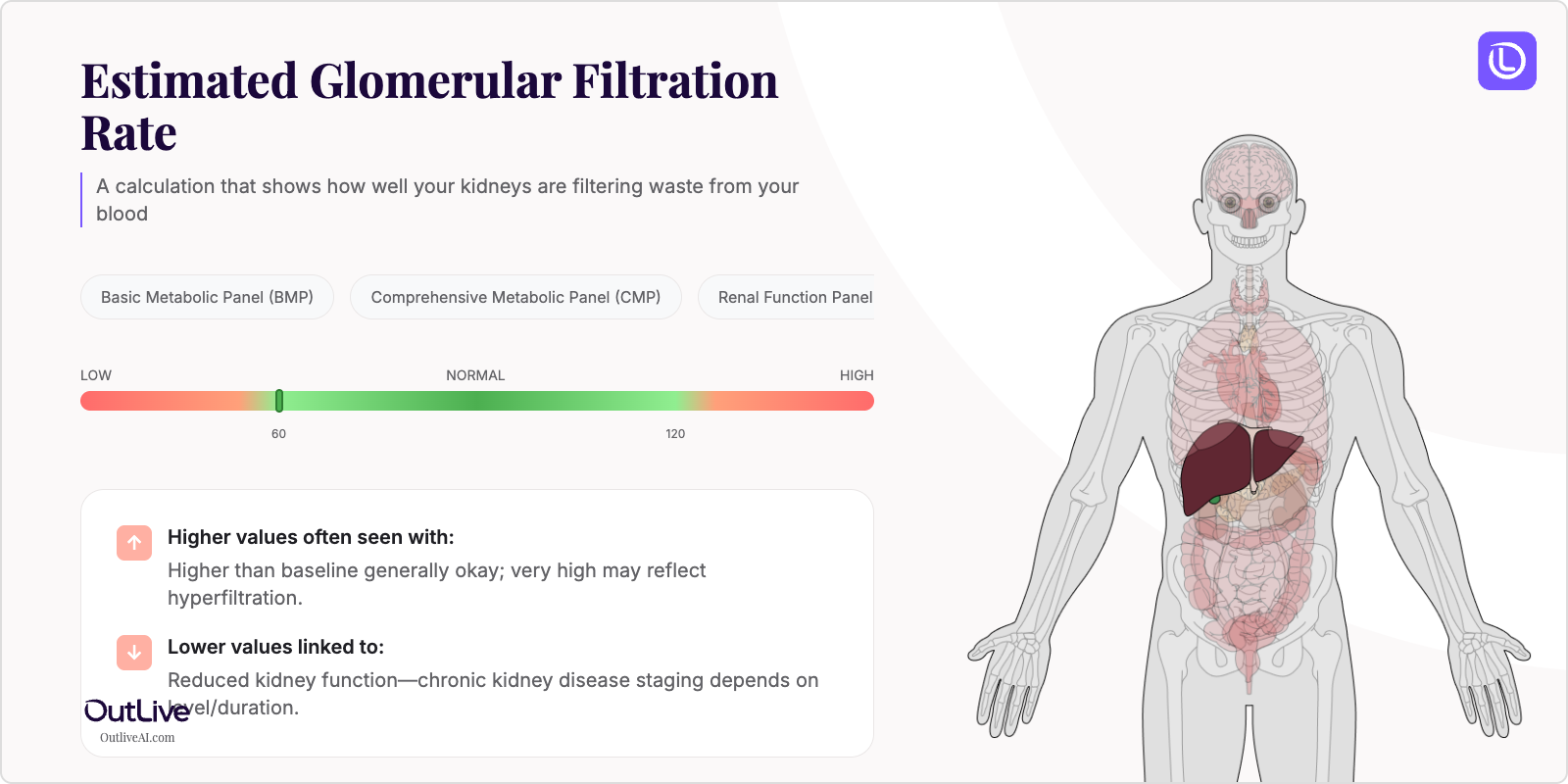
📋 At a Glance
- What it is: A calculation that shows how well your kidneys are filtering waste from your blood
- Found in tests: Basic Metabolic Panel (BMP), Comprehensive Metabolic Panel (CMP), Renal Function Panel
- Normal range: Above 60 mL/min/1.73m² (varies by age, with natural decline after age 40)
If you're looking at your lab results and wondering what eGFR means, you're in the right place. Think of eGFR as your kidney's report card – it tells you how efficiently these vital organs are cleaning your blood, like a filter's performance rating. Let's break down what your numbers mean in plain English, so you can walk into your next doctor's appointment feeling informed rather than anxious.
Why Is eGFR Tested?
Your doctor orders an eGFR test as part of routine health screening, especially if you're over 60, have diabetes, high blood pressure, or a family history of kidney disease. It's automatically calculated whenever you have a basic or comprehensive metabolic panel – those common blood tests done during annual check-ups or hospital visits.
This test helps detect kidney problems early, often before you'd notice any symptoms. Since kidney disease can be silent for years, eGFR acts as an early warning system. It's also crucial for monitoring existing kidney conditions, adjusting medication doses (many drugs are cleared by the kidneys), and checking for kidney damage from conditions like diabetes or high blood pressure.
For many patients, seeing their eGFR is the first indication that their kidneys need attention. The good news? Early detection often means you can take steps to protect your kidney function and prevent further decline.
What Does eGFR Do in Your Body?
Your eGFR doesn't actually "do" anything – it's a calculated measurement, not a substance in your blood. The "e" stands for "estimated," and GFR means "glomerular filtration rate." Your kidneys contain about a million tiny filters called glomeruli that work 24/7 to clean your blood, removing waste products and excess fluid while keeping the good stuff your body needs.
Think of your kidneys as a sophisticated water treatment plant. The eGFR tells you how many milliliters of blood your kidneys can clean per minute. A healthy adult's kidneys filter about 90-120 milliliters per minute – that's roughly 180 liters of blood daily! This number is calculated using your creatinine level (a waste product from muscle activity), along with your age, sex, and race.
The calculation adjusts for body surface area, which is why you'll see results reported as mL/min/1.73m². This standardization allows doctors to compare results between people of different sizes. As we age, our eGFR naturally declines by about 1 point per year after age 40 – it's like any hardworking system that gradually becomes less efficient over time.
What Do My eGFR Results Mean?
Normal eGFR Ranges
| Population | Normal Range | Optimal Range |
|---|---|---|
| Adult Male (20-29 years) | >90mL/min/1.73m² | 100-120 mL/min/1.73m² |
| Adult Female (20-29 years) | >90mL/min/1.73m² | 90-110 mL/min/1.73m² |
| Adults 30-39 years | >90mL/min/1.73m² | 90-110 mL/min/1.73m² |
| Adults 40-49 years | >90mL/min/1.73m² | 85-105 mL/min/1.73m² |
| Adults 50-59 years | >60mL/min/1.73m² | 80-100 mL/min/1.73m² |
| Adults 60-69 years | >60mL/min/1.73m² | 75-95 mL/min/1.73m² |
| Adults 70+ years | >60mL/min/1.73m² | 70-90 mL/min/1.73m² |
| Pregnancy | Often increases by 40-50% | 120-150 mL/min/1.73m² |
Note: Reference ranges may vary slightly between laboratories. Always compare your results to the range provided on your specific lab report.
What Does High eGFR Mean?
Common Causes:
- Pregnancy (kidneys naturally work harder during pregnancy)
- High protein diet consumed before testing
- Hyperfiltration in early diabetes (kidneys overworking before damage occurs)
- Single kidney compensating after donation or loss
- Certain medications like NSAIDs recently stopped
- Lab calculation error (rare but possible with very low muscle mass)
- Recovery phase after acute kidney injury
Possible Symptoms:
- Usually none (high eGFR rarely causes symptoms)
- Increased urination if very elevated
- Mild swelling in some cases
When to Be Concerned: An eGFR above 120 in non-pregnant adults may indicate hyperfiltration, which can be an early sign of kidney stress, particularly in people with diabetes. While not immediately dangerous, it warrants monitoring and discussion with your doctor about underlying causes.
What Does Low eGFR Mean?
Common Causes:
- Chronic kidney disease from diabetes or high blood pressure
- Acute kidney injury from dehydration or medication
- Urinary blockage (kidney stones, enlarged prostate)
- Heart failure reducing blood flow to kidneys
- Autoimmune conditions affecting kidneys
- Polycystic kidney disease
- Long-term use of NSAIDs or certain antibiotics
Possible Symptoms:
- Fatigue and weakness
- Swelling in legs, ankles, or feet
- Shortness of breath
- Nausea or loss of appetite
- Changes in urination (frequency, color, or amount)
- Difficulty concentrating or "brain fog"
- Metallic taste in mouth
When to Be Concerned: An eGFR below 60 for three months indicates chronic kidney disease. Below 30 is considered severe kidney disease requiring specialist care. Below 15 indicates kidney failure, often requiring dialysis or transplant consideration. Any sudden drop in eGFR warrants immediate medical attention.
What Can Affect My eGFR Levels?
Factors That May Increase Levels:
- Medications: ACE inhibitors or ARBs (initially), stopping NSAIDs
- Lifestyle: Increased hydration, pregnancy, high-protein meals
- Conditions: Recovery from acute illness, weight loss with muscle mass reduction
- Supplements: Creatine supplements (can affect calculation)
Factors That May Decrease Levels:
- Medications: NSAIDs, certain antibiotics, chemotherapy drugs, proton pump inhibitors
- Lifestyle: Dehydration, excessive protein intake, intense exercise before testing
- Conditions: Fever, infections, heart problems, liver disease
- Time of Day: Can be slightly lower in the evening
How Is eGFR Related to Other Tests?
Your eGFR is calculated from your creatinine level, so these always appear together. It's often tested alongside BUN (blood urea nitrogen) to get a complete picture of kidney function. The BUN/creatinine ratio helps distinguish between different types of kidney problems.
Often tested alongside: Creatinine, BUN, electrolytes (sodium, potassium, chloride, CO2) Part of: Basic Metabolic Panel, Comprehensive Metabolic Panel Ratio calculations: BUN/Creatinine ratio for kidney function assessment Follow-up tests: Urine albumin, kidney ultrasound, cystatin C for more precise measurement
Frequently Asked Questions
How often should eGFR be tested? For healthy adults, annually after age 60. If you have diabetes, high blood pressure, or kidney disease, your doctor may recommend testing every 3-6 months. More frequent monitoring is needed if you're on medications that affect kidney function.
Can I improve my eGFR levels naturally? Yes! Managing blood pressure and blood sugar, staying hydrated, maintaining a healthy weight, limiting NSAIDs, reducing salt intake, and not smoking can all help protect kidney function. However, some decline with age is normal and can't be reversed.
Should I fast before an eGFR test? Fasting isn't required for eGFR testing, but your doctor may request it if other tests are being done simultaneously. Avoid excessive protein intake 24 hours before testing as it can temporarily affect results.
How quickly can eGFR levels change? eGFR can change within hours due to dehydration or medications, but meaningful kidney function changes typically occur over weeks to months. A single abnormal result should be repeated to confirm true kidney function.
Next Steps After Your eGFR Test
Questions to Ask Your Doctor:
- What do my eGFR results mean for my overall health?
- Are my levels related to my current symptoms or medications?
- Do I need additional testing like urine tests or imaging?
- Should we monitor this over time, and how often?
- Are there lifestyle changes that could help protect my kidneys?
- Should I see a kidney specialist (nephrologist)?
Download our eGFR Doctor Questions Checklist
🔬 Ready to Track Your eGFR Over Time?
Understanding a single eGFR result is just the beginning. Our free Lab Analyzer tool helps you:
- Track how your eGFR changes over time
- See how it relates to your other lab values
- Identify patterns your doctor might miss
- Get personalized insights based on your trends
[Upload Your Lab Report for Free Analysis →]