
📋 At a Glance
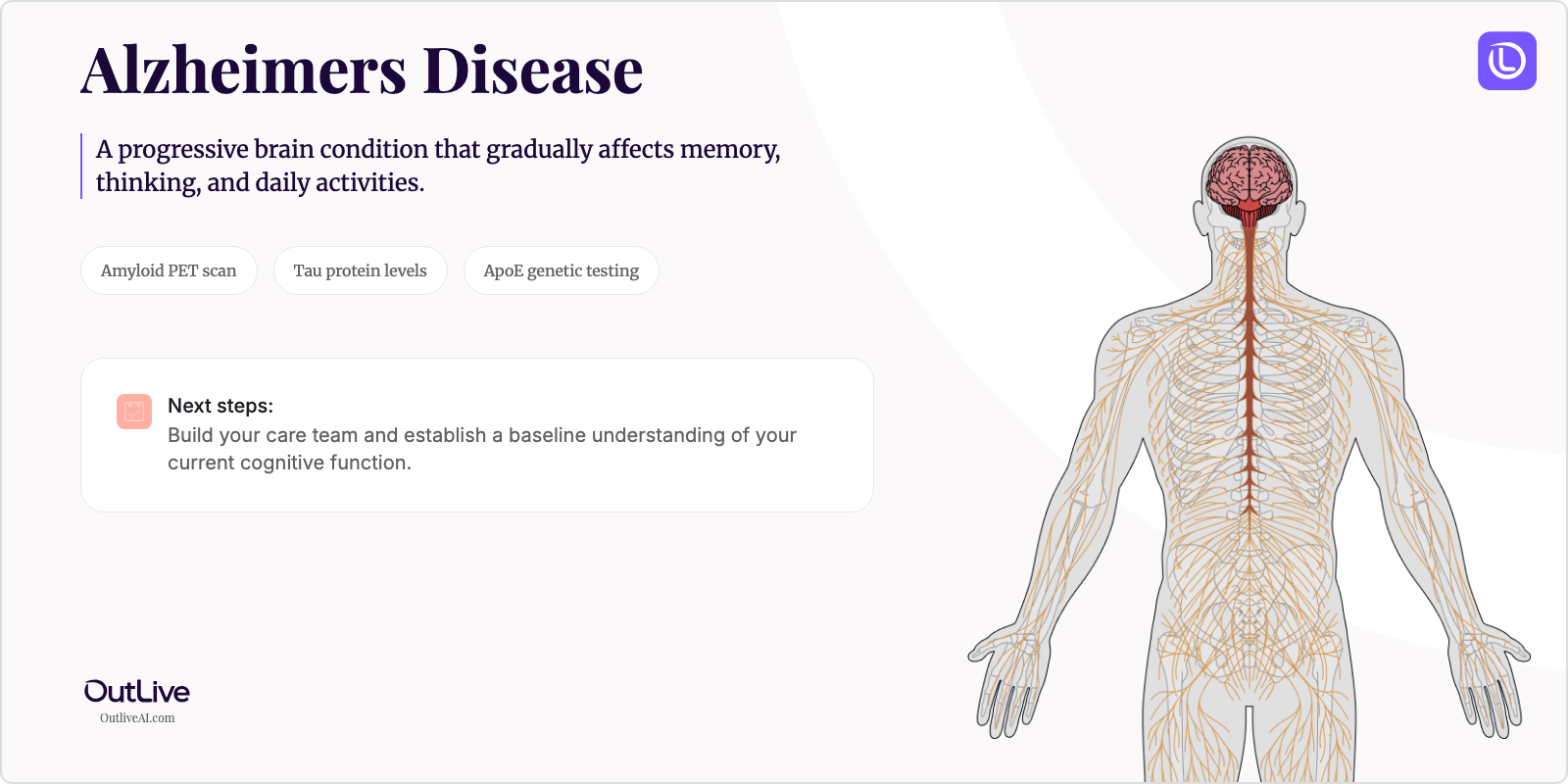
- What it is: A progressive brain condition that gradually affects memory, thinking, and daily activities.
- Key lab tests: Amyloid PET scan, Tau protein levels, ApoE genetic testing
- Your first goal: Build your care team and establish a baseline understanding of your current cognitive function.
Receiving a new diagnosis for Alzheimer's Disease can be overwhelming. You might be feeling anxious, confused, and unsure of what comes next. That's completely normal. This guide is here to help you understand your condition in simple terms, know which lab tests matter most, and feel prepared for your next steps.
First, Take a Breath: What is Alzheimer's Disease in Simple Terms?
Think of your brain as a vast library where memories and skills are stored in carefully organized books. Alzheimer's Disease is like having sticky notes (called plaques) and tangled ribbons (called tangles) slowly accumulating between and inside the books, making it harder to find and read the information you need. This process happens gradually, often over many years, which means you have time to plan, adapt, and make the most of each day. While we can't yet remove all those sticky notes and ribbons, we have treatments that can slow down how quickly they accumulate and strategies to help you navigate around them.
Understanding Your Diagnosis: The Key Lab Tests
This is the most important section. These are the most critical biomarkers used to diagnose and monitor Alzheimer's Disease. Understanding what these tests mean will help you have more informed conversations with your doctor.
Key Tests for Alzheimer's Disease:
- Amyloid Beta (CSF/PET): This test looks for sticky protein clumps in your brain that are a hallmark of Alzheimer's, helping confirm the diagnosis and track disease progression.
- Tau Protein (CSF): This measures tangled proteins inside brain cells that increase as Alzheimer's progresses, giving your doctor insight into how the disease is affecting your brain.
- ApoE Genetic Test: This genetic test identifies if you carry gene variants that affect your risk and potential response to certain treatments.
- Phosphorylated Tau (p-tau): This specific form of tau protein helps distinguish Alzheimer's from other types of memory problems and tracks disease activity.
Your First Specialist Appointment: What to Ask
What to Expect: You'll likely see a neurologist or geriatrician who specializes in memory disorders. They'll review your test results, perform cognitive assessments (simple memory and thinking tests), and discuss treatment options. Bring a trusted family member or friend to help take notes—four ears are better than two, especially when processing important information.
Questions to Ask Your Doctor:
- "What stage is my Alzheimer's, and what does that mean for my daily life right now?"
- "Which medications might help slow progression, and what are the realistic benefits and side effects?"
- "How often should I have follow-up appointments and cognitive testing?"
- "What lifestyle changes have the strongest evidence for helping people with Alzheimer's?"
- "Should my family members consider genetic testing, and what would that tell them?"
Download our [Checklist of Questions to Ask Your Alzheimer's Disease Specialist](# to feel prepared.
How to Track Your Journey
Tracking your Alzheimer's Disease journey is crucial for understanding how your treatment is working and spotting important trends. Here's what you should monitor:
Symptoms to Track:
- Memory changes (forgetting recent conversations, repeating questions)
- Mood and behavior shifts (anxiety, depression, irritability)
- Daily activity challenges (managing finances, driving, cooking)
- Sleep patterns and energy levels
- Language difficulties (finding words, following conversations)
Lab Results to Monitor:
- Cognitive assessment scores (MMSE or MoCA) - Every 6-12 months
- Blood vitamin levels (B12, folate, vitamin D) - Annually
- Thyroid function tests - Annually
- Imaging results if recommended - As advised by your specialist
Why Tracking Matters: Tracking helps you and your doctor see patterns over time rather than focusing on day-to-day fluctuations. It's like watching a slow-motion movie—individual frames might look similar, but the overall picture becomes clearer when you step back and look at the trend.
Next Steps After Your Diagnosis
Immediate Actions (This Week):
- Schedule your first specialist appointment if not already done
- Gather all your medical records and test results in one place
- Start a simple daily journal noting how you feel and any memory concerns
- Tell close family members and discuss how they can support you
Short-term Goals (Next Month):
- Establish care with a neurologist or memory specialist
- Review and update legal documents (will, power of attorney, advance directives)
- Join a local Alzheimer's support group or online community
- Create a medication routine with pill organizers and reminders
Long-term Management:
- Regular cognitive assessments to track progression
- Ongoing medication adjustments based on response and side effects
- Home safety modifications as needs change
- Building a robust support network including family, friends, and professionals
Frequently Asked Questions
How quickly can I expect to feel better? Alzheimer's medications don't reverse symptoms but can slow decline. Some people notice improved alertness or mood within 4-6 weeks of starting treatment, while others mainly see a slower rate of change over months to years.
Will I need to change my diet? A Mediterranean-style diet rich in vegetables, fish, olive oil, and whole grains may help protect brain health. Limiting processed foods and maintaining stable blood sugar can also support cognitive function.
How often will I need to see my doctor? Initially, expect appointments every 3-4 months to establish treatment and monitor response. Once stable, visits typically occur every 6 months, with annual comprehensive evaluations.
Can I still exercise/work/travel? In early stages, most activities remain possible with some adjustments. Regular exercise is strongly encouraged as it supports brain health. Work and travel decisions depend on your specific symptoms and should be discussed with your doctor and family.
When to Seek Immediate Medical Attention
Contact your doctor immediately if you experience:
- Sudden confusion or significant worsening of symptoms over hours or days
- Falls, injuries, or getting lost in familiar places
- Severe mood changes, aggression, or thoughts of self-harm
- Side effects from medications (severe nausea, irregular heartbeat, fainting)
- Signs of infection (fever, painful urination) which can worsen confusion
🔬 Ready to Organize Your Health Journey?
Understanding your condition is the first step. Our free Lab Analyzer tool helps you:
- Track all your lab results for Alzheimer's Disease in one place
- Spot important trends over time
- Generate personalized questions for your doctor
[Upload Your Lab Report for Free Analysis →]