
📋 At a Glance
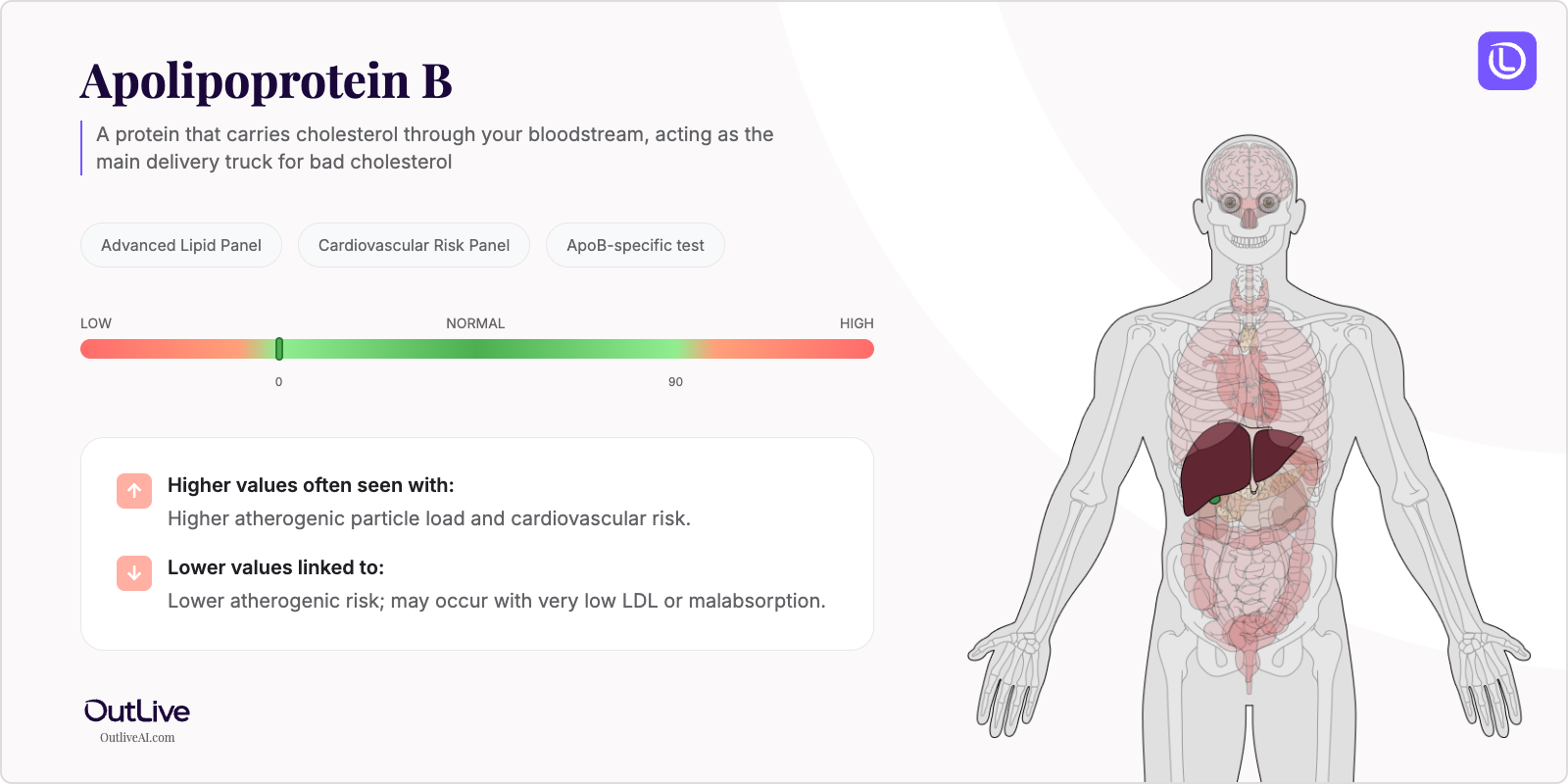
- What it is: A protein that carries cholesterol through your bloodstream, acting as the main "delivery truck" for bad cholesterol
- Found in tests: Advanced Lipid Panel, Cardiovascular Risk Panel, ApoB-specific test
- Normal range: Less than 90 mg/dL for most adults (optimal under 80 mg/dL)
If you're looking at your lab results and wondering what apolipoprotein B means, you're in the right place. Think of apolipoprotein B (or ApoB for short) as the license plate on every "delivery truck" that carries bad cholesterol through your bloodstream. While traditional cholesterol tests count the cargo, ApoB counts the actual number of trucks – and that number might be even more important for understanding your heart disease risk. Let's break down what your numbers mean in plain English.
Why Is Apolipoprotein B Tested?
Your doctor ordered this test because ApoB gives us a more complete picture of your cardiovascular risk than standard cholesterol tests alone. While a regular lipid panel measures the amount of cholesterol in your blood, ApoB tells us how many particles are carrying that cholesterol – and each particle can potentially damage your artery walls.
This test is particularly valuable if you have normal or borderline LDL cholesterol but your doctor suspects you might still be at risk for heart disease. It's often ordered when you have a family history of early heart disease, diabetes, metabolic syndrome, or if your triglycerides are high. Many forward-thinking doctors now include ApoB as part of comprehensive cardiovascular screening because research shows it's one of the best predictors of heart attack and stroke risk.
ApoB testing helps monitor how well cholesterol-lowering treatments are working and can guide decisions about whether you need medication or if lifestyle changes are enough. It's especially useful for people with insulin resistance or those whose standard cholesterol numbers don't seem to match their risk factors.
What Does Apolipoprotein B Do in Your Body?
Apolipoprotein B is like a molecular GPS tag attached to every particle that carries bad cholesterol (LDL) and other harmful fats through your bloodstream. Each LDL particle, VLDL particle, and other atherogenic (artery-damaging) particle has exactly one ApoB protein on its surface. This makes ApoB a perfect way to count how many of these potentially harmful particles are circulating in your blood.
Your liver produces these ApoB-containing particles to transport fats and cholesterol to your tissues. While this is a normal and necessary process, having too many of these particles increases your risk of atherosclerosis – the buildup of plaque in your arteries. Think of it this way: if cholesterol particles are like cars on a highway, having more cars (high ApoB) creates more traffic and more opportunities for accidents (arterial damage), even if each car isn't carrying much cargo (even if LDL cholesterol appears normal).
The reason ApoB matters so much is that smaller, denser LDL particles – which are particularly dangerous – might not show up as abnormal on a standard cholesterol test. But since each particle has one ApoB protein, measuring ApoB catches all the troublemakers, giving you and your doctor a clearer picture of your true cardiovascular risk.
What Do My Apolipoprotein B Results Mean?
Normal Apolipoprotein B Ranges
| Population | Normal Range | Optimal Range |
|---|---|---|
| Adult Male | < 100 mg/dL | < 80 mg/dL |
| Adult Female | < 90 mg/dL | < 80 mg/dL |
| Children (2-19 years) | < 90 mg/dL | < 75 mg/dL |
| Pregnancy | May increase 25-50% | Consult physician |
| High Risk Patients | < 80 mg/dL | < 65 mg/dL |
Note: Reference ranges may vary slightly between laboratories. Always compare your results to the range provided on your specific lab report.
What Does High Apolipoprotein B Mean?
Common Causes:
- High saturated fat and trans fat diet (processed foods, fried foods, fatty meats)
- Genetic conditions like familial hypercholesterolemia (runs in families)
- Diabetes or insulin resistance (high blood sugar damages how your body handles fats)
- Hypothyroidism (underactive thyroid slows down cholesterol clearance)
- Obesity, especially abdominal obesity (belly fat produces inflammatory substances)
- Chronic kidney disease (kidneys help clear cholesterol particles)
- Certain medications like corticosteroids, some birth control pills, or diuretics
Possible Symptoms:
- Usually no symptoms until arterial damage occurs
- Chest pain or pressure with exertion (angina)
- Yellowish deposits around eyes or tendons (xanthomas) in severe cases
- Shortness of breath
- Leg pain when walking (peripheral artery disease)
When to Be Concerned: Values above 130 mg/dL indicate very high cardiovascular risk and typically require immediate medical attention and treatment. Even moderately elevated levels (100-130 mg/dL) significantly increase your risk of heart attack and stroke over time. If your ApoB is elevated along with chest pain, sudden shortness of breath, or other cardiovascular symptoms, seek immediate medical care.
What Does Low Apolipoprotein B Mean?
Common Causes:
- Genetic conditions like abetalipoproteinemia or hypobetalipoproteinemia (rare)
- Severe malnutrition or malabsorption disorders (body can't absorb fats properly)
- Overactive thyroid (hyperthyroidism speeds up metabolism)
- Severe liver disease (liver produces ApoB)
- Certain cancers or chronic infections (body using up proteins)
- Some cholesterol-lowering medications (working as intended)
- Strict vegan diet without proper supplementation (very rare)
Possible Symptoms:
- Fatty stools (steatorrhea) if due to malabsorption
- Vitamin deficiencies (A, D, E, K) leading to vision problems or easy bruising
- Neurological problems in severe genetic cases
- Unexplained weight loss
- Chronic diarrhea
When to Be Concerned: While low ApoB is generally protective against heart disease, extremely low levels (below 40 mg/dL) may indicate an underlying health problem that needs investigation. If accompanied by digestive symptoms, unexplained weight loss, or neurological symptoms, consult your doctor promptly.
What Can Affect My Apolipoprotein B Levels?
Factors That May Increase Levels:
- Medications: Corticosteroids, anabolic steroids, some diuretics, cyclosporine, protease inhibitors, some antipsychotics
- Lifestyle: High saturated fat diet, sedentary lifestyle, smoking, excessive alcohol, chronic stress
- Conditions: Weight gain, pregnancy, menopause, winter months (less vitamin D)
- Supplements: High-dose omega-6 fatty acids without omega-3 balance
Factors That May Decrease Levels:
- Medications: Statins, PCSK9 inhibitors, fibrates, niacin, ezetimibe
- Lifestyle: Plant-based diet, regular aerobic exercise, weight loss, intermittent fasting
- Conditions: Acute illness, hyperthyroidism, severe infections
- Time of Day: Slightly lower in the afternoon (minimal variation)
How Is Apolipoprotein B Related to Other Tests?
ApoB provides context for your other cholesterol numbers and is most meaningful when viewed alongside them. It's particularly useful when compared to your LDL cholesterol – if your ApoB is high but LDL is normal, you likely have many small, dense LDL particles (pattern B), which are more dangerous than fewer, larger particles.
Often tested alongside: LDL cholesterol, HDL cholesterol, triglycerides, ApoA1, Lp(a), hs-CRP Part of: Advanced Lipid Panel, Cardiovascular Risk Panel Ratio calculations: ApoB/ApoA1 ratio (ideal less than 0.7) Follow-up tests: Coronary calcium score, carotid ultrasound, stress test if significantly elevated
Frequently Asked Questions
How often should apolipoprotein B be tested? If your levels are optimal and you have no risk factors, every 4-5 years is sufficient. If you're being treated for high levels or have cardiovascular risk factors, your doctor may check it every 3-6 months until optimal, then annually.
Can I improve my apolipoprotein B levels naturally? Yes! Losing even 5-10% of body weight, exercising 150 minutes weekly, replacing saturated fats with healthy fats (olive oil, nuts, fish), increasing soluble fiber, and managing stress can significantly lower ApoB levels.
Should I fast before an apolipoprotein B test? Unlike traditional cholesterol tests, ApoB levels don't change much after eating, so fasting isn't always required. However, follow your doctor's specific instructions as they may want other tests done simultaneously.
How quickly can apolipoprotein B levels change? With medication, you might see changes in 4-6 weeks. With lifestyle changes alone, expect to see meaningful improvements in 2-3 months, though some people see changes sooner.
Next Steps After Your Apolipoprotein B Test
Questions to Ask Your Doctor:
- What do my apolipoprotein B results mean for my overall cardiovascular risk?
- How do my ApoB levels compare to my other cholesterol numbers?
- Do I need additional cardiovascular testing based on these results?
- Should we set a specific ApoB target for my situation?
- Would medication help, or should we try lifestyle changes first?
- How often should I retest to monitor my progress?
Download our Apolipoprotein B Doctor Questions Checklist
🔬 Ready to Track Your Apolipoprotein B Over Time?
Understanding a single apolipoprotein B result is just the beginning. Our free Lab Analyzer tool helps you:
- Track how your apolipoprotein B changes over time
- See how it relates to your other lab values
- Identify patterns your doctor might miss
- Get personalized insights based on your trends
[Upload Your Lab Report for Free Analysis →]